Kirjojen hintavertailu. Mukana 12 352 636 kirjaa ja 12 kauppaa.

Kirjahaku

Etsi kirjoja tekijän nimen, kirjan nimen tai ISBN:n perusteella.

21 kirjaa tekijältä Maximilian Sternberg

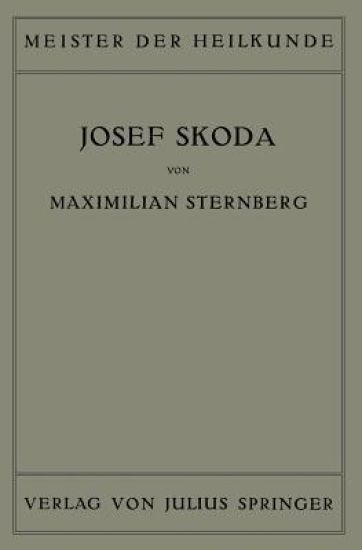
Josef Skoda

Josef Skoda

Maximilian Sternberg

Springer Verlag GmbH
1924
nidottu
Dieser Buchtitel ist Teil des Digitalisierungsprojekts Springer Book Archives mit Publikationen, die seit den Anfängen des Verlags von 1842 erschienen sind. Der Verlag stellt mit diesem Archiv Quellen für die historische wie auch die disziplingeschichtliche Forschung zur Verfügung, die jeweils im historischen Kontext betrachtet werden müssen. Dieser Titel erschien in der Zeit vor 1945 und wird daher in seiner zeittypischen politisch-ideologischen Ausrichtung vom Verlag nicht beworben.
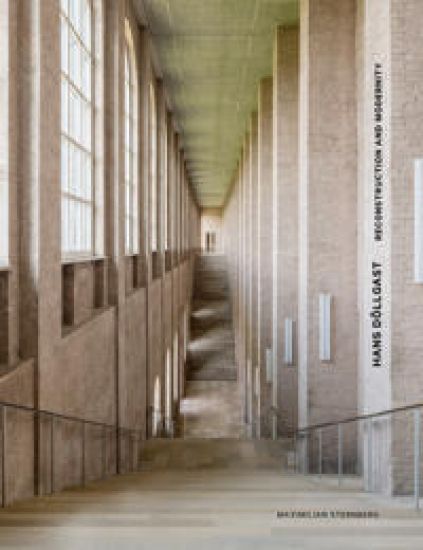
Hans Döllgast

Hans Döllgast

Maximilian Sternberg

LUND HUMPHRIES PUBLISHERS LTD
2026
sidottu
Incorporating original archival work, this book presents a synthetic interpretation of Döllgast’s writings, drawings and designs. It argues that he was one of the most original architects of the twentieth century. Likened to figures such as Jose Plecnik and Carlo Scarpa, Döllgast has been an influence on leading architects including James Stirling, David Chipperfield and Eduardo Souto de Moura. From his professional beginnings in the ateliers of Richard Riemerschmid and Peter Behrens in the 1920s, Döllgast was simultaneously at the centre and the margins of modern architecture. The work of his maturity in his hometown of Munich has come to be recognised as richly significant and timely. As a pioneer of architectural responses to destruction that address questions of trauma and memory, it is important that Döllgast’s contributions become actively discussed.
The Struggle for Jerusalem's Holy Places

The Struggle for Jerusalem's Holy Places

Wendy Pullan; Maximilian Sternberg; Lefkos Kyriacou; Craig Larkin; Michael Dumper

Routledge
2013
sidottu
The Struggle for Jerusalem’s Holy Places investigates the role of architecture and urban identity in relation to the political economy of the city and its wider state context seen through the lens of the holy places. Reflecting the broad disciplinary backgrounds of the authors, this book provides perspectives from architecture, urbanism, and politics, and provides in-depth investigations of historical, ethnographic and policy-related case studies. The research is substantiated by fieldwork carried out in Jerusalem over the past ten years as part of the ESRC Large Grants project ‘Conflict in Cities’. By analysing new dynamics of radicalisation through land seizure, the politicisation of parklands and tourism, the strategic manipulation of archaeological and historical narratives and material culture, and through examination of general appropriation of Jerusalem’s varied rituals, memories and symbolism for factional uses, the book reveals how possibilities of co- existence are seriously threatened in Jerusalem. Shedding new light on the key role played by everyday urban life and its spatial settings for any future political agreements about the city and its religious sites, this book is a useful reference work for students and scholars of Middle East Studies, Architecture, Religion and Urban Studies.
The Struggle for Jerusalem's Holy Places

The Struggle for Jerusalem's Holy Places

Wendy Pullan; Maximilian Sternberg; Lefkos Kyriacou; Craig Larkin; Michael Dumper

Routledge
2013
nidottu
The Struggle for Jerusalem’s Holy Places investigates the role of architecture and urban identity in relation to the political economy of the city and its wider state context seen through the lens of the holy places. Reflecting the broad disciplinary backgrounds of the authors, this book provides perspectives from architecture, urbanism, and politics, and provides in-depth investigations of historical, ethnographic and policy-related case studies. The research is substantiated by fieldwork carried out in Jerusalem over the past ten years as part of the ESRC Large Grants project ‘Conflict in Cities’. By analysing new dynamics of radicalisation through land seizure, the politicisation of parklands and tourism, the strategic manipulation of archaeological and historical narratives and material culture, and through examination of general appropriation of Jerusalem’s varied rituals, memories and symbolism for factional uses, the book reveals how possibilities of co- existence are seriously threatened in Jerusalem. Shedding new light on the key role played by everyday urban life and its spatial settings for any future political agreements about the city and its religious sites, this book is a useful reference work for students and scholars of Middle East Studies, Architecture, Religion and Urban Studies.
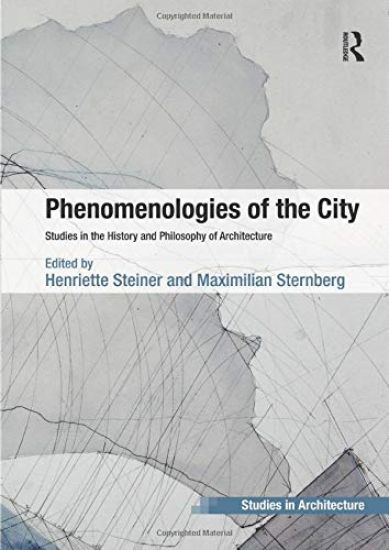
Phenomenologies of the City

Phenomenologies of the City

Henriette Steiner; Maximilian Sternberg

Routledge
2017
nidottu
Phenomenologies of the City: Studies in the History and Philosophy of Architecture brings architecture and urbanism into dialogue with phenomenology. Phenomenology has informed debate about the city from social sciences to cultural studies. Within architecture, however, phenomenological inquiry has been neglecting the question of the city. Addressing this lacuna, this book suggests that the city presents not only the richest, but also the politically most urgent horizon of reference for philosophical reflection on the cultural and ethical dimensions of architecture. The contributors to this volume are architects and scholars of urbanism. Some have backgrounds in literature, history, religious studies, and art history. The book features 16 chapters by younger scholars as well as established thinkers including Peter Carl, David Leatherbarrow, Alberto Pérez-Gomez, Wendy Pullan and Dalibor Vesely. Rather than developing a single theoretical statement, the book addresses architecture’s relationship with the city in a wide range of historical and contemporary contexts. The chapters trace hidden genealogies, and explore the ruptures as much as the persistence of recurrent cultural motifs. Together, these interconnected phenomenologies of the city raise simple but fundamental questions: What is the city for, how is it ordered, and how can it be understood? The book does not advocate a return to a naive sense of ’unity’ or ’order’. Rather, it investigates how architecture can generate meaning and forge as well as contest social and cultural representations.