May Sinclair was the pseudonym of Mary Amelia St. Clair (24 August 1863 - 14 November 1946), a popular British writer who wrote about two dozen novels, short stories and poetry.She was an active suffragist, and member of the Woman Writers' Suffrage League. May Sinclair was also a significant critic in the area of modernist poetry and prose, and she is attributed with first using the term stream of consciousness in a literary context, when reviewing the first volumes of Dorothy Richardson's novel sequence Pilgrimage (1915-67), in The Egoist, April 1918. Early life: She was born in Rock Ferry, Cheshire. Her father was a Liverpool shipowner, who went bankrupt, became an alcoholic, and died before she was an adult. Her mother was strict and religious; the family moved to Ilford on the edge of London. After one year of education at Cheltenham Ladies College, she acted as caretaker for her brothers, as four of the five, all older, were suffering from a fatal congenital heart disease. Career: From 1896 she wrote professionally, to support herself and her mother, who died in 1901. An active feminist, Sinclair treated a number of themes relating to the position of women, and marriage. She also wrote non-fiction based on studies of philosophy, particularly German idealism. Her works sold well in the United States. Around 1913, at the Medico-Psychological Clinic in London, she became interested in psychoanalytic thought, and introduced matter related to Sigmund Freud's teaching in her novels.In 1914, she volunteered to join the Munro Ambulance Corps, a charitable organization (which included Lady Dorothie Feilding, Elsie Knocker and Mairi Chisholm) that aided wounded Belgian soldiers on the Western Front in Flanders. She was sent home after only a few weeks at the front; she wrote about the experience in both prose and poetry. She wrote early criticism on Imagism and the poet H. D. (1915 in The Egoist); she was on social terms with H. D. (Hilda Doolittle), Richard Aldington and Ezra Pound at the time. She also reviewed in a positive light the poetry of T. S. Eliot (1917 in the Little Review) and the fiction of Dorothy Richardson (1918 in The Egoist). It was in connection with Richardson that she introduced "stream of consciousness" as a literary term, which was very generally adopted. Some aspects of Sinclair's subsequent novels have been traced as influenced by modernist techniques, particularly in the autobiographical Mary Olivier: A Life (1919). She was included in the 1925 Contact Collection of Contemporary Writers. Sinclair was a believer in Spiritualism, and was also a member of the Society for Psychical Research from 1914. Sinclair wrote two volumes of supernatural fiction, Uncanny Stories (1923) and The Intercessor and Other Stories (1931).E. F. Bleiler called Sinclair "an underrated writer" and described Uncanny Stories as "excellent".Gary Crawford has stated Sinclair's contribution to the supernatural fiction genre, "small as it is, is notable".Jacques Barzun included Sinclair among a list of supernatural fiction writers that "one should make a point of seeking out".Brian Stableford has stated that Sinclair's "supernatural tales are written with uncommon delicacy and precision, and they are among the most effective examples of their fugitive kind." Andrew Smith has described Uncanny Stories as "an important contribution to the ghost story". From the late 1920s she was suffering from the early signs of Parkinson's disease, and ceased writing. She settled with a companion in Buckinghamshire in 1932.
May Sinclair was the pseudonym of Mary Amelia St. Clair (24 August 1863 - 14 November 1946), a popular British writer who wrote about two dozen novels, short stories and poetry.She was an active suffragist, and member of the Woman Writers' Suffrage League. May Sinclair was also a significant critic in the area of modernist poetry and prose, and she is attributed with first using the term stream of consciousness in a literary context, when reviewing the first volumes of Dorothy Richardson's novel sequence Pilgrimage (1915-67), in The Egoist, April 1918. Early life: She was born in Rock Ferry, Cheshire. Her father was a Liverpool shipowner, who went bankrupt, became an alcoholic, and died before she was an adult. Her mother was strict and religious; the family moved to Ilford on the edge of London. After one year of education at Cheltenham Ladies College, she acted as caretaker for her brothers, as four of the five, all older, were suffering from a fatal congenital heart disease. Career: From 1896 she wrote professionally, to support herself and her mother, who died in 1901. An active feminist, Sinclair treated a number of themes relating to the position of women, and marriage. She also wrote non-fiction based on studies of philosophy, particularly German idealism. Her works sold well in the United States. Around 1913, at the Medico-Psychological Clinic in London, she became interested in psychoanalytic thought, and introduced matter related to Sigmund Freud's teaching in her novels.In 1914, she volunteered to join the Munro Ambulance Corps, a charitable organization (which included Lady Dorothie Feilding, Elsie Knocker and Mairi Chisholm) that aided wounded Belgian soldiers on the Western Front in Flanders. She was sent home after only a few weeks at the front; she wrote about the experience in both prose and poetry. She wrote early criticism on Imagism and the poet H. D. (1915 in The Egoist); she was on social terms with H. D. (Hilda Doolittle), Richard Aldington and Ezra Pound at the time. She also reviewed in a positive light the poetry of T. S. Eliot (1917 in the Little Review) and the fiction of Dorothy Richardson (1918 in The Egoist). It was in connection with Richardson that she introduced "stream of consciousness" as a literary term, which was very generally adopted. Some aspects of Sinclair's subsequent novels have been traced as influenced by modernist techniques, particularly in the autobiographical Mary Olivier: A Life (1919). She was included in the 1925 Contact Collection of Contemporary Writers. Sinclair was a believer in Spiritualism, and was also a member of the Society for Psychical Research from 1914. Sinclair wrote two volumes of supernatural fiction, Uncanny Stories (1923) and The Intercessor and Other Stories (1931).E. F. Bleiler called Sinclair "an underrated writer" and described Uncanny Stories as "excellent".Gary Crawford has stated Sinclair's contribution to the supernatural fiction genre, "small as it is, is notable".Jacques Barzun included Sinclair among a list of supernatural fiction writers that "one should make a point of seeking out".Brian Stableford has stated that Sinclair's "supernatural tales are written with uncommon delicacy and precision, and they are among the most effective examples of their fugitive kind." Andrew Smith has described Uncanny Stories as "an important contribution to the ghost story". From the late 1920s she was suffering from the early signs of Parkinson's disease, and ceased writing. She settled with a companion in Buckinghamshire in 1932.
Did Horace "dare" take a risk on that poet Rickman? The poet dropped his aitches, for one thing. And there was the matter of that actress he doted on -- low-class Yet cousin Lucia kept asking about him . . . and Horace did think maybe, just maybe, Rickman was a genius. But could Horace introduce Rickman to his club? He yearned to -- and yet, as he told Lucia, "The burnt critic dreads the divine fire " In this witty 1904 novel of literary and social manners and foibles, May Sinclair demonstrates all the wit, perception and style that made her one of the most respected -- and most read -- novelists of her time. May Sinclair was the pseudonym of Mary Amelia St. Clair (24 August 1863 - 14 November 1946), a popular British writer who wrote about two dozen novels, short stories and poetry.She was an active suffragist, and member of the Woman Writers' Suffrage League. May Sinclair was also a significant critic in the area of modernist poetry and prose, and she is attributed with first using the term stream of consciousness in a literary context, when reviewing the first volumes of Dorothy Richardson's novel sequence Pilgrimage (1915-67), in The Egoist, April 1918. Early life: She was born in Rock Ferry, Cheshire. Her father was a Liverpool shipowner, who went bankrupt, became an alcoholic, and died before she was an adult. Her mother was strict and religious; the family moved to Ilford on the edge of London. After one year of education at Cheltenham Ladies College, she acted as caretaker for her brothers, as four of the five, all older, were suffering from a fatal congenital heart disease. Career: From 1896 she wrote professionally, to support herself and her mother, who died in 1901. An active feminist, Sinclair treated a number of themes relating to the position of women, and marriage. She also wrote non-fiction based on studies of philosophy, particularly German idealism. Her works sold well in the United States. Around 1913, at the Medico-Psychological Clinic in London, she became interested in psychoanalytic thought, and introduced matter related to Sigmund Freud's teaching in her novels.In 1914, she volunteered to join the Munro Ambulance Corps, a charitable organization (which included Lady Dorothie Feilding, Elsie Knocker and Mairi Chisholm) that aided wounded Belgian soldiers on the Western Front in Flanders. She was sent home after only a few weeks at the front; she wrote about the experience in both prose and poetry. She wrote early criticism on Imagism and the poet H. D. (1915 in The Egoist); she was on social terms with H. D. (Hilda Doolittle), Richard Aldington and Ezra Pound at the time. She also reviewed in a positive light the poetry of T. S. Eliot (1917 in the Little Review) and the fiction of Dorothy Richardson (1918 in The Egoist). It was in connection with Richardson that she introduced "stream of consciousness" as a literary term, which was very generally adopted. Some aspects of Sinclair's subsequent novels have been traced as influenced by modernist techniques, particularly in the autobiographical Mary Olivier: A Life (1919). She was included in the 1925 Contact Collection of Contemporary Writers. Sinclair was a believer in Spiritualism, and was also a member of the Society for Psychical Research from 1914. Sinclair wrote two volumes of supernatural fiction, Uncanny Stories (1923) and The Intercessor and Other Stories (1931).E. F. Bleiler called Sinclair "an underrated writer" and described Uncanny Stories as "excellent".Gary Crawford has stated Sinclair's contribution to the supernatural fiction genre, "small as it is, is notable"....
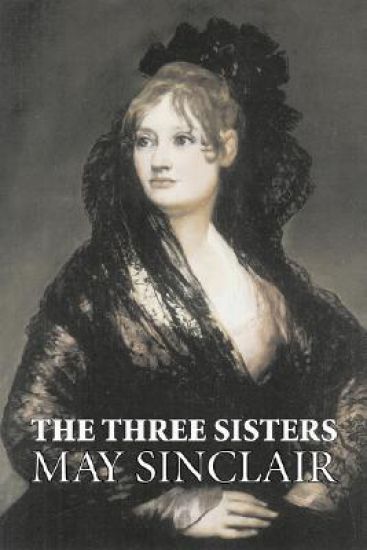
Author, poet, critic, and suffragist Mary Amelia St. Clair was a contemporary of and acquainted with Henry James, Thomas Hardy, Ford Madox Ford, T.S. Eliot, Ezra Pound, and Rebecca West, among others. She served as an ambulance driver in World War I, and produced poetry and fiction based on it.Her novel Mr. Waddington of Wyk was a social comedy. The Three Sisters is Sinclair's first psychological novel, drawing upon her interest in the work of Sigmund Freud. It an early example of the transition from classic realism to modernism, Influenced by Imagism, and structured around epiphanies, images and symbols. It's also considered a precursor to her later novels Mary Oliver and Harriet Frean, using knowledge of psychoanalysis and acknowledging the importance of the character's internal reality.
Did Horace dare take a risk on that poet Rickman?The poet dropped his aitches, for one thing. And there was the matter of that actress he doted on -- low-class Yet cousin Lucia kept asking about him . . . and Horace did think maybe, just maybe, Rickman was a genius. But could Horace introduce Rickman to his club? He yearned to -- and yet, as he told Lucia, "The burnt critic dreads the divine fire "
The Fieldings are a family that tries to love her, tries to help her forget her sorrows -- and they try to take care of her. Too many things remind Anne of her dead mother, however, and so she has a difficult time returning the affections of the matriarch. When she finally begins to love them, she is sent off again for school. By the time she returns, she discovers that the family children have grown, as had she. They begin to love each other more than brother and sister. But will they survive the ravages of war to find their happily ever after?May Sinclair was an active member of the suffragette movement. Her best-known novels include The Three Sisters (based on the Bront sisters), and Life and Death of Harriet Frean. Anne Severn and the Fieldings is partly based on Sinclair's own experiences during World War I.
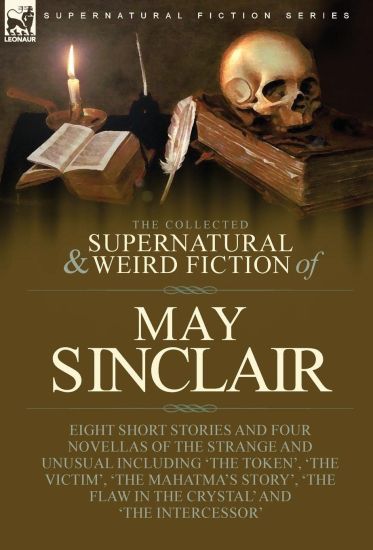
Ghostly tales from an active feminist and suffragist of fine literary abilityMay Sinclair was the pseudonym used by the prolific, but underrated, British writer, Mary Amelia St. Clair. Active in the late 19th and early 20th centuries, Sinclair was typical among writers of her period in the significant volume and breadth of her literary output, which included novels, short stories and poetry. From 1896 Sinclair, motivated by the need to support herself and her mother, wrote professionally. Her 1913 novel, 'The Combined Maze', was highly praised by George Orwell, whilst Agatha Christie regarded it as, 'one of the greatest English novels of its time'. Her work was also well received in the United States of America. She wrote two volumes of supernatural fiction, 'Uncanny Stories' and, 'The Intercessor and Other Stories' both of which are included in this Leonaur collection. Several authorities on the supernatural genre have praised the quality of Sinclair's work, with regrets only about the modest number of such stories she wrote. Sinclair's writing is considered to be be subtle, concise and modern despite her choice of traditional themes.In this Leonaur edition readers will discover 'The Intercessor', 'The Token', 'The Flaw in The Crystal', 'If the Dead Knew' and others.Leonaur editions are newly typeset and are not facsimiles; each title is available in softcover and hardback with dustjacket.
Ghostly tales from an active feminist and suffragist of fine literary abilityMay Sinclair was the pseudonym used by the prolific, but underrated, British writer, Mary Amelia St. Clair. Active in the late 19th and early 20th centuries, Sinclair was typical among writers of her period in the significant volume and breadth of her literary output, which included novels, short stories and poetry. From 1896 Sinclair, motivated by the need to support herself and her mother, wrote professionally. Her 1913 novel, 'The Combined Maze', was highly praised by George Orwell, whilst Agatha Christie regarded it as, 'one of the greatest English novels of its time'. Her work was also well received in the United States of America. She wrote two volumes of supernatural fiction, 'Uncanny Stories' and, 'The Intercessor and Other Stories' both of which are included in this Leonaur collection. Several authorities on the supernatural genre have praised the quality of Sinclair's work, with regrets only about the modest number of such stories she wrote. Sinclair's writing is considered to be be subtle, concise and modern despite her choice of traditional themes.In this Leonaur edition readers will discover 'The Intercessor', 'The Token', 'The Flaw in The Crystal', 'If the Dead Knew' and others.Leonaur editions are newly typeset and are not facsimiles; each title is available in softcover and hardback with dustjacket.
May Sinclair was the pseudonym of Mary Amelia St. Clair (24 August 1863 - 14 November 1946), a popular British writer who wrote about two dozen novels, short stories and poetry. She was an active suffragist, and member of the Woman Writers' Suffrage League. She once dressed up as a demure, rebel Jane Austen for a suffrage fundraising event. Sinclair was also a significant critic in the area of modernist poetry and prose, and she is attributed with first using the term 'stream of consciousness' in a literary context, when reviewing the first volumes of Dorothy Richardson's novel sequence Pilgrimage (1915-67), in The Egoist, April 1918.
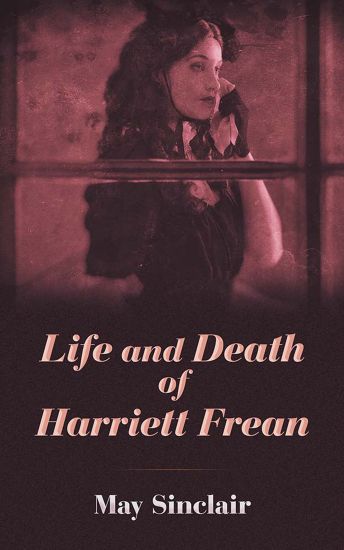
"A masterpiece." -- Walter Allen. A moral fable about the narrow and starved existence that results from self-sacrifice, this novel traces a Victorian woman's suffocating and stunted life. More than a case history of an underdeveloped individual who chooses loyalty to a friendship over the lure of romance, the story criticizes the values of 19th-century middle-class society and the irresponsibility and destructiveness that lurk beneath the fa ade of good manners.