Kirjojen hintavertailu. Mukana 11 627 630 kirjaa ja 12 kauppaa.

Kirjahaku

Etsi kirjoja tekijän nimen, kirjan nimen tai ISBN:n perusteella.

6 kirjaa tekijältä Maynard Mack

King Lear in our Time

King Lear in our Time

Maynard Mack

Routledge
2004
sidottu
This edition first published in 1966. Previous edition published 1965 by the University of California Press. Perhaps more than any other play of Shakespeare's King Lear has been subjected to almost totally contradictory interpretations. In the first historical section of the book the author describes the varying concepts of the play and the distortions of text and even plot that have been widely used. Garrick's playing of Lear as a pathetic and down-trodden old man. Laughton's and Olivier's versions and Herbert Blaus's theory of the 'subtext' are described and analysed. The central section of the book examines the medieval, folk and romance sources of the play. The final chapter illustrates how the action of the play and its pervading violence and evil are not explained in terms of human motive and rely for their meaning more on their effects than their antecedents. An important theme is the play's examination of society and the ties of service and family love.
King Lear in our Time

King Lear in our Time

Maynard Mack

Routledge
2010
nidottu
This edition first published in 1966. Previous edition published 1965 by the University of California Press. Perhaps more than any other play of Shakespeare's King Lear has been subjected to almost totally contradictory interpretations. In the first historical section of the book the author describes the varying concepts of the play and the distortions of text and even plot that have been widely used. Garrick's playing of Lear as a pathetic and down-trodden old man. Laughton's and Olivier's versions and Herbert Blaus's theory of the 'subtext' are described and analysed. The central section of the book examines the medieval, folk and romance sources of the play. The final chapter illustrates how the action of the play and its pervading violence and evil are not explained in terms of human motive and rely for their meaning more on their effects than their antecedents. An important theme is the play's examination of society and the ties of service and family love.
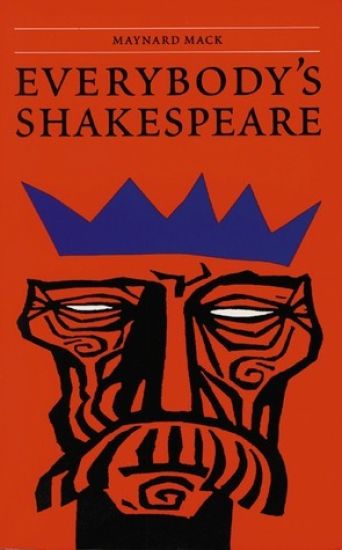
Everybody's Shakespeare

Everybody's Shakespeare

Maynard Mack

University of Nebraska Press
1994
pokkari
Everybody's Shakespeare brings the insights and wisdom of one of the finest Shakespearean scholars of our century to the task of surveying why the Bard continues to flourish in modern times. Mack treats individually seven plays—Hamlet, King Lear, Macbeth, Othello, Romeo and Juliet, Julius Cesar, and Antony and Cleopatra—and demonstrates in each case how the play has retained its vitality, complexity, and appeal.
Collected in Himself

Collected in Himself

Maynard Mack

University of Delaware Press
1982
sidottu
A collection of various essays about Pope and the eighteenth century written by Professor Mack during the past four decades. An appendix includes a finding list of books surviving from Pope's library and a selection of letters by, to, and about Pope, most of them unpublished.
The Garden and the City

The Garden and the City

Maynard Mack

UNIVERSITY OF TORONTO PRESS
1969
pokkari
In his preface Maynard Mack writes, "Criticism in the case of literary figures is never entirely separable from literary history and biography; yet it is more or less separable, and the merit of this book, if it has any, lies in the two latter areas. If I am judged to be right about the profoundly political orientation of most of Pope's poems of the [17]30's and about there being a certain emblematic quality in his way of life at Twickenham whose shaping influence is also felt inside the poems, here may be an additional complexity of texture which criticism will wish to take into account." In this work Mr. Mack explores the tension in Pope's life between Garden and City, between the poet's desire for seclusion and privacy and his concern for political and social issues. In a vivid and factual reconstruction, including many illustrations and contemporary documents, he presents the famous garden, grotto, and villa as a setting that both expressed Pope as a man and contributed to the dramatic personality who speaks to us in the satires and epistles. At the same time, he uncovers and elucidates a vein of political satire which is present in these poems to a degree not hitherto recognized. Retirement attitudes, Mr. Mack argues, combine with political attitudes to effect in all of Pope's later poetry a confrontation of Sir Robert Walople's England with a poet's country of the mind; "Pope's 'creation' of Twickenham constituted an act of the mythopoeic imagination and (to borrow a phrase from the manuals of religious meditation) a 'composition of place' without which he could not have written his mature poems as we have them." Mr. Mack provides here a biographical and historical context that throws new light on the mature works of one of the great poets and satirists of English literature.