Kirjojen hintavertailu. Mukana 11 699 587 kirjaa ja 12 kauppaa.

Kirjahaku

Etsi kirjoja tekijän nimen, kirjan nimen tai ISBN:n perusteella.

6 kirjaa tekijältä Megan Bradley

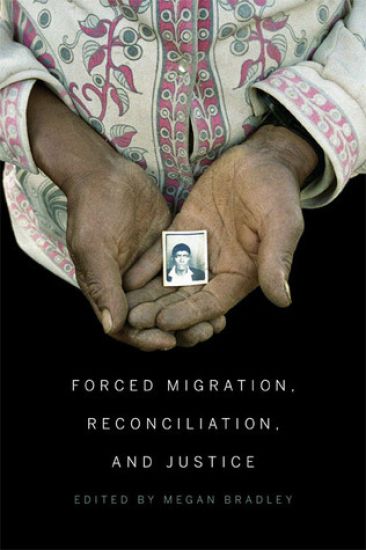
Forced Migration, Reconciliation, and Justice

Forced Migration, Reconciliation, and Justice

Megan Bradley

McGill-Queen's University Press
2015
sidottu
At the start of 2014, more people were displaced globally by conflict and human rights violations than at any time since the Second World War. Although many of those displaced, from countries such as Syria, Iraq, Colombia, Kenya, and Sudan, have survived grave human rights abuses that demand redress, the links between forced migration, justice, and reconciliation have historically received little attention. This collection addresses the roles of various actors including governments, UN agencies, NGOs, and displaced persons themselves, raising complex questions about accountability for past injustices and how to support reconciliation in communities shaped by exile. Forced Migration, Reconciliation, and Justice draws on a variety of disciplinary perspectives including political science, law, anthropology, and social work. The chapters range from case studies in countries such as Bosnia, Cambodia, Lebanon, Turkey, East Timor, Kenya, and Canada, to macro-level analyses of trends, interconnections, and theoretical dilemmas. Furthermore, the authors explore the contribution of trials and truth commissions, as well as the role of religious practices, oral history, theatre, and social interactions in addressing justice and reconciliation issues in affected communities. In doing so, they provide fresh insight into emerging debates at the centre of forced migration and transitional justice. Exploring critical issues in political science and development studies, this provocative collaboration unites leading researchers, policymakers, human rights advocates, and aid workers to examine the theoretical and practical relationships between displacement, transitional justice, and reconciliation. Contributors include Ian B. Anderson (Department of Foreign Affairs, Trade and Development Canada), John Bell (Toledo International Center for Peace), Chaloka Beyani (London School of Economics), Mateja Celestina (Coventry University), Ayse Betul Celik (Sabanci University), Mick Dumper (Exeter University), Roger Duthie (International Center for Transitional Justice), Huma Haider (University of Birmingham), Nancy Maroun (United Nations Development Programme Office in Lebanon), James Milner (Carleton University), Mike Molloy (University of Ottawa), Paige Morrow (Frank Bold), Lisa Ndejuru (Concordia University), Thien-Huong T. Ninh (California State University, Dominguez Hills), Anneke Smit (University of Windsor), Roberto Vidal Lopez (Pontifica Universidad), Luiz Vieira (formerly with IOM), Nicole Waintraub (University of Ottawa), Jennifer Winstanley (lawyer).
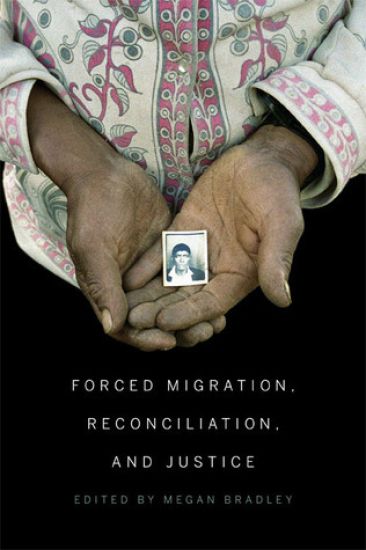
Forced Migration, Reconciliation, and Justice

Forced Migration, Reconciliation, and Justice

Megan Bradley

McGill-Queen's University Press
2015
nidottu
At the start of 2014, more people were displaced globally by conflict and human rights violations than at any time since the Second World War. Although many of those displaced, from countries such as Syria, Iraq, Colombia, Kenya, and Sudan, have survived grave human rights abuses that demand redress, the links between forced migration, justice, and reconciliation have historically received little attention. This collection addresses the roles of various actors including governments, UN agencies, NGOs, and displaced persons themselves, raising complex questions about accountability for past injustices and how to support reconciliation in communities shaped by exile. Forced Migration, Reconciliation, and Justice draws on a variety of disciplinary perspectives including political science, law, anthropology, and social work. The chapters range from case studies in countries such as Bosnia, Cambodia, Lebanon, Turkey, East Timor, Kenya, and Canada, to macro-level analyses of trends, interconnections, and theoretical dilemmas. Furthermore, the authors explore the contribution of trials and truth commissions, as well as the role of religious practices, oral history, theatre, and social interactions in addressing justice and reconciliation issues in affected communities. In doing so, they provide fresh insight into emerging debates at the centre of forced migration and transitional justice. Exploring critical issues in political science and development studies, this provocative collaboration unites leading researchers, policymakers, human rights advocates, and aid workers to examine the theoretical and practical relationships between displacement, transitional justice, and reconciliation. Contributors include Ian B. Anderson (Department of Foreign Affairs, Trade and Development Canada), John Bell (Toledo International Center for Peace), Chaloka Beyani (London School of Economics), Mateja Celestina (Coventry University), Ayse Betul Celik (Sabanci University), Mick Dumper (Exeter University), Roger Duthie (International Center for Transitional Justice), Huma Haider (University of Birmingham), Nancy Maroun (United Nations Development Programme Office in Lebanon), James Milner (Carleton University), Mike Molloy (University of Ottawa), Paige Morrow (Frank Bold), Lisa Ndejuru (Concordia University), Thien-Huong T. Ninh (California State University, Dominguez Hills), Anneke Smit (University of Windsor), Roberto Vidal Lopez (Pontifica Universidad), Luiz Vieira (formerly with IOM), Nicole Waintraub (University of Ottawa), Jennifer Winstanley (lawyer).
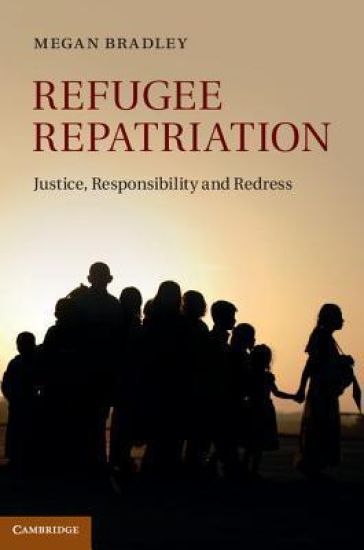
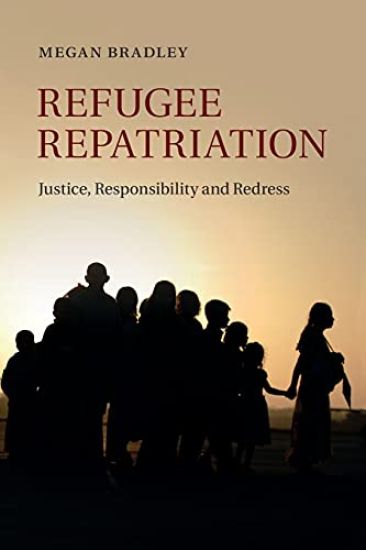
Refugee Repatriation

Refugee Repatriation

Megan Bradley

Cambridge University Press
2013
sidottu
Voluntary repatriation is now the predominant solution to refugee crises, yet the responsibilities states of origin bear towards their repatriating citizens are under-examined. Through a combination of legal and moral analysis, and case studies of the troubled repatriation movements to Guatemala, Bosnia and Mozambique, Megan Bradley develops and refines an original account of the minimum conditions of a 'just return' process. The goal of a just return process must be to recast a new relationship of rights and duties between the state and its returning citizens, and the conditions of just return match the core duties states should provide for all their citizens: equal, effective protection for security and basic human rights, including accountability for violations of these rights. This volume evaluates the ways in which different forms of redress such as restitution and compensation may help enable just returns, and traces the emergence and evolution of international norms on redress for refugees.
Refugee Repatriation

Refugee Repatriation

Megan Bradley

Cambridge University Press
2014
pokkari
Voluntary repatriation is now the predominant solution to refugee crises, yet the responsibilities states of origin bear towards their repatriating citizens are under-examined. Through a combination of legal and moral analysis, and case studies of the troubled repatriation movements to Guatemala, Bosnia and Mozambique, Megan Bradley develops and refines an original account of the minimum conditions of a 'just return' process. The goal of a just return process must be to recast a new relationship of rights and duties between the state and its returning citizens, and the conditions of just return match the core duties states should provide for all their citizens: equal, effective protection for security and basic human rights, including accountability for violations of these rights. This volume evaluates the ways in which different forms of redress such as restitution and compensation may help enable just returns, and traces the emergence and evolution of international norms on redress for refugees.
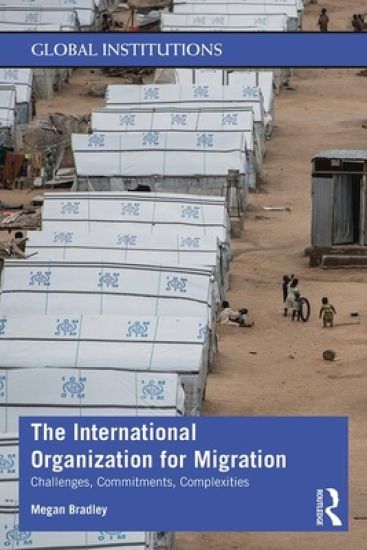
The International Organization for Migration
Since its establishment in 1951, the International Organization for Migration (IOM) has expanded from a small, regionally specific, logistically focused outfit into a major international organization involved in an almost dizzying array of activities related to human mobility. In 2016, IOM joined the UN system and has rebranded itself as the "UN migration agency." Despite its dramatic expansion and increasing influence, IOM remains understudied. This book provides an accessible, incisive introduction to IOM, focusing on its humanitarian activities and responses to forced migration – work that now makes up the majority of the organization’s budget, staff, and field presence. IOM’s humanitarian work is often overlooked or dismissed as a veil for its involvement in other activities that serve states’ interests in restricting migration. In contrast, Bradley argues that understanding IOM’s involvement in humanitarian action and work with displaced persons is pivotal to comprehending its evolution and contemporary significance. Examining tensions and controversies surrounding the agency’s activities, including in the complex cases of Haiti and Libya, the book considers how IOM’s structure, culture, and internal and external power struggles have shaped its behaviour. It demonstrates how IOM has grown by acting as an entrepreneur, cultivating autonomy and influence well beyond its limited formal mandate. The International Organization for Migration is essential reading for students and scholars of migration, humanitarianism, and international organizations.
The International Organization for Migration
Since its establishment in 1951, the International Organization for Migration (IOM) has expanded from a small, regionally specific, logistically focused outfit into a major international organization involved in an almost dizzying array of activities related to human mobility. In 2016, IOM joined the UN system and has rebranded itself as the "UN migration agency." Despite its dramatic expansion and increasing influence, IOM remains understudied. This book provides an accessible, incisive introduction to IOM, focusing on its humanitarian activities and responses to forced migration – work that now makes up the majority of the organization’s budget, staff, and field presence. IOM’s humanitarian work is often overlooked or dismissed as a veil for its involvement in other activities that serve states’ interests in restricting migration. In contrast, Bradley argues that understanding IOM’s involvement in humanitarian action and work with displaced persons is pivotal to comprehending its evolution and contemporary significance. Examining tensions and controversies surrounding the agency’s activities, including in the complex cases of Haiti and Libya, the book considers how IOM’s structure, culture, and internal and external power struggles have shaped its behaviour. It demonstrates how IOM has grown by acting as an entrepreneur, cultivating autonomy and influence well beyond its limited formal mandate. The International Organization for Migration is essential reading for students and scholars of migration, humanitarianism, and international organizations.