Kirjojen hintavertailu. Mukana 11 699 587 kirjaa ja 12 kauppaa.

Kirjahaku

Etsi kirjoja tekijän nimen, kirjan nimen tai ISBN:n perusteella.

3 kirjaa tekijältä Megan Koreman

The Escape Line

The Escape Line

Megan Koreman

Oxford University Press Inc
2018
sidottu
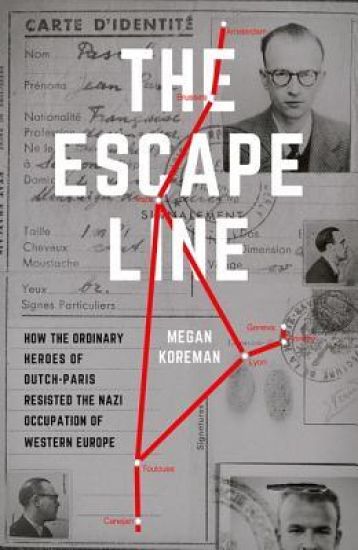
Of all the resistance organizations that operated during the war, about which much has been written, one stands out for its transnational character, the diversity of the tasks its members took on, and the fact that, unlike many of the known evasion lines, it was not directed by Allied officers, but rather by group of ordinary citizens. Between 1942 and 1945, they formed a network to smuggle Dutch Jews and others targeted by the Nazis south into France, via Paris, and then to Switzerland. This network became known as the Dutch-Paris Escape Line, eventually growing to include 300 people and expanding its reach into Spain. Led by Jean Weidner, a Dutchman living in France, many lacked any experience in clandestine operations or military tactics, and yet they became one of the most effective resistance groups of the Second World War. Dutch-Paris largely improvised its operations--scrounging for food on the black market, forging documents, and raising cash. Hunted relentlessly by the Nazis, some were even captured and tortured. In addition to Jews, those it helped escape the clutches of the Nazis included resistance fighters, political foes, Allied airmen, and young men looking to get to London to enlist. As the need grew more desperate, so did the bravery of those who rose to meet it. Using recently declassified archives, The Escape Line tells the story of the Dutch-Paris and the thousands of people it saved during World War II. Koreman, who was given exclusive access to many of the archives, is herself the daughter of Dutch parents who were part of the resistance, offers the definitive account of this largely untold story.
The Expectation of Justice

The Expectation of Justice

Megan Koreman

Duke University Press
2000
sidottu
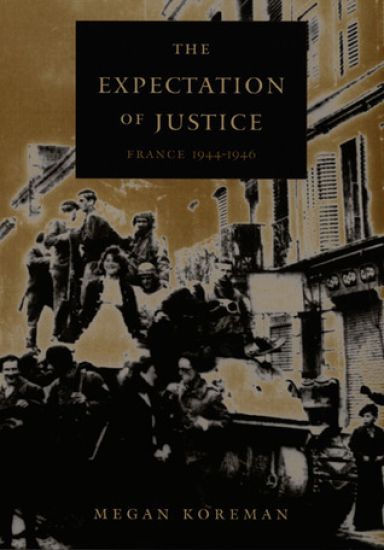
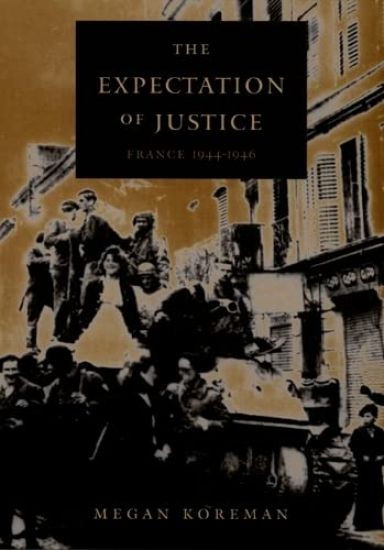
In The Expectation of Justice Megan Koreman traces the experiences of three small French towns during the troubled months of the Provisional Government following the Liberation in 1944. Her descriptions of the towns’ different wartime and postwar experiences contribute to a fresh depiction of mid-century France and illustrate the failure of the postwar government to adequately serve the interests of justice.As the first social history of the “aprÈs -LibÉration” period from the perspective of ordinary people, Koreman’s study reveals how citizens of these towns expected legal, social, and honorary justice-such as punishment for collaborators, fair food distribution, and formal commemoration of patriots, both living and dead. Although the French expected the Resistance’s Provisional Government to act according to local understandings of justice, its policies often violated local sensibilities by instead pursuing national considerations. Koreman assesses both the citizens’ eventual disillusionment and the social costs of the “Resistencialist myth” propagated by the de Gaulle government in an effort to hold together the fragmented postwar nation. She also suggests that the local demands for justice created by World War II were stifled by the Cold War, since many people in France feared that open opposition to the government would lead to a Communist takeover. This pattern of nationally instituted denial and suppression made it difficult for citizens to deal effectively with memories of wartime suffering and collaborationist betrayal. Now, with the end of the Cold War, says Koreman, memories of postwar injustices are resurfacing, and there is renewed interest in witnessing just and deserved closure.This social history of memory and reconstruction will engage those interested in history, war and peace issues, contemporary Europe, and the twentieth century.
The Expectation of Justice

The Expectation of Justice

Megan Koreman

Duke University Press
2000
pokkari
In The Expectation of Justice Megan Koreman traces the experiences of three small French towns during the troubled months of the Provisional Government following the Liberation in 1944. Her descriptions of the towns’ different wartime and postwar experiences contribute to a fresh depiction of mid-century France and illustrate the failure of the postwar government to adequately serve the interests of justice.As the first social history of the “aprÈs -LibÉration” period from the perspective of ordinary people, Koreman’s study reveals how citizens of these towns expected legal, social, and honorary justice-such as punishment for collaborators, fair food distribution, and formal commemoration of patriots, both living and dead. Although the French expected the Resistance’s Provisional Government to act according to local understandings of justice, its policies often violated local sensibilities by instead pursuing national considerations. Koreman assesses both the citizens’ eventual disillusionment and the social costs of the “Resistencialist myth” propagated by the de Gaulle government in an effort to hold together the fragmented postwar nation. She also suggests that the local demands for justice created by World War II were stifled by the Cold War, since many people in France feared that open opposition to the government would lead to a Communist takeover. This pattern of nationally instituted denial and suppression made it difficult for citizens to deal effectively with memories of wartime suffering and collaborationist betrayal. Now, with the end of the Cold War, says Koreman, memories of postwar injustices are resurfacing, and there is renewed interest in witnessing just and deserved closure.This social history of memory and reconstruction will engage those interested in history, war and peace issues, contemporary Europe, and the twentieth century.