Kirjojen hintavertailu. Mukana 11 627 220 kirjaa ja 12 kauppaa.

Kirjahaku

Etsi kirjoja tekijän nimen, kirjan nimen tai ISBN:n perusteella.

17 kirjaa tekijältä Mel Thompson

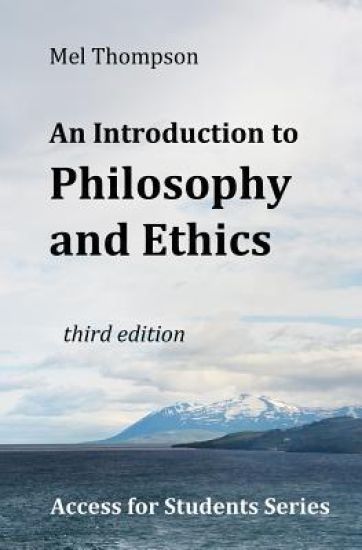
An Introduction to Philosophy and Ethics

An Introduction to Philosophy and Ethics

Mel Thompson

Independently Published
2019
pokkari
This book offers an introduction to key topics in the Philosophy of Religion and Ethics. The first two editions, published by Hodder Education, served as core textbooks for students taking AS-Level papers in Religious Studies in the UK. This new edition provides the same material in a more affordable form, suitable for students and anyone interested in the subject.It explores major questions, such as the existence of God, the nature of the self, religion and science, ethical theories and religious ethics, and is written in a jargon-free, accessible style. At the end of each chapter, a study guide provides students with the opportunity to check their understanding. It also contains advice on writing essays and answering examination questions.
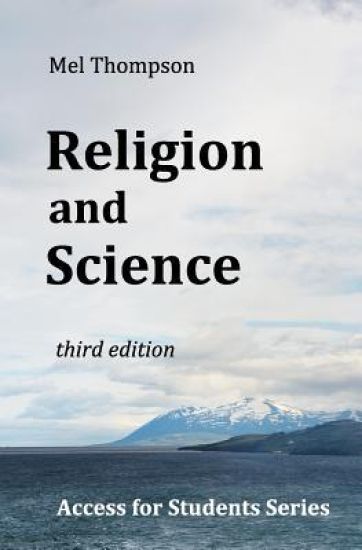
Religion and Science

Religion and Science

Mel Thompson

Independently Published
2019
nidottu
Does science render religion obsolete? Are they incompatible? Are miracles possible? Is the idea of design compatible with Darwin's theory of natural selection? This book introduces these and many other issues that arise in the interface between religion and science. Starting with an historical overview, it examine questions of method, authority and language, before looking at key topics, including evolution and design, freedom and determinism, miracles, scientific explanations of religion and what it means to be a human being.In general, the book argues that religion and science are two very different and complimentary ways of looking at and relating to the world, neither of which does itself justice if it tries to claim to be an exclusive source of knowledge.This book retains the text of the previous edition, published by Hodder Education and designed primarily for those in the UK taking A-level examinations in Religious Studies. However, its accessible and open-ended exploration makes it suitable for all readers interested in this subject.
Me

Me

Mel Thompson

Routledge
2016
sidottu
'Who am I?' In a world where randomness and chance make life transient and unpredictable, religion, psychology and philosophy have all tried, in their different ways, to answer this question and to give meaning and coherence to the human person. How we should construct a meaningful 'me' - and to make sense of one's life - is the question at the heart of Mel Thompson's illuminating book.Although Thompson begins by exploring the workings of the brain, he shows that if we are to consider the nature of the self, it is not enough to argue about such things as how mind relates to matter, or whether neuroscience can fully explain consciousness. Such an approach fails to do justice to the self that we experience and the selves that we encounter around us. We need to engage with the more personal, existential questions: how do I make sense of my life? And am I responsible for the person I have become?Thompson investigates the gap between what we are and what others perceive us to be to ascertain whether we are genuinely knowable entities. He explores the central dilemma of how one can have a fixed idea of 'me' to shape and direct one's life when, in a world of constant change, events will rob us of that fixed idea at any moment. Perhaps we would be better to let go of the need for 'me', asks Thompson, but would a self-less life be possible, or desirable?Drawing on the writings of literature, philosophy, religion and science, as well as personal reflection and anecdote, Thompson has written an engaging and thought-provoking work that recaptures the notion of 'me' from the neuroscientists and situates it at the heart of finding a place in the world.
Understand the Philosophy of Religion: Teach Yourself
Is this the right book for me?This book is for anyone wanting to understand what religion is really about. Exploring all the key principles upon which religion is based and setting out the arguments for and against belief in a clear, accessible style, it examines religion against current issues such as terrorism, evolution, and our multi-cultural society.Understand the Philosophy of Religion includes:Chapter 1: Religious experienceChapter 2: Religious languageChapter 3: God: the conceptsChapter 4: God: the argumentsChapter 5: Atheism and humanismChapter 6: The selfChapter 7: Psychology and religionChapter 8: Suffering and evilChapter 9: Religion and scienceChapter 10: Religion and societyLearn effortlessly with a new easy-to-read page design and added features:Not got much time?One, five and ten-minute introductions to key principles to get you started.Author insightsLots of instant help with common problems and quick tips for success, based on the author's many years of experience.Test yourselfTests in the book and online to keep track of your progress.Extend your knowledgeExtra online articles to give you a richer understanding of psychology.Five things to rememberQuick refreshers to help you remember the key facts.Try thisInnovative exercises illustrate what you've learnt and how to use it.
Understand Political Philosophy: Teach Yourself
Understand Political Philosophy is an in-depth guide to the philosophers and political ideas who have shaped our society. Quickly and easily get to grips with the key thinkers and theories, from Aristotle to Wollstonecraft, from capitalism to utilitarianism. With exploration of contemporary issues and current debates, this book will put political philosophy in the context of the world we live in today.NOT GOT MUCH TIME?One, five and ten-minute introductions to key principles to get you started.AUTHOR INSIGHTSLots of instant help with common problems and quick tips for success, based on the author's many years of experience.TEST YOURSELFTests in the book and online to keep track of your progress.EXTEND YOUR KNOWLEDGEExtra online articles to give you a richer understanding of psychology.FIVE THINGS TO REMEMBERQuick refreshers to help you remember the key facts.TRY THISInnovative exercises illustrate what you've learnt and how to use it.
The Philosophers Beach Book

The Philosophers Beach Book

Mel Thompson

John Murray Learning
2012
pokkari
The Philosopher's Beach Book invites you to relax and think; to wiggle your toes in the sand (literally or metaphorically) and reflect on the meaning of life.Have you ever stretched out on a holiday beach or taken a relaxed stroll in the evening, musing on your life 'back home' - your family, your work, your values - and wondered if it all makes sense? This book invites you to ask questions; to explore the assumptions of everyday life; to challenge your own values. You may go on holiday to see something new, but it also offers you a new perspective on the familiar. From the distance of your (literal or metaphorical) beach, now is the chance to give life a gentle, intellectual prod.
Eastern Philosophy: Teach Yourself

Eastern Philosophy: Teach Yourself

Mel Thompson

Teach Yourself
2012
pokkari
Eastern Philosophy examines key ideas that developed within the ancient civilisations of India and China. It presents a range of philosophies that both inform discussion of personal, moral and social issues and address the fundamental questions about the nature of reality and the place and purpose of human life within it.From the erotic images of Tantra to the simple precision of Zen, and from the social order in traditional Confucian teaching to the rich variety of Hindu ideas and lifestyles, Eastern Philosophy provides a feast of ideas of universal relevance.Eastern Philosophy:- Looks at the ethical and social implications of Eastern philosophy.- Gives key terms in their original language with full explananations.- Points to parallels with Western thought, where appropriate.- Provides essential background information for appreciating the religions of India and the Far East.
Philosophy of Mind: Teach Yourself

Philosophy of Mind: Teach Yourself

Mel Thompson

Teach Yourself
2012
isokokoinen pokkari
What is your mind? How is it related to your body? What is the effect of artificial intelligence and information technology? These and many other issues are explored in TEACH YOURSELF PHILOSOPHY OF MIND.- Investigate ideas about the mind, from ancient Greece to present-day cognitive science.- Explore the concepts of memory and free will.- Consider issues relating the mind to religion and artistic creativity.- Examine the impact of information technology on our understanding of the mind and the way it works.
Philosophy of Science: Teach Yourself

Philosophy of Science: Teach Yourself

Mel Thompson

Teach Yourself
2012
isokokoinen pokkari
A modern understanding of the world is unthinkable without science, but what exactly is it? What does it mean to say that something is 'scientific'? How are its results justified? From the genetic basis of life, to the structures of the universe and the atom, TEACH YOURSELF PHILOSOPHY OF SCIENCE explores how the key ideas that shape our world have been developed.- Investigate the history of science.- Examine scientific method.- Discover key philosophers and scientists.- Explore the impact of science on Western thought.
Philosophy In a Week: Teach Yourself

Philosophy In a Week: Teach Yourself

Mel Thompson

John Murray Learning
2013
nidottu
Learn in a week, remember for a lifetime!In just one week, this accessible book will give you knowledge to last forever. End of chapter summaries and multiple choice questions are all designed to help you test your knowledge and gain confidence. So whether you are a student or you simply want to widen your knowledge, you will find this seven-day course a very memorable introduction.Sunday: Think about knowledge like a philosopherMonday: Consider what science is and how we gain knowledge of the natural worldTuesday: Explore how we speak and think, and how this relates to the philosophy of mind.Wednesday: Learn how philosophers view and engage with religionThursday: Engage with ethics - how we decide what is the right thing to doFriday: Discover how political philosophers have balanced the role of government with individual freedom.Saturday: Explore continental ideas such as existentialism and how the next generation of philosophers may build on them.
Philosophy for Life: Teach Yourself

Philosophy for Life: Teach Yourself

Mel Thompson

Teach Yourself
2017
pokkari
Philosophy For Life is the definitive introduction to the history of Western thought, but more than that, it is a toolkit for using philosophy in your daily life. As you read, you will develop your own critical and creative thinking, exploring the key ideas in Western Philosophy and the arguments that continue to shape our world. You will discover what philosophy is really about, learn to be a sceptic, meet Plato and Aristotle, explore the concept of mind, question free will, use philosophy to be happy, find out about Marx and materialism, see how philosophy relates to everything from comics to coffee, and ask whether god exists. Philosophy is a life-tool, a set of skills for engaging with any subject, and in Philosphy For Life, you will discover a body of wisdom and a way to develop your own critical and creative thinking.ABOUT THE SERIESPeople have been learning with Teach Yourself since 1938. With a vast range of practical, how-to guides covering language learning, lifestyle, hobbies, business, psychology and self-help, there's a Teach Yourself book for whatever you want to do. Join more than 60 million people who have reached their goals with Teach Yourself, and never stop learning.
Ethics for Life

Ethics for Life

Mel Thompson

Teach Yourself
2018
nidottu
We all face questions on an almost daily basis related to truth and post-truth, particularly in the political sphere, terrorism, globalization, immigration and asylum, social responsibility, media and social-media ethics, and gender and LGBT issues. So how do you navigate this minefield? Ethics for Life is an accessible introduction to all the key theories and thinkers. It shows the relevance of ethical ideas and theories to everyday life, emphasizing the way our view of ourselves and the societies we live in is shaped by our moral values and the arguments they are based on.With contemporary examples and discussion of current debates including terrorism, genetics and the media, Ethics for Life will help you grasp how ethics applies to life today.
Me

Me

Mel Thompson

Acumen Publishing Ltd
2009
nidottu
'Who am I?' In a world where randomness and chance make life transient and unpredictable, religion, psychology and philosophy have all tried, in their different ways, to answer this question and to give meaning and coherence to the human person. How we should construct a meaningful 'me' - and to make sense of one's life - is the question at the heart of Mel Thompson's illuminating book.Although Thompson begins by exploring the workings of the brain, he shows that if we are to consider the nature of the self, it is not enough to argue about such things as how mind relates to matter, or whether neuroscience can fully explain consciousness. Such an approach fails to do justice to the self that we experience and the selves that we encounter around us. We need to engage with the more personal, existential questions: how do I make sense of my life? And am I responsible for the person I have become?Thompson investigates the gap between what we are and what others perceive us to be to ascertain whether we are genuinely knowable entities. He explores the central dilemma of how one can have a fixed idea of 'me' to shape and direct one's life when, in a world of constant change, events will rob us of that fixed idea at any moment. Perhaps we would be better to let go of the need for 'me', asks Thompson, but would a self-less life be possible, or desirable?Drawing on the writings of literature, philosophy, religion and science, as well as personal reflection and anecdote, Thompson has written an engaging and thought-provoking work that recaptures the notion of 'me' from the neuroscientists and situates it at the heart of finding a place in the world.
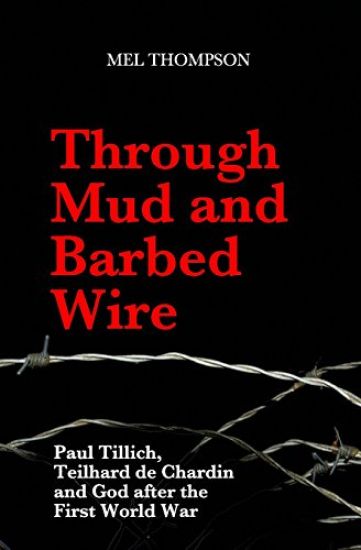
Through Mud and Barbed Wire

Through Mud and Barbed Wire

Mel Thompson

Createspace Independent Publishing Platform
2017
pokkari
Can faith survive war? What can we hope for in a world gone mad? In June 1916, two of the 20th century's greatest religious thinkers found themselves on opposite sides of the battlefield at Verdun. For each it was an experience like no other, but they responded to it very differently, and for each of them it transformed their idea of God, their career and their life. A German Lutheran chaplain and a French Jesuit stretcher-bearer, although separated by only a few hundred yards of mud and barbed wire, tried to cope with and make sense of the horror of war. The story of these two men - Paul Tillich and Teilhard de Chardin - and the impact the war had on them, reflects a century of thinking about religion, politics, humanism and our global future. The story moves from the battlefields of the Great War, through Europe in the 1920s and 30s, to America in the 1950s. It explores questions about belief in God, the place of religion, and how we cope with suffering and change, whether on a battlefield or in a cancer ward. Believers may ask how God allows such things to happen, and many have their faith shattered through suffering. But the broader issue, for believers and atheists alike, is how to find anything positive to say about life in the face of suffering and death on such a scale. From a nervous breakdown during the war to success in New York, and from exile in China to a belated recognition in Paris, this is also a story of hope and determination.