Kirjojen hintavertailu. Mukana 11 717 486 kirjaa ja 12 kauppaa.

Kirjahaku

Etsi kirjoja tekijän nimen, kirjan nimen tai ISBN:n perusteella.

8 kirjaa tekijältä Melissa Lane

Greek and Roman Political Ideas
Where do our ideas about politics come from? What can we learn from the Greeks and Romans?How should we exercise power?Melissa Lane teaches politics at Princeton University, and previously taught political thought at the University of Cambridge, where she was a Fellow of King's College. She has received a Guggenheim Fellowship in the field of classics, and the historian Richard Tuck called her book Eco-Republic 'a virtuoso performance by one of our best scholars of ancient philosophy.'
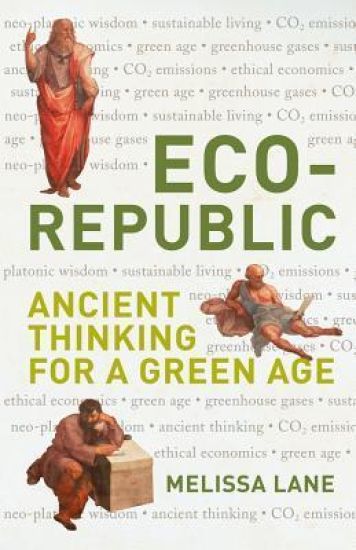
Eco-Republic

Eco-Republic

Melissa Lane

Princeton University Press
2011
sidottu
An ecologically sustainable society cannot be achieved without citizens who possess the virtues and values that will foster it, and who believe that individual actions can indeed make a difference. Eco-Republic draws on ancient Greek thought--and Plato's Republic in particular--to put forward a new vision of citizenship that can make such a society a reality. Melissa Lane develops a model of a society whose health and sustainability depend on all its citizens recognizing a shared standard of value and shaping their personal goals and habits accordingly. Bringing together the moral and political ideas of the ancients with the latest social and psychological theory, Lane illuminates the individual's vital role in social change, and articulates new ways of understanding what is harmful and what is valuable, what is a benefit and what is a cost, and what the relationship between public and private well-being ought to be. Eco-Republic reveals why we must rethink our political imagination if we are to meet the challenges of climate change and other urgent environmental concerns.Offering a unique reflection on the ethics and politics of sustainability, the book goes beyond standard approaches to virtue ethics in philosophy and current debates about happiness in economics and psychology. Eco-Republic explains why health is a better standard than happiness for capturing the important links between individual action and social good, and diagnoses the reasons why the ancient concept of virtue has been sorely neglected yet is more relevant today than ever.
Eco-Republic

Eco-Republic

Melissa Lane

Princeton University Press
2013
pokkari
An ecologically sustainable society cannot be achieved without citizens who possess the virtues and values that will foster it, and who believe that individual actions can indeed make a difference. Eco-Republic draws on ancient Greek thought--and Plato's Republic in particular--to put forward a new vision of citizenship that can make such a society a reality. Melissa Lane develops a model of a society whose health and sustainability depend on all its citizens recognizing a shared standard of value and shaping their personal goals and habits accordingly. Bringing together the moral and political ideas of the ancients with the latest social and psychological theory, Lane illuminates the individual's vital role in social change, and articulates new ways of understanding what is harmful and what is valuable, what is a benefit and what is a cost, and what the relationship between public and private well-being ought to be. Eco-Republic reveals why we must rethink our political imagination if we are to meet the challenges of climate change and other urgent environmental concerns.Offering a unique reflection on the ethics and politics of sustainability, the book goes beyond standard approaches to virtue ethics in philosophy and current debates about happiness in economics and psychology. Eco-Republic explains why health is a better standard than happiness for capturing the important links between individual action and social good, and diagnoses the reasons why the ancient concept of virtue has been sorely neglected yet is more relevant today than ever.
The Birth of Politics

The Birth of Politics

Melissa Lane

Princeton University Press
2016
pokkari
In The Birth of Politics, Melissa Lane introduces the reader to the foundations of Western political thought, from the Greeks, who invented democracy, to the Romans, who created a republic and then transformed it into an empire. Tracing the origins of our political concepts from Socrates to Plutarch to Cicero, Lane reminds us that the birth of politics was a story as much of individuals as ideas. Scouring the speeches of lawyers alongside the speculations of philosophers, and the reflections of ex-slaves next to the popular comedies and tragedies of the Greek and Roman stages, this book brings ancient ideas to life in unexpected ways.Lane shows how the Greeks and Romans defined politics with distinctive concepts, vocabulary, and practices-all of which continue to influence politics and political aspirations around the world today. She focuses on eight political ideas from the Greco-Roman world that are especially influential today: justice, virtue, constitution, democracy, citizenship, cosmopolitanism, republic, and sovereignty. Lane also describes how the ancient formulations of these ideas often challenge widely held modern assumptions-for example, that it is possible to have political equality despite great economic inequality, or that political regimes can be indifferent to the moral character of their citizens.A stimulating introduction to the origins of our political ideas and ideals, The Birth of Politics demonstrates how much we still have to learn from the political genius of the Greeks and Romans.
Of Rule and Office

Of Rule and Office

Melissa Lane

PRINCETON UNIVERSITY PRESS
2023
sidottu
A constitutionalist reading of Plato’s political thoughtPlato famously defends the rule of knowledge. Knowledge, for him, is of the good. But what is rule? In this study, Melissa Lane reveals how political office and rule were woven together in Greek vocabulary and practices that both connected and distinguished between rule in general and office as a constitutionally limited kind of rule in particular. In doing so, Lane shows Plato to have been deeply concerned with the roles and relationships between rulers and ruled. Adopting a longstanding Greek expectation that a ruler should serve the good of the ruled, Plato’s major political dialogues—the Republic, the Statesman, and Laws—explore how different kinds of rule might best serve that good. With this book, Lane offers the first account of the clearly marked vocabulary of offices at the heart of all three of these dialogues, explaining how such offices fit within the broader organization and theorizing of rule.Lane argues that taking Plato’s interest in rule and office seriously reveals tyranny as ultimately a kind of anarchy, lacking the order as well as the purpose of rule. When we think of tyranny in this way, we see how Plato invokes rule and office as underpinning freedom and friendship as political values, and how Greek slavery shaped Plato’s account of freedom. Reading Plato both in the Greek context and in dialogue with contemporary thinkers, Lane argues that rule and office belong at the center of Platonic, Greek, and contemporary political thought.
Of Rule and Office

Of Rule and Office

Melissa Lane

PRINCETON UNIVERSITY PRESS
2025
pokkari
A constitutionalist reading of Plato’s political thoughtPlato famously defends the rule of knowledge. Knowledge, for him, is of the good. But what is rule? In this study, Melissa Lane reveals how political office and rule were woven together in Greek vocabulary and practices that both connected and distinguished between rule in general and office as a constitutionally limited kind of rule in particular. In doing so, Lane shows Plato to have been deeply concerned with the roles and relationships between rulers and ruled. Adopting a longstanding Greek expectation that a ruler should serve the good of the ruled, Plato’s major political dialogues—the Republic, the Statesman, and Laws—explore how different kinds of rule might best serve that good. With this book, Lane offers the first account of the clearly marked vocabulary of offices at the heart of all three of these dialogues, explaining how such offices fit within the broader organization and theorizing of rule.Lane argues that taking Plato’s interest in rule and office seriously reveals tyranny as ultimately a kind of anarchy, lacking the order as well as the purpose of rule. When we think of tyranny in this way, we see how Plato invokes rule and office as underpinning freedom and friendship as political values, and how Greek slavery shaped Plato’s account of freedom. Reading Plato both in the Greek context and in dialogue with contemporary thinkers, Lane argues that rule and office belong at the center of Platonic, Greek, and contemporary political thought.
Plato's Progeny

Plato's Progeny

Melissa Lane

Bristol Classical Press
2001
nidottu
Socrates wrote nothing; Plato's accounts of Socrates helped to establish western politics, ethics, and metaphysics. Both have played crucial and dramatically changing roles in western culture. In the last two centuries, the triumph of democracy has led many to side with the Athenians against a Socrates whom they were right to kill. Meanwhile, the Cold War gave us polar images of Plato as both a dangerous totalitarian and an escapist intellectual. This book is framed by accounts of modern responses to the trials of Socrates and the ironies of Socratic inquiry. At its centre are two chapters exploring the idea of Platonic 'origins' in philosophy, and of Platonic 'foundations' for philosophical politics, as these have been read by Coleridge, Nietzsche, Heidegger, Popper, and Murdoch among others. Melissa Lane argues that the search for Platonic origins is an artefact of post-modern literalism. Yet images of Socratic inquiry can still invigorate our ethics and politics.
Eco-Republic

Eco-Republic

Melissa Lane

Peter Lang Ltd
2011
sidottu
Climate change and sustainability are the issues du jour, and they are not likely to go off the agenda any time soon. In this age of competing politics and policies, with limited resources and often limited will to make change, what can we learn from ancient wisdom and philosophy to humankind's benefit? Climate change and sustainability are not just technical problems or problems in applied ethics: they require a new political imagination, which this book illuminates. Professor Melissa Lane identifies key messages - on the role of the individual, the household, the nature of citizenship, and the significance of the imagination - which bring the wisdom of the past to bear on the challenges of the present. Using these resources, and building on these insights this book is a call to action from the past, to a present understanding of political thought and ethical wellbeing. Drawing on Plato's Republic as a model while also challenging aspects of Platonic politics, the book sets out the political and psychological challenges that we face in moving beyond the psycho-political settlement of modern commercial society.