Kirjojen hintavertailu. Mukana 12 373 230 kirjaa ja 12 kauppaa.

Kirjahaku

Etsi kirjoja tekijän nimen, kirjan nimen tai ISBN:n perusteella.

15 kirjaa tekijältä Melville

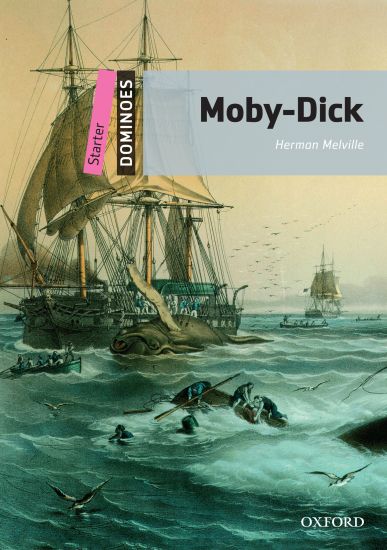
Dominoes: One: Moby Dick

Dominoes: One: Moby Dick

Melville

Oxford University Press
2014
nidottu
Dominoes is a full-colour, interactive readers series that offers students a fun reading experience while building their language skills. With integrated activities, an interactive MultiROM, and exciting, fully dramatized audio for every story, the new edition of the series makes reading motivating for students while making it easy for you to develop their reading and language skills.
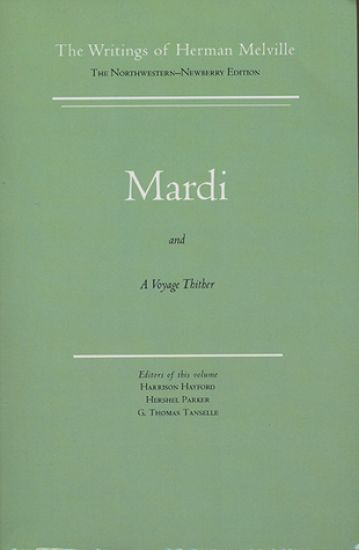
Mardi

Mardi

Melville

Northwestern University Press
1970
nidottu
Presented as narratives of his own South Sea experiences, Melville's first two books had roused incredulity in many readers. Their disbelief, he declared, had been "the main inducement" in altering his plan for his third book, Mardi: and a Voyage Thither (1849). Melville wanted to exploit the "rich poetical material" of Polynesia and also to escape feeling "irked, cramped, & fettered" by a narrative of facts. "I began to feel . . . a longing to plume my pinions for a flight," he told his English publisher. This scholarly edition aims to present a text as close to the author's intention as surviving evidence permits. Based on collations of all editions publishing during Melville's lifetime, it incorporates author corrections and many emendations made by the present editors. This edition of Mardi is an Approved Text of the Center for Editions of American Authors (Modern Language Association of America).
Mardi

Mardi

Melville

Northwestern University Press
1970
sidottu
Presented as narratives of his own South Sea experiences, Melville's first two books had roused incredulity in many readers. Their disbelief, he declared, had been "the main inducement" in altering his plan for his third book, "Mardi: and a Voyage Thither "(1849). Melville wanted to exploit the "rich poetical material" of Polynesia and also to escape feeling "irked, cramped, & fettered" by a narrative of facts. "I began to feel . . . a longing to plume my pinions for a flight," he told his English publisher. This scholarly edition aims to present a text as close to the author's intention as surviving evidence permits. Based on collations of all editions publishing during Melville's lifetime, it incorporates author corrections and many emendations made by the present editors. This edition of "Mardi" is an Approved Text of the Center for Editions of American Authors (Modern Language Association of America).
Moby-Dick, or the Whale

Moby-Dick, or the Whale

Melville

Northwestern University Press
1988
sidottu
In Moby Dick Melville set out to write a mighty book on a mighty theme. The editors of this critical text affirm that he succeeded. Nevertheless, their prolonged examination of the novel reveals textual flaws and anomalies that help to explain Melville's fears that his great work was in some ways a hash or a botch. A lengthy historical note also gives a fresh account of Melville's earlier literary career and his working conditions as he wrote; it also analyzes the book's contemporary reception and outlines how it finally achieved fame. Other sections review theories of the book's genesis, detail the circumstances of its publication, and present documents closely relating to the story. This scholarly edition is based on collations of both editions published during Melville's lifetime, it adopts 185 revisions and corrections from the English edition and incorporates 237 emendations by the series editors. This is an Approved Text of the Center for Editions of American Authors (Modern Language Association of America).
Moby-Dick, or the Whale

Moby-Dick, or the Whale

Melville

Northwestern University Press
1988
nidottu
In Moby Dick Melville set out to write a "mighty book" on "a mighty theme." The editors of this critical text affirm that he succeeded. Nevertheless, their prolonged examination of the novel reveals textual flaws and anomalies that help to explain Melville's fears that his great work was in some ways a hash or a botch. A lengthy historical note also gives a fresh account of Melville's earlier literary career and his working conditions as he wrote; it also analyzes the book's contemporary reception and outlines how it finally achieved fame. Other sections review theories of the book's genesis, detail the circumstances of its publication, and present documents closely relating to the story. This scholarly edition is based on collations of both editions published during Melville's lifetime, it adopts 185 revisions and corrections from the English edition and incorporates 237 emendations by the series editors. This is an Approved Text of the Center for Editions of American Authors (Modern Language Association of America).
The Confidence Man

The Confidence Man

Melville

Northwestern University Press
1984
nidottu
Long considered Melville's strangest novel, The Confidence-Man is a comic allegory aimed at the optimism and materialism of mid-nineteenth century America. A shape-shifting Confidence-Man approaches passengers on a Mississippi River steamboat and, winning over his not-quite-innocent victims with his charms, urges each to trust in the cosmos, in nature, and even in human nature--with predictable results. In Melville's time the book was such a failure he abandoned fiction writing for twenty years; only in the twentieth century did critics celebrate its technical virtuosity, wit, comprehensive social vision, and wry skepticism. This scholarly edition includes a Historical Note offering a detailed account of the novel's composition, publication, reception, and subsequent critical history. In addition the editors present the twenty-six surviving manuscript leaves and scraps with full transcriptions and analytical commentary. This scholarly edition aims to present a text as close to the author's intention as surviving evidence permits. Based on collations of both editions publishing during Melville's lifetime, it incorporates 138 emendations made by the present editors. It is an Approved Text of the Center for Editions of American Authors (Modern Language Association of America).
Piazza Tales and Other Prose Pieces, 1839--1860

Piazza Tales and Other Prose Pieces, 1839--1860

Melville

Northwestern University Press
1987
nidottu
In this new edition of The Piazza Tales, the editors of the acclaimed Northwestern-Newberry Edition of the Writings of Herman Melville have used the original magazine versions for five of the six stories in order to present the most accurate tests of these works. Here, in such famous stories as "Bartleby, the Scrivener" and "The Encantadas, or Enchanted Isles," we find Melville's imagination and style at its best. Of the less well known tales, the humor in "The Piazza" and "The Lightning-Rod Man," and the gothic horror of "The Bell Tower," command attention as well. Whether in the exotic Galapagos or the more familiar climes of Wall Street or a Massachusetts farmhouse, Melville's power and imagination transport the reader into his unique worlds. This scholarly edition presents texts as close to the author's intentions as surviving evidence permits. Based on surviving manuscripts, on original newspaper and magazine printings, and on collations of magazine printings with the book of editions of The Piazza Tales, the text incorporates over 800 emendations by the editors and over 200 from later printings during Melville's lifetime. This edition is an Approved Text of the Center for Editions of American Authors (Modern Language Association of America).
Clarel

Clarel

Melville

Northwestern University Press
1991
sidottu
Melville's long poem Clarel: A Poem and Pilgrimage in the Holy Land (1876) was the last full-length book he published. Until the mid-twentieth century even the most partisan of Melville's advocates hesitated to endure a four-part poem of 150 cantos of almost 18,000 lines, about a naive American named Clarel, on pilgrimage through the Palestinian ruins with a provocative cluster of companions. But modern critics have found Clarel a much better poem than was ever realized. Robert Penn Warren called it a precursor of The Waste Land. It abounds with revelations of Melville's inner life. Most strikingly, it is argued that the character Vine is a portrait of Melville's friend Hawthorne. Based on the only edition published during Melville's lifetime, this scholarly edition adopts thirty-nine corrections from a copy marked by Melville and incorporates 154 emendations by the present editors, an also includes a section of related documents and extensive discussions. This scholarly edition is an Approved Text of the Center for Editions of American Authors (Modern Language Association of America).
Clarel

Clarel

Melville

Northwestern University Press
1991
sidottu
Melville's long poem Clarel: A Poem and Pilgrimage in the Holy Land (1876) was the last full-length book he published. Until the mid-twentieth century even the most partisan of Melville's advocates hesitated to endure a four-part poem of 150 cantos of almost 18,000 lines, about a naive American named Clarel, on pilgrimage through the Palestinian ruins with a provocative cluster of companions. But modern critics have found Clarel a much better poem than was ever realized. Robert Penn Warren called it a precursor of The Waste Land. It abounds with revelations of Melville's inner life. Most strikingly, it is argued that the character Vine is a portrait of Melville's friend Hawthorne. Based on the only edition published during Melville's lifetime, this scholarly edition adopts thirty-nine corrections from a copy marked by Melville and incorporates 154 emendations by the present editors, an also includes a section of related documents and extensive discussions. This scholarly edition is an Approved Text of the Center for Editions of American Authors (Modern Language Association of America).
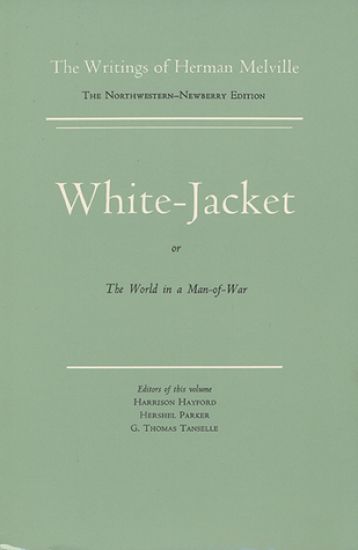
White-Jacket

White-Jacket

Melville

Northwestern University Press
1970
nidottu
Herman Melville wrote White-Jacket; or, The World in a Man-of-War during two months of intense work in the summer of 1849. He drew upon his memories of naval life, having spent fourteen months as an ordinary seaman aboard a frigate as it sailed the Pacific and made the homeward voyage around Cape Horn. Already that same summer Melville had written Redburn, and he regarded the books as two jobs, which I have done for money--being forced to it, as other men are to sawing wood. The reviewers were not as hard on White-Jacket as Melville himself was. The English liked its praise of British seamen. The Americans were more interested in Melville's attack on naval abuses, particularly flogging, and his advocacy of humanitarian causes. Soon Melville was acclaimed the best sea writer of the day. Part autobiography, part epic fiction, White-Jacket remains a brilliantly imaginative social novel by one of the great writers of the sea. This text of the novel is an Approved Text of the Center for Editions of American Authors (Modern Language Association of America).
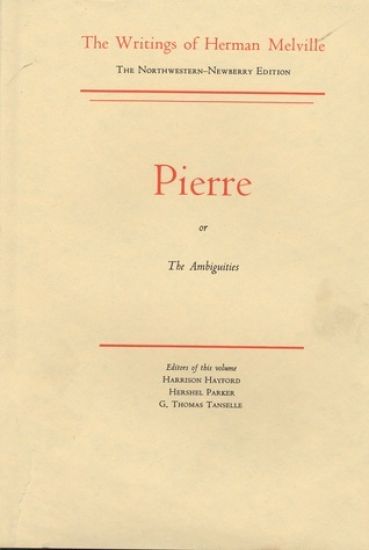
Pierre

Pierre

Melville

Northwestern University Press
1972
sidottu
Initially dismissed as a dead failure and a bad book, and declined by Melville's British publisher, Pierre, or The Ambiguities has since struck critics as modern in its psychological probings and literary technique--fit, as Carl Van Vechten said in 1922, to be ranked with The Golden Bowl, Women in Love, and Ulysses. None of Melville's other secondary works has so regularly been acknowledged by its most thorough critics as a work of genuine grandeur, however flawed. This scholarly edition aims to present a text as close to the author's intention as the surviving evidence permits. Based on collations of the two issues and the two impressions of the single edition publishing in Melville's lifetime, it incorporates necessary emendations made by the series editors. This text of Pierre is an Approved Text of the Center for Editions of American Authors (Modern Language Association of America).