Kirjojen hintavertailu. Mukana 11 244 527 kirjaa ja 12 kauppaa.

Kirjahaku

Etsi kirjoja tekijän nimen, kirjan nimen tai ISBN:n perusteella.

3 kirjaa tekijältä Melvin R. Gilmore

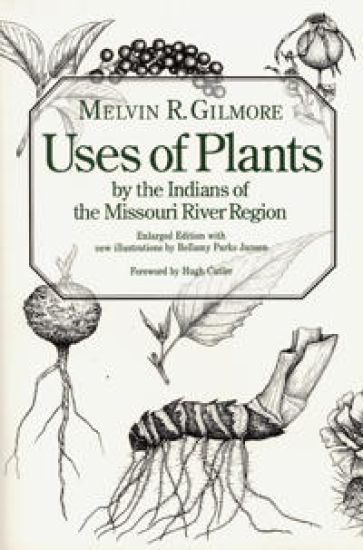
Uses of Plants by the Indians of the Missouri River Region

Uses of Plants by the Indians of the Missouri River Region

Melvin R. Gilmore

University of Nebraska Press
1991
pokkari
A classic of ethnobotany, Uses of Plants by the Indians of the Missouri River Region has been enlarged for this Bison Book edition with thirty drawings, by Bellamy Parks Jansen, of plants discussed by Gilmore. The taxonomic glossary has been updated as well. Readers will find here, conveniently described, the uses that Plains Indians made of the wild plants they collected and of those plants they cultivated for food, clothing, medicine, and ornamentation. This fascinating book, originally published in 1919, reveals cultures that evolved in close harmony with their environment.

Prairie Smoke

Prairie Smoke

Melvin R. Gilmore

Minnesota Historical Society Press,U.S.
2002
nidottu
Tells the traditional stories and describes the lifeways of some of the first people of the Plains: the Pawnee, Sioux, Hidatsa, Mandan, Arikara, and Omaha Indians. Through these stories, readers learn of the essential ties Native peoples have to the land.
The Ethnobotanical Laboratory at the University of Michigan

The Ethnobotanical Laboratory at the University of Michigan

Melvin R. Gilmore

U of M Museum Anthro Archaeology
1932
nidottu
In 1932, with this slim but important volume, the University of Michigan Museum of Anthropology began its publication series. Melvin R. Gilmore, a preeminent ethnobotanist, joined the Museum as its first curator of ethnology in 1929 and in 1930 established the Ethnobotanical Laboratory: the largest such collection in North America. He became director of the laboratory in 1938. In this volume, he discusses the establishment of the laboratory and the importance of ethnobotanical research. Nearly a century later, the Ethnobotanical Laboratory is still unique for its extensive collection of archaeological and systematic comparative wood, seeds, and plant parts from around the world, and for its ethnographic examples of how traditional cultures collect, store, process, and use these plants.