The definitive life of Jefferson in one volume, this biography relates Jefferson's private life and thought to his prominent public position and reveals the rich complexity of his development. As Peterson explores the dominant themes guiding Jefferson's career--democracy, nationality, and enlightenment--and Jefferson's powerful role in shaping America, he simultaneously tells the story of nation coming into being.
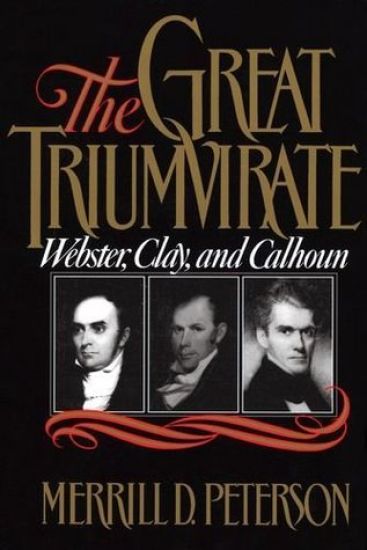
This is a joint biography of Daniel Webster, Henry Clay and John C. Calhoun, the most prominent of the second generation of American statesmen, from 1812 until 1850. It is at the same time a history of the America of the period: its political style and character, political ambition and reputation, success and failure, and ideas and interests. The three statesmen make a startling contrast - Webster, the staunch New England defender of the Union, Clay, first a `war hawk' and later a populist politician, and Calhoun, the foremost advocate of Southern separatism and slavery. Their political lives were intertwined during much of this period.
In tracing the changing image of Lincoln through time, this wide-ranging account offers insight into the evolution and struggles of American politics and society.
Dominated by the personalities of three towering figures of the nation's middle period - Henry Clay, John C. Calhoun, and President Andrew Jackson - Olive Branch and Sword: The Compromise of 1833 tells of the political and rhetorical dueling that brought about the Compromise of 1833, resolving the crisis of the Union caused by South Carolina's nullification of the protective tariff. In 1832 South Carolina's John C. Calhoun denounced the entire protectionist system as unconstitutional, unequal, and founded on selfish sectional interests. Opposing him was Henry Clay, the Kentucky senator and champion of the protectionists. Both Calhoun and Clay had presidential ambitions, and neither could agree on any issue save their common opposition to President Jackson, who seemed to favour a military solution to the South Carolina problem. It was only when Clay, after the most complicated maneuverings, produced the Compromise of 1833 that he, Calhoun, and Jackson could agree to coexist peaceably within the Union.The compromise consisted of two key parts. The Compromise Tariff, written by Clay and approved by Calhoun, provided for the gradual reduction of duties to the revenue level of 20 percent. The Force Bill, enacted at the request of President Jackson, authorized the use of military force, if necessary, to put down nullification in South Carolina. The two acts became, respectively, the olive branch and the sword of the compromise that preserved the peace, the Union, and the Constitution in 1833.A careful study of what has become a neglected event in American political history, Merrill D. Peterson's work spans a period of over thirty years - sketching the background of national policy out of which nullification arose, detailing the explosive events of 1832 and 1833, and then tracing the consequences of the compromise through the dozen or so years that it remained in public controversy. Considering as well the larger question of decision making and policy making in the Jacksonian republic, Peterson nonetheless never loses sight of the crucial role played by the ambitions, whims, and passions of such men as Calhoun, Clay, and Jackson in determining the course of history.
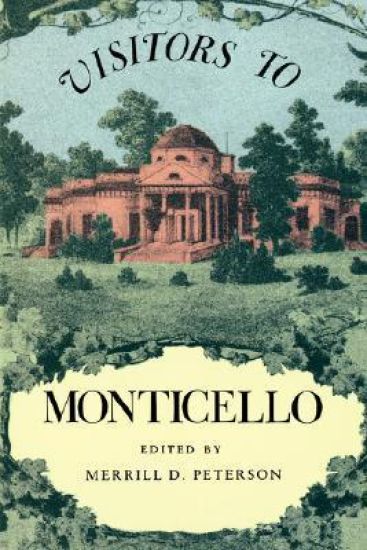
Many visitors over the generations have recorded their impressions of Monticello and its creator. These writings, especialy those from Jefferson's lifetime, preserve important details about him and the house and grounds that might otherwise have been lost. In Visitors to Monticello, Merrill D. Peterson provides a collegtion of thirty-five of these writings dating from 1780 to 1984.
Many visitors over the generations have recorded their impressions of Monticello and its creator. These writings, especialy those from Jefferson's lifetime, preserve important details about him and the house and grounds that might otherwise have been lost. In Visitors to Monticello, Merrill D. Peterson provides a collegtion of thirty-five of these writings dating from 1780 to 1984.
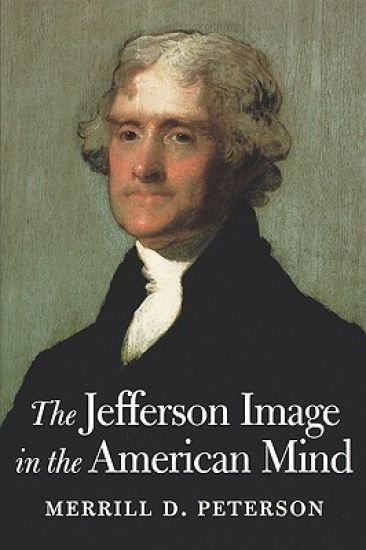
This text, first published in 1960, presents a study of Thomas Jefferson's posthumous reputation, and its influence on American imagination and political thought from the 1820s to the 1930s. It examines how Jefferson's reputation rose and fell and what this shows about America's evolving culture.
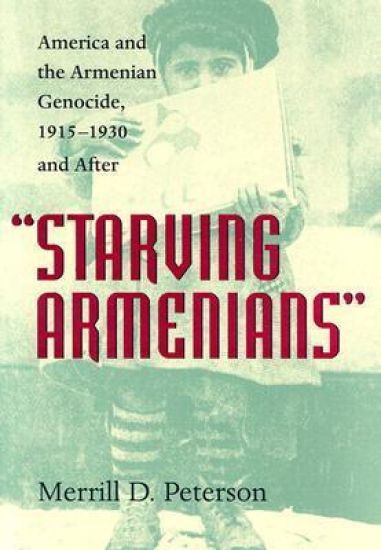
The persecution and suffering of the Armenian people, a religious and cultural minority in the Ottoman Empire, reached a peak in the era of World War I at the hands of the Turks. Between 1915 and 1925 as many as 1.5 million Armenian men, women, and children died in Ottoman Turkey, victims of execution, starvation, and death marches to the Syrian desert. In ""Starving Armenians,"" Merrill Peterson explores the American response to these atrocities, beginning with the initial reports to President Wilson from his Ambassador to the Ottoman Empire, Henry Morgenthau, who described Turkey as ""a place of horror."" The West gradually began to take notice. As the New York Times carried stories about the ""slow massacre of a race,"" public outrage over this tragedy led to an unprecedented philanthropic crusade spearheaded by Near East Relief, an organization rooted in Protestant missionary endeavors in the Near East and dedicated to saving the survivors of the first genocide of the twentieth century. The book also addresses the Armenian aspirations for an independent republic under American auspices; these hopes went unfulfilled in the peacemaking after the war and ended altogether when Armenia was absorbed into the Soviet Union. Part of a generation who were admonished as children to ""remember the starving Armenians,"" Peterson went to Armenia in 1997 as a Peace Corps volunteer and became fascinated by the country's troubled history. The extensive research he embarked upon afterwards revealed not only the scope of the people's hardship and amazing resilience; it located in the American effort to help the Armenians a unique perspective on our own nation's experience of the twentieth century. ""Starving Armenians"" is an eloquent narrative of an all but forgotten part of that experience.
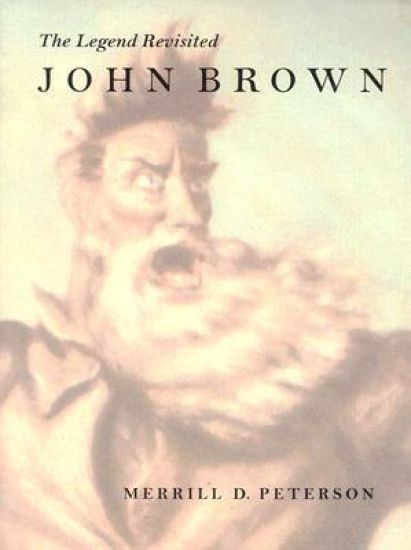
This work traces the legend of John Brown from his own era to the present day. The narrative flows between a discussion of the events of Brown's life and the dramatization of the events in prose, poetry and the visual arts.
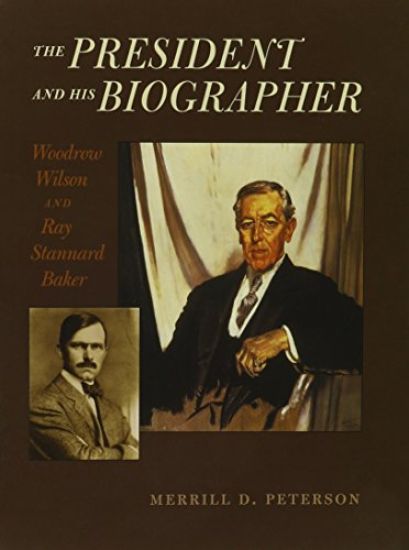
As his presidency drew to a close, Woodrow Wilson came to realize the claim history would soon have on the documentary record of his life and work, of which he had been a rather inattentive keeper. While some of his more important manuscripts had been kept at his home on S Street in Washington, D.C., approximately 200,000 papers were left behind in the basement of the White House. That is, until one of the president's longtime friends, the journalist and author Ray Stannard Baker, came forward spurred by an interest in Wilson and his involvement in the American Peace Commission in Paris in 1919. In ""The President and His Biographer: Woodrow Wilson and Ray Stannard Baker"", the renowned historian Merrill D. Peterson looks not just at Wilson's life and career, but also at the way Wilson was represented by Baker and other biographers, as well as in the media. Rather than addressing the voluminous Wilson historiography, Peterson bases his biographical study on primary sources - in particular the sixty-nine volumes of his Papers edited by Arthur Link and those compiled by Baker - providing a vivid and detailed narrative of our nation's twenty-eighth president. Making the reader constantly aware of the powerful filters through which we perceive historical figures, Peterson's vivid and detailed narrative of encounters between the idealistic Wilson and his even more idealistic biographer makes for absorbing reading. A sympathetic account of a controversial figure in American history, ""The President and His Biographer"" will appeal to anyone interested in Wilson and his time.