Pat Barker is one of the most important authors of her time. Her fiction has won many awards – including the Booker Prize for The Ghost Road, the last novel in her celebrated Regeneration trilogy – and has attracted much critical attention.This stimulating Guide examines the key critical responses to the full range of Barker's fiction, from newspaper reviews and journal articles to revealing interviews and book-length scholarship. Merritt Moseley also explores the central themes which run through Barker's novels and the criticism, such as the issues of gender, class, social realism, violence and trauma.Tracing the development of Barker's fiction through the surrounding critical works, this is an indispensable volume for anyone with an interest in one of Britain's most popular and widely-studied contemporary writers.
Pat Barker is one of the most important authors of her time. Her fiction has won many awards – including the Booker Prize for The Ghost Road, the last novel in her celebrated Regeneration trilogy – and has attracted much critical attention.This stimulating Guide examines the key critical responses to the full range of Barker's fiction, from newspaper reviews and journal articles to revealing interviews and book-length scholarship. Merritt Moseley also explores the central themes which run through Barker's novels and the criticism, such as the issues of gender, class, social realism, violence and trauma.Tracing the development of Barker's fiction through the surrounding critical works, this is an indispensable volume for anyone with an interest in one of Britain's most popular and widely-studied contemporary writers.
In this book, Merritt Moseley offers a brief history of the Booker Prize since 1992. With a short chapter covering each year, we follow the change in criteria, the highs and lows, short lists, winners, and controversies of the Booker Prize. The book also functions as an example of literary criticism for each of the books involved, analyzing the judging process and the winning books.Exploring themes such as literary vs. popular fiction, the role of Postcolonial work in what began as a very "British" prize, the role of marketing, publishing, and the Booker organization itself, the book offers a crucial view into literary prize culture. The book spends time looking at exclusions, as well as the overall role and function of the literary prize. What books aren’t included and why? Why has the Booker become so significant?This book will be of use to anyone with an interest in, or studying, contemporary literature, literary prizes, literary culture and British literature, as well as publishing studies.
In this book, Merritt Moseley offers a brief history of the Booker Prize since 1992. With a short chapter covering each year, we follow the change in criteria, the highs and lows, short lists, winners, and controversies of the Booker Prize. The book also functions as an example of literary criticism for each of the books involved, analyzing the judging process and the winning books.Exploring themes such as literary vs. popular fiction, the role of Postcolonial work in what began as a very "British" prize, the role of marketing, publishing, and the Booker organization itself, the book offers a crucial view into literary prize culture. The book spends time looking at exclusions, as well as the overall role and function of the literary prize. What books aren’t included and why? Why has the Booker become so significant?This book will be of use to anyone with an interest in, or studying, contemporary literature, literary prizes, literary culture and British literature, as well as publishing studies.
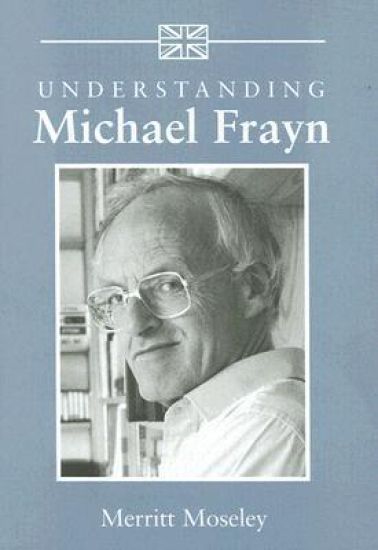
Best known for his play ""Noises Off"", Michael Frayn has garnered widespread critical acclaim and a number of literary honors for his work as a journalist, playwright, novelist, philosopher, and translator. Published in 2002, his novel ""Spies"" won the Booker Prize and was short-listed for the Whitbread Prize, and he presides as his generation's foremost translator of Anton Chekhov. In this comprehensive assessment of Frayn's varied body of work, Merritt Moseley introduces readers to the accomplishments of one of Britain's most versatile writers. Beginning with Frayn's humorous journalism, which was vital to the ""satire boom"" of the 1960s, Moseley assesses the entirety of the writer's literary contributions, including his works of philosophy and autobiography. One of the first scholars to consider Frayn seriously as a novelist, Moseley provides careful readings of his fiction, including ""The Tin Man"", ""Sweet Dreams"", and ""Headlong"". Moseley also explores Frayn's development as a playwright, beginning in 1970 with the critically panned ""The Two of Us"". From 1970 through 1990, Frayn knew remarkable success for such award-winning plays as ""Alphabetical Order"" and ""Make or Break"", as well as disastrous failure with ""Look Look"". Moseley follows Frayn's career through these highs and lows and beyond to discuss his work for television and the stage, particularly his triumphant recovery with the hit ""Copenhagen"".
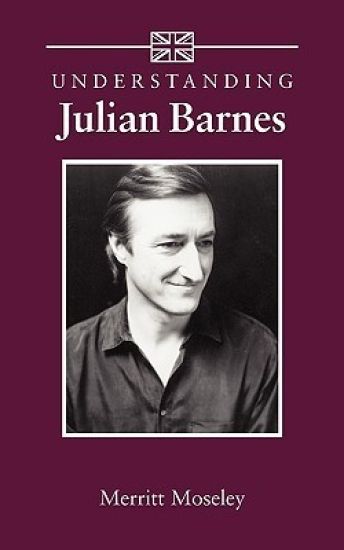
This is a telling assessment of the divergent works of a daring British writer. ""Understanding Julian Barnes"" surveys the career of an innovative British novelist who has been shortlisted for the Man Booker Prize on three occasions. In this analysis of Barnes' distinctive qualities and of his place in the British literary establishment, Merritt Moseley suggests that Barnes' greatest achievement is his ability to resist summary and categorization by imagining each book in a dramatically original way. In evaluating Barnes' fiction, Moseley discusses the novelist's admiration for Gustave Flaubert, identifies his technical and thematic concerns, and explores the intrigue surrounding his divided career as a writer of serious novels, published under his own name, and of detective thrillers, published under the pseudonym Dan Kavanagh.
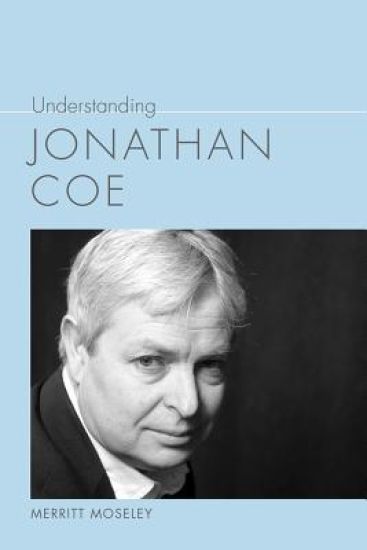
In Understanding Jonathan Coe, the first full-length study of the British novelist, Merritt Moseley surveys a writer whose experimental technique has become increasingly well received and critically admired. Coe is the recipient of the John Llewellyn Rhys Prize, the Prix Medicis, the Priz du Meilleur Livre Entranger, the Bollinger Everyman Wodehouse Prizes for Fiction, and the Samuel Johnson Prize for Nonfiction. His oeuvre includes eleven novels and three biographies--two of famous Hollywood actors Humphrey Bogart and Jimmy Stewart and one of English modernist novelist B. S. Johnson.Following an introductory overview of Coe's life and career, Moseley examines Coe's complex engagement with popular culture, his experimental technique, his political satire, and his broad-canvased depictions of British society. Though his first three books, An Accidental Woman, A Touch of Love, and The Dwarves of Death, received little notice upon publication, Moseley shows their strengths as literary works and as precursors. In 1994 Coe gained visibility with What a Carve Up!, which has remained his most admired and discussed novel. He has since published a postmodern take on sleep disorders and university students, The House of Sleep; a two-volume roman-fleuve consisting of The Rotters' Club and The Closed Circle; a touching account of a lonely woman's life, The Rain before It Falls; a satiric vision of a misguided life, The Terrible Privacy of Maxwell Sim; and a domestic comedy thriller set at the 1958 world's fair in Brussels, Expo '58. Moseley explicates these works and discusses the recurring features of Coe's fiction: political consciousness, a deep artistic concern with the form of fiction, and comedy.