Kirjojen hintavertailu. Mukana 11 699 587 kirjaa ja 12 kauppaa.

Kirjahaku

Etsi kirjoja tekijän nimen, kirjan nimen tai ISBN:n perusteella.

6 kirjaa tekijältä Mette Halskov Hansen

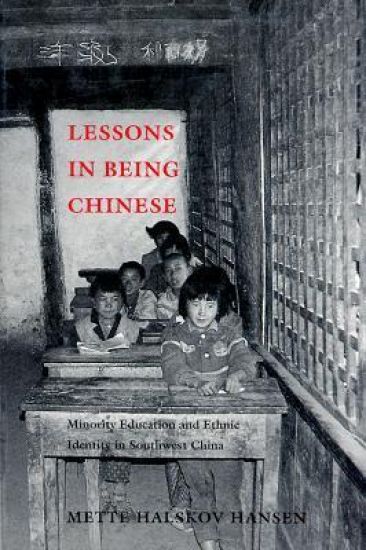
Lessons in Being Chinese

Lessons in Being Chinese

Mette Halskov Hansen

University of Washington Press
1999
pokkari
Open-access edition: DOI 10.6069/9780295804125Two very different ethnic minority communities—the Naxi of the Lijiang area in northern Yunnan and the Tai (Dai) of Sipsong Panna (Xishuangbanna), along Yunnan's border with Burma and Laos—are featured in this comparative study of the implementation and reception of state minority education policy in the People's Republic of China. Based on field research and historical sources, Lessons in Being Chinese argues that state policy, which is intended to be applied uniformly across all minority regions, in fact is much more successful in some than in others.In Lijiang, elite members of the Naxi ethnic group (minzu) have a centuries-old connection with Chinese state educational systems as avenues to social mobility, and have continued this tradition under Communist rule. They participate enthusiastically in the present system, using education to gain official and professional positions. In contrast to the Lijiang area, Sipsong Panna functioned in many ways as a separate kingdom until 1950, with its own script and a separate educational system centered in Theravada Buddhist monasteries. Today, many Tai in that area still prefer monastic education for their sons, and most parents are indifferent to state education.This study finds that standardized, homogenizing state education is in itself incapable of instilling in students an identification with the Chinese state, ironically often increasing ethnic identity. Lessons in Being Chinese enhances our understanding of how state policy toward minorities works in many areas of life, and its conclusions can be extended well beyond the sphere of education. It will be of interest to both anthropologists and educators.
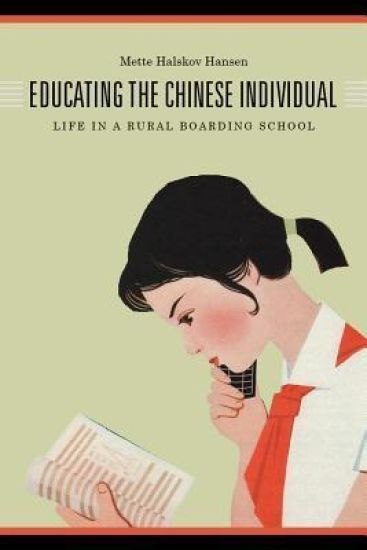
Educating the Chinese Individual

Educating the Chinese Individual

Mette Halskov Hansen

University of Washington Press
2015
sidottu
In twenty-first-century China, socialist educational traditions have given way to practices that increasingly emphasize the individual. This volume investigates that trend, drawing on Hansen's fieldwork in a rural high school in Zhejiang where students, teachers, and officials of different generations, genders, and social backgrounds form what is essentially a miniature version of Chinese society. Hansen paints a complex picture of the emerging "neosocialist" educational system and shows how individualization of students both challenges and reinforces state control of society.
Educating the Chinese Individual

Educating the Chinese Individual

Mette Halskov Hansen

University of Washington Press
2016
pokkari
In twenty-first-century China, socialist educational traditions have given way to practices that increasingly emphasize the individual. This volume investigates that trend, drawing on Hansen's fieldwork in a rural high school in Zhejiang where students, teachers, and officials of different generations, genders, and social backgrounds form what is essentially a miniature version of Chinese society. Hansen paints a complex picture of the emerging "neosocialist" educational system and shows how individualization of students both challenges and reinforces state control of society.
Lessons in Being Chinese

Lessons in Being Chinese

Mette Halskov Hansen

University of Washington Press
2015
sidottu
Open-access edition: DOI 10.6069/9780295804125Two very different ethnic minority communities—the Naxi of the Lijiang area in northern Yunnan and the Tai (Dai) of Sipsong Panna (Xishuangbanna), along Yunnan's border with Burma and Laos—are featured in this comparative study of the implementation and reception of state minority education policy in the People's Republic of China. Based on field research and historical sources, Lessons in Being Chinese argues that state policy, which is intended to be applied uniformly across all minority regions, in fact is much more successful in some than in others.In Lijiang, elite members of the Naxi ethnic group (minzu) have a centuries-old connection with Chinese state educational systems as avenues to social mobility, and have continued this tradition under Communist rule. They participate enthusiastically in the present system, using education to gain official and professional positions. In contrast to the Lijiang area, Sipsong Panna functioned in many ways as a separate kingdom until 1950, with its own script and a separate educational system centered in Theravada Buddhist monasteries. Today, many Tai in that area still prefer monastic education for their sons, and most parents are indifferent to state education.This study finds that standardized, homogenizing state education is in itself incapable of instilling in students an identification with the Chinese state, ironically often increasing ethnic identity. Lessons in Being Chinese enhances our understanding of how state policy toward minorities works in many areas of life, and its conclusions can be extended well beyond the sphere of education. It will be of interest to both anthropologists and educators.
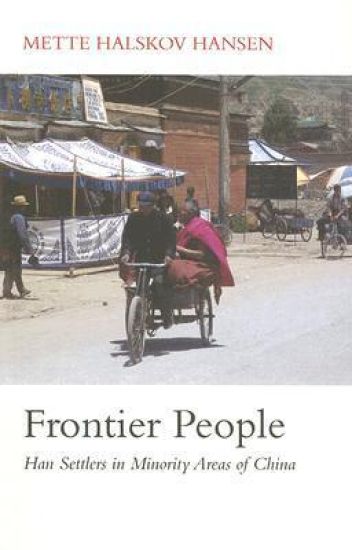
Frontier People: Han Settlers in Minority Areas of China

Frontier People: Han Settlers in Minority Areas of China

Mette Halskov Hansen

University of British Columbia Press
2006
nidottu
Frontier People shows how the Han themselves have been directly involved in the process of transformation within these areas where they have settled. Their perceptions of the minority natives, their "old home," other immigrants, and their own role in the areas are examined in relation to the official discourse on the migrations. This study contests conventional ways of presenting Han immigrants in minority areas as a homogeneous group of colonizers with shared identification, equal class status, and access to power.
Frontier People

Frontier People

Mette Halskov Hansen

C Hurst Co Publishers Ltd
2005
sidottu
Aims to contest conventional ways of presenting Han immigrants in minority areas as a homogenous group of colonisers with shared identification, equal status and access to power. This book demonstrates that the category of 'Han immigrants' is fragmented in terms of generation, ethnic identification, migration history, class and economic activity.