Kirjojen hintavertailu. Mukana 12 083 983 kirjaa ja 12 kauppaa.

Kirjahaku

Etsi kirjoja tekijän nimen, kirjan nimen tai ISBN:n perusteella.

7 kirjaa tekijältä Mette Hjort

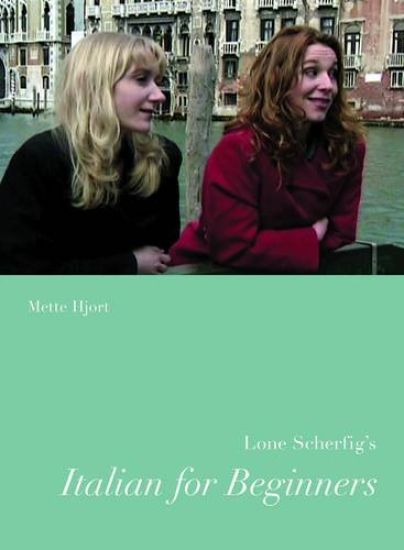
Lone Scherfig's Italian for Beginners

Lone Scherfig's Italian for Beginners

Mette Hjort

University of Washington Press
2015
sidottu
Lone Scherfig was the first of a number of women directors to take up the challenge of Dogme, the back-to-basics, manifesto-based, rule-governed, and now globalized film initiative introduced by Danish filmmakers Lars von Trier and Thomas Vinterberg in 1995. Entitled Italiensk for begyndere (Italian for Beginners), Scherfig's Dogme film transformed this already accomplished filmmaker into one of Europe's most noteworthy women directors. Danish and international critics lavished praise on Scherfig and her film, and their reactions harmonized with those of festival juries.Battered by life, but by no means defeated or destroyed, the characters in Italian for Beginners are all in touch at some deep intuitive level with the truth that is the film's basic message: that happiness and a sense of self-worth are sustained by love--whether romantic love or that of a community of like-minded people. The film struck an important chord with viewers precisely because it took Dogme in a new direction, one that reflects Scherfig's sensibilities and preferences as a woman.The book includes the Dogme manifesto and draws on interviews with the filmmaker as well as with the cast and crew.Watch the book trailer: https://www.youtube.com/watch?v=gk7SGfrIHGA
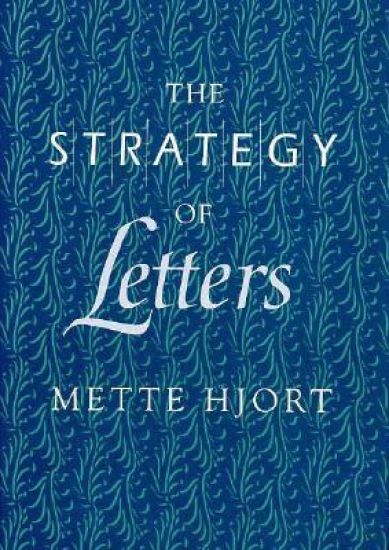
The Strategy of Letters

The Strategy of Letters

Mette Hjort

Harvard University Press
1993
sidottu
Although literary theories describe a world of strategies—textual, discursive, interpretive, and political—what is missing is the strategist. Poststructuralists try to explain agency as the effect of large-scale systems or formations; as a result, intuitions about individual action and responsibility are expressed in terms of impersonal strategies. Mette Hjort's book responds to this situation by proposing an alternative account of strategic action, one that brings the strategist back into the picture.Hjort analyzes influential statements made by Derrida, Foucault, and others to show how proposed conceptions of strategy are contradictory, underdeveloped, and at odds with the actual use of the term. Why, then, has the term acquired such rhetorical force? Since “strategy” evokes conflict, Hjort suggests, its very use calls into question various pieties of idealism and humanism, and emphasizes a desired break between modernism and postmodernism. It follows that a theory of strategy must explore some of the psychological implications of conflict, and Hjort pursues these implications through traditions as diverse as game theory, discourse ethics, and the philosophy of war. Unstable frames, self deception, promiscuous pragmatism, and social emotion are some of the phenomena she explores as she develops her account of strategic action in the highly competitive domain of letters.In her reflection on strategy, Hjort draws on such literary examples as Troilus and Cressida, Tartuffe, the autobiographical writings of Holberg, and early modern French and English treatises on theater. For its well-informed and incisive arguments and literary historical case studies, this book will be invaluable to literary theorists and will appeal to readers interested in drama, philosophy and literature, aesthetics, and theories of agency and rationality.
Film and Risk

Film and Risk

Mette Hjort

Wayne State University Press
2012
nidottu
The phenomenon of risk has been seriously neglected in connection with the study of film, yet many of those who write about film seem to have intuitions about how various forms of risk-taking shape aspects of the filmmaking or film-viewing process. Film and Risk fills this gap as editor Mette Hjort and interdisciplinary contributors discuss film's relation to all types of risk. Bringing together scholars from philosophy, anthropology, film studies, economics, and cultural studies, as well as experts from the fields of law, filmmaking, and photojournalism, this volume discusses risk from multiple intriguing angles. In thirteen chapters, contributors consider concrete risks (e.g., stunts or financial decisions); theoretical aesthetic and artistic risks (e.g., filmmakers who incorporate excessive hazards into their films); and the real-world jeopardy spectators might put themselves in when viewing films. The first three chapters tackle the conceptual terrain that is relevant to understanding risk in film. The next three chapters focus on risk as it pertains to the practice of filmmaking. Subsequent chapters deal with economic risk and the role that risk has in the development of film's institutional landscape. The scholarship in this collection is impressive, boasting some of the top writers in their respective fields.Through the contributors' clear and thorough discussions, this cohesive but diverse collection shows that risk arises in many different areas that tend to be thought of as central to film studies. Scholars of film studies will appreciate this daring and inventive collection, and readers with a general interest in film studies will enjoy its accessible style.
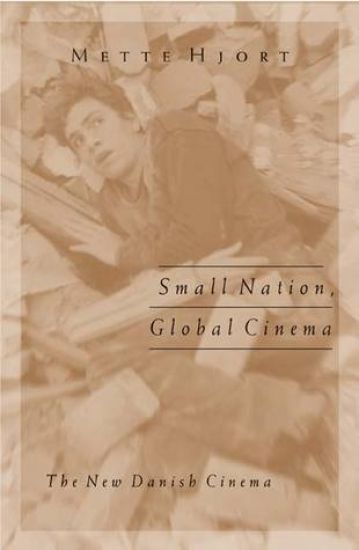
Small Nation, Global Cinema

Small Nation, Global Cinema

Mette Hjort

University of Minnesota Press
2005
nidottu
Small Nation, Global Cinema engages the effects of globalization from the perspective of small nations. Focusing her study on the specific cultural context of the international film market, Mette Hjort argues that the New Danish Cinema presents an opportunity to understand the effects of globalization within the culture and economy of a privileged small nation. Hjort offers two key strategies underwriting the transformation and globalization of contemporary Danish cinema—the processes of cultural circulation and the psychological efficacy of heritage. Exploring the Dogma 95 movement initiated by Lars von Trier and Thomas Vinterberg as well as films by Erik Clausen, Gabriel Axel, Henning Carlsen, and Ole Bornedal, among others, Hjort examines means for cinematic globalization specific to Denmark, but then evolves her investigation into a truly comparative framework encompassing references to Hong Kong, Latin America, and Hollywood filmmaking. Providing a fresh way of looking at cultural influence in the era of globalization, Hjort's concept of "small" nation points as much to the dynamics of recognition, indifference, and participation as it does to more common measures of population size, economic strength, or linguistic reach. Mette Hjort is professor of intercultural studies at Aalborg University.
Lone Scherfig's Italian for Beginners

Lone Scherfig's Italian for Beginners

Mette Hjort

Museum Tusculanum Press
2010
pokkari
Battered by life, but by no means defeated or destroyed, this title features characters who are all in touch at some deep intuitive level with the truth that is the film's basic message: that happiness and a sense of self-worth are sustained by loveoby romantic love, to be sure, but also by inclusion in a community of like-minded people.
Lone Scherfig's Italian for Beginners

Lone Scherfig's Italian for Beginners

Mette Hjort

University of Washington Press
2010
pokkari
Lone Scherfig was the first of a number of women directors to take up the challenge of Dogme, the back-to-basics, manifesto-based, rule-governed, and now globalized film initiative introduced by Danish filmmakers Lars von Trier and Thomas Vinterberg in 1995. Entitled Italiensk for begyndere (Italian for Beginners), Scherfig's Dogme film transformed this already accomplished filmmaker into one of Europe's most noteworthy women directors. Danish and international critics lavished praise on Scherfig and her film, and their reactions harmonized with those of festival juries. Battered by life, but by no means defeated or destroyed, the characters in Italian for Beginners are all in touch at some deep intuitive level with the truth that is the film's basic message: that happiness and a sense of self-worth are sustained by love--whether romantic love or that of a community of like-minded people. The film struck an important chord with viewers precisely because it took Dogme in a new direction, one that reflects Scherfig's sensibilities and preferences as a woman. The book includes the Dogme manifesto and draws on interviews with the filmmaker as well as with the cast and crew. Watch the book trailer: https://www.youtube.com/watch?v=gk7SGfrIHGA