Do you remember getting up on a Saturday morning to watch Going Live? A time when scrunchies and curtains were the height of cool? Playing Sonic the Hedgehog on your Sega Mega Drive? Then the chances are you were a child in the nineties. This trip down memory lane will jog the memory of even the coolest 30-year-old, and make you long for the days when Gladiators was on the telly and the Spice Girls spiced up your life.
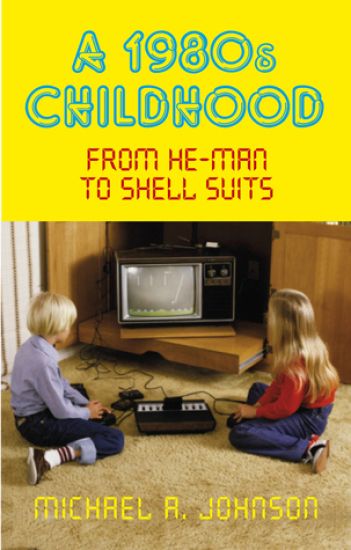
Do you remember trying to solve the Rubik’s cube whilst dressed in your He-Man picture pyjamas?Did you try to make ‘cool’ sound effects with your mouth like Jones from Police Academy?Or maybe you swooned over Scott and Charlene’s (aka Jason and Kylie’s) wedding of the year?If that sounds like you, there’s no mistaking you were a child of the eighties. Rev up your DeLorean, switch on the Flux Capacitor and take a cruise back through the decade that made you the person you are today. This amusing and entertaining collection of reminiscences will jog the memories of all who grew up in the same decade where greed was good, mullets were cool and white dog poo littered the streets.
1. The main category of the book: Effective High School Building Leadership. 2. Other subject categories: Preparation for the School Principal's Certification Exam and the School Building Appointment Interview; School Supervision and Administrative Leadership; The Criteria for Selecting and Evaluating a School Principal, Job Requirements, and the Job Analysis of the Principalship; The Structure, Functional Components, and Organizational Elements of a High School; Effectively Managing Administrative and Instructional Practices That Raise Student Academic Achievement; Effective Organizational and Institutional Leadership.
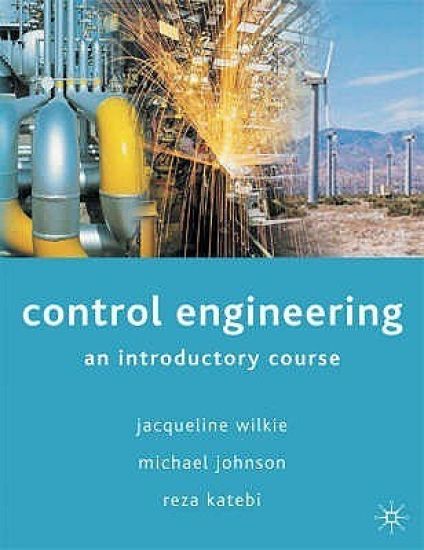
Control Engineering "An Introductory Course" is aimed at second or third year courses in Electrical and Mechanical Engineering, and provides for the needs of these courses without being over-burdened with detail.The authors work in one of the foremost centres in Europe for Control Engineering, and bring both teaching and practical consultancy experience to the text, which links theoretical approaches to actual case histories. Including an introduction to the software tools of MATLAB and SIMULINK, this book also includes simulations and examples throughout, and will give a straightforward and no-nonsense introduction to Control Engineering for students, and those wishing to refresh their knowledge.
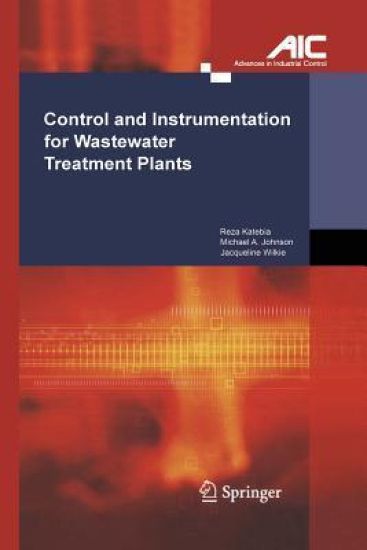
The series Advances in Industrial Control aims to report and encourage technology transfer in control engineering. The rapid development of control technology impacts all areas of the control discipline. New theory, new controllers, actuators, sensors, new industrial processes, computer methods, new applications, new philosophies…, new challenges. Much of this development work resides in industrial reports, feasibility study papers and the reports of advanced collaborative projects. The series offers an opportunity for researchers to present an extended exposition of such new work in all aspects of industrial control for wider and rapid dissemination. The environmental aspects of all of our society’s activities are extremely important if the countryside; the sea and wildernesses are to be fully enjoyed by future generations. Urban waste in all its manifestations presents a particularly difficult disposal problem, which must be tackled conscientiously to prevent long lasting damage to the environment. Technological solutions should be seen as part of the available options. In this monograph, the authors M. R. Katebi, M. A. Johnson and J. Wilkie seek to introduce a comprehensive technological framework to the particular measurement and control problems of wastewater processing plants. Of course the disposal of urban sewage is a long-standing process but past solutions have used options (disposal at sea) which are no longer acceptable. Thus to meet new effluent regulations it is necessary to develop a new technological paradigm based on process control methods, and this is what the authors attempt to provide.
The series Advances in Industrial Control aims to report and encourage technology transfer in control engineering. The rapid development of control technology impacts all areas of the control discipline. New theory, new controllers, actuators, sensors, new industrial processes, computer methods, new applications, new philosophies…, new challenges. Much of this development work resides in industrial reports, feasibility study papers and the reports of advanced collaborative projects. The series offers an opportunity for researchers to present an extended exposition of such new work in all aspects of industrial control for wider and rapid dissemination. The environmental aspects of all of our society’s activities are extremely important if the countryside; the sea and wildernesses are to be fully enjoyed by future generations. Urban waste in all its manifestations presents a particularly difficult disposal problem, which must be tackled conscientiously to prevent long lasting damage to the environment. Technological solutions should be seen as part of the available options. In this monograph, the authors M. R. Katebi, M. A. Johnson and J. Wilkie seek to introduce a comprehensive technological framework to the particular measurement and control problems of wastewater processing plants. Of course the disposal of urban sewage is a long-standing process but past solutions have used options (disposal at sea) which are no longer acceptable. Thus to meet new effluent regulations it is necessary to develop a new technological paradigm based on process control methods, and this is what the authors attempt to provide.
Many large-scale processes like refineries or power generation plant are constructed using the multi-vendor system and a main co-ordinating engineering contractor. With such a methodology. the key process units are installed complete with local proprietary control systems in place. Re-assessing the so called lower level control loop design or structure is becoming less feasible or desirable. Consequently, future comp~titive gains in large-scale industrial systems will arise from the closer and optimised global integration of the process sub-units. This is one of the inherent commercial themes which motivated the research reported in this monograph. To access the efficiency and feasibility of different large-scale system designs, the traditional tool has been the global steady-state analysis and energy balance. The process industries have many such tools encapsu lated as proprietary design software. However, to obtain a vital and critical insight into global process operation a dynamic model and simulation is necessary. Over the last decade, the whole state of the art in system simulation has irrevocably changed. The Graphical User Interface (G UI) and icon based simulation approach is now standard with hardware platforms becoming more and more powerful. This immediately opens the way to some new and advanced large-scale dynamic simulation developments. For example, click-together blocks from standard or specialised libraries of process units are perfectly feasible now.