Kirjojen hintavertailu. Mukana 12 390 323 kirjaa ja 12 kauppaa.

Kirjahaku

Etsi kirjoja tekijän nimen, kirjan nimen tai ISBN:n perusteella.

15 kirjaa tekijältä Michael A. Arbib

A Programming Approach to Computability

A Programming Approach to Computability

A.J. Kfoury; Robert N. Moll; Michael A. Arbib

Springer-Verlag New York Inc.
2011
nidottu
Computability theory is at the heart of theoretical computer science. Yet, ironically, many of its basic results were discovered by mathematical logicians prior to the development of the first stored-program computer. As a result, many texts on computability theory strike today's computer science students as far removed from their concerns. To remedy this, we base our approach to computability on the language of while-programs, a lean subset of PASCAL, and postpone consideration of such classic models as Turing machines, string-rewriting systems, and p. -recursive functions till the final chapter. Moreover, we balance the presentation of un solvability results such as the unsolvability of the Halting Problem with a presentation of the positive results of modern programming methodology, including the use of proof rules, and the denotational semantics of programs. Computer science seeks to provide a scientific basis for the study of information processing, the solution of problems by algorithms, and the design and programming of computers. The last 40 years have seen increasing sophistication in the science, in the microelectronics which has made machines of staggering complexity economically feasible, in the advances in programming methodology which allow immense programs to be designed with increasing speed and reduced error, and in the develop­ ment of mathematical techniques to allow the rigorous specification of program, process, and machine.
When Brains Meet Buildings

When Brains Meet Buildings

Michael A. Arbib

Oxford University Press Inc
2021
sidottu
After decades of research on minds and brains and a decade of conversations with architects, Michael Arbib presents When Brains Meet Buildings as an invitation to the science behind architecture, richly illustrated with buildings both famous and domestic. As he converses with the reader, he presents action-oriented perception, memory, and imagination as well as atmosphere, aesthetics, and emotion as keys to analyzing the experience and design of architecture. He also explores what it might mean for buildings to have "brains" and illuminates all this with an appreciation of the biological and cultural evolution that supports the diverse modes of human living that we know today. These conversations will not only raise the level of interaction between architecture and neuroscience but, by explaining the world of each group to the other, will also engage all readers who share a fascination with both the brains within them and the buildings around them. Michael Arbib is a pioneer in the interdisciplinary study of computers and brains and has long studied brain mechanisms underlying the visual control of action. His expertise makes him a unique authority on the intersection of architecture and neuroscience.
How the Brain Got Language

How the Brain Got Language

Michael A. Arbib

Oxford University Press Inc
2012
sidottu
This book explains how the human brain evolved to make language possible and how cultural evolution took over from biological evolution during the transition from basic forms of communication to fully fledged languages. Basing his argument on the latest research in neuroscience, linguistics, and primatology, Michael Arbib presents an up-to-the-minute version of a theory that offers insights into the evolutionary importance of the brain's mirror neurons that enable monkeys, chimps, and humans to recognize the actions of others. Only in humans have these evolved to allow the "complex imitation" which supports the breakthrough to language. This theory, he shows, lights the path from the simple manual gesture we share with apes, to the imitation of manual skills and pantomime, and to the development of sign language and speech. It also explains why we can learn sign languages as easily as we can learn to speak. The author looks at how the brain mechanisms that made the original emergence of fully-fledged languages possible are still active in the ways that children acquire language today and sign languages continue to emerge. He also shows their crucial role in the processes by which languages change on time scales from decades to centuries. This book explains how the brain evolved to make language Michael Arbib provides nonspecialist readers with all the necessary background in primatology, neuroscience, and linguistics. His compelling account of this fascinating subject is fully accessible to a general audience.
In Search of the Person

In Search of the Person

Michael A. Arbib

University of Massachusetts Press
1985
nidottu
For twenty-five years Michael Arbib has been studying the workings of the human brain and developing new approaches to the design of intelligent machines. These concerns have often led him to ponder philosophical questions about the nature of mind and knowledge. In this book, Arbib offers a stimulating, speculative discussion of cognitive science and its relation to larger philosophical and social issues. Arbib proposes a theory of mental schemas to explain how the individual brain represents the world around it. He builds on Piaget's studies of how children learn and on his own work in brain theory and artificial intelligence to show how the concept of schemas an be used to link cognitive science to the study of persons in society. He then employs this schema theory as a way of looking at various constructions of reality, including those of Chomsky, Freud, Marx, and Habermas. In the final chapter, he addresses the question of human freedom and suggests a means of avoiding the apparent limitations of mechanistic explanations for human mental processes.
Brains, Machines, and Mathematics

Brains, Machines, and Mathematics

Michael A. Arbib

Springer-Verlag New York Inc.
2011
nidottu
This is a book whose time has come-again. The first edition (published by McGraw-Hill in 1964) was written in 1962, and it celebrated a number of approaches to developing an automata theory that could provide insights into the processing of information in brainlike machines, making it accessible to readers with no more than a college freshman's knowledge of mathematics. The book introduced many readers to aspects of cybernetics-the study of computation and control in animal and machine. But by the mid-1960s, many workers abandoned the integrated study of brains and machines to pursue artificial intelligence (AI) as an end in itself-the programming of computers to exhibit some aspects of human intelligence, but with the emphasis on achieving some benchmark of performance rather than on capturing the mechanisms by which humans were themselves intelligent. Some workers tried to use concepts from AI to model human cognition using computer programs, but were so dominated by the metaphor "the mind is a computer" that many argued that the mind must share with the computers of the 1960s the property of being serial, of executing a series of operations one at a time. As the 1960s became the 1970s, this trend continued. Meanwhile, experi­ mental neuroscience saw an exploration of new data on the anatomy and physiology of neural circuitry, but little of this research placed these circuits in the context of overall behavior, and little was informed by theoretical con­ cepts beyond feedback mechanisms and feature detectors.
Neural Organization

Neural Organization

Michael A. Arbib; Peter Erdi; Alice Szentagothai

Bradford Books
1997
pokkari
In Neural Organization, Arbib, Erdi, and Szentagothai integrate structural, functional, and dynamical approaches to the interaction of brain models and neurobiologcal experiments.In Neural Organization, Arbib, Erdi, and Szentagothai integrate structural, functional, and dynamical approaches to the interaction of brain models and neurobiologcal experiments. Both structure-based "bottom-up" and function- based "top-down" models offer coherent concepts by which to evaluate the experimental data. The goal of this book is to point out the advantages of a multidisciplinary, multistrategied approach to the brain. Part I of Neural Organization provides a detailed introduction to each of the three areas of structure, function, and dynamics. Structure refers to the anatomical aspects of the brain and the relations between different brain regions. Function refers to skills and behaviors, which are explained by means of functional schemas and biologically based neural networks. Dynamics refers to the use of a mathematical framework to analyze the temporal change of neural activities and synaptic connectivities that underlie brain development and plasticity-in terms of both detailed single-cell models and large-scale network models. In part II, the authors show how their systematic approach can be used to analyze specific parts of the nervous system-the olfactory system, hippocampus, thalamus, cerebral cortex, cerebellum, and basal ganglia-as well as to integrate data from the study of brain regions, functional models, and the dynamics of neural networks. In conclusion, they offer a plan for the use of their methods in the development of cognitive neuroscience.
The Construction of Reality

The Construction of Reality

Michael A. Arbib; Mary B. Hesse

Cambridge University Press
2008
pokkari
In this book, Michael Arbib, a researcher in artificial intelligence and brain theory, joins forces with Mary Hesse, a philosopher of science, to present an integrated account of how humans 'construct' reality through interaction with the social and physical world around them. The book is a major expansion of the Gifford Lectures delivered by the authors at the University of Edinburgh in the autumn of 1983. The authors reconcile a theory of the individual's construction of reality as a network of schemas 'in the head' with an account of the social construction of language, science, ideology and religion to provide an integrated schema-theoretic view of human knowledge. The authors still find scope for lively debate, particularly in their discussion of free will and of the reality of God. The book integrates an accessible exposition of background information with a cumulative marshalling of evidence to address fundamental questions concerning human action in the world and the nature of ultimate reality.
The Construction of Reality

The Construction of Reality

Michael A. Arbib; Mary B. Hesse

Cambridge University Press
1986
sidottu
In this book, Michael Arbib, a researcher in artificial intelligence and brain theory, joins forces with Mary Hesse, a philosopher of science, to present an integrated account of how humans ‘construct’ reality through interaction with the social and physical world around them. The book is a major expansion of the Gifford Lectures delivered by the authors at the University of Edinburgh in the autumn of 1983. The authors reconcile a theory of the individual’s construction of reality as a network of schemas ‘in the head’ with an account of the social construction of language, science, ideology, and religion to provide an integrated schema-theoretic view of human knowledge. The authors still find scope for lively debate, particularly in their discussion of free will and of the reality of God. The book integrates an accessible exposition of background information with a cumulative marshalling of evidence to address fundamental questions concerning human action in the world and the nature of ultimate reality.
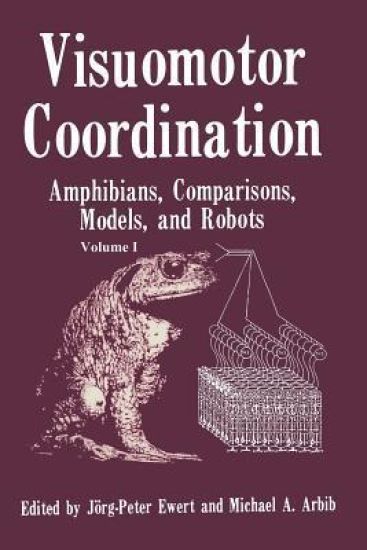
Visuomotor Coordination

Visuomotor Coordination

Jorg Peter Ewert; Michael A. Arbib

Kluwer Academic/Plenum Publishers
1989
sidottu
Various brain areas of mammals can phyletically be traced back to homologous structures in amphibians. The amphibian brain may thus be regarded as a kind of "microcosm" of the highly complex primate brain, as far as certain homologous structures, sensory functions, and assigned ballistic (pre-planned and pre-pro­ grammed) motor and behavioral processes are concerned. A variety of fundamental operations that underlie perception, cognition, sensorimotor transformation and its modulation appear to proceed in primate's brain in a way understandable in terms of basic principles which can be investigated more easily by experiments in amphibians. We have learned that progress in the quantitative description and evaluation of these principles can be obtained with guidance from theory. Modeling - supported by simulation - is a process of transforming abstract theory derived from data into testable structures. Where empirical data are lacking or are difficult to obtain because of structural constraints, the modeler makes assumptions and approximations that, by themselves, are a source of hypotheses. If a neural model is then tied to empirical data, it can be used to predict results and hence again to become subject to experimental tests whose resulting data in tum will lead to further improvements of the model. By means of our present models of visuomotor coordination and its modulation by state-dependent inputs, we are just beginning to simulate and analyze how external information is represented within different brain structures and how these structures use these operations to control adaptive behavior.
The Design of Well-Structured and Correct Programs

The Design of Well-Structured and Correct Programs

Suad Alagic; Michael A. Arbib

Springer-Verlag New York Inc.
2011
nidottu
The major goal of this book is to present the techniques of top-down program design and verification of program correctness hand-in-hand. It thus aims to give readers a new way of looking at algorithms and their design, synthesizing ten years of research in the process. It provides many examples of program and proof development with the aid of a formal and informal treatment of Hoare's method of invariants. Modem widely accepted control structures and data structures are explained in detail, together with their formal definitions, as a basis for their use in the design of correct algorithms. We provide and apply proof rules for a wide range of program structures, including conditionals, loops, procedures and recur­ sion. We analyze situations in which the restricted use of gotos can be justified, providing a new approach to proof rules for such situations. We study several important techniques of data structuring, including arrays, files, records and linked structures. The secondary goal of this book is to teach the reader how to use the programming language Pascal. This is the first text to teach Pascal pro­ gramming in a fashion which not only includes advanced algorithms which operate on advanced data structures, but also provides the full axiomatic definition of Pascal due to Wirth and Hoare. Our approach to the language is very different from that of a conventional programming text.
Visuomotor Coordination

Visuomotor Coordination

Jorg Peter Ewert; Michael A. Arbib

Springer-Verlag New York Inc.
2013
nidottu
Various brain areas of mammals can phyletically be traced back to homologous structures in amphibians. The amphibian brain may thus be regarded as a kind of "microcosm" of the highly complex primate brain, as far as certain homologous structures, sensory functions, and assigned ballistic (pre-planned and pre-pro­ grammed) motor and behavioral processes are concerned. A variety of fundamental operations that underlie perception, cognition, sensorimotor transformation and its modulation appear to proceed in primate's brain in a way understandable in terms of basic principles which can be investigated more easily by experiments in amphibians. We have learned that progress in the quantitative description and evaluation of these principles can be obtained with guidance from theory. Modeling - supported by simulation - is a process of transforming abstract theory derived from data into testable structures. Where empirical data are lacking or are difficult to obtain because of structural constraints, the modeler makes assumptions and approximations that, by themselves, are a source of hypotheses. If a neural model is then tied to empirical data, it can be used to predict results and hence again to become subject to experimental tests whose resulting data in tum will lead to further improvements of the model. By means of our present models of visuomotor coordination and its modulation by state-dependent inputs, we are just beginning to simulate and analyze how external information is represented within different brain structures and how these structures use these operations to control adaptive behavior.
Foundations of System Theory: Finitary and Infinitary Conditions

Foundations of System Theory: Finitary and Infinitary Conditions

Brian Anderson; Michael A. Arbib; E. G. Manes

Springer-Verlag Berlin and Heidelberg GmbH Co. K
1976
nidottu
This paper is one of a series in which the ideas of category theory are applied to problems of system theory. As with the three principal earlier papers, [1-3], the emphasis is on study of the realization problem, or the problem of associating with an input-output description of a system an internal description with something analogous to a state-space. In this paper, several sorts of machines will be discussed, which arrange themselves in the following hierarchy: Input process Machine Output process (Tree automaton) Machine ~ ~ State-behavior Machine I Adjoint Machine .(Sequential Machine) ., I Decomposable Machine (Linear System, Group Machine) Each member of the hierarchy includes members below it; examples are included in parentheaes, and each example is at its lowest possible point in the hierarchy. There are contrived examples of output process machines and IV state-behavior machines which are not adjoint machines [3], but as yet, no examples with the accepted stature of linear systems [4], group machines [5, 6], sequential machines [7, Ch. 2], and tree automata [7, Ch. 4].
Embodiments of Mind

Embodiments of Mind

Warren S. McCulloch; Michael A. Arbib; Jerome Y. Lettvin

MIT Press
2016
pokkari
Writings by a thinker-a psychiatrist, a philosopher, a cybernetician, and a poet-whose ideas about mind and brain were far ahead of his time.Warren S. McCulloch was an original thinker, in many respects far ahead of his time. McCulloch, who was a psychiatrist, a philosopher, a teacher, a mathematician, and a poet, termed his work "experimental epistemology." He said, "There is one answer, only one, toward which I've groped for thirty years: to find out how brains work." Embodiments of Mind, first published more than fifty years ago, teems with intriguing concepts about the mind/brain that are highly relevant to recent developments in neuroscience and neural networks. It includes two classic papers coauthored with Walter Pitts, one of which applies Boolean algebra to neurons considered as gates, and the other of which shows the kind of nervous circuitry that could be used in perceiving universals. These first models are part of the basis of artificial intelligence.Chapters range from "What Is a Number, that a Man May Know It, and a Man, that He May Know a Number," and "Why the Mind Is in the Head," to "What the Frog's Eye Tells the Frog's Brain" (with Jerome Lettvin, Humberto Maturana, and Walter Pitts), "Machines that Think and Want," and "A Logical Calculus of the Ideas Immanent in Nervous Activity" (with Walter Pitts). Embodiments of Mind concludes with a selection of McCulloch's poems and sonnets. This reissued edition offers a new foreword and a biographical essay by McCulloch's one-time research assistant, the neuroscientist and computer scientist Michael Arbib.
Algebraic Approaches to Program Semantics

Algebraic Approaches to Program Semantics

Ernest G. Manes; Michael A. Arbib

Springer-Verlag New York Inc.
2014
nidottu
In the 1930s, mathematical logicians studied the notion of "effective comput­ ability" using such notions as recursive functions, A-calculus, and Turing machines. The 1940s saw the construction of the first electronic computers, and the next 20 years saw the evolution of higher-level programming languages in which programs could be written in a convenient fashion independent (thanks to compilers and interpreters) of the architecture of any specific machine. The development of such languages led in turn to the general analysis of questions of syntax, structuring strings of symbols which could count as legal programs, and semantics, determining the "meaning" of a program, for example, as the function it computes in transforming input data to output results. An important approach to semantics, pioneered by Floyd, Hoare, and Wirth, is called assertion semantics: given a specification of which assertions (preconditions) on input data should guarantee that the results satisfy desired assertions (postconditions) on output data, one seeks a logical proof that the program satisfies its specification. An alternative approach, pioneered by Scott and Strachey, is called denotational semantics: it offers algebraic techniques for characterizing the denotation of (i. e. , the function computed by) a program-the properties of the program can then be checked by direct comparison of the denotation with the specification. This book is an introduction to denotational semantics. More specifically, we introduce the reader to two approaches to denotational semantics: the order semantics of Scott and Strachey and our own partially additive semantics.
An Introduction to Formal Language Theory

An Introduction to Formal Language Theory

Robert N. Moll; Michael A. Arbib; A.J. Kfoury

Springer-Verlag New York Inc.
2012
nidottu
The study of formal languages and of related families of automata has long been at the core of theoretical computer science. Until recently, the main reasons for this centrality were connected with the specification and analy­ sis of programming languages, which led naturally to the following ques­ tions. How might a grammar be written for such a language? How could we check whether a text were or were not a well-formed program generated by that grammar? How could we parse a program to provide the structural analysis needed by a compiler? How could we check for ambiguity to en­ sure that a program has a unique analysis to be passed to the computer? This focus on programming languages has now been broadened by the in­ creasing concern of computer scientists with designing interfaces which allow humans to communicate with computers in a natural language, at least concerning problems in some well-delimited domain of discourse. The necessary work in computational linguistics draws on studies both within linguistics (the analysis of human languages) and within artificial intelligence. The present volume is the first textbook to combine the topics of formal language theory traditionally taught in the context of program­ ming languages with an introduction to issues in computational linguistics. It is one of a series, The AKM Series in Theoretical Computer Science, designed to make key mathematical developments in computer science readily accessible to undergraduate and beginning graduate students.