Kirjojen hintavertailu. Mukana 12 016 292 kirjaa ja 12 kauppaa.

Kirjahaku

Etsi kirjoja tekijän nimen, kirjan nimen tai ISBN:n perusteella.

3 kirjaa tekijältä Michael A. Chaney

Fugitive Vision

Fugitive Vision

Michael A. Chaney

Indiana University Press
2009
pokkari
Analyzing the impact of black abolitionist iconography on early black literature and the formation of black identity, Fugitive Vision examines the writings of Frederick Douglass, William Wells Brown, William and Ellen Craft, and Harriet Jacobs, and the slave potter David Drake. Juxtaposing pictorial and literary representations, the book argues that the visual offered an alternative to literacy for current and former slaves, whose works mobilize forms of illustration that subvert dominant representations of slavery by both apologists and abolitionists. From a portrait of Douglass's mother as Ramses to the incised snatches of proverb and prophecy on Dave the Potter's ceramics, the book identifies a "fugitive vision" that reforms our notions of antebellum black identity, literature, and cultural production.
Reading Lessons in Seeing

Reading Lessons in Seeing

Michael A. Chaney

University Press of Mississippi
2017
sidottu
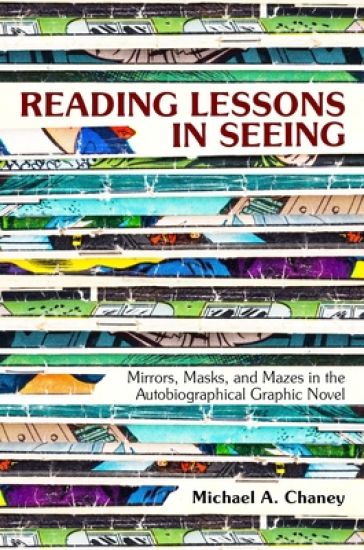
Literary scholar Michael A. Chaney examines graphic novels to illustrate that in form and function they inform readers on how they ought to be read. His arguments result in an innovative analysis of the various knowledges that comics produce and the methods artists and writers employ to convey them. Theoretically eclectic, this study attends to the lessons taught by both the form and content of today's most celebrated graphic novels.Chaney analyzes the embedded lessons in comics and graphic novels through the form's central tropes: the iconic child storyteller and the inherent childishness of comics in American culture; the use of mirrors and masks as ciphers of the unconscious; embedded puzzles and games in otherwise story-driven comic narratives; and the form's self-reflexive propensity for showing its work. Comics reveal the labor that goes into producing them, embedding lessons on how to read the ""work"" as a whole.Throughout, Chaney draws from a range of theoretical insights from psychoanalysis and semiotics to theories of reception and production from film studies, art history, and media studies. Some of the major texts examined include Marjane Satrapi's Persepolis; Chris Ware's Jimmy Corrigan: The Smartest Kid on Earth; Joe Sacco's Palestine; David B.'s Epileptic; Kyle Baker's Nat Turner; and many more. As Chaney's examples show, graphic novels teach us even as they create meaning in their infinite relay between words and pictures.
Reading Lessons in Seeing

Reading Lessons in Seeing

Michael A. Chaney

University Press of Mississippi
2018
nidottu
Literary scholar Michael A. Chaney examines graphic novels to illustrate that in form and function they inform readers on how they ought to be read. His arguments result in an innovative analysis of the various knowledges that comics produce and the methods artists and writers employ to convey them. Theoretically eclectic, this study attends to the lessons taught by both the form and content of today's most celebrated graphic novels.Chaney analyzes the embedded lessons in comics and graphic novels through the form's central tropes: the iconic child storyteller and the inherent childishness of comics in American culture; the use of mirrors and masks as ciphers of the unconscious; embedded puzzles and games in otherwise story-driven comic narratives; and the form's self-reflexive propensity for showing its work. Comics reveal the labor that goes into producing them, embedding lessons on how to read the ""work"" as a whole.Throughout, Chaney draws from a range of theoretical insights from psychoanalysis and semiotics to theories of reception and production from film studies, art history, and media studies. Some of the major texts examined include Marjane Satrapi's Persepolis; Chris Ware's Jimmy Corrigan: The Smartest Kid on Earth; Joe Sacco's Palestine; David B.'s Epileptic; Kyle Baker's Nat Turner; and many more. As Chaney's examples show, graphic novels teach us even as they create meaning in their infinite relay between words and pictures.