Kirjojen hintavertailu. Mukana 12 016 292 kirjaa ja 12 kauppaa.

Kirjahaku

Etsi kirjoja tekijän nimen, kirjan nimen tai ISBN:n perusteella.

6 kirjaa tekijältä Michael A. Elliott

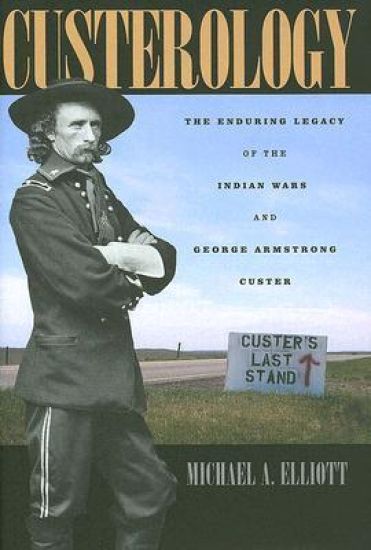
Custerology

Custerology

Michael A. Elliott

University of Chicago Press
2007
sidottu
On a hot summer day in 1876, George Armstrong Custer led the Seventh Cavalry to the most famous defeat in U.S. military history. Outnumbered and exhausted, the Seventh Cavalry lost more than half of its four hundred men, and every soldier under Custer's direct command was killed.It's easy to understand why this tremendous defeat shocked the American public at the time. But with "Custerology", Michael A. Elliott tackles the far more complicated question of why the battle still haunts the American imagination today. Weaving vivid historical accounts of Custer at Little Bighorn with contemporary commemorations that range from battle reenactments to the unfinished Crazy Horse memorial, Elliott reveals a Custer and a West whose legacies are still vigorously contested. He takes readers to each of the important places of Custer's life, from his Civil War home in Michigan to the site of his famous demise, and introduces us to Native American activists, Park Service rangers, and devoted history buffs along the way. Throughout, Elliott shows how Custer and the Indian Wars continue to be both a powerful symbol of America's bloody past and a crucial key to understanding the nation's multicultural present.
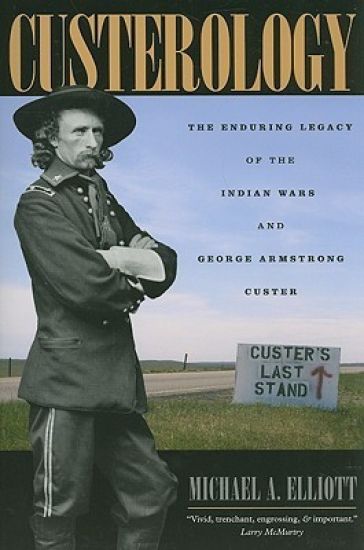
Custerology

Custerology

Michael A. Elliott

University of Chicago Press
2008
nidottu
On a hot summer day in 1876, George Armstrong Custer led the Seventh Cavalry to the most famous defeat in U.S. military history. Outnumbered and exhausted, the Seventh Cavalry lost more than half of its four hundred men, and every soldier under Custer's direct command was killed.It's easy to understand why this tremendous defeat shocked the American public at the time. But with "Custerology", Michael A. Elliott tackles the far more complicated question of why the battle still haunts the American imagination today. Weaving vivid historical accounts of Custer at Little Bighorn with contemporary commemorations that range from battle reenactments to the unfinished Crazy Horse memorial, Elliott reveals a Custer and a West whose legacies are still vigorously contested. He takes readers to each of the important places of Custer's life, from his Civil War home in Michigan to the site of his famous demise, and introduces us to Native American activists, Park Service rangers, and devoted history buffs along the way. Throughout, Elliott shows how Custer and the Indian Wars continue to be both a powerful symbol of America's bloody past and a crucial key to understanding the nation's multicultural present.
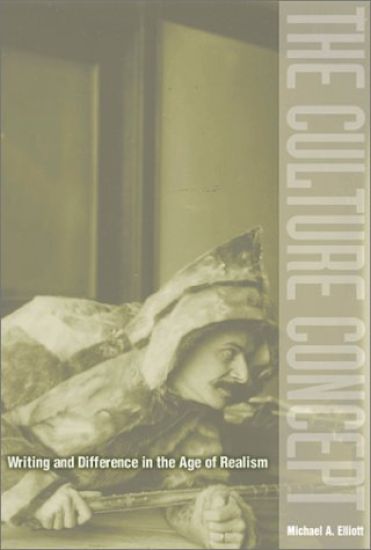
Culture Concept

Culture Concept

Michael A. Elliott

University of Minnesota Press
2002
sidottu
"Culture" is a term we commonly use to explain the differences in our ways of living. In this book Michael A. Elliott returns to the moment this usage was first articulated, tracing the concept of culture to the writings -- folktales, dialect literature, local color sketches, and ethnographies -- that provided its intellectual underpinnings in turn-of-the-century America.The Culture Concept explains how this now-familiar definition of "culture" emerged during the late nineteenth century through the intersection of two separate endeavors that shared a commitment to recording group-based difference -- American literary realism and scientific ethnography. Elliott looks at early works of cultural studies as diverse as the conjure tales of Charles Chesnutt, the Ghost-Dance ethnography of James Mooney, and the prose narrative of the Omaha anthropologist-turned-author Francis La Flesche. His reading of these works -- which struggle to find appropriate theoretical and textual tools for articulating a less chauvinistic understanding of human difference -- is at once a recovery of a lost connection between American literary realism and ethnography and a productive inquiry into the usefulness of the culture concept as a critical tool in our time and times to come.
Culture Concept

Culture Concept

Michael A. Elliott

University of Minnesota Press
2002
nidottu
Examines the prehistory of the American struggle to address cultural difference."Culture" is a term we commonly use to explain the differences in our ways of living. In this book Michael A. Elliott returns to the moment this usage was first articulated, tracing the concept of culture to the writings-folktales, dialect literature, local color sketches, and ethnographies-that provided its intellectual underpinnings in turn-of-the-century America. The Culture Concept explains how this now-familiar definition of "culture" emerged during the late nineteenth century through the intersection of two separate endeavors that shared a commitment to recording group-based difference-American literary realism and scientific ethnography. Elliott looks at early works of cultural studies as diverse as the conjure tales of Charles Chesnutt, the Ghost Dance ethnography of James Mooney, and the prose narrative of the Omaha anthropologist-turned-author Francis La Flesche. His reading of these works-which struggle to find appropriate theoretical and textual tools for articulating a less chauvinistic understanding of human difference-is at once a recovery of a lost connection between American literary realism and ethnography and a productive inquiry into the usefulness of the culture concept as a critical tool in our time and times to come.