Kirjojen hintavertailu. Mukana 12 390 323 kirjaa ja 12 kauppaa.

Kirjahaku

Etsi kirjoja tekijän nimen, kirjan nimen tai ISBN:n perusteella.

36 kirjaa tekijältä Michael A. Peters

Wittgenstein’s Education: 'A Picture Held Us Captive’

Wittgenstein’s Education: 'A Picture Held Us Captive’

Michael A. Peters; Jeff Stickney

Springer Verlag, Singapore
2018
nidottu
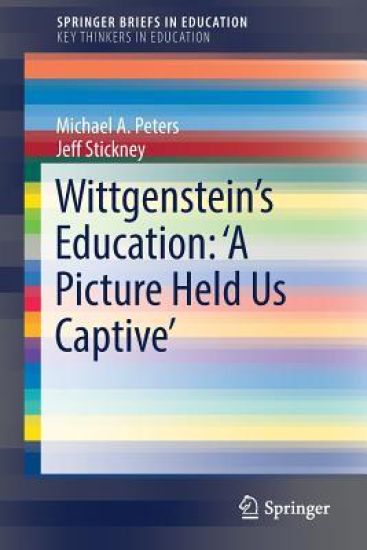
Dedicated to educators who are not philosophy specialists, this book offers an overview of the connections between Wittgenstein’s later philosophy and his own training and practice as an educator. Arguing for the centrality of education to Wittgenstein’s life and works, the authors resist any reduction of Wittgenstein’s philosophy to remarks on pedagogy while addressing the current controversy surrounding the role of training in the enculturation process. Significant events in his education and life are examined as the background for successful interpretation, without lending biographical details explanatory force. The book discusses the importance of Wittgenstein’s training and dismissal as an elementary teacher (1920-26) in light of his later, frequent use (1930s-40s) of many ‘scenes of instruction’ in his Cambridge lectures and notebooks. These depictions culminated in his now famous Philosophical Investigations -- a counter to his earlier philosophy in the Tractatus. Wittgenstein came to distinguish between empirical inquiries into how education, language or mathematics might ideally work, from grammatical studies of how we learn on the rough ground to normatively go-on as others do – often without explicit rules and with considerable degrees of ambiguity, for instance, in implementing new guidelines during a curriculum reform or in evaluating teachers. The book argues that Wittgenstein’s reflections on education -- spanning from mathematics training to the acquisition of language and cultivation of aesthetic appreciation -- are of central significance to both the man and his pedagogical style of philosophy.
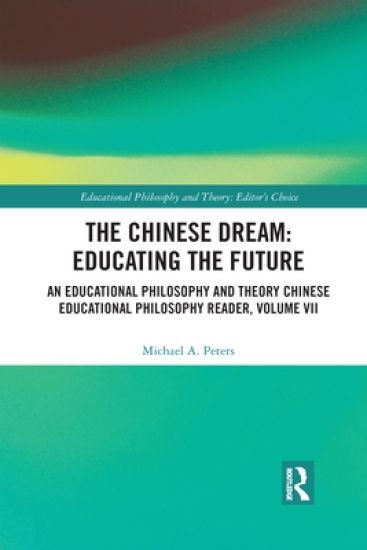
The Chinese Dream: Educating the Future

The Chinese Dream: Educating the Future

Michael A. Peters

Routledge
2019
sidottu
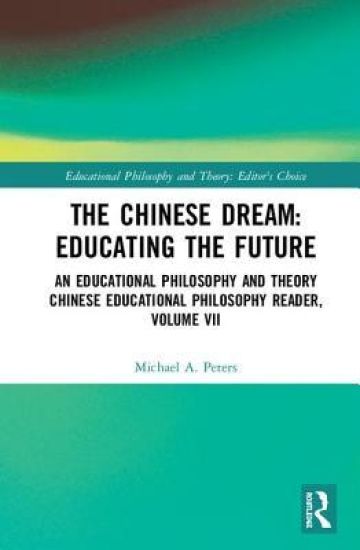
This edited collection is based on a series of articles written by Michael A Peters as Editor-in-Chief of Educational Philosophy and Theory to explore the concept of The Chinese Dream first introduced by President Xi in 2012. This seventh volume in the Editor's Choice series provides a philosophical and historical analysis of The Chinese Dream by analyzing its major intersecting narratives - liberal, Confucian and Marxist. With chapters covering higher education strategy, social governance, socialist rule of law, the US-China trade war, technological unemployment and the emergence of the Chinese techno-state, this volume also offers an introduction to Chinese philosophy and history, and its narrative re-crafting that presents China as a global power. The author calls this process and the emerging Chinese narratives 'Educating the Future'.
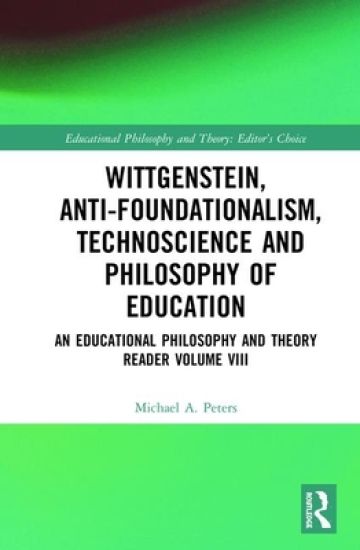
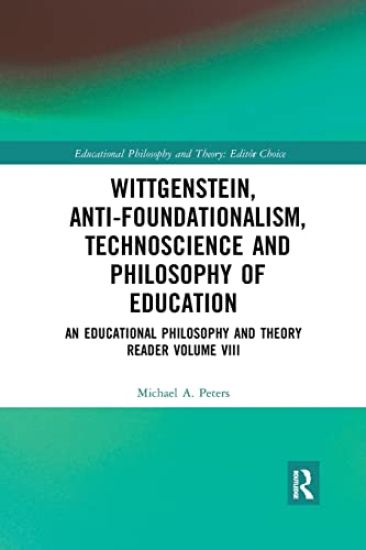
Wittgenstein, Anti-foundationalism, Technoscience and Philosophy of Education
This book is a collection of essays motivated by a "cultural" and biographical reading of Wittgenstein. It includes some new essays and some that were originally published in Educational Philosophy and Theory. The book focuses on the concept of “technoscience”, and the relevance of Wittgenstein’s work for philosophy of technology which amplifies Lyotard’s reading and provides a critique of education as an increasingly technology-led enterprise. It includes a distinctive view on the ethics of reading Wittgenstein and the ethics of suicide that shaped him. It also examines the reception and engagement with Wittgenstein’s work in French philosophy with a chapter on post-analytic philosophy of education as a choice between Richard Rorty and Jean-François Lyotard. Peters examines Wittgenstein’s academic life at Cambridge University and his involvement as a student and faculty member in the Moral Sciences Club. Finally, the book provides an understanding of Wittgensteinian styles of reasoning and the concept of worldview. Is it possible to escape the picture that holds us captive? This constitutes a challenging introduction to Wittgenstein’s work for academics, researchers and postgraduate students in the fields of education, technology and philosophy.
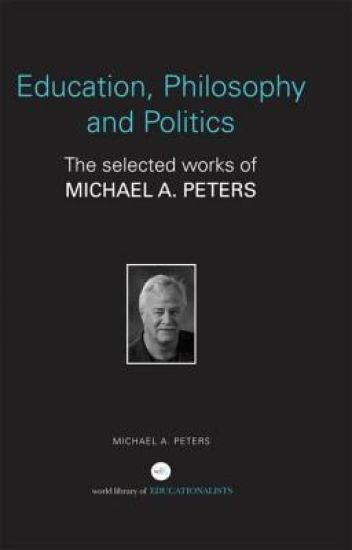
Education, Philosophy and Politics

Education, Philosophy and Politics

Michael A. Peters

Routledge
2012
sidottu
In the World Library of Educationalists series, international experts themselves compile career-long collections of what they judge to be their finest pieces - extracts from books, key articles, salient research findings, major theoretical and/practical contributions - so the world can read them in a single manageable volume. Michael A. Peters has spent the last 30 years researching, thinking and writing about some of the key and enduring issues in education. He has contributed over 60 books (authored, co-authored and edited) and 500 articles to the field. In Education, Philosophy and Politics, Michael A. Peters brings together 15 of his key writings in one place, including chapters from his best-selling books and articles from leading journals. Starting with a specially written Introduction, which gives an overview of Michael's career and contextualises his selection, the essays are then arranged thematically to create a pathway of a way of thinking in philosophy of education which is forward looking but takes account of tradition and the past. The subjects of the chapters include; Wittgenstein Studies Philosophical Critique of Modernity French Poststructuralism Jean-Francois Lyotard Foucault & Deleuze Derrida American Pragmatism Rorty Cavell Philosophy and racismThrough this book, readers can follow the themes and strands that Michael A. Peters has written about for over three decades and clearly see his important contribution to the field of education.
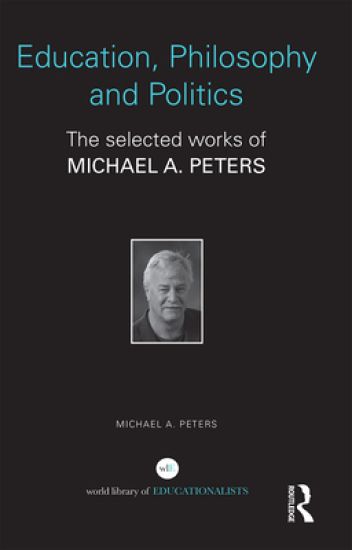
Education, Philosophy and Politics

Education, Philosophy and Politics

Michael A. Peters

Routledge
2021
nidottu
In the World Library of Educationalists series, international experts themselves compile career-long collections of what they judge to be their finest pieces - extracts from books, key articles, salient research findings, major theoretical and/practical contributions - so the world can read them in a single manageable volume. Readers will be able to follow the themes and strands of their work and see their contribution to the development of a field.Michael Peters has spent the last 30 years researching, thinking and writing about some of the key and enduring issues in education. He has contributed over 50 books (authored, co-authored and edited) and 500 articles to the field. In Educational Philosophy and Politics, Michael Peters brings together over 20 of his key writings in one place, including chapters from his best-selling books and articles from leading journals. Starting with a specially written Introduction, which gives an overview of Michael's career and contextualises his selection, the chapters are divided into 5 sections:* Wittgenstein Studies* Philosophical Critique of Modernity* French Poststructuralism- Jean-Francois Lyotard- Foucault & Deleuze - Derrida* American Pragmatism- Rorty- Cavell- Philosophy and racism* Applied educational philosophyThrough this book, readers can follow the themes and strands that Michael Peters has written about for over three decades and clearly see his important contribution to the field of education.
Heidegger, Education, and Modernity

Heidegger, Education, and Modernity

Michael A. Peters

Rowman Littlefield Publishers
2002
sidottu
Martin Heidegger is, perhaps, the most controversial philosopher of the twentieth-century. Little has been written on him or about his work and its significance for educational thought. This unique collection by a group of international scholars reexamines Heidegger's work and its legacy for educational thought. Thematically, the collection focuses on Heidegger's critique of modernity and contributors investigate the central significance for education of Heidegger's ontology and his investigation of the question of the meaning of Being by examining his 'art of teaching' (a translation of his submission to the denazification hearing), his view of science and reason, his philosophy of technology, his poetics, and the implications of his thought for learning. These essays point to the crucial importance of Heidegger's work for understanding modern, highly-technologized forms of education and for the possibilities of redemption from its worst excesses.
Poststructuralism, Marxism, and Neoliberalism

Poststructuralism, Marxism, and Neoliberalism

Michael A. Peters

Rowman Littlefield Publishers
2001
nidottu
This introduction to the politics of poststructuralism focuses on two interrelated themes: the culture of Western Marxism and contemporary neoliberal capitalism. Poststructuralism is not a form of anti-Marxism, Peters argues; indeed, poststructural philosophers view themselves in some kind of relationship to the legacy of Marx. Either they have been Marxist or still view themselves as Marxist. In a post-Marxist era they have invented new ways of reading and writing Marx. Peters critically engages neoliberalism, an ideology that is committed to the revitalization of homo economicus and neoclassical economics. This book is a deconstruction of neoliberalism, considered as a world-historical political project aimed at a form of globalisation.
The Chinese Dream: Educating the Future

The Chinese Dream: Educating the Future

Michael A. Peters

Taylor Francis Ltd
2021
nidottu
This edited collection is based on a series of articles written by Michael A Peters as Editor-in-Chief of Educational Philosophy and Theory to explore the concept of The Chinese Dream first introduced by President Xi in 2012. This seventh volume in the Editor's Choice series provides a philosophical and historical analysis of The Chinese Dream by analyzing its major intersecting narratives - liberal, Confucian and Marxist. With chapters covering higher education strategy, social governance, socialist rule of law, the US-China trade war, technological unemployment and the emergence of the Chinese techno-state, this volume also offers an introduction to Chinese philosophy and history, and its narrative re-crafting that presents China as a global power. The author calls this process and the emerging Chinese narratives 'Educating the Future'.
Wittgenstein, Anti-foundationalism, Technoscience and Philosophy of Education
This book is a collection of essays motivated by a "cultural" and biographical reading of Wittgenstein. It includes some new essays and some that were originally published in Educational Philosophy and Theory. The book focuses on the concept of “technoscience”, and the relevance of Wittgenstein’s work for philosophy of technology which amplifies Lyotard’s reading and provides a critique of education as an increasingly technology-led enterprise. It includes a distinctive view on the ethics of reading Wittgenstein and the ethics of suicide that shaped him. It also examines the reception and engagement with Wittgenstein’s work in French philosophy with a chapter on post-analytic philosophy of education as a choice between Richard Rorty and Jean-François Lyotard. Peters examines Wittgenstein’s academic life at Cambridge University and his involvement as a student and faculty member in the Moral Sciences Club. Finally, the book provides an understanding of Wittgensteinian styles of reasoning and the concept of worldview. Is it possible to escape the picture that holds us captive? This constitutes a challenging introduction to Wittgenstein’s work for academics, researchers and postgraduate students in the fields of education, technology and philosophy.
Education, Globalization and the State in the Age of Terrorism
Education plays an important role in challenging, combating and in understanding terrorism in its different forms, whether as counter-terrorism or as a form of human rights education. Just as education has played a significant role in the process of nation-building, so education also plays a strong role in the process of empire, globalization and resistance to global forces-and in terrorism, especially where it is linked to emergent statehood. This book focuses on the theme of education in an age of terrorism, exploring the conflicts of globalization and global citizenship, feminism post-9/11, youth identities, citizenship and democracy in a culture of permanent war, and the relation between education and war, with a focus on the war against Iraq.
Education, Globalization and the State in the Age of Terrorism
Education plays an important role in challenging, combating and in understanding terrorism in its different forms, whether as counter-terrorism or as a form of human rights education. Just as education has played a significant role in the process of nation-building, so education also plays a strong role in the process of empire, globalization and resistance to global forces-and in terrorism, especially where it is linked to emergent statehood. This book focuses on the theme of education in an age of terrorism, exploring the conflicts of globalization and global citizenship, feminism post-9/11, youth identities, citizenship and democracy in a culture of permanent war, and the relation between education and war, with a focus on the war against Iraq.
See to Play: The Eyes of Elite Athletes

See to Play: The Eyes of Elite Athletes

Michael A. Peters

BASCOM Hill Publishing Group
2012
nidottu
In the competitive world of post high school athletics, conditioning is everything. From muscle mass to lung capacity to endurance to speed, athletes who can get an edge have a better chance of moving up the ladder to more and more elite levels of play. But one aspect of conditioning that is often overlooked is vision. Ignored or undetected problems in the visual system have stopped many athletes' progress before making it to the professional--or even college--levels and has even ended otherwise promising professional athletic careers. But one cannot control vision, right? Wrong Vision can be conditioned just like any other physical attribute, and the earlier this conditioning starts, the better. In See to Play, eminent optometrist Michael Peters, who works with many professional athletes and sports teams, addresses every aspect of this vital component of elite athletics. Included are in-depth discussions of all facets of vision accompanied by myriad exercises to help athletes hon
Wittgenstein, Education and the Problem of Rationality

Wittgenstein, Education and the Problem of Rationality

Michael A. Peters

Springer Verlag, Singapore
2021
sidottu
This book develops an argument for a historicist and non-foundationalist notion of rationality based on an interpretation of Wittgenstein of the Philosophical Investigations and On Certainty. The book examines two notions of rationality—a universal versus a constitutive conception – and their significance for educational theory. The former advanced by analytic philosophy of education as a form of conceptual analysis is based on a mistaken reading of Wittgenstein. Analytic philosophy of education used a reading of Wittgenstein’s philosophy of language to set up and justify an absolute, universal and ahistorical notion of rationality. By contrast, the book examines the underlying influence of the later Wittgenstein on the historicist turn in philosophy of science as a basis for a non-foundationalist and constitutive notion of rationality which is both historical and cultural, and remains consistent with wider developments in philosophy, hermeneutics and social theory. This book aims to understand the philosophical motivation behind this view, to examine its intellectual underpinnings and to substitute this universal conception of rationality by reference to a Hegelian interpretation of the later Wittgenstein that emphasizes his status as an anti-foundational thinker.
Wittgenstein, Education and the Problem of Rationality

Wittgenstein, Education and the Problem of Rationality

Michael A. Peters

SPRINGER VERLAG, SINGAPORE
2022
nidottu
This book develops an argument for a historicist and non-foundationalist notion of rationality based on an interpretation of Wittgenstein of the Philosophical Investigations and On Certainty. The book examines two notions of rationality—a universal versus a constitutive conception – and their significance for educational theory. The former advanced by analytic philosophy of education as a form of conceptual analysis is based on a mistaken reading of Wittgenstein. Analytic philosophy of education used a reading of Wittgenstein’s philosophy of language to set up and justify an absolute, universal and ahistorical notion of rationality. By contrast, the book examines the underlying influence of the later Wittgenstein on the historicist turn in philosophy of science as a basis for a non-foundationalist and constitutive notion of rationality which is both historical and cultural, and remains consistent with wider developments in philosophy, hermeneutics and social theory. This book aims to understand the philosophical motivation behind this view, to examine its intellectual underpinnings and to substitute this universal conception of rationality by reference to a Hegelian interpretation of the later Wittgenstein that emphasizes his status as an anti-foundational thinker.
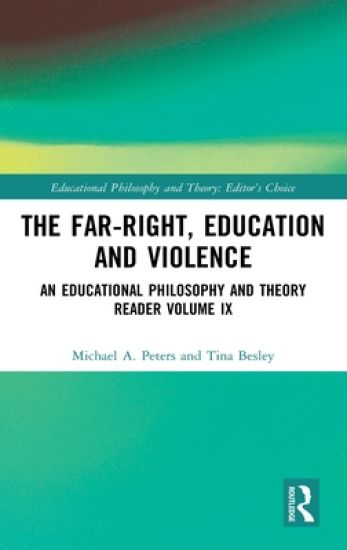
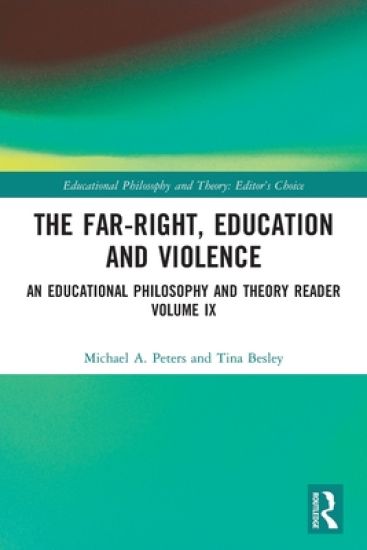
The Far-Right, Education and Violence

The Far-Right, Education and Violence

Michael A. Peters; Tina Besley

Routledge
2020
sidottu
In the last decade the far-right, associated with white nationalism, identitarian politics, and nativist ideologies, has established itself as a major political force in the West, making substantial electoral gains across Europe, the USA, and Latin America, and coalescing with the populist movements of Trump, Brexit, and Boris Johnson’s 2019 election in the UK. This political shift represents a major new political force in the West that has rolled back the liberal internationalism that developed after WWI and shaped world institutions, globalization, and neoliberalism. It has also impacted upon the democracies of the West. Its historical origins date from the rise of fascism in Italy, Germany, and Austria from the 1920s. In broad philosophical terms, the movement can be conceived as a reaction against the rationalism and individualism of liberal democratic societies, and a political revolt based on the philosophies of Nietzsche, Darwin, and Bergson that purportedly embraced irrationalism, subjectivism, and vitalism. This edited collection of essays by Michael A Peters and Tina Besley, taken from the journal Educational Philosophy and Theory, provides a philosophical discussion of the rise of the far-right and uses it as a canvas to understand the return of fascism, white supremacism, acts of terrorism, and related events, including the refugee crisis, the rise of authoritarian populism, the crisis of international education, and Trump’s ‘end of globalism’.
The Far-Right, Education and Violence

The Far-Right, Education and Violence

Michael A. Peters; Tina Besley

TAYLOR FRANCIS LTD
2022
nidottu
In the last decade the far-right, associated with white nationalism, identitarian politics, and nativist ideologies, has established itself as a major political force in the West, making substantial electoral gains across Europe, the USA, and Latin America, and coalescing with the populist movements of Trump, Brexit, and Boris Johnson’s 2019 election in the UK. This political shift represents a major new political force in the West that has rolled back the liberal internationalism that developed after WWI and shaped world institutions, globalization, and neoliberalism. It has also impacted upon the democracies of the West. Its historical origins date from the rise of fascism in Italy, Germany, and Austria from the 1920s. In broad philosophical terms, the movement can be conceived as a reaction against the rationalism and individualism of liberal democratic societies, and a political revolt based on the philosophies of Nietzsche, Darwin, and Bergson that purportedly embraced irrationalism, subjectivism, and vitalism. This edited collection of essays by Michael A Peters and Tina Besley, taken from the journal Educational Philosophy and Theory, provides a philosophical discussion of the rise of the far-right and uses it as a canvas to understand the return of fascism, white supremacism, acts of terrorism, and related events, including the refugee crisis, the rise of authoritarian populism, the crisis of international education, and Trump’s ‘end of globalism’.
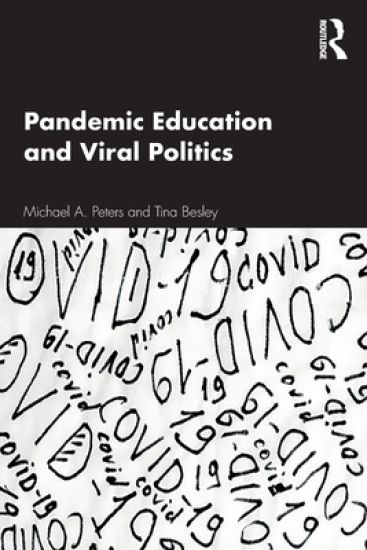
Pandemic Education and Viral Politics

Pandemic Education and Viral Politics

Michael A. Peters; Tina Besley

Routledge
2020
sidottu
Viral modernity is a concept based upon the nature of viruses, the ancient and critical role they play in evolution and culture, and their basic application to understanding the role of information and forms of bioinformation in the social world. The concept draws a close association between viral biology on the one hand and information science on the other to understand ‘viral’ technologies, conspiracy theories and the nature of post-truth. The COVID-19 pandemic is a major occurrence and momentous tragedy in world history, with millions of infections and many deaths worldwide. It has disrupted society and caused massive unemployment and hardship in the global economy. Michael A. Peters and Tina Besley explore human resilience and the collective response to catastrophe, and the philosophy and literature of pandemics, including ‘love and social distancing in the time of COVID-19’. These essays, a collection from Educational Philosophy and Theory, also explore the politicization of COVID-19, the growth of conspiracy theories, its origins and the ways it became a ‘viral’ narrative in the future of world politics.
Pandemic Education and Viral Politics

Pandemic Education and Viral Politics

Michael A. Peters; Tina Besley

Routledge
2020
nidottu
Viral modernity is a concept based upon the nature of viruses, the ancient and critical role they play in evolution and culture, and their basic application to understanding the role of information and forms of bioinformation in the social world. The concept draws a close association between viral biology on the one hand and information science on the other to understand ‘viral’ technologies, conspiracy theories and the nature of post-truth. The COVID-19 pandemic is a major occurrence and momentous tragedy in world history, with millions of infections and many deaths worldwide. It has disrupted society and caused massive unemployment and hardship in the global economy. Michael A. Peters and Tina Besley explore human resilience and the collective response to catastrophe, and the philosophy and literature of pandemics, including ‘love and social distancing in the time of COVID-19’. These essays, a collection from Educational Philosophy and Theory, also explore the politicization of COVID-19, the growth of conspiracy theories, its origins and the ways it became a ‘viral’ narrative in the future of world politics.
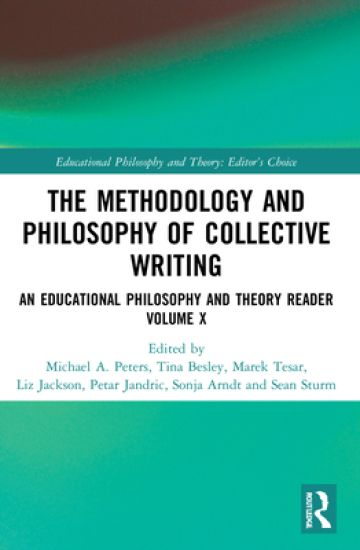
The Methodology and Philosophy of Collective Writing

The Methodology and Philosophy of Collective Writing

Michael A. Peters; Tina Besley; Marek Tesar; Liz Jackson; Petar Jandric; Sonja Arndt; Sean Sturm

TAYLOR FRANCIS LTD
2023
nidottu
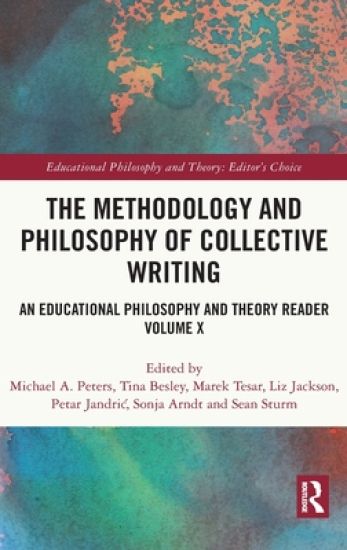
This multi-authored collection covers the methodology and philosophy of collective writing. It is based on a series of articles written by the authors in Educational Philosophy and Theory, Open Review of Educational Research and Knowledge Cultures to explore the concept of collective writing. This tenth volume in the Editor's Choice series provides insights into the philosophy of academic writing and peer review, peer production, collective intelligence, knowledge socialism, openness, open science and intellectual commons. This collection represents the development of the philosophy, methodology and philosophy of collective writing developed in the last few years by members of the Editors’ Collective (EC), who also edit, review and contribute to Educational Philosophy and Theory (EPAT), as well as to PESA Agora, edited by Tina Besley, and Access, edited by Nina Hood, two PESA ‘journals’ recently developed by EC members. This book develops the philosophy, methodology and pedagogy of collective writing as a new mode of academic writing as an alternative to the normal academic article. The philosophy of collective writing draws on a new mode of academic publishing that emphasises the metaphysics of peer production and open review along with the main characteristics of openness, collaboration, co-creation and co-social innovation, peer review and collegiality that have become a praxis for the self-reflection emphasising the subjectivity of writing, sometimes called self-writing. This collection, under the EPAT series Editor’s Choice, draws on a group of members of the Editors’ Collective,who constitute a network of editors, reviewers and authors who established the organisation to further the aims of innovation in academic writing and publishing. It provides discussion and examples of the philosophy, methodology and pedagogy of collective writing. Split into three sections: Introduction, Openness and Projects, this volume offers an introduction to the philosophy and methodology of collective writing. It will be of interest to scholars in philosophy of education and those interested in the process of collective writing.
The Methodology and Philosophy of Collective Writing

The Methodology and Philosophy of Collective Writing

Michael A. Peters; Tina Besley; Marek Tesar; Liz Jackson; Petar Jandric; Sonja Arndt; Sean Sturm

Routledge
2021
sidottu
This multi-authored collection covers the methodology and philosophy of collective writing. It is based on a series of articles written by the authors in Educational Philosophy and Theory, Open Review of Educational Research and Knowledge Cultures to explore the concept of collective writing. This tenth volume in the Editor's Choice series provides insights into the philosophy of academic writing and peer review, peer production, collective intelligence, knowledge socialism, openness, open science and intellectual commons. This collection represents the development of the philosophy, methodology and philosophy of collective writing developed in the last few years by members of the Editors’ Collective (EC), who also edit, review and contribute to Educational Philosophy and Theory (EPAT), as well as to PESA Agora, edited by Tina Besley, and Access, edited by Nina Hood, two PESA ‘journals’ recently developed by EC members. This book develops the philosophy, methodology and pedagogy of collective writing as a new mode of academic writing as an alternative to the normal academic article. The philosophy of collective writing draws on a new mode of academic publishing that emphasises the metaphysics of peer production and open review along with the main characteristics of openness, collaboration, co-creation and co-social innovation, peer review and collegiality that have become a praxis for the self-reflection emphasising the subjectivity of writing, sometimes called self-writing. This collection, under the EPAT series Editor’s Choice, draws on a group of members of the Editors’ Collective,who constitute a network of editors, reviewers and authors who established the organisation to further the aims of innovation in academic writing and publishing. It provides discussion and examples of the philosophy, methodology and pedagogy of collective writing. Split into three sections: Introduction, Openness and Projects, this volume offers an introduction to the philosophy and methodology of collective writing. It will be of interest to scholars in philosophy of education and those interested in the process of collective writing.