Kirjojen hintavertailu. Mukana 11 611 212 kirjaa ja 12 kauppaa.

Kirjahaku

Etsi kirjoja tekijän nimen, kirjan nimen tai ISBN:n perusteella.

7 kirjaa tekijältä Michael A. Radin

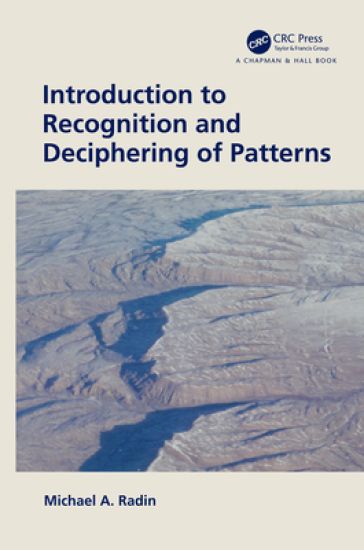
Introduction to Recognition and Deciphering of Patterns
Introduction to Recognition and Deciphering of Patterns is meant to acquaint STEM and non-STEM students with different patterns, as well as to where and when specific patterns arise. In addition, the book teaches students how to recognize patterns and distinguish the similarities and differences between them.Patterns, such as weather patterns, traffic patterns, behavioral patterns, geometric patterns, linguistic patterns, structural patterns, digital patterns, and the like, emerge on an everyday basis, . Recognizing patterns and studying their unique traits are essential for the development and enhancement of our intuitive skills and for strengthening our analytical skills. Mathematicians often apply patterns to get acquainted with new concepts--a technique that can be applied across many disciplines.Throughout this book we explore assorted patterns that emerge from various geometrical configurations of squares, circles, right triangles, and equilateral triangles that either repeat at the same scale or at different scales. The book also analytically examines linear patterns, geometric patterns, alternating patterns, piecewise patterns, summation-type patterns and factorial-type patterns. Deciphering the details of these distinct patterns leads to the proof by induction method, and the book will also render properties of Pascal’s triangle and provide supplemental practice in deciphering specific patterns and verifying them.This book concludes with first-order recursive relations: describing sequences as recursive relations, obtaining the general solution by solving an initial value problem, and determining the periodic traits.Features• Readily accessible to a broad audience, including those with limited mathematical background• Especially useful for students in non-STEM disciplines, such as psychology, sociology, economics and business, as well as for liberal arts disciplines and art students.
Introduction to Recognition and Deciphering of Patterns
Introduction to Recognition and Deciphering of Patterns is meant to acquaint STEM and non-STEM students with different patterns, as well as to where and when specific patterns arise. In addition, the book teaches students how to recognize patterns and distinguish the similarities and differences between them.Patterns, such as weather patterns, traffic patterns, behavioral patterns, geometric patterns, linguistic patterns, structural patterns, digital patterns, and the like, emerge on an everyday basis, . Recognizing patterns and studying their unique traits are essential for the development and enhancement of our intuitive skills and for strengthening our analytical skills. Mathematicians often apply patterns to get acquainted with new concepts--a technique that can be applied across many disciplines.Throughout this book we explore assorted patterns that emerge from various geometrical configurations of squares, circles, right triangles, and equilateral triangles that either repeat at the same scale or at different scales. The book also analytically examines linear patterns, geometric patterns, alternating patterns, piecewise patterns, summation-type patterns and factorial-type patterns. Deciphering the details of these distinct patterns leads to the proof by induction method, and the book will also render properties of Pascal’s triangle and provide supplemental practice in deciphering specific patterns and verifying them.This book concludes with first-order recursive relations: describing sequences as recursive relations, obtaining the general solution by solving an initial value problem, and determining the periodic traits.Features• Readily accessible to a broad audience, including those with limited mathematical background• Especially useful for students in non-STEM disciplines, such as psychology, sociology, economics and business, as well as for liberal arts disciplines and art students.
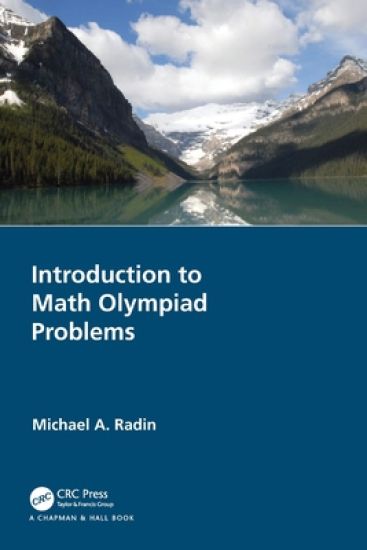
Introduction to Math Olympiad Problems

Introduction to Math Olympiad Problems

Michael A. Radin

CRC Press
2021
nidottu
Introduction to Math Olympiad Problems aims to introduce high school students to all the necessary topics that frequently emerge in international Math Olympiad competitions. In addition to introducing the topics, the book will also provide several repetitive-type guided problems to help develop vital techniques in solving problems correctly and efficiently. The techniques employed in the book will help prepare students for the topics they will typically face in an Olympiad-style event, but also for future college mathematics courses in Discrete Mathematics, Graph Theory, Differential Equations, Number Theory and Abstract Algebra.Features: Numerous problems designed to embed good practice in readers, and build underlying reasoning, analysis and problem-solving skills Suitable for advanced high school students preparing for Math Olympiad competitions
Introduction to Math Olympiad Problems

Introduction to Math Olympiad Problems

Michael A. Radin

CRC Press
2021
sidottu
Introduction to Math Olympiad Problems aims to introduce high school students to all the necessary topics that frequently emerge in international Math Olympiad competitions. In addition to introducing the topics, the book will also provide several repetitive-type guided problems to help develop vital techniques in solving problems correctly and efficiently. The techniques employed in the book will help prepare students for the topics they will typically face in an Olympiad-style event, but also for future college mathematics courses in Discrete Mathematics, Graph Theory, Differential Equations, Number Theory and Abstract Algebra.Features: Numerous problems designed to embed good practice in readers, and build underlying reasoning, analysis and problem-solving skills Suitable for advanced high school students preparing for Math Olympiad competitions
Piece-wise and Max-Type Difference Equations

Piece-wise and Max-Type Difference Equations

Michael A. Radin

TAYLOR FRANCIS LTD
2022
nidottu
Piece-wise and Max-Type Difference Equations: Periodic and Eventually Periodic Solutions is intended for lower-level undergraduate students studying discrete mathematics. The book focuses on sequences as recursive relations and then transitions to periodic recursive patterns and eventually periodic recursive patterns. In addition to this, it will also focus on determining the patterns of periodic and eventually periodic solutions inductively. The aim of the author, throughout this book, is to get students to understand the significance of pattern recognition as a mathematical tool.Key Features Can provide possible topics for undergraduate research and for bachelor’s thesis Provides supplementary practice problems and some open-ended research problems at the end of each chapter Focusses on determining the patterns of periodic and eventually periodic solutions inductively Enhances students’ algebra skills before moving forward to upper level courses Familiarize students with the topics before they start undergraduate research by providing applications.
Piece-wise and Max-Type Difference Equations
Piece-wise and Max-Type Difference Equations: Periodic and Eventually Periodic Solutions is intended for lower-level undergraduate students studying discrete mathematics. The book focuses on sequences as recursive relations and then transitions to periodic recursive patterns and eventually periodic recursive patterns. In addition to this, it will also focus on determining the patterns of periodic and eventually periodic solutions inductively. The aim of the author, throughout this book, is to get students to understand the significance of pattern recognition as a mathematical tool.Key Features Can provide possible topics for undergraduate research and for bachelor’s thesis Provides supplementary practice problems and some open-ended research problems at the end of each chapter Focusses on determining the patterns of periodic and eventually periodic solutions inductively Enhances students’ algebra skills before moving forward to upper level courses Familiarize students with the topics before they start undergraduate research by providing applications.
Periodic Character and Patterns of Recursive Sequences

Periodic Character and Patterns of Recursive Sequences

Michael A. Radin

Springer Nature Switzerland AG
2019
sidottu
This textbook on periodic character and patterns of recursive sequences focuses on discrete periodic patterns of first order, second order and higher order difference equations. Aimed toward advanced undergraduate students and graduate students who have taken a basic course in Calculus I and Discrete Mathematics, this book serves as a core text for a course in Difference Equations and Discrete Dynamical Systems. The text contains over 200 exercises to provide readers with a hands-on experience working with the material; the exercises include computations of specific examples and proofs of general results. Readers will receive a first-hand introduction to patterns of periodic cycles and patterns of transient terms with exercises for most sections of the text, preparing them for significant research work in the area.