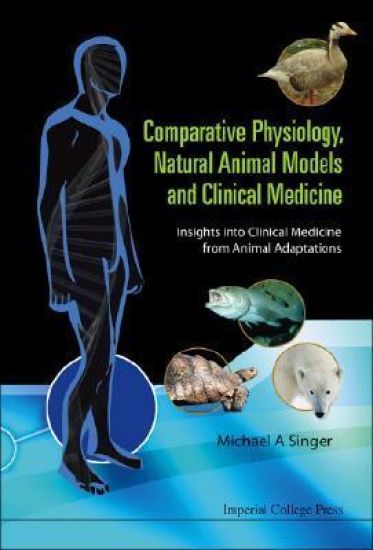
Comparative Physiology, Natural Animal Models And Clinical Medicine: Insights Into Clinical Medicine From Animal Adaptations
Michael Alan Singer
Imperial College Press
2007
sidottu
This book describes a novel and unique approach to the treatment of human diseases based on the study of natural animal models. A natural animal model is defined as an animal group or species that possesses a set of biochemical/physiological characteristics which are natural and adaptive for that animal, but are quite abnormal for humans. For example, how is it that birds can tolerate blood glucose concentrations which in humans are associated with diabetes. The natural animal model is living proof that a biological answer to this question is available. By studying natural animal models, we can gain valuable insights into the treatment of various human clinical disorders. Covering a wide range of disorders, this book describes in detail how medical scientists can take advantage of all the “research” that nature has already performed over billions of years in biological problem solving through extensive animal design testing and selection.