Kirjojen hintavertailu. Mukana 11 451 887 kirjaa ja 12 kauppaa.

Kirjahaku

Etsi kirjoja tekijän nimen, kirjan nimen tai ISBN:n perusteella.

4 kirjaa tekijältä Michael B. Jones

Papyrus and Wetlands Management in Africa

Papyrus and Wetlands Management in Africa

Michael B. Jones

TAYLOR FRANCIS LTD
2025
sidottu
This book provides a comprehensive overview of the influence that the papyrus plant has had on African wetlands (with a particular focus on the Nile) in the past, and how this may change with the oncoming threats of climate change. The papyrus plant is one of the fastest growing in the world and it forms the dominant vegetation in almost all sub-Saharan wetlands, and particularly the Nile Basin wetlands. Unlike other books on rivers and wetlands, this book focuses on this dominant and defining plant which plays such an important role in determining the structure and functioning of the Nile and other African wetland systems. It examines papyrus in the past, in the present and in the future, asking where and when did it evolve, what features have made it so widespread, productive and useful to humans, and how it has influenced the ecology of African wetlands. With over 250 million people relying on the water of the Nile to survive, the book examines the intimate relationship between, papyrus, people and the river. It concludes by discussing the current challenges to the sustainability of that relationship and whether this relationship can withstand the threat of changing climate and human demands as populations increase. This book will be of great interest to students and scholars of wetland management, ecosystem services, water resource management, biogeography, sustainable development and African studies.
Miscanthus for Bioenergy Production

Miscanthus for Bioenergy Production

Michael B. Jones

Routledge
2021
nidottu
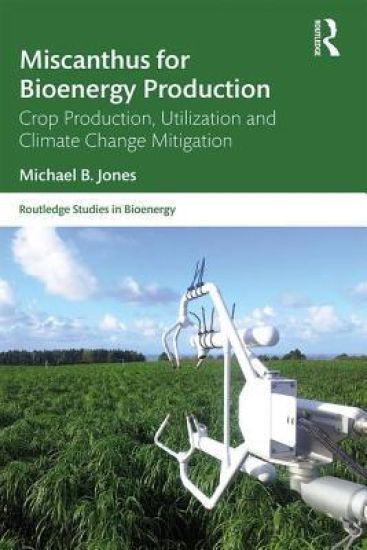
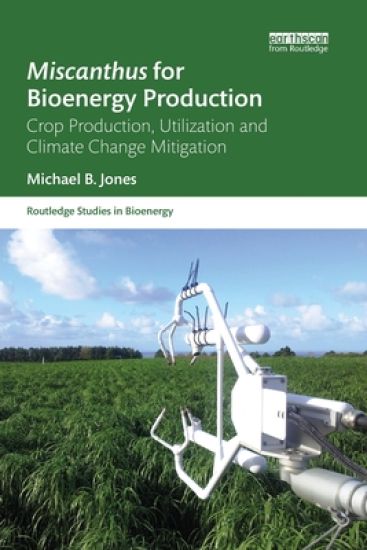
Miscanthus has been enthusiastically promoted as a second generation biomass crop, and this book provides a comprehensive review of this knowledge. Miscanthus, also known as elephant grass, is a high yielding grass crop that grows over three metres tall, resembles bamboo and produces a crop every year without the need for replanting or fertiliser application . The rapid growth, low mineral content, and high biomass yield of Miscanthus increasingly make it a favourite choice as a biofuel, outperforming switchgrass and other alternatives. There is over 20 years of research evidence to support its promotion as a second generation biomass crop. The author reviews many field measurements of yields as well as the physiology of the crop, and why it is so productive while at the same time requiring low inputs to grow it. It also shows how as a key biofuel crop it can contribute to mitigating climate change and how uptake of the adoption of Miscanthus production can be promoted, particularly in Europe and North America. The book will be key reading for students taking courses in the areas of Environmental Science and Engineering, Climate Change Impacts, Renewable Energy and Energy Conservation. It will also be of interest to researchers of second generation biomass crops, and policy developers working in biofuel production and utilization.
Miscanthus for Bioenergy Production

Miscanthus for Bioenergy Production

Michael B. Jones

Routledge
2019
sidottu
Miscanthus has been enthusiastically promoted as a second generation biomass crop, and this book provides a comprehensive review of this knowledge. Miscanthus, also known as elephant grass, is a high yielding grass crop that grows over three metres tall, resembles bamboo and produces a crop every year without the need for replanting or fertiliser application . The rapid growth, low mineral content, and high biomass yield of Miscanthus increasingly make it a favourite choice as a biofuel, outperforming switchgrass and other alternatives. There is over 20 years of research evidence to support its promotion as a second generation biomass crop. The author reviews many field measurements of yields as well as the physiology of the crop, and why it is so productive while at the same time requiring low inputs to grow it. It also shows how as a key biofuel crop it can contribute to mitigating climate change and how uptake of the adoption of Miscanthus production can be promoted, particularly in Europe and North America. The book will be key reading for students taking courses in the areas of Environmental Science and Engineering, Climate Change Impacts, Renewable Energy and Energy Conservation. It will also be of interest to researchers of second generation biomass crops, and policy developers working in biofuel production and utilization.