Kirjojen hintavertailu. Mukana 12 002 875 kirjaa ja 12 kauppaa.

Kirjahaku

Etsi kirjoja tekijän nimen, kirjan nimen tai ISBN:n perusteella.

9 kirjaa tekijältä Michael Barthorp

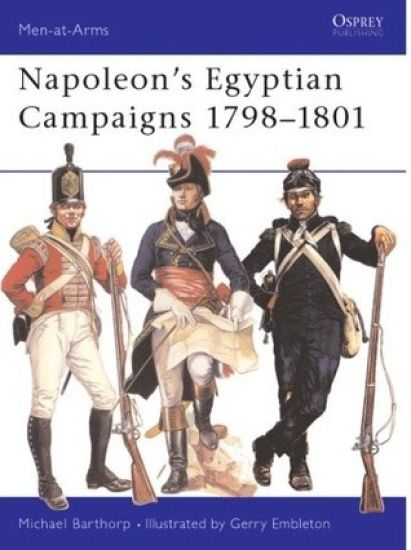
Napoleon's Egyptian Campaigns 1798–1801

Napoleon's Egyptian Campaigns 1798–1801

Michael Barthorp

Osprey Publishing
1992
nidottu
The imaginative strategic plan of Revolutionary France to cut Britain's lifeline to India by seizing Egypt and the Levant was an epic adventure, set amongst some of the most ancient places of history, then almost unknown to Europeans. The conflicts proved once again the supremacy of the British fleet and furthermore that a reformed British Army was a force to be reckoned with. This fascinating book by Michael Barthorp provides an outline of the campaigns and examines in greater detail the armies which marched and fought amid the desert sands and relics of earlier civilisations.
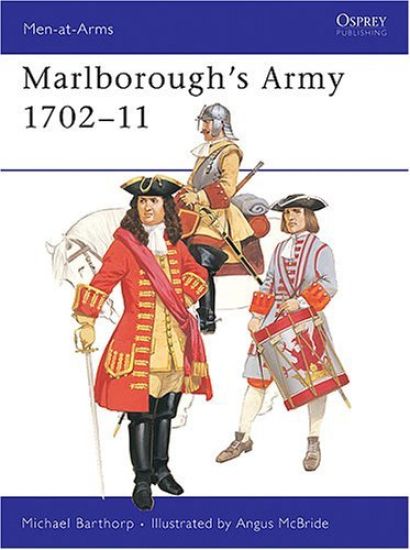
Marlborough's Army 1702–11

Marlborough's Army 1702–11

Michael Barthorp

Osprey Publishing
1980
nidottu
The succession of the French Duke of Anjou to the Spanish throne in 1700 provoked the formation of a Grand Alliance to thwart the king's expansionist ambitions. Led by the Duke of Marlborough, the army of the Grand Alliance declared war on France. Between 1702 and 1711, this united force, comprised of English, Dutch, Danish, Prussian, Austrian and other German troops, were victorious at such historic battles as Blenheim, Oudenarde and Malplaquet. This book chronicles Marlborough's campaigns in the War of the Spanish Succession, detailing the tactics, troops and uniforms of his army.
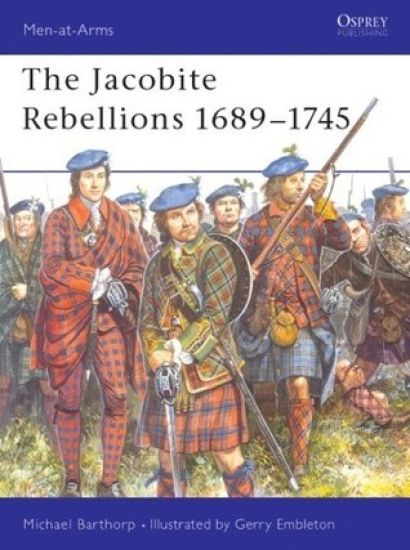
The Jacobite Rebellions 1689–1745

The Jacobite Rebellions 1689–1745

Michael Barthorp

Osprey Publishing
1982
nidottu
Between the first Jacobite rising in 1689 and the final collapse of the cause in 1746, the hopes of the House of Stuart were centred chiefly on Scotland. It is often wrongly assumed that the Jacobite rebellions were a contest between England and Scotland. In fact many Lowland Scots share the feelings of the English, and had cause to hate and fear their fellow countrymen in the Highlands. Thus it was to the Highland clans that the Jacobites looked to for their most reliable manpower. In this book Michael Barthorp details the events of the Jacobite rebellions, and the organisation and uniforms of the forces of both sides.
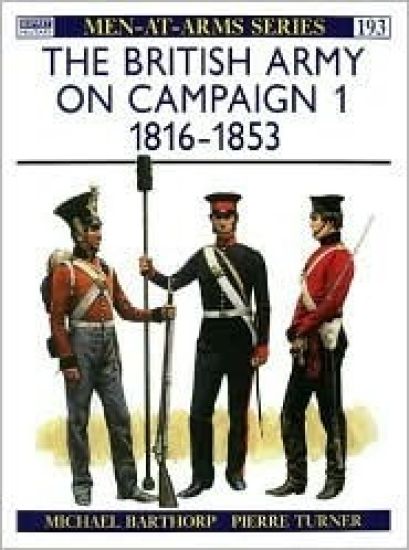
The British Army on Campaign (1)

The British Army on Campaign (1)

Michael Barthorp

Osprey Publishing
1987
nidottu
Although the period between the end of the Napoleonic Wars and the Crimean War has been called 'the long peace', as far as the British Army (and the Honourable East India Company) were concerned, it was to see an almost continual series of campaigns and expeditions across the world. Most were fought in the defence, or further expansion, of the British Empire. This first of four volumes by Michael Barthorp detailing the British Army on campaign from 1815-1902, centres on the campaigns in the eventful period from 1816-53: the regiments which took part; the tactics employed; and the changing nature of uniforms and equipment.
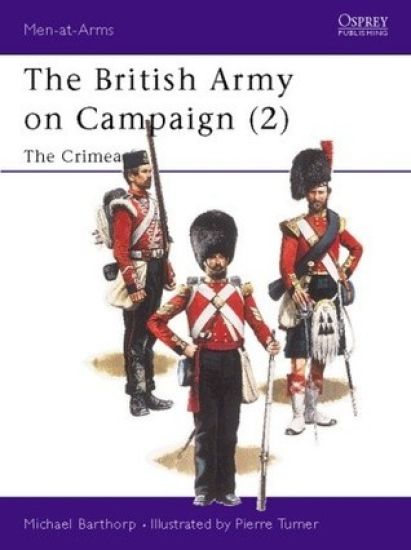
The British Army on Campaign (2)

The British Army on Campaign (2)

Michael Barthorp

Osprey Publishing
1987
nidottu
In 1854 the British Army was committed to its first major war against a European power since 1815. The expeditionary force, or 'Army of the East', was despatched to Turkey nominally to support the Ottoman Empire in its war with Russia; but in reality to check, in alliance with France and later Sardinia, Russian ambitions for an outlet to the Mediterranean. Despite many failures in the conduct of operations and administration, the war was won in two years and Russian designs on the Balkans and Levant were thwarted for two decades.
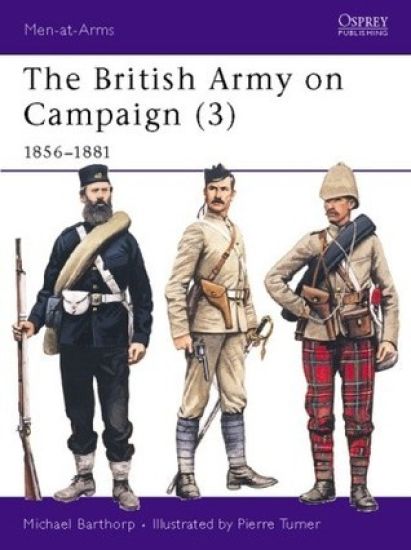
The British Army on Campaign (3)

The British Army on Campaign (3)

Michael Barthorp

Osprey Publishing
1988
nidottu
In the period of reform following the Crimean War, the British Army's main role reverted to the security and consolidation of the Empire and its trade, resulting in campaigns large and small all over the world. From the Indian Mutiny of 1857-59, to campaigns in the North-West Frontier, Canada, New Zealand and the Transvaal, the British Army fought to protect its Empire and thwart the expansion of encroaching nations. This book, the third in a series of four, outlines these campaigns and details the fighting methods, uniforms, equipment and weapons of the British Army.
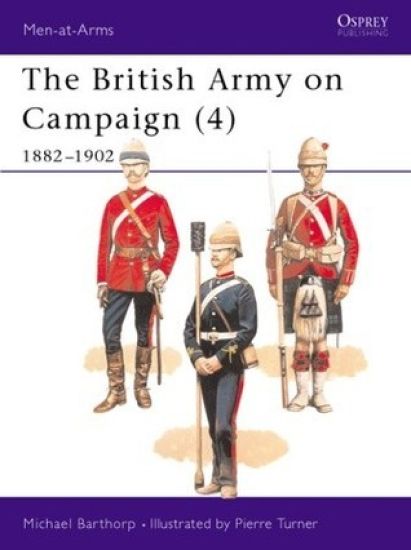
The British Army on Campaign (4)

The British Army on Campaign (4)

Michael Barthorp

Osprey Publishing
1988
nidottu
The Army of 1882 had just emerged from the many modernizing reforms effected between 1856-81. These included: opening of schools of instruction; abolition of the purchase of commissions; improvements in pay, living conditions and disciplinary measures and new weapons and tactics. By these later years of the 19th century the British Army had become the policeman of a vast global Empire. This volume in the acclaimed British Army on Campaign mini-series details the uniforms, organisation and equipment used in a succession of campaigns across the face of the globe. Michael Barthorp's splendid text is accompanied by numerous illustrations including eight colour plates by Pierre Turner.
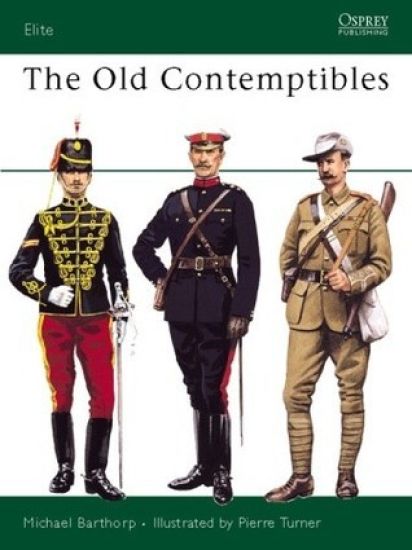
The Old Contemptibles

The Old Contemptibles

Michael Barthorp

Osprey Publishing
1989
nidottu
On 19 August 1914 Kaiser Wilhelm II ordered General von Kluck, commanding the German First Army, to 'exterminate the treacherous English and walk over General French's contemptible little Army'. The 'Old Contemptibles' adopted the aspersion like a treasured regimental title, their subsequent successes earning them a more accurate evaluation as 'the best trained, best organised and best equipped British Army that ever went forth to war'. This book examines the history, organization and uniforms of the British Expeditionary Force of the early 20th century. The text is accompanied by numerous illustrations, including maps, photographs, and colour plates.
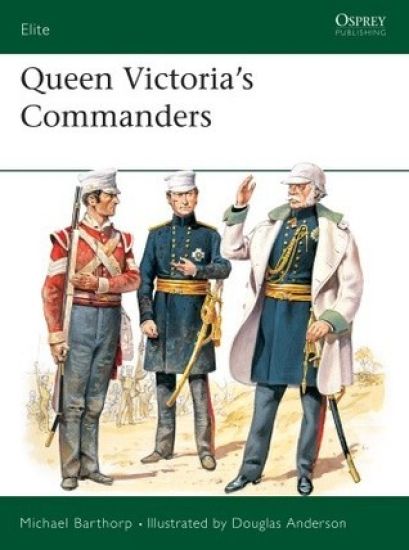
Queen Victoria's Commanders

Queen Victoria's Commanders

Michael Barthorp

Osprey Publishing
2000
nidottu
Michael Barthorp's entertaining and authoritative study includes key commanders such as (India 1837-56) Charles Napier, Hugh Gough, Harry Smith; (Crimean War) Lord Raglan, James Scarlett, George Cathcart, John Pennefather; (Indian Mutiny) John Nicholson, Henry Havelock, Hope Grant, Colin Campbell; (India 1860-98) Frederick Roberts; (Africa) Robert Napier, Garnet Wolseley, Herbert Stewart, Evelyn Wood, Redvers Buller, Hector Macdonald and Herbert Kitchener – among others.