Kirjojen hintavertailu. Mukana 11 244 527 kirjaa ja 12 kauppaa.

Kirjahaku

Etsi kirjoja tekijän nimen, kirjan nimen tai ISBN:n perusteella.

24 kirjaa tekijältä Michael Bell

Open Secrets

Open Secrets

Michael Bell

Oxford University Press
2007
sidottu
Open Secrets reflects on contemporary humanistic pedagogy by examining the limits of the teachable in this domain. The Goethean motif of the open secret refers not to a revealed mystery but to an utterance that is not understood, the likely fate of any instruction based purely on authority. Revisiting the European Bildungsroman, it studies the pedagogical relationship from the point of view of the tutor or mentor figure rather than with the usual focus on the young hero. The argument is not confined to works of fiction, however, but examines texts in which the category of fiction has a crucial and constitutive function, for a growing awareness of limited authority on the part of the mentor figures is closely related to fictive self-consciousness in the texts. Rousseau's Emile, as a semi-novelised treatise, whose fictiveness is at once overt and yet unmarked, is relatively unaware of the imaginary nature of its envisaged authority. Passing through Laurence Sterne, C. M. Wieland, Goethe and Nietzsche, the situation is gradually reversed, culminating with the conscious impasse of authority in Thus Spoke Zarathustra. All these writers have achieved their pedagogical impact despite, indeed by means of, their internal scepticism. By contrast, in the three subsequent writers, D. H. Lawrence, F. R. Leavis and J. M. Coetzee, the impasse of pedagogical authority becomes more literal as the authority of Bildung is eroded in the wider culture. The awareness of pedagogical authority as a species of fiction, to be conducted in an aesthetic spirit, remains a significant prophylactic against the perennial pressure of reductive conceptions of the education as form of instructional 'production'.
Gabriel García Márquez

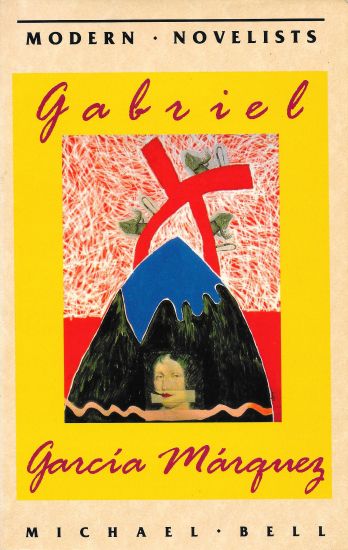
Gabriel García Márquez

Michael Bell

Red Globe Press
1993
nidottu
Much good criticism of Mrquez came in the wake of One Hundred Years of Solitude and the perception of his fiction has been dominated by that novel. It seemed the implicit goal to which the earlier fiction has been striving. By concentrating on the later novels, including The General in his Labyrinth, this study brings out the internal dialogue between the novels so that One Hundred Years of Solitude then stands out, like Don Quixote in Cervantes' oeuvre, as untypical yet more deeply representative. Behind the popular impact of its 'magical realism' lies Mrquez' abiding meditation on the nature of fictional and historical truth.
The Sentiment of Reality

The Sentiment of Reality

Michael Bell

TAYLOR FRANCIS LTD
2023
nidottu
Originally published in 1983, The Sentiment of Reality covers the rise and decline of the realist novel from the mid-eighteenth century to the mid-twentieth century. The book takes the form of an extended essay on two closely related themes in the history of the novel: first, the impact and aftermath of the eighteenth-century cult of sentiment and, secondly, the supplanting of illusionism by an aesthetic of mimesis. This forms the basis of an exploration of the emotional impact that fiction has on the reader. Using this analysis, the book defends the realist tradition against common contemporary criticism. The Sentiment of Reality combines a close reading of key moments in European fiction with a wide-ranging speculative treatment of historical and formal questions.
The Sentiment of Reality

The Sentiment of Reality

Michael Bell

Routledge
2020
sidottu
Originally published in 1983, The Sentiment of Reality covers the rise and decline of the realist novel from the mid-eighteenth century to the mid-twentieth century. The book takes the form of an extended essay on two closely related themes in the history of the novel: first, the impact and aftermath of the eighteenth-century cult of sentiment and, secondly, the supplanting of illusionism by an aesthetic of mimesis. This forms the basis of an exploration of the emotional impact that fiction has on the reader. Using this analysis, the book defends the realist tradition against common contemporary criticism. The Sentiment of Reality combines a close reading of key moments in European fiction with a wide-ranging speculative treatment of historical and formal questions.
F.R. Leavis

F.R. Leavis

Michael Bell

Routledge
1988
nidottu
First published in 1988. Leavis's examples and preoccupations still largely underlie the teaching of English literature in the universities and he remains the most substantial embodiment of the liberal humanist conception of criticism with its insistence on a 'canon' of on personal judgement within a literary tradition. Hence while recent theorists have rejected his methods, he remains the most potent single influence on the practical teaching of literature. This book locates Leavis within the critical tradition, suggests whence he derived his characteristic commitments and rhetoric, and assesses his limitations in relation to his continuing value.
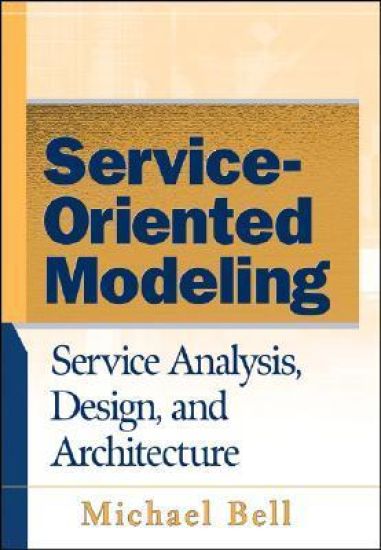
Service-Oriented Modeling

Service-Oriented Modeling

Michael Bell

John Wiley Sons Inc
2008
sidottu
Answers to your most pressing SOA development questions How do we start with service modeling? How do we analyze services for better reusability? Who should be involved? How do we create the best architecture model for our organization? This must-read for all enterprise leaders gives you all the answers and tools needed to develop a sound service-oriented architecture in your organization. Praise for Service-Oriented Modeling Service Analysis, Design, and Architecture "Michael Bell has done it again with a book that will be remembered as a key facilitator of the global shift to Service-Oriented Architecture. . . . With this book, Michael Bell provides that foundation and more-an essential bible for the next generation of enterprise IT." -Eric Pulier, Executive Chairman, SOA Software "Michael Bell's insightful book provides common language and techniques for business and technology organizations to take advantage of the SOA paradigm. By focusing modeling techniques on the business problem, Bell provides a way for professionals to work throughout the life cycle to create reusable and enduring services." -Mike Zbranak, CIO, Chase Card Services "This book will become an imperative business and technology service-oriented modeling recipe for any manager, architect, modeler, analyst, and developer in today's software development industry." -Jeff Schneider, CEO, MomentumSI "'Innovative' and 'groundbreaking' are words that best describe Michael Bell's Service-Oriented Modeling. It depicts a true service modeling approach that elegantly closes a clear and critical service modeling gap in the SOA industry. This holistic book ties these concepts together using real-world examples across a service life cycle that transitions services from ideas and concepts into production assets that deliver business value. A must-read for business and technical SOA practitioners." -Eric A. Marks, CEO, AgilePath Corporation "As hot as SOA is today, many business and technology professionals still find it challenging to mind the gap between their disparate methodologies and objectives. Herein Michael Bell speaks clearly to both camps in straightforward language, outlining disciplines each can use to communicate effectively and advance the realization of corporate aims. This book is a bible for all who seek to drive business/technology into the future." -Mark Edward Goodrich, Director, Investing Product Management, Reuters Media "This book takes senior IT architects and systems designers into the depths of modeling for SOA, with a fresh new perspective on tools, terminology, and how to turn the theory into practice. His full life-cycle approach balances process, control, and accountability to align all the participants in the delivery pipeline-clearing the road for successful SOA business solutions." -Phil Gilligan, Chief Technology Officer, EBS
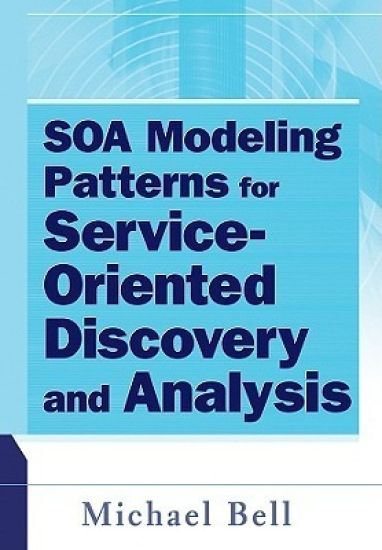
SOA Modeling Patterns for Service-Oriented Discovery and Analysis
Learn the essential tools for developing a sound service-oriented architecture SOA Modeling Patterns for Service-Oriented Discovery and Analysis introduces a universal, easy-to-use, and nimble SOA modeling language to facilitate the service identification and examination life cycle stage. This business and technological vocabulary will benefit your service development endeavors and foster organizational software asset reuse and consolidation, and reduction of expenditure. Whether you are a developer, business architect, technical architect, modeler, business analyst, team leader, or manager, this essential guide-introducing an elaborate set of more than 100 patterns and anti-patterns-will help you successfully discover and analyze services, and model a superior solution for your project,. Explores how to discover servicesExplains how to analyze services for construction and productionHow to assess service feasibility for deploymentHow to employ the SOA modeling language during the service identification and examination processHow to utilize the SOA modeling patterns and anti-patterns for service discovery and analysis Focusing on the Service-Oriented Discovery and Analysis Life Cycle Stage, this book will help you acquire a broad SOA Modeling knowledge base and leverage that to increase efficiency and productivity in the workplace.
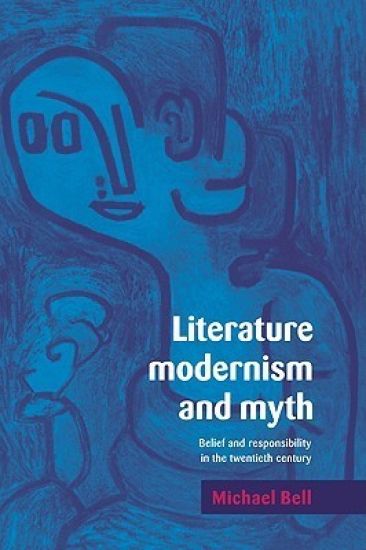
Literature, Modernism and Myth

Literature, Modernism and Myth

Michael Bell

Cambridge University Press
2006
pokkari
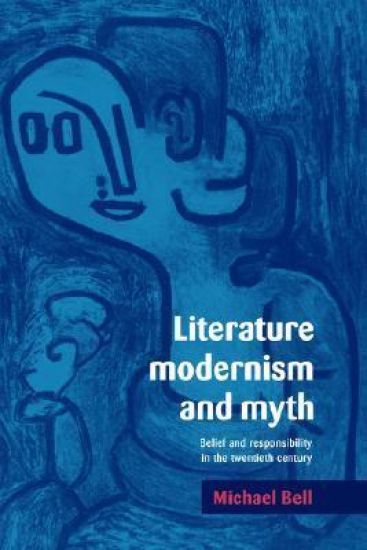
The use of myth in Modernist literature is a misleadingly familiar theme. Joyce's appropriation of Homer's Odyssey and Eliot's of Frazer's Golden Bough are, like Lawrence's primitivism or Yeats's nationalist folklore, attempts to discover an underlying metaphysic in an increasingly fragmented world. In Literature, Modernism and Myth Michael Bell also examines the relationship of myth and modernism to postmodernism. Myth, Bell shows, is inherently flexible; it was used to justify Pound's totalizing vision of society which eventually descended into fascism, and the liberal, ironic vision of human existence Joyce and Mann expressed. Those theorists who present myth as another form of mystification, a search for false origins, ignore its use by modernists to emphasise the ultimate contingency of all values. This anti-foundational element, Bell claims, enables myth to act as a corrective to the claims of ideological critique. Bell shows how postmodern concerns with political and social responsibility, and the role literature plays in formulating this, have in fact been inherited from modernism.
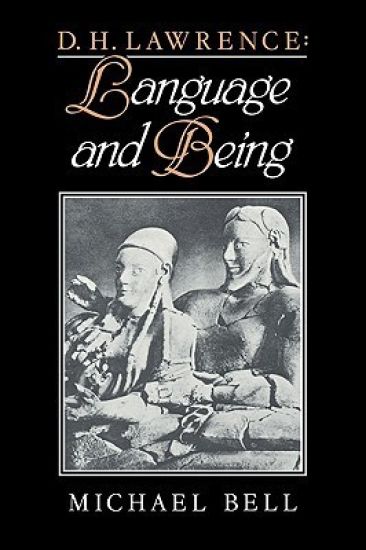
D. H. Lawrence: Language and Being

D. H. Lawrence: Language and Being

Michael Bell

Cambridge University Press
2008
pokkari
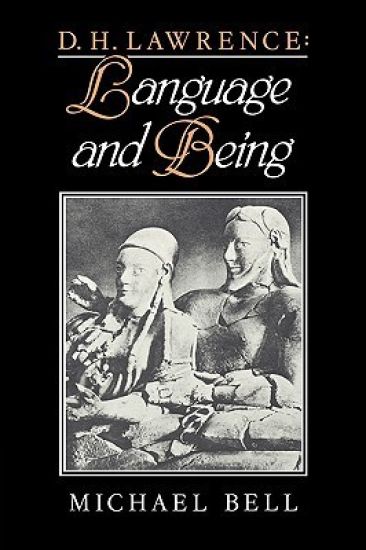
D. H. Lawrence once wrote that 'we have no language for the feelings'. The remark testifies to the struggle in his novels to express his sophisticated understanding of the nature of being through the intransigent medium of language. Michael Bell argues that Lawrence's unfashionable status stems from a failure to perceive within his informal expression the nature and complexity of his ontological vision. He traces the evolution of the struggle for its articulation through the novels, and looks at the way in which Lawrence himself made it a conscious theme in his writing. Embracing in this argument Lawrence's failures as a writer, his rhetorical stridency and also his primitivist extremism, Michael Bell creates a powerful and fresh sense of his true importance as a novelist.
D. H. Lawrence: Language and Being

D. H. Lawrence: Language and Being

Michael Bell

Cambridge University Press
1992
sidottu
D. H. Lawrence once wrote that ‘we have no language for the feelings’. The remark testifies to the struggle in his novels to express his sophisticated understanding of the nature of being through the intransigent medium of language. Michael Bell argues that Lawrence’s currently unfashionable status stems from a failure to perceive within his informal expression the nature and complexity of his ontological vision. He traces the evolution of the struggle for its articulation through the novels, and looks at the way in which Lawrence himself made it a conscious theme in his writing. Embracing in this argument Lawrence’s failures as a writer, his rhetorical stridency and also his primitivist extremism, Michael Bell creates a powerful and fresh sense of his true importance as a novelist.
Literature, Modernism and Myth

Literature, Modernism and Myth

Michael Bell

Cambridge University Press
1997
sidottu
The use of myth in Modernist literature is a misleadingly familiar theme. Joyce's appropriation of Homer's Odyssey and Eliot's of Frazer's Golden Bough are, like Lawrence's primitivism or Yeats's nationalist folklore, attempts to discover an underlying metaphysic in an increasingly fragmented world. In Literature, Modernism and Myth Michael Bell also examines the relationship of myth and modernism to postmodernism. Myth, Bell shows, is inherently flexible; it was used to justify Pound's totalizing vision of society which eventually descended into fascism, and the liberal, ironic vision of human existence Joyce and Mann expressed. Those theorists who present myth as another form of mystification, a search for false origins, ignore its use by modernists to emphasise the ultimate contingency of all values. This anti-foundational element, Bell claims, enables myth to act as a corrective to the claims of ideological critique. Bell shows how postmodern concerns with political and social responsibility, and the role literature plays in formulating this, have in fact been inherited from modernism.
Incremental Software Architecture

Incremental Software Architecture

Michael Bell

John Wiley Sons Inc
2016
sidottu
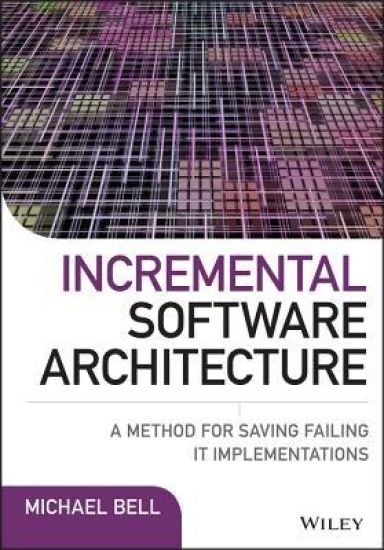
The best-practices solution guide for rescuing broken software systems Incremental Software Architecture is a solutions manual for companies with underperforming software systems. With complete guidance and plenty of hands-on instruction, this practical guide shows you how to identify and analyze the root cause of software malfunction, then identify and implement the most powerful remedies to save the system. You'll learn how to avoid developing software systems that are destined to fail, and the methods and practices that help you avoid business losses caused by poorly designed software. Designed to answer the most common questions that arise when software systems negatively impact business performance, this guide details architecture and design best practices for enterprise architecture efforts, and helps you foster the reuse and consolidation of software assets. Relying on the wrong software system puts your company at risk of failing. It's a question of when, not if, something goes catastrophically wrong. This guide shows you how to proactively root out and repair the most likely cause of potential issues, and how to rescue a system that has already begun to go bad. Mitigate risks of software development projectsIncrease ROI and accelerate time-to-marketAccurately assess technological achievability and viabilityIdentify actual software construction value propositions Fierce competition and volatile commerce markets drive companies to invest heavily in the construction of software systems, which strains IT and business budgets and puts immense strain on existing network infrastructure. As technology evolves, these ever-more-complex computing landscapes become more and more expensive and difficult to maintain. Incremental Software Architecture shows you how to revamp the architecture to effectively reduce strain, cost, and the chance of failure.
Software Architect

Software Architect

Michael Bell

JOHN WILEY SONS INC
2023
nidottu
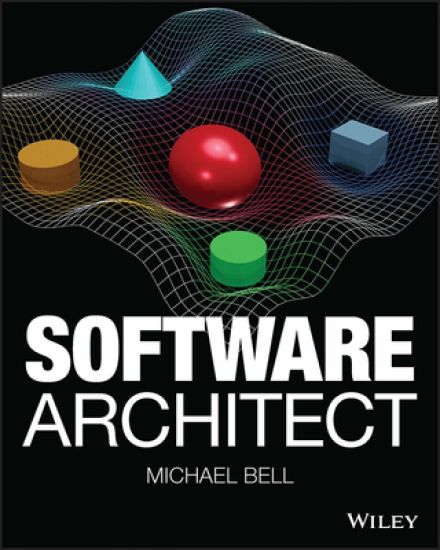
A strategic state-of-the-art software architecture manual for all skill levels In Software Architect, veteran enterprise and solution architect Michael Bell delivers a hands-on playbook of best practices for aspiring and practicing software architects, seeking to improve their software design, integration, communication, presentation, and knowledge acquisition skills. He explores the career enablement, career planning, self-training, and self-improvement topics you’ll need to increase your ability to offer powerful and effective business and technological solutions. In the book, you’ll learn how to help companies promote business and technological transformation by implementing modern and first-class software design, deployment, integration, and operations. Software Architect also includes: A modern software architect’s toolbox that includes best practices for multi-dimensional software design and integration in an enterprise quantum computing ecosystem A breakdown of the various types of software architects, as well as useful self-assessments for aspiring and practicing professionalsSkill acquisition strategies for software architects along with strategic approaches to ace software architecture interviews An indispensable manual for aspiring to be architects, software architects-in-training, and practicing software architects. Software Architect is an essential read for anyone hoping to improve their ability to deliver robust business and technical solutions to enterprises everywhere.
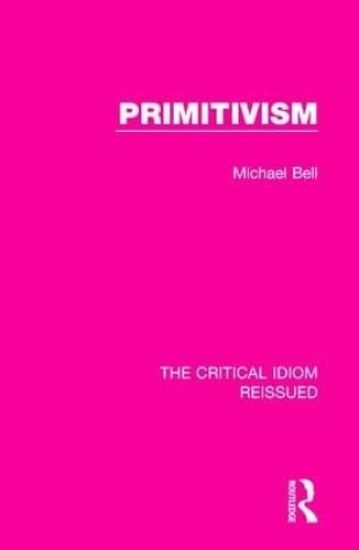
Primitivism

Primitivism

Michael Bell

Routledge
2017
sidottu
First published in 1972, this books examines the subject of primitivism through the study of the work of a number of major writers, including D. H. Lawrence, Herman Melville, Joseph Conrad, T. S. Eliot and James Joyce. It looks at the variety of definitions and uses of primitivism and how the idea has changed over time as well as with each writer. In doing so, it is argued that primitivism denotes, or arises from, a sense of crisis in civilization and it is born of the interplay between the civilized self and the desire to reject or transform it. This book will be of interest to those studying modern literature.
Primitivism

Primitivism

Michael Bell

Routledge
2019
nidottu
First published in 1972, this books examines the subject of primitivism through the study of the work of a number of major writers, including D. H. Lawrence, Herman Melville, Joseph Conrad, T. S. Eliot and James Joyce. It looks at the variety of definitions and uses of primitivism and how the idea has changed over time as well as with each writer. In doing so, it is argued that primitivism denotes, or arises from, a sense of crisis in civilization and it is born of the interplay between the civilized self and the desire to reject or transform it. This book will be of interest to those studying modern literature.