Kirjojen hintavertailu. Mukana 11 699 587 kirjaa ja 12 kauppaa.

Kirjahaku

Etsi kirjoja tekijän nimen, kirjan nimen tai ISBN:n perusteella.

15 kirjaa tekijältä Michael Burleigh

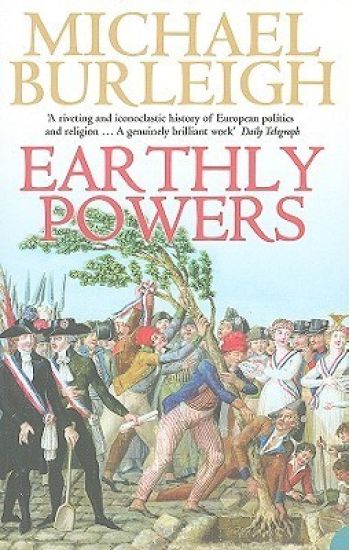
Earthly Powers

Earthly Powers

Michael Burleigh

Harpercollins Publishers
2006
pokkari
A major work setting out the inextricable link between politics and religion over the past two centuries, from the French Revolution to the present dayâ??s War on Terror.
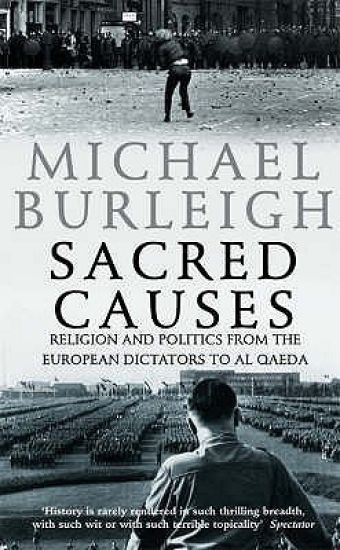
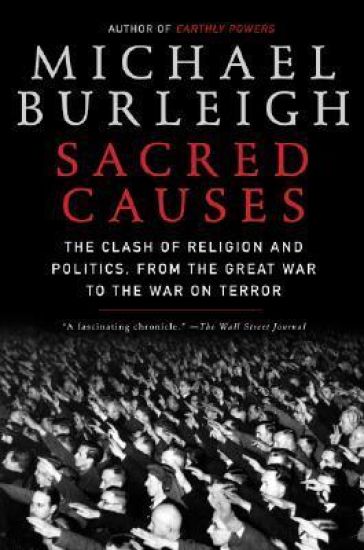
Sacred Causes

Sacred Causes

Michael Burleigh

HARPERCOLLINS PUBLISHERS
2007
nidottu
Populated by many of the most iconic figures of the twentieth-century, ‘Sacred Causes’ provides a brilliant examination of how religion has shaped twentieth-century Europe from the Great War until the modern-day ‘War on Terror’. Beginning with the chaotic post-World War I landscape in which religious belief was one way of reordering a world knocked off its axis, ‘Sacred Causes’ is a sweepingly assured critique of how religion has often been camouflaged by politics. Covering a vast canvas, Burleigh examines the many 'secular' religions the twentieth-century produced, analysing how successive totalitarian leaders fantasised and aped the hierarchy, rites and ritual of the churches in the desire to return to the day where ruler and deity were one. All the many bloody regimes and movements of the century are here, from Stalin's Soviet Union, Hitler's Germany, Mussolini's Italy, Franco's Spain through to the modern scourge of terrorism the current 'War on Terror'. Often blackly comic, the book shows how the church has been swayed by – and contributed to – conflicting secular currents. He traces religious beliefs and institutions from a time when the church, disenchanted with both democracy and fascism, began to search for political alternatives. During the Second World War, the churches faced agonising dilemmas, notably how to respond to the Holocaust. Combining the deeper workings of history with an urgent sense of the contemporary relevance of his material, Burleigh challenges his readers to consider why no-one foresaw the religious implications of massive Third World immigration, as well as what is driving current calls for a 'civic religion' with which to counter the terrorist threats which have so shocked the West.
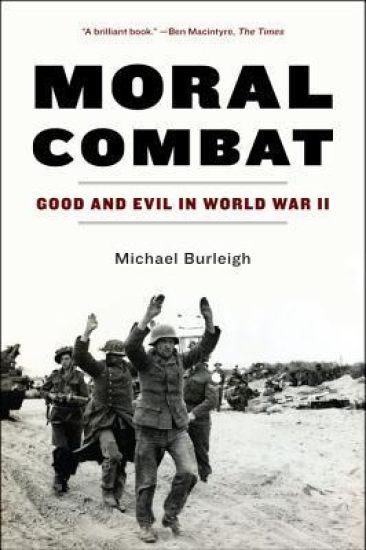
Moral Combat

Moral Combat

Michael Burleigh

HarperPress
2011
nidottu
A clear, chronological narrative exploring many of the ethical dilemmas posed for real people during and after the Second World War. Literature on the Second World War is voluminous. In ‘Moral Combat’, however, Michael Burleigh achieves what few historians can claim to have done; by exploring the moral sentiment of entire societies and their leaders, and how this changed under the impact of total war, he presents readers with an entirely fresh perspective of this conflict. Opening with the 'predators' – Mussolini, Hitler, Prince Hirohito of Japan – and moving onto appeasement (a popular policy or a 'wrong' policy?), the rape of Poland, Barbarossa, the role of Churchill, and the Holocaust, Burleigh analyses the moral dimension of the Second World War's most important moments. More than merely a history of 'great men', however, Burleigh also examines the moral reasoning of individuals who had to make choices under circumstances difficult to imagine. Stressing the maxim that the past is used to make sense of the present world we live in, he takes us right up to today's war on terror – a war of competing ideas. What, in the end, will constitute its victory? Burleigh's fascinating and deeply engaging exploration refuses to draw lessons from the past for the future, remaining instead firmly focused on the on-the-spot decisions that came to define the conflict. Original, perceptive and remarkable in scope, this is an unforgettable and hugely important Second World War history.
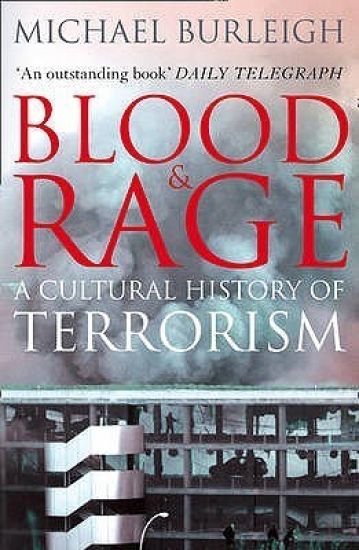
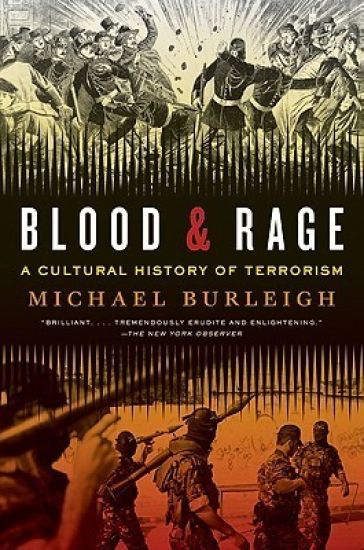
Blood and Rage

Blood and Rage

Michael Burleigh

HARPERCOLLINS PUBLISHERS
2009
nidottu
A far-reaching history of terrorism across the world, from its beginnings to the modern day, from the highly acclaimed author of ‘Sacred Causes’ and ‘Earthly Powers’. The paperback edition will be updated to cover recent events – including the recent terror attacks in Mumbai in November 2008 and the continued military clash in Gaza in early 2009. Basing his study on a wide range of sources and key players from the world of terrorism, Burleigh explains and defines the meaning of terrorism and marks its progression from its hard-to-trace beginnings to the modern day. Burleigh takes us from the origins of terrorism in the Irish Republican Brotherhood – the precursors of the IRA – on to look at Tsarist Russia, where the 'intelligentsia' launched attacks on organs of state, and left-wing fighting against 'Fascism' and 'Nazism' in the 1970s and 1980s in western Germany and Italy. But such nationalist terrrorism has in turn been eclipsed by international jihadist violence, largely driven by widespread resentment of the successful societes of the West. Burleigh explores the background and the milieu of people engaged in careers of political violence, and examines their various mindsets as revealed by their actions rather than their words. He makes clear that the West has considerable resources to comprehend and combat terrorism and shows how history enables us to see how terrrorism can be effectively contained and countered – if only by avoiding some of the major mistakes of the past. An unrivalled study that sheds an insightful new light on a plight that threatens to affect the world at large for many years to come, ‘Blood and Rage’ establishes Michael Burleigh as one of the most original, learned and important historians of our time.
Sacred Causes

Sacred Causes

Michael Burleigh

HarperCollins Publishers
2008
pokkari
Beginning with the chaotic post-World War I landscape, in which religious belief was one way of reordering a world knocked off its axis, Sacred Causes is a penetrating critique of how religion has often been camouflaged by politics. All the bloody regimes and movements of the twentieth century are masterfully captured here, from Stalin's Soviet Union, Hitler's Germany, Mussolini's Italy, and Franco's Spain through to the modern scourge of terrorism. Eloquently and persuasively combining an authoritative survey of history with a timely reminder of the dangers of radical secularism, Burleigh asks why no one foresaw the religious implications of massive Third World immigration, and he deftly investigates what are now driving calls for a civic religion to counter the terrorist threats that have so shocked the West.
Blood and Rage

Blood and Rage

Michael Burleigh

HARPER PERENNIAL
2010
nidottu
In this sweeping and deeply penetrating work, distinguished historian Michael Burleigh explores the nature of terrorism from its origins in the West to the current global threat fueled by fundamentalists. Burleigh takes us from the roots of terrorism in the Irish Republican Brotherhood, the Russian Nihilists, and the London-based anarchists of Black International to the various terrorist campaigns that exist today. He also explores the lives of people engaged in careers of political violence and those who are most affected by the scourge of terrorism. Authoritative, illuminating, and masterfully written, Blood and Rage sheds an unflinching light on the global threat that we are likely to face for decades to come.
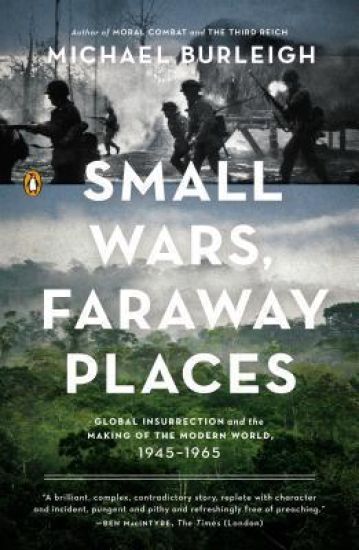
Small Wars, Faraway Places: Global Insurrection and the Making of the Modern World, 1945-1965
A sweeping history of the Cold War's many "hot" wars born in the last gasps of empire The Cold War reigns in popular imagination as a period of tension between the two post-World War II superpowers, the United States and the Soviet Union, without direct conflict. Drawing from new archival research, prize-winning historian Michael Burleigh gives new meaning to the seminal decades of 1945 to 1965 by examining the many, largely forgotten, "hot" wars fought around the world. As once-great Western colonial empires collapsed, counter-insurgencies campaigns raged in the Philippines, the Congo, Iran, and other faraway places. Dozens of new nations struggled into existence, the legacies of which are still felt today. Placing these vicious struggles alongside the period-defining United States and Soviet standoffs in Korea, Vietnam, and Cuba, Burleigh swerves from Algeria to Kenya, to Vietnam and Kashmir, interspersing top-level diplomatic negotiations with portraits of the charismatic local leaders. The result is a dazzling work of history, a searing analysis of the legacy of imperialism and a reminder of just how the United States became the world's great enforcer.
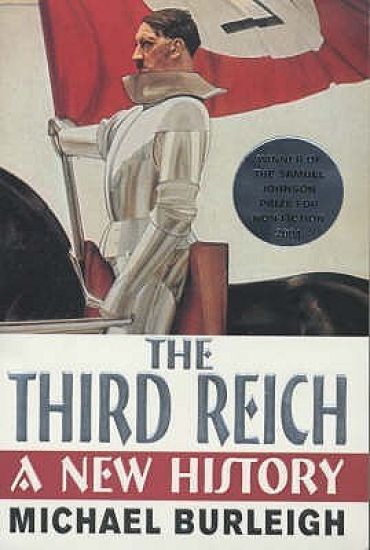
The Third Reich

The Third Reich

Michael Burleigh

Pan Books
2001
pokkari
In this riveting book, Michael Burleigh sets Nazi Germany in a European context, showing how the Third Reich's abandonment of liberal democracy, decency and tolerance was widespread in the Europe of the period. He shows how a radical, pseudo-religious movement, led by an oddity with dazzling demagogic talents, seemed to offer salvation to a German exhausted by war, depression and galloping inflation. 'This is a monumental book.' Richard Overy, Sunday Telegraph 'If I had to recommend one book on the Third Reich, this would be it.' Daniel Johnson, Daily Telegraph 'It is a breathtaking achievement, at once broader and deeper than any other single volume ever published on the subject. Indeed I would go further: it is the product of authentic historical genius.' Niall Ferguson, Sunday Times 'Happily, Michael Burleigh now fills that bibliographical gap, with a readable and highly knowledgeable account of that ghastly period. You will never be bored by this extraordinary book.' Andrew Roberts, Mail on Sunday
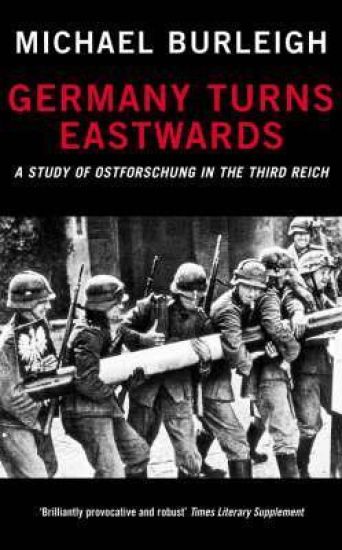
Germany Turns Eastwards

Germany Turns Eastwards

Michael Burleigh

Pan Books
2002
pokkari
Combining intellectual history, biography and the analysis of particular institutions, GERMANY TURNS EASTWARDS shows the relations between the Nazi regime and contemporary scholarly experts on eastern Europe, which eventually put an entire academic discipline on a path which led to biological racism and manipulation under the Nazis. 'Meticulously, stylishly, and with great skill, Burleigh describes the growing links with state authorities, and with the SS, even before the outbreak of the war and German expansion brought about the 'hour of the experts'. Michael Burleigh's excellent study is a chilling account of scholarship working in the interest of inhumane, repulsive political precepts.' Ian Kershaw 'A major contribution to our knowledge of ordinary life in Nazi Germany through its exposure of the ready collaboration of a section of the no-so-muddled majority, the academic profession' History Today 'Michael Burleigh's case against German experts on the East is brilliantly provocative and robust' Times Literary Supplement
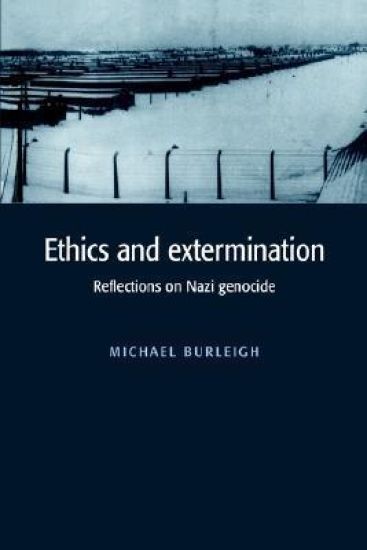
Ethics and Extermination

Ethics and Extermination

Michael Burleigh

Cambridge University Press
1997
sidottu
This series of essays by one of today’s most original and prolific scholars on German racial policy concerns three interrelated aspects of Nazi Germany: relations with ‘the east’, ‘euthanasia’ and extermination. They are linked closely by the sub-themes of professionals or ‘experts’ and an interest in competing systems of morality. The collection includes important and wholly new contributions to the German-Soviet war and other national tragedies; to the controversial question of whether the Nazi analogy has any relevance to contemporary ethical discussions; and to the contemporary historiography, including works of fiction and literary criticism, of the Holocaust. The product of twelve years’ research on Nazi Germany, the book will be essential reading for anyone interested in current scholarship on the period, or indeed in how we might view the period in future decades.
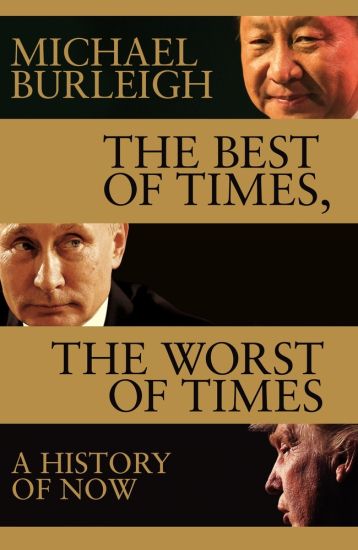
The Best of Times, the Worst of Times: A History of Now
A gripping tour d'horizon of the state of the world as it is in 2017 from an acclaimed historian.In the decades since the end of World War II, it has been widely assumed that the western model of liberal democracy and free trade is the way the world should be governed. However, events in the early years of the 21st century--first, the 2003 war with Iraq and its chaotic aftermath and, second, the financial crash of 2008--have threatened the general acceptance that continued progress under the benign (or sometimes not-so-benign) gaze of the western powers is the only way forwards. And as America turns inwards and Europe is beset by austerity politics and populist nationalism, the post-war consensus looks less and less secure. But is this really the worst of times? In a forensic examination of the world we now live in, acclaimed historian Michael Burleigh sets out to answer that question. Who could have imagined that China would champion globalization and lead the battle on climate change? Or that post-Soviet Russia might present a greater threat to the world's stability than ISIS? And while we may be on the cusp of still more dramatic change, perhaps the risks will--in time--bring not only change but a wholly positive transformation. Incisive, robust, and always insightful, The Best of Times, The Worst of Times is both a dazzling tour d'horizon of the world as it is today and a surprisingly optimistic vision of the world as it might become.
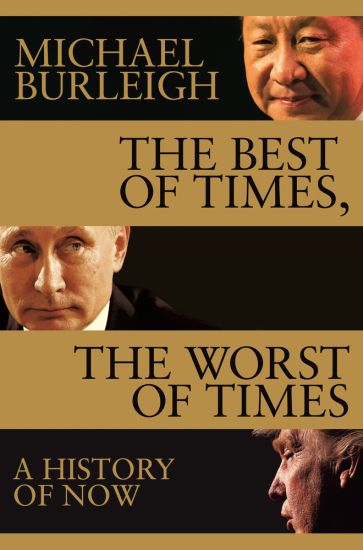
The Best of Times, The Worst of Times

The Best of Times, The Worst of Times

Michael Burleigh

Pan Books
2018
pokkari
In the decades since the end of the Second World War, it has been widely assumed that the western model of liberal democracy and free trade is the way the world should be governed. However, events in the early years of the twenty-first century – first, the 2003 war with Iraq and its chaotic aftermath and, second, the financial crash of 2008 – have threatened the general acceptance that continued progress under the benign (or sometimes not so benign) gaze of the western powers is the only way forwards. And as America turns inwards and Europe is beset by austerity politics and populist nationalism, the post-war consensus looks less and less secure. But is this really the worst of times? In a forensic examination of the world we now live in, acclaimed historian Michael Burleigh sets out to answer that question. Who could have imagined that China would champion globalization and lead the battle on climate change? Or that post-Soviet Russia might present a greater threat to the world’s stability than ISIS? And while we may be on the cusp of still more dramatic change, perhaps the risks will – in time – bring not only change but a wholly positive transformation.Incisive, robust and always insightful, The Best of Times, The Worst of Times by Michael Burleigh is both a dazzling tour d’horizon of the world as it is today and a surprisingly optimistic vision of the world as it might become.
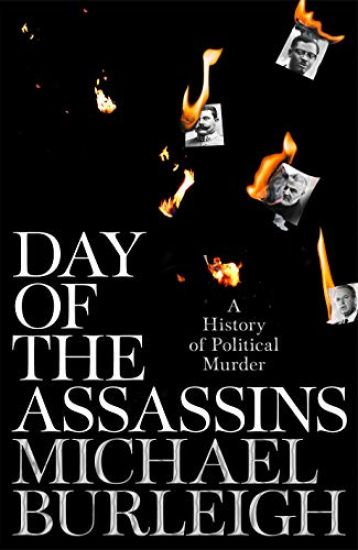
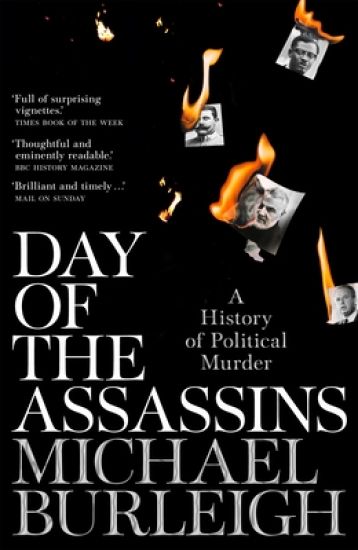
Day of the Assassins

Day of the Assassins

Michael Burleigh

PAN MACMILLAN
2022
pokkari
‘Written with Burleigh’s characteristic brio, with pithy summaries of historical moments (he is brilliant on the Americans in Vietnam, for example) and full of surprising vignettes’ – The Times ’Book of the Week’In Day of the Assassins, acclaimed historian Michael Burleigh examines assassination as a special category of political violence and asks whether, like a contagious disease, it can be catching.Focusing chiefly on the last century and a half, Burleigh takes readers from Europe, Russia, Israel and the United States to the Congo, India, Iran, Laos, Rwanda, South Africa and Vietnam. And, as we travel, we revisit notable assassinations, among them Leon Trotsky, Hendrik Verwoerd, Juvénal Habyarimana, Indira Gandhi, Yitzhak Rabin and Jamal Khashoggi.Combining human drama, questions of political morality and the sheer randomness of events, Day of the Assassins is a riveting insight into the politics of violence.‘Brilliant and timely . . . Our world today is as dangerous and mixed-up as it has ever been. Luckily we have Michael Burleigh to help us make sense of it.’ – Mail on Sunday
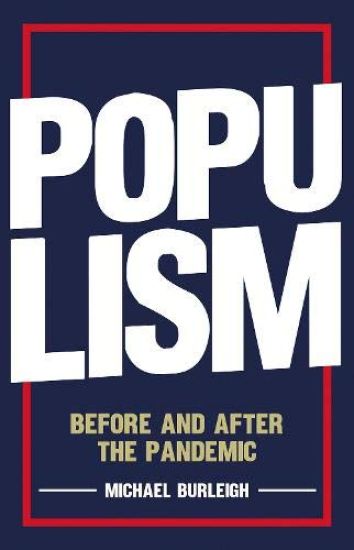
Populism

Populism

Michael Burleigh

C Hurst Co Publishers Ltd
2021
sidottu
We are said to be living in an age of anger, and national populist movements are often identified as its political manifestation. In Populism Michael Burleigh explores this new global era, drawing on his Engelsberg Lectures. The first chapter explores the nature of mass anger, mainly in Europe and the US: how might popular discontent be artificially incited and sustained by elite figures claiming to speak for the common people? The second chapter compares the difficult aftermaths of empire in Britain and Russia. Has that experience fostered these countries' sense of exceptionality and inability to evolve into normal societies? Many national populist movements exploit History, as we saw with the so-called 'statue wars' reignited in 2020. The third chapter ranges across Europe, but also China, where a nationalised version of History has become intrinsic to social support for the ruling Communist Party. In the short term, COVID-19 has created problems for several populist leaders, whose image has suffered amidst the public's new-found respect for expertise and unfavourable comparisons with less shouty politicians who have handled the pandemic differently. Yet, with the looming risk of an extended economic depression, Burleigh fears that new post-populists may arise in the long run.