Kirjojen hintavertailu. Mukana 11 583 192 kirjaa ja 12 kauppaa.

Kirjahaku

Etsi kirjoja tekijän nimen, kirjan nimen tai ISBN:n perusteella.

37 kirjaa tekijältä Michael Carlberg

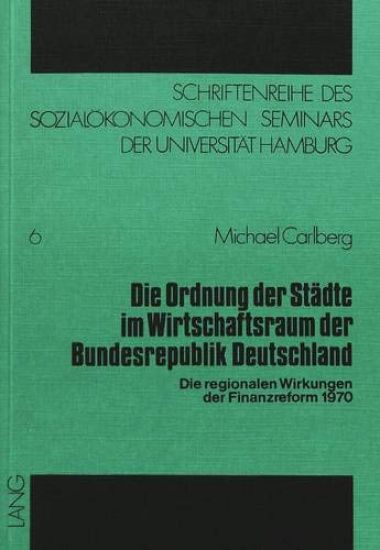
Die Ordnung Der Staedte Im Wirtschaftsraum Der Bundesrepublik Deutschland

Die Ordnung Der Staedte Im Wirtschaftsraum Der Bundesrepublik Deutschland

Michael Carlberg

Herbert Cie Lang AG, Buchhandlung Antiquariat
1977
nidottu
Die mangelhafte Finanzausstattung der Kommunen wird in der politischen Diskussion seit Jahren gebrandmarkt. Die Kommunen fordern aus diesem Grunde eine Verbesserung der Einnahmestruktur, die der Aufgabenverteilung gerecht wird. Hand in Hand mit dieser Diskussion gehen Reformmassnahmen wie die Finanzreform 1970, die die finanzielle Position der Kommunen verandert haben. Die damit verbundenen Probleme werden theoretisch und empirisch untersucht."
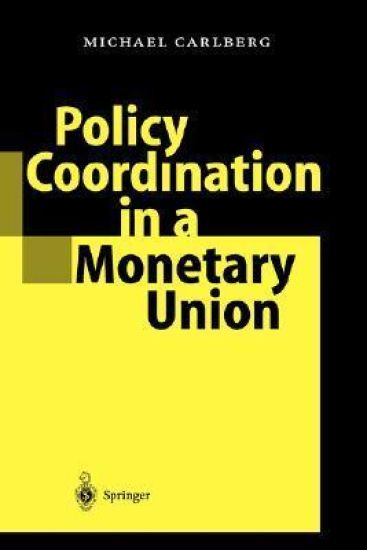
Policy Coordination in a Monetary Union

Policy Coordination in a Monetary Union

Michael Carlberg

Springer-Verlag Berlin and Heidelberg GmbH Co. K
2003
sidottu
A comprehensive study of the international coordination of economic policy in a monetary union. It carefully discusses the process of policy competition and the structure of policy cooperation. As to policy competition, the focus is on competition between the union central bank, the German government, and the French government. Similarly, as to policy cooperation, the focus is on cooperation between the union central bank, the German government, and the French government. The key questions are: Does the process of policy competition lead to full employment and price stability? Can these targets be achieved through policy cooperation? And is policy cooperation superior to policy competition? Another important issue is monetary competition / monetary cooperation between Europe and America.
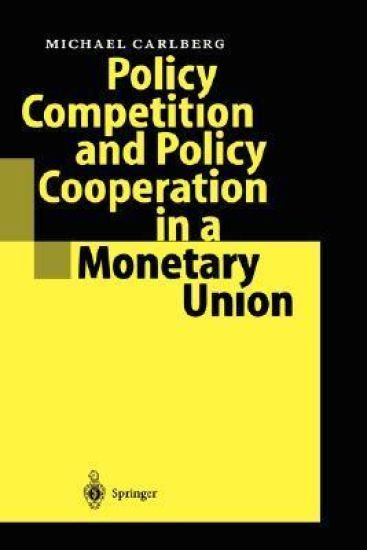
Policy Competition and Policy Cooperation in a Monetary Union

Policy Competition and Policy Cooperation in a Monetary Union

Michael Carlberg

Springer-Verlag Berlin and Heidelberg GmbH Co. K
2004
sidottu
European monetary unification seems to be one of the most important events in international monetary affairs since the breakdown of Bretton Woods. It pos es a major challenge to central banks, governments, and labour unions. It opens up new fields of economic research that are both intriguing and fascinating. European Monetary Union amounts to a switch of regime. Surely the Mundell­ Fleming model of the open economy does no longer apply to Germany or France. The effects of shocks and policies on output and prices should have changed dramatically in size. Some of them should even work in the opposite direction now. The present book is part of a larger research project on monetary union, see Carlberg (1999, 2000, 2001, 2002, 2003). Some parts of this project were presented at the World Congress of the International Economic Association in Lisbon. Other parts were presented at the Macro Study Group of the German Economic Association, at the Annual Meeting of the Austrian Economic Association in Klagenfurt, at the Pass au Workshop on International Economics, at the Halle Workshop on Monetary Economics, and at the Research Seminar on Macroeconomics in Freiburg. Moreover, book reviews were published in the Economic Journal, Kyklos, the Journal of Economics, and the Journal of Economics and Statistics.
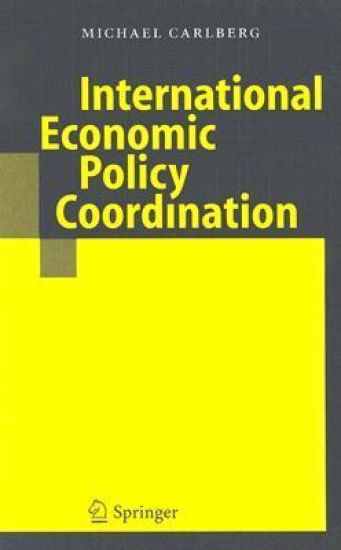
International Economic Policy Coordination

International Economic Policy Coordination

Michael Carlberg

Springer-Verlag Berlin and Heidelberg GmbH Co. K
2005
sidottu
This book studies the international coordination of monetary and fiscal policies in the world economy. It carefully discusses the process of policy competition and the structure of policy cooperation. As to policy competition, the focus is on monetary and fiscal competition between Europe and America. Similarly, as to policy cooperation, the focus is on monetary and fiscal cooperation between Europe and America. The spillover effects of monetary policy are negative while the spillover effects of fiscal policy are positive. The policy targets are price stability and full employment. The policy makers follow either cold-turkey or gradualist strategies. Policy expectations are adaptive or rational. The world economy consists of two, three or more regions. The present book is part of a larger research project on European Monetary Union, see the references at the back of the book. Some parts of this project were presented at the World Congress of the International Economic Association in Lisbon. Other parts were presented at the International Institute of Public Finance, at the Macro Study Group of the German Economic Association, at the Annual Meeting of the Austrian Economic Association, at the Gottingen Workshop on International Economics, at the Halle Workshop on Monetary Economics, at the Research Seminar on Macroeconomics in Freiburg, and at the Passau Workshop on International Economics.
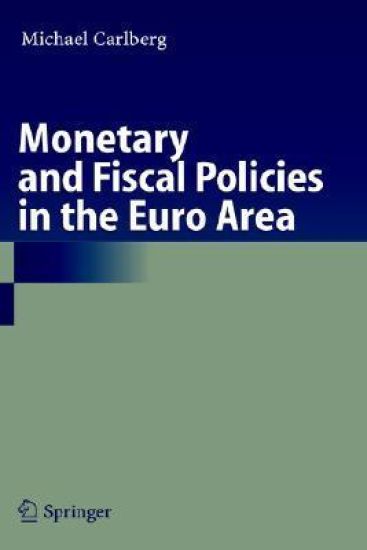
Monetary and Fiscal Policies in the Euro Area

Monetary and Fiscal Policies in the Euro Area

Michael Carlberg

Springer-Verlag Berlin and Heidelberg GmbH Co. K
2005
sidottu
This book studies the interactions between monetary and fiscal poUcies in the euro area. It carefully discusses the process of policy competition and the structure of policy cooperation. As to policy competition, the focus is on competition between the European central bank, the American central bank, the German government, and the French government. As to policy cooperation, the focus is on the same institutions. These are higher-dimensional issues. The pohcy targets are price stability and full employment. The policy makers follow co- turkey or gradualist strategies. The policy decisions are taken sequentially or simultaneously. Monetary and fiscal policies have spillover effects. Special features of this book are numerical simulations of policy competition and numerical solutions to policy cooperation. The present book is part of a larger research project on European Monetary Union, see the references at the back of the book. Some parts of this project were presented at the World Congress of the International Economic Association. Other parts were presented at the International Conference on Macroeconomic Analysis, at the International Institute of Public Finance, at the Macro Study Group of the German Economic Association, at the Annual Meeting of the Austrian Economic Association, at the Gottingen Workshop on International Economics, at the Halle Workshop on Monetary Economics, at the Research Seminar on Macroeconomics in Freiburg, and at the Passau Workshop on International Economics.
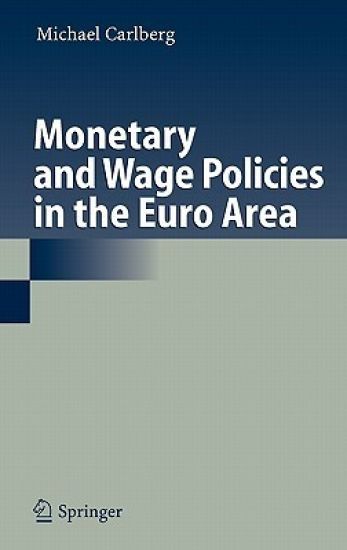
Monetary and Wage Policies in the Euro Area

Monetary and Wage Policies in the Euro Area

Michael Carlberg

Springer-Verlag Berlin and Heidelberg GmbH Co. K
2006
sidottu
This book studies the interactions between monetary and wage pohcies in the euro area. It carefully discusses the process of policy competition and the structure of policy cooperation. As to policy competition, the focus is on competition between the European central bank, the American central bank, the German labour union, and the French labour union. As to policy cooperation, the focus is on the same institutions. These are higher-dimensional issues. The policy targets are price stability and full employment. The policy makers follow co- turkey or gradualist strategies. The policy decisions are taken sequentially or simultaneously. Monetary and wage policies have spillover effects. Special features of this book are numerical simulations of policy competition and numerical solutions to policy cooperation. The present book is part of a larger research project on European Monetary Union, see the references at the back of the book. Some parts of this project were presented at the World Congress of the International Economic Association, at the International Conference on Macroeconomic Analysis, at the International Institute of Public Finance, and at the International Atlantic Economic Conference. Other parts were presented at the Macro Study Group of the German Economic Association, at the Annual Meeting of the Austrian Economic Association, at the Gottingen Workshop on International Economics, at the Halle Workshop on Monetary Economics, at the Research Seminar on Macro­ economics in Freiburg, and at the Passau Workshop on International Economics.
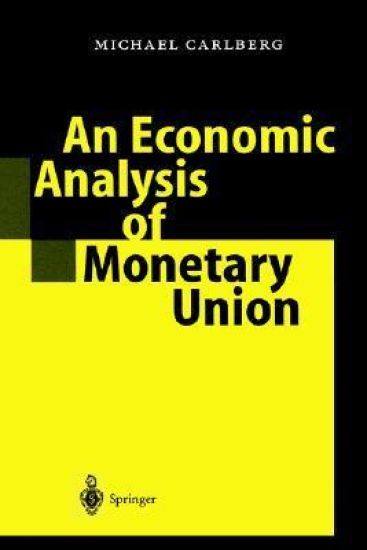
An Economic Analysis of Monetary Union

An Economic Analysis of Monetary Union

Michael Carlberg

Springer-Verlag Berlin and Heidelberg GmbH Co. K
2001
sidottu
This book explores the new economics of monetary UnIon. It carefully discusses the effects of shocks and policies on output and prices. Shocks and policies are country-specific or common. They occur on the demand or supply side. Countries can differ in behavioural functions. Wages can be fixed, flexible, or slow. In addition, fixed wages and flexible wages can coexist. Take for instance fixed wages in Germany and flexible wages in France. Or take fixed wages in Europe and flexible wages in America. A special feature of this book is the numerical estimation of shock and policy multipliers. Further topics are inflation and disinflation. Take for instance inflation in Germany and price stability in France. Then what policy is needed for disinflation in the union? And what will be the dynamic effects on Germany and France? The present book is part of a larger research project on monetary union, see Carlberg (1999, 2000). Over the years, in working on this project, I have benefited from comments by lain Begg, Christopher Bliss, Michael Cyrus, Johannes Hackmann, Bemd Hayo, Jay H. Levin, Jochen Michaelis, Franco Reither, Gerhard Rubel, Wolf Schafer, Michael Schmid, and Artur Woll. In addition, Michael Brauninger and Alkis Otto carefully discussed with me all parts of the manuscript. Last but not least, Doris Ehrich did the secretarial work as excellently as ever. I would like to thank all of them. March 2001 Michael Carlberg Executive Summary 1) The small monetary union as a whole. First consider monetary policy.
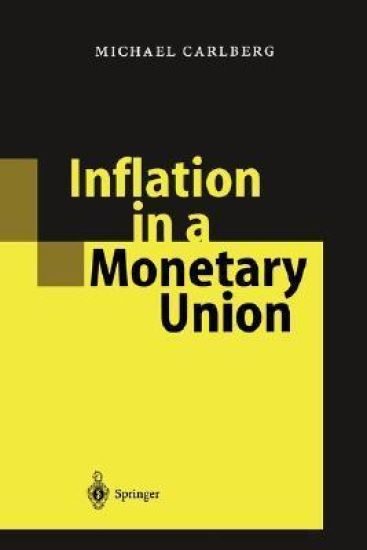
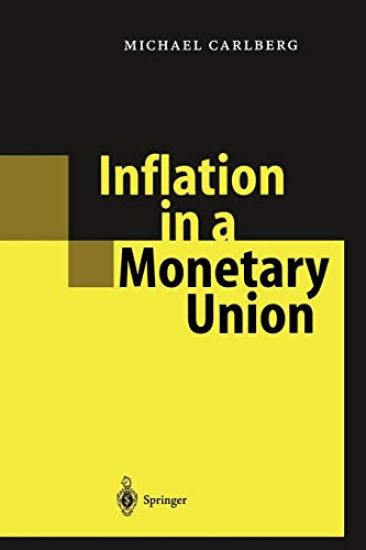
Inflation in a Monetary Union

Inflation in a Monetary Union

Michael Carlberg

Springer-Verlag Berlin and Heidelberg GmbH Co. K
2002
sidottu
This book studies the causes and cures of inflation in a monetary union. It carefully discusses the effects of money growth and output growth on inflation. The focus is on producer inflation, currency depreciation and consumer inflation. For instance, what determines the rate of consumer inflation in Europe, and what in America? Moreover, what determines the rate of consumer inflation in Germany, and what in France? Further topics are real depreciation, nominal and real interest rates, the growth of nominal wages, the growth of producer real wages, and the growth of consumer real wages. Here productivity growth and labour growth play significant roles. Another important issue is target inflation and required money growth. A special feature of this book is the numerical estimation of shock and policy multipliers. The present book is part of a larger research project on monetary union, see Carlberg (1999, 2000, 2001). Over the years, in working on this project, I have benefited from comments by lain Begg, Christopher Bliss, Volker Clausen, Peter Flaschel, Wilfried Fuhrmann, Michael Funke, Franz X. Hof, Jay H. Levin, Alfred MauBner, Hans G. Monissen, Manfred J. M. Neumann, Klaus Neusser, Franco Reither, Michael Schmid, Jiirgen von Hagen, and Helmut Wagner. In addition, Michael Brauninger and Alkis Otto carefully discussed with me all parts of the manuscript. Last but not least, Doris Ehrich did the secretarial work as excellently as ever. I would like to thank all of them.
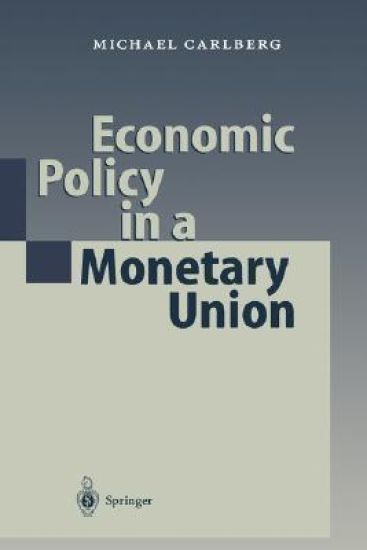
Economic Policy in a Monetary Union

Economic Policy in a Monetary Union

Michael Carlberg

Springer-Verlag Berlin and Heidelberg GmbH Co. K
2000
sidottu
This book explores the scope and limits of macroeconomic policy in a monetary union. The focus is on pure policies, policy mixes, and policy coordination. The leading protagonists are the union central bank, national governments, and national trade unions. Special emphasis is put on wage shocks and wage restraint. This book develops a series of basic, intennediate, and advanced models. A striking feature is the numerical estimation of policy multipliers. A lot of diagrams serve to illustrate the subject in hand. The monetary union is an open economy with high capital mobility. The exchange rate between the monetary union and the rest of the world is floating. The world interest rate can be exogenous or endogenous. The union countries may differ in money demand, consumption, imports, openness, or size. Previous versions of some parts were presented at the Annual Conference of the Gennan Economic Association and . at the Workshop on International Economics. I have benefited from comments by Christopher Bliss, Volker Clausen, Johannes Hackmann, Bernd Hayo, Jay H. Levin, Reinar Ludeke, Dirk Meyer, Jochen Michaelis, Franco Reither, Gerhard Rubel, WolfScMfer, Michael Schmid, Reinhard Selten, Hans-Werner Sinn, Sylvia Staudinger, Thomas Straubhaar, Bas van Aarle, and Artur Woll. In addition, Michael Brauninger and Michael Cyrus carefully discussed with me all parts of the manuscript. Last but not least, Doris Ehrich did the secretarial work as excellently as ever. I wish to thank all of them. Executive Summary 1) The monetary union as a whole. First consider fiscal policy.
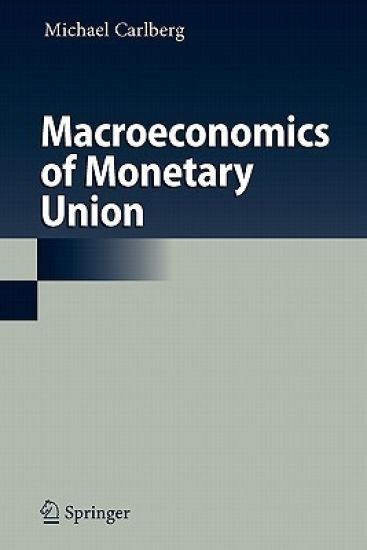
Macroeconomics of Monetary Union

Macroeconomics of Monetary Union

Michael Carlberg

Springer-Verlag Berlin and Heidelberg GmbH Co. K
2007
sidottu
This book, unlike other books, provides readers with a practical yet sophisticated grasp of the macroeconomic principles necessary to understand a monetary union. By definition, a monetary union is a group of countries that share a common currency. The most important case in point is the euro area. Policy makers are the central bank, national governments, and national labour unions. Policy targets are price stability and full employment. Policy makers follow cold-turkey or gradualist strategies. Policy decisions are taken sequentially or simultaneously. The countries can differ in size or behaviour. Policy expectations are adaptive or rational. To illustrate all of this there are numerical simulations of monetary policy, fiscal policy, and wage policy. The present book is part of a larger research project on European Monetary Union, see the references given at the back of the book. Some parts of this project were presented at the World Congress of the International Economic Association, at the International Conference on Macroeconomic Analysis, at the International Institute of Public Finance, and at the International Atlantic Economic Conference. Other parts were presented at the Macro Study Group of the German Economic Association, at the Annual Meeting of the Austrian Economic Association, at the Gottingen Workshop on International Economics, at the Halle Workshop on Monetary Economics, at the Research Seminar on Macroeconomics in Freiburg, at the Research Seminar on Economics in Kassel, and at the Passau Workshop on International Economics.
Inflation and Unemployment in a Monetary Union

Inflation and Unemployment in a Monetary Union

Michael Carlberg

Springer-Verlag Berlin and Heidelberg GmbH Co. K
2008
sidottu
This book studies the coexistence of inflation and unemployment in a monetary union. The focus is on how to reduce the associated loss. The primary target of the European central bank is low inflation in Europe. The primary target of the German government is low unemployment in Germany. And the primary target of the French government is low unemployment in France. The European central bank has a quadratic loss function. The same applies to the German government and the French government. The key questions are: To what extent can the sequential process of monetary and fiscal decisions reduce the loss caused by inflation and unemployment? Is monetary and fiscal cooperation superior to the sequential process of monetary and fiscal decisions? The present book is part of a larger research project on European Monetary Union, see the references given at the back of the book. Some parts of this project were presented at the World Congress of the International Economic Association, at the International Conference on Macroeconomic Analysis, at the International Institute of Public Finance, and at the International Atlantic Economic Conference. Other parts were presented at the Macro Study Group of the German Economic Association, at the Annual Meeting of the Austrian Economic Association, at the Göttingen Workshop on International Economics, at the Halle Workshop on Monetary Economics, at the Research Seminar on Macroeconomics in Freiburg, at the Research Seminar on Economics in Kassel, and at the Passau Workshop on International Economics.
Strategic Policy Interactions in a Monetary Union

Strategic Policy Interactions in a Monetary Union

Michael Carlberg

Springer-Verlag Berlin and Heidelberg GmbH Co. K
2009
sidottu
This book studies the strategic policy interactions in a monetary union. The leading protagonists are the European Central Bank and national governments. The target of the ECB is low inflation in Europe. The targets of a national government are low unemployment and a low structural deficit. There are demand shocks, supply shocks, and mixed shocks. There are country-specific shocks and common shocks. This book develops a series of basic, intermediate, and more advanced models. Here the focus is on the Nash equilibrium. The key questions are: Given a shock, can policy interactions reduce the existing loss? And to what extent can they do so? Another topical issue is policy cooperation. To illustrate all of this there are a lot of numerical examples. The present book is part of a larger research project on European Monetary Union, see the references given at the back of the book. Some parts of this project were presented at the World Congress of the International Economic Association, at the International Conference on Macroeconomic Analysis, at the International Institute of Public Finance, and at the International Atlantic Economic Conference. Other parts were presented at the Macro Study Group of the German Economic Association, at the Annual Meeting of the Austrian Economic Association, at the Göttingen Workshop on International Economics, at the Halle Workshop on Monetary Economics, at the Research Seminar on Macroeconomics in Freiburg, at the Research Seminar on Economics in Kassel, and at the Passau Workshop on International Economics.
Policy Coordination in a Monetary Union

Policy Coordination in a Monetary Union

Michael Carlberg

Springer-Verlag Berlin and Heidelberg GmbH Co. K
2010
nidottu
A comprehensive study of the international coordination of economic policy in a monetary union. It carefully discusses the process of policy competition and the structure of policy cooperation. As to policy competition, the focus is on competition between the union central bank, the German government, and the French government. Similarly, as to policy cooperation, the focus is on cooperation between the union central bank, the German government, and the French government. The key questions are: Does the process of policy competition lead to full employment and price stability? Can these targets be achieved through policy cooperation? And is policy cooperation superior to policy competition? Another important issue is monetary competition / monetary cooperation between Europe and America.
International Economic Policy Coordination

International Economic Policy Coordination

Michael Carlberg

Springer-Verlag Berlin and Heidelberg GmbH Co. K
2010
nidottu
This book studies the international coordination of monetary and fiscal policies in the world economy. It carefully discusses the process of policy competition and the structure of policy cooperation. As to policy competition, the focus is on monetary and fiscal competition between Europe and America. Similarly, as to policy cooperation, the focus is on monetary and fiscal cooperation between Europe and America. The spillover effects of monetary policy are negative while the spillover effects of fiscal policy are positive. The policy targets are price stability and full employment. The policy makers follow either cold-turkey or gradualist strategies. Policy expectations are adaptive or rational. The world economy consists of two, three or more regions. The present book is part of a larger research project on European Monetary Union, see the references at the back of the book. Some parts of this project were presented at the World Congress of the International Economic Association in Lisbon. Other parts were presented at the International Institute of Public Finance, at the Macro Study Group of the German Economic Association, at the Annual Meeting of the Austrian Economic Association, at the Gottingen Workshop on International Economics, at the Halle Workshop on Monetary Economics, at the Research Seminar on Macroeconomics in Freiburg, and at the Passau Workshop on International Economics.
Monetary and Fiscal Policies in the Euro Area

Monetary and Fiscal Policies in the Euro Area

Michael Carlberg

Springer-Verlag Berlin and Heidelberg GmbH Co. K
2010
nidottu
This book studies the interactions between monetary and fiscal poUcies in the euro area. It carefully discusses the process of policy competition and the structure of policy cooperation. As to policy competition, the focus is on competition between the European central bank, the American central bank, the German government, and the French government. As to policy cooperation, the focus is on the same institutions. These are higher-dimensional issues. The pohcy targets are price stability and full employment. The policy makers follow co- turkey or gradualist strategies. The policy decisions are taken sequentially or simultaneously. Monetary and fiscal policies have spillover effects. Special features of this book are numerical simulations of policy competition and numerical solutions to policy cooperation. The present book is part of a larger research project on European Monetary Union, see the references at the back of the book. Some parts of this project were presented at the World Congress of the International Economic Association. Other parts were presented at the International Conference on Macroeconomic Analysis, at the International Institute of Public Finance, at the Macro Study Group of the German Economic Association, at the Annual Meeting of the Austrian Economic Association, at the Gottingen Workshop on International Economics, at the Halle Workshop on Monetary Economics, at the Research Seminar on Macroeconomics in Freiburg, and at the Passau Workshop on International Economics.
Monetary and Wage Policies in the Euro Area

Monetary and Wage Policies in the Euro Area

Michael Carlberg

Springer-Verlag Berlin and Heidelberg GmbH Co. K
2010
nidottu
This book studies the interactions between monetary and wage pohcies in the euro area. It carefully discusses the process of policy competition and the structure of policy cooperation. As to policy competition, the focus is on competition between the European central bank, the American central bank, the German labour union, and the French labour union. As to policy cooperation, the focus is on the same institutions. These are higher-dimensional issues. The policy targets are price stability and full employment. The policy makers follow co- turkey or gradualist strategies. The policy decisions are taken sequentially or simultaneously. Monetary and wage policies have spillover effects. Special features of this book are numerical simulations of policy competition and numerical solutions to policy cooperation. The present book is part of a larger research project on European Monetary Union, see the references at the back of the book. Some parts of this project were presented at the World Congress of the International Economic Association, at the International Conference on Macroeconomic Analysis, at the International Institute of Public Finance, and at the International Atlantic Economic Conference. Other parts were presented at the Macro Study Group of the German Economic Association, at the Annual Meeting of the Austrian Economic Association, at the Gottingen Workshop on International Economics, at the Halle Workshop on Monetary Economics, at the Research Seminar on Macro­ economics in Freiburg, and at the Passau Workshop on International Economics.
An Economic Analysis of Monetary Union

An Economic Analysis of Monetary Union

Michael Carlberg

Springer-Verlag Berlin and Heidelberg GmbH Co. K
2010
nidottu
This book explores the new economics of monetary UnIon. It carefully discusses the effects of shocks and policies on output and prices. Shocks and policies are country-specific or common. They occur on the demand or supply side. Countries can differ in behavioural functions. Wages can be fixed, flexible, or slow. In addition, fixed wages and flexible wages can coexist. Take for instance fixed wages in Germany and flexible wages in France. Or take fixed wages in Europe and flexible wages in America. A special feature of this book is the numerical estimation of shock and policy multipliers. Further topics are inflation and disinflation. Take for instance inflation in Germany and price stability in France. Then what policy is needed for disinflation in the union? And what will be the dynamic effects on Germany and France? The present book is part of a larger research project on monetary union, see Carlberg (1999, 2000). Over the years, in working on this project, I have benefited from comments by lain Begg, Christopher Bliss, Michael Cyrus, Johannes Hackmann, Bemd Hayo, Jay H. Levin, Jochen Michaelis, Franco Reither, Gerhard Rubel, Wolf Schafer, Michael Schmid, and Artur Woll. In addition, Michael Brauninger and Alkis Otto carefully discussed with me all parts of the manuscript. Last but not least, Doris Ehrich did the secretarial work as excellently as ever. I would like to thank all of them. March 2001 Michael Carlberg Executive Summary 1) The small monetary union as a whole. First consider monetary policy.
Inflation in a Monetary Union

Inflation in a Monetary Union

Michael Carlberg

Springer-Verlag Berlin and Heidelberg GmbH Co. K
2010
nidottu
This book studies the causes and cures of inflation in a monetary union. It carefully discusses the effects of money growth and output growth on inflation. The focus is on producer inflation, currency depreciation and consumer inflation. For instance, what determines the rate of consumer inflation in Europe, and what in America? Moreover, what determines the rate of consumer inflation in Germany, and what in France? Further topics are real depreciation, nominal and real interest rates, the growth of nominal wages, the growth of producer real wages, and the growth of consumer real wages. Here productivity growth and labour growth play significant roles. Another important issue is target inflation and required money growth. A special feature of this book is the numerical estimation of shock and policy multipliers. The present book is part of a larger research project on monetary union, see Carlberg (1999, 2000, 2001). Over the years, in working on this project, I have benefited from comments by lain Begg, Christopher Bliss, Volker Clausen, Peter Flaschel, Wilfried Fuhrmann, Michael Funke, Franz X. Hof, Jay H. Levin, Alfred MauBner, Hans G. Monissen, Manfred J. M. Neumann, Klaus Neusser, Franco Reither, Michael Schmid, Jiirgen von Hagen, and Helmut Wagner. In addition, Michael Brauninger and Alkis Otto carefully discussed with me all parts of the manuscript. Last but not least, Doris Ehrich did the secretarial work as excellently as ever. I would like to thank all of them.
Macroeconomics of Monetary Union

Macroeconomics of Monetary Union

Michael Carlberg

Springer-Verlag Berlin and Heidelberg GmbH Co. K
2010
nidottu
This book, unlike other books, provides readers with a practical yet sophisticated grasp of the macroeconomic principles necessary to understand a monetary union. By definition, a monetary union is a group of countries that share a common currency. The most important case in point is the euro area. Policy makers are the central bank, national governments, and national labour unions. Policy targets are price stability and full employment. Policy makers follow cold-turkey or gradualist strategies. Policy decisions are taken sequentially or simultaneously. The countries can differ in size or behaviour. Policy expectations are adaptive or rational. To illustrate all of this there are numerical simulations of monetary policy, fiscal policy, and wage policy. The present book is part of a larger research project on European Monetary Union, see the references given at the back of the book. Some parts of this project were presented at the World Congress of the International Economic Association, at the International Conference on Macroeconomic Analysis, at the International Institute of Public Finance, and at the International Atlantic Economic Conference. Other parts were presented at the Macro Study Group of the German Economic Association, at the Annual Meeting of the Austrian Economic Association, at the Gottingen Workshop on International Economics, at the Halle Workshop on Monetary Economics, at the Research Seminar on Macroeconomics in Freiburg, at the Research Seminar on Economics in Kassel, and at the Passau Workshop on International Economics.