Kirjojen hintavertailu. Mukana 11 342 296 kirjaa ja 12 kauppaa.

Kirjahaku

Etsi kirjoja tekijän nimen, kirjan nimen tai ISBN:n perusteella.

28 kirjaa tekijältä Michael Casey

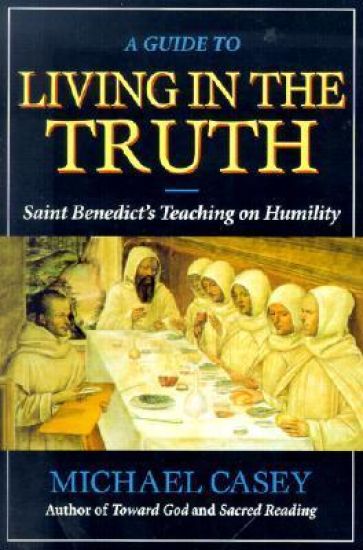
A Guide to Living in the Truth

A Guide to Living in the Truth

Michael Casey

Liguori Publications
2001
pokkari
This book shows us how humility brings a basic happiness that is able to cope with difficulties and sorrows. Casey translates the ancient wisdom of Saint Benedict into the modern arena of capitalistic competition. He also demonstrates how people must stop regarding others as rivals and be content with what we have because it is a waste of time to envy those who possess qualities different than our own. Humble individuals are content with both the gifts and limitations inherent in who they are. Paperback
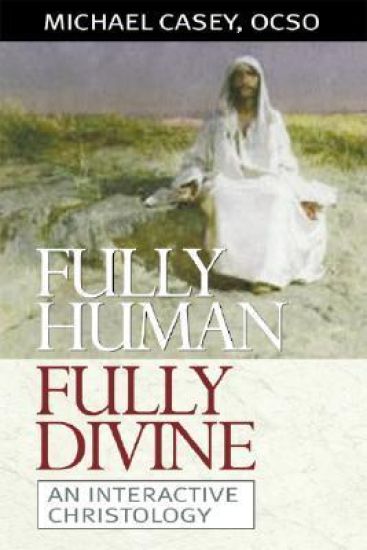
Fully Human, Fully Divine

Fully Human, Fully Divine

Michael Casey

Liguori Publications,U.S.
2004
pokkari
A solid blend of theology and spirituality, this refreshing book introduces the reader -- in an interactive way -- to the humanity and divinity of Jesus. Furthermore, Fully Human, Fully Divine applies its significant points to the reader's spiritual life. Paperback
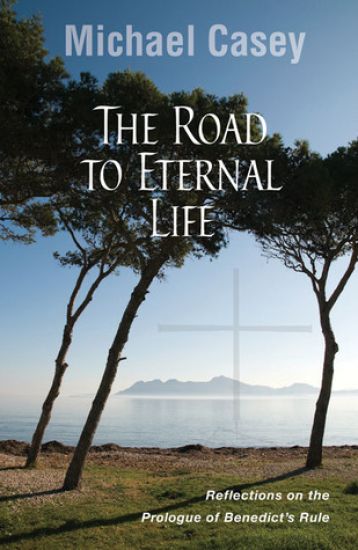
The Road to Eternal Life

The Road to Eternal Life

Michael Casey

Liturgical Press
2012
pokkari
In the Prologue of his Rule, St. Benedict maps out the road that leads to heaven; he lays the foundation for life in a community that seeks God. The themes that are present throughout the Rule - obedience, humility, prayer, fear of the Lord, eternal life - are grounded in the Prologue.By reflecting on the Prologue one verse at a time, Michael Casey, OCSO, delves into the richness of meaning that can be found in Benedict's words. These reflections, first given as talks and made available on his community's web site, build a bridge between the sixth-century text and twenty-first-century Christians. In The Road to Eternal Life, Casey invites readers to reflect on the Prologue in light of their own experiences, to seek the road that leads to salvation.
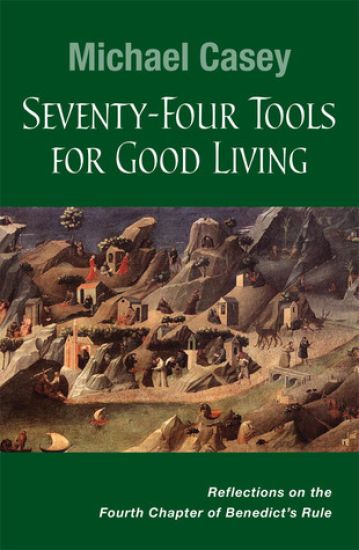
Seventy-Four Tools for Good Living

Seventy-Four Tools for Good Living

Michael Casey

Liturgical Press
2014
pokkari
There is more in Benedict’s Rule than meets the eye. Based on the rules of life of John Cassian and Saint Basil, Benedict invites us to go further back to the scriptural basis of all Christian and monastic living and pursue our spiritual journey by the guidance of the Gospel.This book of reflections on the tools for good living is intended to be read very slowly, one section at a time. In addition to communicating reflections on each verse of chapter 4, Casey invites readers to:· continue the process of reflection for themselves· apply what is written to their own lives· draw on their own wisdom and insight· and, ultimately, broaden their experience of monastic spirituality
Balaam?s Donkey

Balaam?s Donkey

Michael Casey

Liturgical Press
2019
pokkari
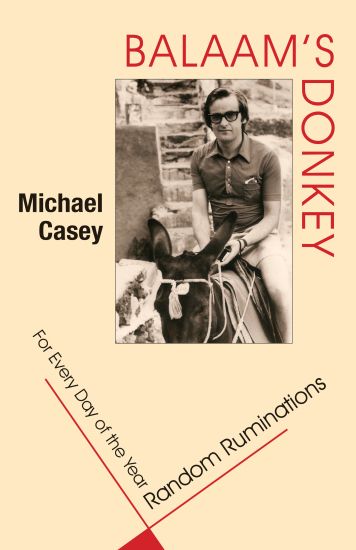
Balaam’s Donkey is a series of daily reflections based on the homilies preached by Cistercian monk Michael Casey over his fifty years of priesthood. What remained of the original homilies was a large box full of index cards with a few talking points on each. From there, Casey has re-created the homilies and recast them into short reflections, arranged randomly for every day of the year. The range of topics discussed is broad and the approach taken differs with each reflection, most of them colored with a touch of Casey’s whimsy and good humor.
The Art of Winning Souls

The Art of Winning Souls

Michael Casey

Liturgical Press
2012
pokkari
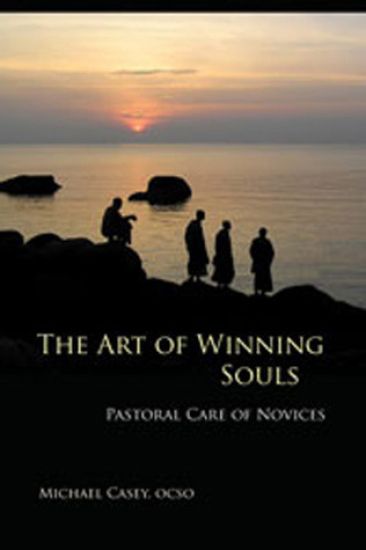
In his chapter on the procedure for the reception of new brothers, Saint Benedict makes provision for entrusting them to the care of "a senior who is skilled in winning souls who will diligently pay attention to them in everything" (58.6). In The Art of Winning Souls: Pastoral Care of Novices, Michael Casey, OCSO, reflects on what this means today, based on his own experience and observation of the fruitful ministry of others.Here Casey focuses on the pastoral care given in the name of a monastic community to those who enter it, from initial contact up to the point where their vocation has recognizably stabilized. His reflections are not intended to be prescriptive. They are, rather, descriptive of what he considers to be best practice, as he has encountered this in his experience of many different expressions of the monastic and Benedictine charism. This book promises to serve as an indispensable resource for vocation directors, novice directors, and junior directors for years to come.
Coenobium

Coenobium

Michael Casey

Liturgical Press
2021
pokkari
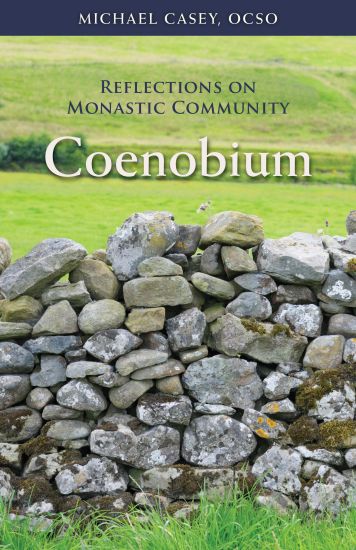
After sixty years of living in a Cistercian community, Michael Casey combines his down-to-earth observations about the joys and challenges of living in community with an appreciation of the deeper meanings of cenobitic life, taking into account the changes in both theory and practice that have occurred in his lifetime. He invites his readers, especially monks and nuns, to reflect on their own experiences of community as a means of seeing a path forward into the future. Many of the key components of monastic community have kept the same names for more than a millennium. In an age of paradigm shift, Michael Casey invites readers to examine these essential practices of community life and to ask how they might be envisioned in a way that speaks to our contemporaries.
There It Is

There It Is

Michael Casey

Loom Press
2017
nidottu
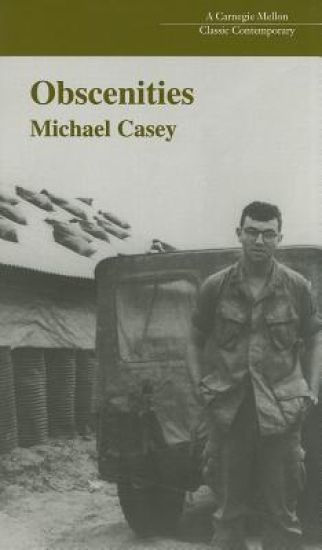
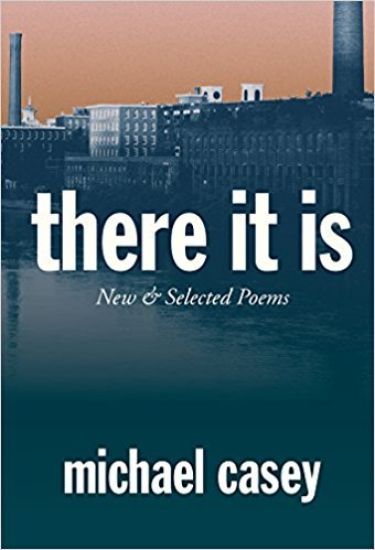
In 1972, Michael Casey won the Yale Younger Poets Prize for Obscenities, a collection of poems drawn from his military experience during the Vietnam War. In his foreword to the book, judge Stanley Kunitz called the work a kind of anti-poetry that befits a kind of war empty of any kind of glory and the first significant book of poems written by an American to spring from the war in Vietnam. Its raw depictions of wars mundanity and obscenity resonated with a broad audience, and Obscenities went into a mass market paperback edition, and was stocked in drugstores as well as bookstores. In the decades since, Caseys poetry has continued to document the places of his work and life. Then and now, his poems foreground the voices around him over that of a single author; they are the words of young American conscripts and their Vietnamese counterparts, co-workers and bosses, neighbours and strangers. His compressed sketches and unadorned monologues have appeared in The New York Times, The Nation, and Rolling Stone. There It Is: New and Selected Poems presents, for the first time, a full tour through Caseys work, from his 1972 debut to 2011s Check Points, together with new and uncollected work from the late 60s on. Here are all the locations of Caseys life and work -- Lowell to Landing Zone, dye house to desk -- and an ensemble cast with a lot to say. The publication of Michael Casey's New and Selected Poems, with his quirky portraits of ordinary Americans, is an event to celebrate. Like a photographer snapping pictures relentlessly, he must have written a poem about everyone he ever met with dead-on realism. Compared to him, the Spoon River Anthology is a work for kiddies.
The Promise of Deliverance

The Promise of Deliverance

Michael Casey

ORBIS BOOKS (USA)
2021
pokkari
The Promise of Deliverance is a series of reflections on important themes of Second Isaiah, intended to inspire readers of this biblical text. Each chapters reflects on a variety of themes from Isaiah 40-55: consolation, transcendence, servanthood, glory, sin, compassion, awake and deliverance. The book guides the reader to see how these themes keep emerging, how they are intertwined, and how they build up a complex message of hope, which is as relevant in our times as it was originally.
To Love This Earthly Life

To Love This Earthly Life

Michael Casey

ORBIS BOOKS (USA)
2022
pokkari
To Love this Earthly Life, reflections on the book of Ecclesiastes, is the latest work by Trappist monk Michael Casey, whose biblical studies bridge the divide between scholarly analysis and prayerful reflection. The title may surprise readers, who regard the author Qoheleth as a gloomy fellow. But as Fr. Casey notes, "His central point is, quite simply: Make the most of your life as it is, because it is the only one you will ever have. . . . If we cannot love the reality we see, any love we profess toward what is unseen must be considered delusional. . . . So, let's get on with it." Examining such themes as vanity, God, wisdom, time, and carpe diem, Fr. Casey shows how they all build to a constant message of hope by living in the present.
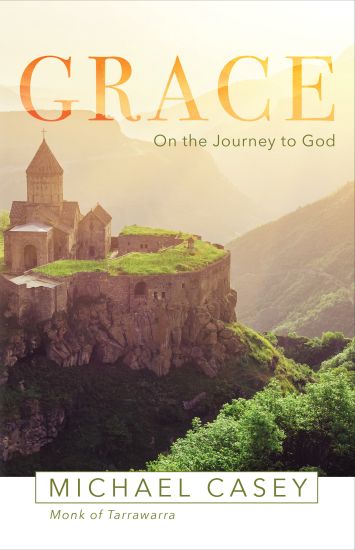
Grace

Grace

Michael Casey

PARACLETE PRESS
2018
nidottu
Benedictine monastic spirituality has emerged as an antidote to the spiritual and cultural challenges facing people of faith today. In this book, the author focuses specifically on GRACE, and the benevolence of God as it expresses itself in many different ways along our spiritual journey. What is a person likely to experience when beginning to give up him or herself conscientiously to the spiritual journey? In this beautiful guide, gradually, we come to realize that everything that happens in our lives is somehow the gift of our loving Father.Every journey is ultimately individual. As Casey explains, what you hear within your own spirit is more significant than what he can say. But his aim is to help you listen to the voice of God in your heart.
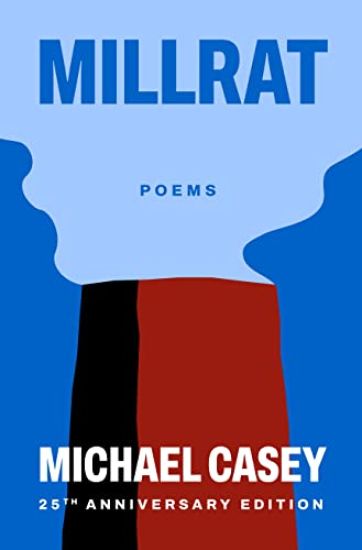
Millrat

Millrat

Michael Casey

Loom Press
2022
nidottu
"The poems in Millrat are full of blessed and flawed humanity, based on author Michael Casey’s experience working in a textile mill in Lowell, Massachusetts, in the 1960s. This is a 25th anniversary edition of the book, with additional poems plus commentary by early reviewers and contemporary writers. The book gained national attention when first released in 1996. Poet Michael Casey writes, “My writing about the mills stemmed from the jobs during summers from college, undergrad school at the Lowell Technological Institute (LTI, now University of Massachusetts, Lowell) and then later when on leave from the State University of New York in Buffalo. A friend told me not to give the phony impression that the jobs there were at that time my career. Mention that here in compliance. I did not always work at a textile mill but for a book’s setting in Lowell, the textile mill was appropriate. Lowell was where the other American revolution began. History. The Industrial Revolution. For any writer at any time you are apt to write about what you are doing. I have to say think of Robert Frost and apple picking or Fred Voss at the airplane factory and writing about factory work is not restricted to men. I can recommend here the wonderful books by Inez Holden. Author Jeanne Schinto wrote in The Nation magazine: “In 1972, when Michael Casey was twenty-four, he won the Yale Younger Poets award with a book called Obscenities. Stanley Kunitz called it “the first significant book of poems written by an American to spring from the war in Vietnam.” . . . “Casey didn’t see action in Vietnam; he was in the military police, assigned to the highway patrol and gate-guard duty. So it’s no wonder that very little of Obscenities is about combat; instead, many of the poems illuminate the Army’s pecking order and its hyper-logical nonsense. In Millrat, Casey explores the mill hierarchy, at times even more complex than the military’s, since the rules there are less rigid and the consequences of disobeying them less certain. You may not lose your job, but you may lose face, which is often more valued. . . .” Poet Helena Minton says, “Michael Casey’s Millrat, first published twenty-five years ago by Adastra Press in western Massachusetts, is a novel distilled, spoken in a series of distinctly American voices. These laconic, but visceral poems, with their blunt language, immerse us in the world of a textile mill, featuring characters whose mishaps, trials and escapades sometimes land them “on the outside lookin in.” “In deceptively simple, yet startlingly original lines, Casey uses true sleight-of-hand. The job at the mill involves heavy machinery, dangerous chemicals and working with others who can’t be counted on for much of anything. Even moments of downtime—at the coffee truck, a softball game, a picnic, or signing up for the company betting pool, with its byzantine rules—are fraught with complications. On first reading, we might be tempted look at the world of the millrat as absurd, but it is all too real, and we laugh at our own peril. Thanks to Loom Press, Millrat will remain in print. It already has the feel of a classic, and should be widely read and re-read."