Kirjojen hintavertailu. Mukana 11 342 296 kirjaa ja 12 kauppaa.

Kirjahaku

Etsi kirjoja tekijän nimen, kirjan nimen tai ISBN:n perusteella.

10 kirjaa tekijältä Michael Chanan

The Dream That Kicks

The Dream That Kicks

Michael Chanan

Routledge
1995
nidottu
The Dream the Kicks is a classic account of the prehistory and early years of cinema in Britain. In this new paperback edition, which has been thoroughly revised to take into account recent scholarship of early cinema, Michael Chanan provides a fasciniating account of the rich and hitherto hidden history of the origins of film. Chanan demonstrates that the theory of `the persistence of vision', which led to the invention of moving pictures, has been superceded by modern scientific findings. In its place, he puts forward a theory of invention as a type of bricolage, and shows that cinematography was a product of the forces of nineteenth century capitalism. He discusses the wealth of influences, both popular and bourgeois, on the culture of early cinema, including diorama, the magic lantern, itinerant entertainers and music hall. He looks at the relationship between film and photography, and considers the nascent film business, the ways in which early cinema was received by its audiences and the developing aesthetics of cinema in its first fifteen years.
From Printing to Streaming

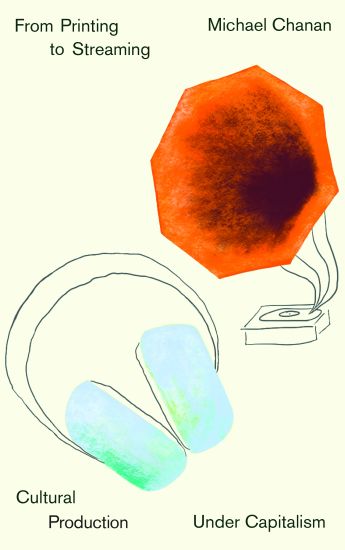
From Printing to Streaming

Michael Chanan

PLUTO PRESS
2022
sidottu
**Shortlisted for the Deutscher Memorial Prize 2023** For mainstream economics, cultural production raises no special questions: creative expression is to be harvested for wealth creation like any other form of labour. As Karl Marx saw it, however, capital is hostile to the arts because it cannot fully control the process of creativity. But while he saw the arts as marginal to capital accumulation, that was before the birth of the mass media. Engaging with the major issues in Marxist theory around art and capitalism, From Printing to Streaming traces how the logic of cultural capitalism evolved from the print age to digital times, tracking the development of printing, photography, sound recording, newsprint, advertising, film and broadcasting, exploring the peculiarities of each as commodities, and their recent transformation by digital technology, where everything melts into computer code. Showing how these developments have had profound implications for both cultural creation and consumption, Chanan offers a radical and comprehensive analysis of the commodification of artistic creation and the struggle to realise its potential in the digital age.
From Printing to Streaming

From Printing to Streaming

Michael Chanan

PLUTO PRESS
2022
pokkari
**Shortlisted for the Deutscher Memorial Prize 2023** For mainstream economics, cultural production raises no special questions: creative expression is to be harvested for wealth creation like any other form of labour. As Karl Marx saw it, however, capital is hostile to the arts because it cannot fully control the process of creativity. But while he saw the arts as marginal to capital accumulation, that was before the birth of the mass media. Engaging with the major issues in Marxist theory around art and capitalism, From Printing to Streaming traces how the logic of cultural capitalism evolved from the print age to digital times, tracking the development of printing, photography, sound recording, newsprint, advertising, film and broadcasting, exploring the peculiarities of each as commodities, and their recent transformation by digital technology, where everything melts into computer code. Showing how these developments have had profound implications for both cultural creation and consumption, Chanan offers a radical and comprehensive analysis of the commodification of artistic creation and the struggle to realise its potential in the digital age.
Memories Of Underdevelopment

Memories Of Underdevelopment

Michael Chanan

Rutgers University Press
1990
nidottu
Memories of Underdevelopment was the first great international success of Cuban cinema. The film provides a complex portrait of Sergio, a disaffected bourgeois intellectual who remains in Havana after the Revolution, suspended between two worlds. He can no longer accept the values of his family's reactionary past and yet boredom and the conditioning of his early life prevent him from committing himself to the new revolutionary society. Sergio's story is played out in the turbulent period of the Bay of Pigs invasion and the 1962 missile crisis, events he can only watch on his television screen or from his apartment balcony.The film, initially banned by the U.S. government as part of its trade quarantine of Cuba, was shown here five years after its original release. But American critics responded enthusiastically to it and the National Society of Film Critics bestowed an award on its director. This double volume includes the complete continuity script of Memories, as well as the complete novel, Inconsolable Memories, upon which the film is based. An interview with Alea is reproduced here, as well as documentation of the political controversy that surrounded the film in this country. Michael Chanan's introduction places the film in the context of Cuban political and cultural history. The volume also includes a biographical sketch of Alea, a chronology of the Cuban Revolution, reviews, commentary, a filmography, and a bibliography.Michael Chanan lives in England, where he teaches and writes on film. He is the author of The Cuban Image: Cinema and Cultural Politics in Cuba.
Cuban Cinema

Cuban Cinema

Michael Chanan

University of Minnesota Press
2004
nidottu
The earliest films made in Cuba—newsreel footage of the Cuban-Spanish-American War—date from the end of the nineteenth century, but Cuba cannot be said to have had an indigenous film industry before the revolution of 1959. The melodramas, musicals, and comedies made until then reflected Hollywood's—and the United States's—cultural domination of the island, but the revolution precipitated urgent debates about the role of cinema in a socialist country and the kinds of films best suited to the needs of the people and their rulers. Among the feature films, documentaries, and short subjects made in accordance with revolutionary principles are celebrated works by Tomás Gutiérrez Alea, Humberto Solás, and other filmmakers who have had a profound influence on both Latin American and world cinema.Michael Chanan provides a comprehensive, authoritative, and absorbing account of Cuban cinema both before and after the revolution, deftly setting individual films and filmmakers within the larger framework of Cuba's social, political, and cultural history. First published as The Cuban Image in 1984 to wide acclaim, Cuban Cinema now appears in a new, expanded edition that updates Chanan's discussion to the beginning of the twenty-first century. New chapters address ongoing concerns about freedom of expression; Havana's restored importance within the Latin American film industry through the Havana Film Festival, before state support for filmmakers dwindled in the economic collapse that followed the fall of the Soviet Union; Cuban cinema's place within the globalized cultural market; and the changing audience for Cuban films. The only book-length study of Cuban cinema written in English, this indispensable work on one of the world's most vital national cinemas offers a unique perspective on the Cuban experience in the twentieth century.Michael Chanan is a documentary filmmaker and professor of cultural and media studies at the University of the West of England in Bristol.
The Dream That Kicks

The Dream That Kicks

Michael Chanan

Routledge
2017
sidottu
The Dream the Kicks is a classic account of the prehistory and early years of cinema in Britain. In this new paperback edition, which has been thoroughly revised to take into account recent scholarship of early cinema, Michael Chanan provides a fasciniating account of the rich and hitherto hidden history of the origins of film. Chanan demonstrates that the theory of `the persistence of vision', which led to the invention of moving pictures, has been superceded by modern scientific findings. In its place, he puts forward a theory of invention as a type of bricolage, and shows that cinematography was a product of the forces of nineteenth century capitalism. He discusses the wealth of influences, both popular and bourgeois, on the culture of early cinema, including diorama, the magic lantern, itinerant entertainers and music hall. He looks at the relationship between film and photography, and considers the nascent film business, the ways in which early cinema was received by its audiences and the developing aesthetics of cinema in its first fifteen years.
Politics of Documentary

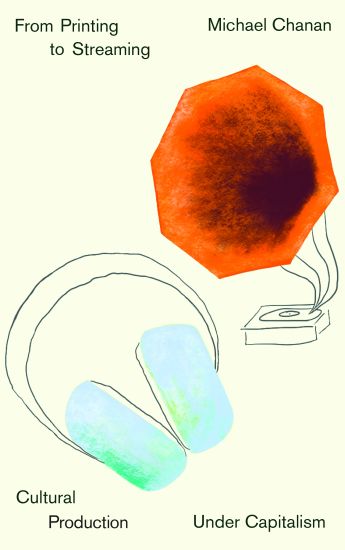
Politics of Documentary

Michael Chanan

BFI Publishing
2007
nidottu
This wide-ranging study traces the history of the documentary from the first Lumiere films to Michael Moore's 'Fahrenheit 9/11'. Chanan argues that documentary makes a vital contribution to the public sphere - where ideas are debated, opinion formed and those in authority are held to account.
Musica Practica

Musica Practica

Michael Chanan

Verso Books
1994
nidottu
Musica Practica is a historical investigation into the social practice of Western music which advances an alternative approach to that of established musicology. Citing evidence from Barthes, Nietzsche, Bakhtin, Max Weber and Schoenberg, Michael Chanan explores the communal roots of the musical tradition and the effects of notation on creative and performing practice. He appraises the psychological wellsprings of music using the insights of linguistics, semiotics and psychoanalysis. Tracing the growth of musical printing and the creation of a market for the printed score, he examines the transformation of patronage with the demise of the ancien régime, and draws on little-known texts by Marx to analyze the formation of the musical economy in the nineteenth century.Chanan sketches out an unwritten history of musical instruments as technology, from Tutankhamen's trumpets to the piano, the ancient Greek water organ to the digital synthesizer. The book concludes with reflections on the rise of modernism and the dissolution of the European tradition in a sea of postmodernism and "world music."Musica Practica assumes no specialist knowledge of music beyond an ordinary familiarity with common terms and an average acquaintance with the music of different styles and periods. It is a fascinating commentary on the soundtrack of daily life in the metropolis of the late twentieth century.
Repeated Takes

Repeated Takes

Michael Chanan

Verso Books
1995
nidottu
Repeated Takes is the first general book on the history of the recording industry, covering the entire field from Edison's talking tin foil of 1877 to the age of the compact disc.Michael Chanan considers the record as a radically new type of commodity which turned the intangible performance of music into a saleable object, and describes the upset which this caused in musical culture. He asks: What goes on in a recording studio? How does it affect the music? Do we listen to music differently because of reproduction?Repeated Takes relates the growth and development of the industry, both technically and economically; the effects of the microphone on interpretation in both classical and popular music; and the impact of all these factors on musical styles and taste. This highly readable book also traces the connections between the development of recording and the rise of new forms of popular music, and discusses arguments among classical musicians about microphone technique and studio practice.
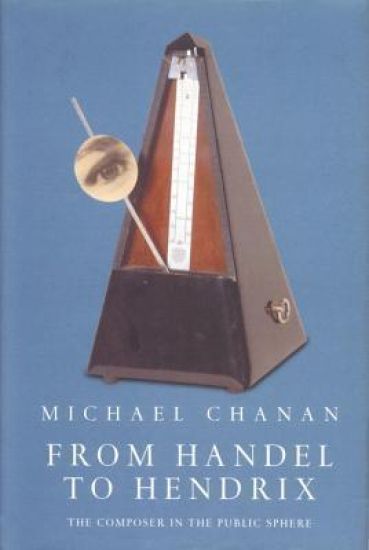
From Handel to Hendrix

From Handel to Hendrix

Michael Chanan

Verso Books
1999
sidottu
In this book, a continuation of Michael Chanan's investigation of the relation between music and society, the author examines the composer in the light of Jurgen Habermas's study of the public sphere. Taking his cue from the German philosopher's remarks about the bourgeois concert audience, the emergence of criticism and the development of autonomous music, Chanan examines the fate of the composer through successive incarnations, from Handel, Bach and Mozart in the eighteenth century by way of Beethoven, Liszt, Wagner, Mahler and Debussy in the nineteenth, to Schoenberg, Stravinsky, Bartok, Gershwin, Weill, Ellington, Cage and Boulez in the twentieth.Drawing upon recent work in feminist and gay musicology, the book ranges over themes such as subjectivity and identity in Schubert and Chopin, the ascendancy of the Romantic personality, the lure of the exotic in Milhaud's work, and the political economy of music.A detailed history of the idea of the composer as a public figure, Chanan's book charts both the dramatic change in the listening audience and, simultaneously, the composer's progressive marginalization from the centre of musical life."It is undoubtedly true, as the music critic Hans Keller used to observe, that more people nowadays hear a single broadcast of a new work by an avant-garde composer than would have heard all Beethoven's symphonies in his own lifetime. But the effects are not only quantitative; they also include radical alterations in the relationship between the audience and the object of aesthetic consumption, which seriously affect the situation of the composer, whose audience may now be wider and larger, but also becomes ever more fragmented and anonymous."