Kirjojen hintavertailu. Mukana 11 244 527 kirjaa ja 12 kauppaa.

Kirjahaku

Etsi kirjoja tekijän nimen, kirjan nimen tai ISBN:n perusteella.

20 kirjaa tekijältä Michael Cook

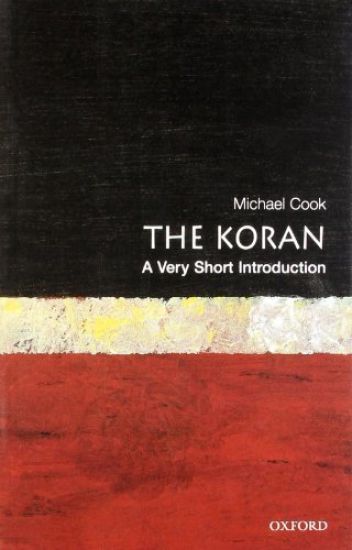
The Koran

The Koran

Michael Cook

Oxford University Press
2000
nidottu
The Koran has constituted a remarkably strong core of identity and continuity for a religious tradition that is now in its fifteenth century. This Very Short Introduction explores the significance of the Koran both in the modern world and in traditional Muslim culture. Michael Cook provides a lucid and direct account of the Koran as codex, as scripture, as liturgy, and as the embodiment of truth, and examines its means of formation and dissemination. He also discusses issues of interpretation for certain key verses, demonstrating that fecundity of the text for readers throughout the world. ABOUT THE SERIES: The Very Short Introductions series from Oxford University Press contains hundreds of titles in almost every subject area. These pocket-sized books are the perfect way to get ahead in a new subject quickly. Our expert authors combine facts, analysis, perspective, new ideas, and enthusiasm to make interesting and challenging topics highly readable.
Muhammad

Muhammad

Michael Cook

Oxford University Press
1983
nidottu
Just over a sixth of the world's population subscribes to the Muslim belief that `there is no god but God, and Muhammad is his Messenger'. Michael Cook gives an incisive account of the man who inspired this faith, drawing on the traditional Muslim sources to describe Muhammad's life and teaching. He also attempts to stand back from this traditional picture to question how far it is historically justified.
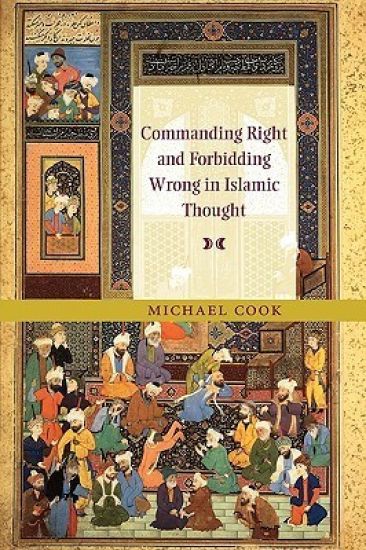
Commanding Right and Forbidding Wrong in Islamic Thought

Commanding Right and Forbidding Wrong in Islamic Thought

Michael Cook

Cambridge University Press
2010
pokkari
What kind of duty do we have to try to stop other people doing wrong? The question is intelligible in just about any culture, but few of them seek to answer it in a rigourous fashion. The most striking exception is found in the Islamic tradition, where 'commanding right' and 'forbidding wrong' is a central moral tenet already mentioned in the Koran. As an historian of Islam whose research has ranged widely over space and time, Michael Cook is well placed to interpret this complex subject. His book represents the first sustained attempt to map the history of Islamic reflection on this obligation. It covers the origins of Muslim thinking about 'forbidding wrong', the relevant doctrinal developments over the centuries, and its significance in Sunni and Shi'ite thought today. In this way the book contributes to the understanding of Islamic thought, its relevance to contemporary Islamic politics and ideology, and raises fundamental questions for the comparative study of ethics.
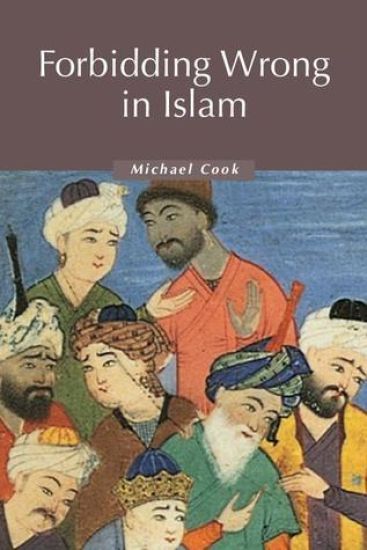
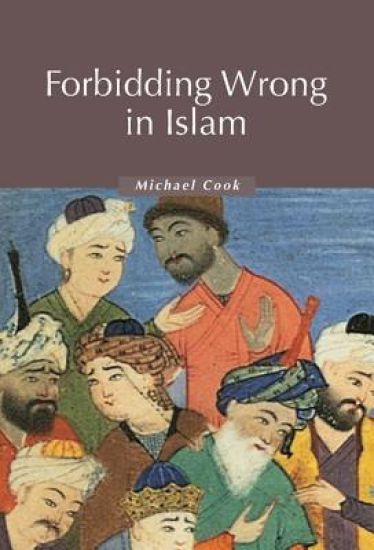
Forbidding Wrong in Islam

Forbidding Wrong in Islam

Michael Cook

Cambridge University Press
2003
pokkari
Michael Cook’s magisterial study in Islamic ethics, Commanding Right and Forbidding Wrong in Islamic Thought, was published to much acclaim in 2001. It was described by one reviewer as a masterpiece. In that book, the author reflected on the Islamic injunction, incumbent on every Muslim, to forbid wrongdoing. The present book is a short, accessible survey of the same material. Using anecdotes and stories from Islamic sources to illustrate the argument, Cook unravels the complexities of the subject. Moving backwards and forwards through time, he demonstrates how the past informs the present. By the end, the reader will be familiar with a colourful array of characters from Islamic history ranging from the celebrated thinker Ghazzali, to the caliph Harun al-Rashid, to the Ayatollah Khumayni. The book educates and entertains - at its heart, however, is an important message about the Islamic tradition, its values, and the relevance of those values today.
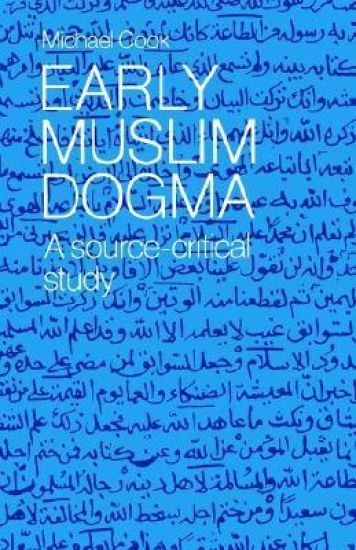
Early Muslim Dogma

Early Muslim Dogma

Michael Cook

Cambridge University Press
2003
pokkari
The key sources for the reconstruction of the early history of Muslim dogma are a group of texts ascribed to authors of the late first century of the Hijra. These texts bear on two major doctrinal controversies, the Murji'ite and the Qadarite, raising issues related on the one hand to the judgement of the events of the First Civil War, and on the other to the dilemma of predestination and free will. Part I and II of this study present a new source for the early history of the Murji'a, and argue new positions regarding the early doctrine and politics of the movement. Parts III and IV are an investigation of the authenticity and dating of this and half a dozen similar sources; the issues thereby raised are fundamental for the history of Muslim dogma, and have ramifications for the study of early Muslim history at large. The book also discusses the origin of particular Muslim doctrines in the religious and intellectual trends of late antiquity.
Commanding Right and Forbidding Wrong in Islamic Thought

Commanding Right and Forbidding Wrong in Islamic Thought

Michael Cook

Cambridge University Press
2001
sidottu
What kind of duty do we have to try to stop other people doing wrong? The question is intelligible in just about any culture, but few of them seek to answer it in a rigorous fashion. The most striking exception is found in the Islamic tradition, where ‘commanding right’ and ‘forbidding wrong’ is a central moral tenet already mentioned in the Koran. As an historian of Islam whose research has ranged widely over space and time, Michael Cook is well placed to interpret this complex subject. His book represents the first sustained attempt to map the history of Islamic reflection on this obligation. It covers the origins of Muslim thinking about ‘forbidding wrong’, the relevant doctrinal developments over the centuries, and its significance in Sunni and Shi’ite thought today. In this way the book contributes to the understanding of Islamic thought, its relevance to contemporary Islamic politics and ideology, and raises fundamental questions for the comparative study of ethics.
Forbidding Wrong in Islam

Forbidding Wrong in Islam

Michael Cook

Cambridge University Press
2003
sidottu
Michael Cook's magisterial study in Islamic ethics, Commanding Right and Forbidding Wrong in Islamic Thought, was published to much acclaim in 2001. It was described by one reviewer as a masterpiece. In that book, the author reflected on the Islamic injunction, incumbent on every Muslim, to forbid wrongdoing. The present book is a short, accessible survey of the same material. Using anecdotes and stories from Islamic sources to illustrate the argument, Cook unravels the complexities of the subject. Moving backwards and forwards through time, he demonstrates how the past informs the present. By the end, the reader will be familiar with a colourful array of characters from Islamic history ranging from the celebrated thinker Ghazzali, to the caliph Harun al-Rashid, to the Ayatollah Khumayni. The book educates and entertains - at its heart, however, is an important message about the Islamic tradition, its values, and the relevance of those values today.
The Management of Information from Archives

The Management of Information from Archives

Michael Cook

Gower Publishing Ltd
1999
sidottu
This authoritative guide to the principles and practice of archives management in private and public sector organizations has been substantially revised. It now provides detailed advice on changes in national and international standards and approaches, in particular ISAD(G) (International Standard Archival Description) and ISASAR(CPF) (International Standard Archive Authority Record). The new edition also includes guidance on the interpretation of the Manual of Archival Description, also published by Gower. Michael Cook takes the reader through the history, definition and function of archives and archival services, international service models, staffing and resource issues. He explains how to set up and run a records management programme, manage the interface with archival management, conduct a records survey, set up retention schedules and organize appraisal, acquisition and disposal in a way which ensures the service meets organizational and individual needs. Chapters covering the arrangement, coding and description of archival material, and the administration of its physical storage, demonstrate how efficient management facilitates the accessibility of archival information. The book concludes with chapters on computing and user issues, such as rights of access, Freedom of Information, security and data protection standards. This key reference on best practice is intended for students and lecturers in archives administration and records management, and for archives and records managers, particularly those newly qualified or seeking professional registration. Managers without formal qualifications but responsible for records or archives management, and information managers working with archivists and records managers, will find it helps to improve working methods and to run a more effective archives service within the modern information management environment.
Black Earth: How We Got Here

Black Earth: How We Got Here

Michael Cook

Michael Cook
2020
nidottu
What truths lie in the black void between the stars?It's late September 2019 when a young astronomer working at the Haleakala Space Observatory in Maui, Hawaii, accidentally spots a black dot in the night sky and is calculated to be closely trailing Earth by only seventy-five million miles...on the same ecliptic plane.NASA launches an unmanned probe to Earth's nearest neighbor, given the name ILK-87b. The images coming back from the black planet both shock and amaze those inside the halls of NASA. Curiosity, fear, and dread overcome insiders as infrastructure is detected on the black mass. Scientists are confounded since infrared telescopes are not detecting a heat signature. After a secret meeting of the G8 world leaders, an international manned mission is scheduled. SPOILERS AHEAD: Prior to the scheduled manned mission, a secret satellite orbiting the planet - now dubbed Black Earth - detects light emanating from a triangular structure with pentagon-shaped corners. When astronauts finally arrive, two of them - Dr. Carrick 'Rock' Michaels and Dr. Kaley 'Kinzi' London - are dispatched to investigate. When they arrive at the triangular mega-plex, they are shocked when an exterior airlock door opens. What the two find on the other side will change everything we know about man's origins on Earth and how climate change decided the fate of a once-great society...Zenith.Inside the structure called The Triad, Carrick and Kinzi stand face-to-face with a one-hundred-fifteen-year-old man named Erik, who greets the two by saying: "What took you so long?" Erik tells them the story of Zenith and its mass migration to Earth beginning 6000 years ago. As the astronauts are preparing to depart for their journey back to Earth, Carrick shocks them by saying that he will remain on Black Earth. Over the next thirteen months, Carrick will learn the history of Zenith and what prompted its mass migration to Earth. Carrick will be shocked to discover that many of Earth's greatest historical figures are actually from the planet Zenith. These figures - hundreds of them - helped shape Earth's growth and spurred its medical and technological advancements. Not all of these historical figures were good, though.The connection between Erik and Carrick is unexplainable and will lead to a story that has never been told before. This story will connect the dots of the universe and answer the age-old questions: Are we alone in the universe? How humans came to be on Earth? What are the origins of religion, racism, and segregation? And finally: How we got here?What happens next will bridge the planetary gap between Earth and Zenith, life and death, time and space; and will result in the heartbreaking story of love, family, and mankind's past, present, and future.
Back to Black Earth

Back to Black Earth

Michael Cook

Michael Cook
2020
nidottu
What truths will be revealed?After Erik Erickson, the last resident of Black Earth, arrived in 2024 he was greeted with a hero's welcome by nearly all people on Earth. Some, however, questioned if he or planet Zenith were real or simply a lie. A fabrication by the United States Government, thought, many conspiracy theorists.As Erik toured planet Earth, telling everyone the truths of Zenith and all the riches that it held, some countries thought they could bypass a U.N. Resolution and go it alone to the black menace. Zenith closely trailed Earth by only seventy-five million miles and the race 'Back to Black Earth' was on.The truths found on Zenith could propel a country to be the only super-power on Earth. What would a country do to own advanced propulsion systems and medical cures to every known disease afflicting humans since the beginning of time? And what of the passenger manifests from the migration shuttles? Who was on those shuttles? Perhaps some of Earth's most famous and infamous historical figures.The story continues as the sequel to Black Earth - How We Got Here picks up where it left off, concluding the poignant story of Erik Erickson and Carrick Michaels. While Erik finally came Home, Carrick was still looking for his purpose, his reason for being, his Home. The Erickson legacy lives on, and the story will conclude with the greatest sacrifice of all. Family, truth, love, and sacrifice, are all revealed in this modern-day classic that will break your heart while restoring your faith in humankind.
Old Man Winter

Old Man Winter

Michael Cook

Michael Cook
2021
pokkari
If you like The Shining, The Sixth Sense, or Shutter Island, you'll love this book. In the winter of 1974, Old Man Winter came calling, again. In August of '74, Detective Penelope Bryce had just won her four-year legal battle with the City of Philadelphia and finally earned her Detective Badge. Her first case ended up being her last. Penny's new partner, Detective Frank Bruno, was wrestling with his own demons when he came across Old Man Winter himself, Garrison Winter. The grizzled detective would finally meet his match. Detectives Bryce and Bruno would attempt to chase down the man they suspected in the disappearances of nine elderly people across seven states and five decades. Who was the phantom, the ghost, or the devil that they were chasing? Only death would answer their question.
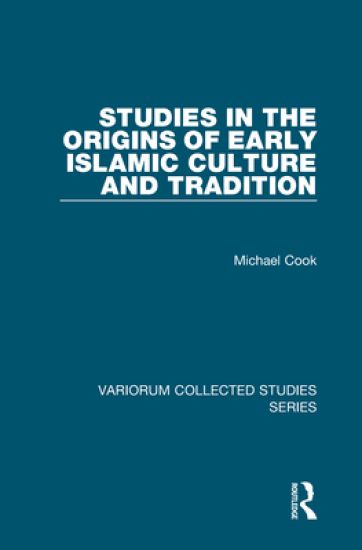
Studies in the Origins of Early Islamic Culture and Tradition
In contrast to the gradual formation of the high cultures of most of the world, the process by which Islamic civilisation emerged and took on its classical form between the 7th and 9th centuries was unusually sudden. The studies collected here are concerned with aspects of this remarkable development. Their topics are varied, including the emergence of dialectical theology, the origins of accounts of Pharaonic history current in medieval Egypt, the sources of Muslim dietary law, the Islamic background of Karaism, and Max Weber's views on Islamic sects. Other articles look at early Syrian eschatology and its connections with late antiquity and Byzantium, at the relevance of eschatology to debates about the dating of traditions, and at the attitudes of the early traditionists to the writing down of tradition. The final items examine reports about the textual affiliations of a long-lost Koranic codex and discussions of adultery among the baboons of Yemen. A recurring theme is the relationship between Early Muslim ideas and those of non-Muslim cultures, sometimes very ancient ones.
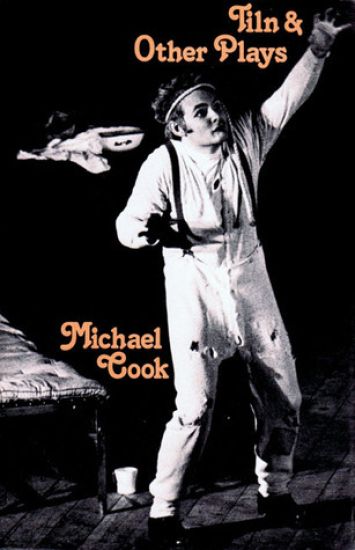
Tiln & Other Plays

Tiln & Other Plays

Michael Cook

Talonbooks
1976
pokkari
Three short plays by Michael Cook: Tiln, Quiller and Therese's Creed. In Tiln, two old men are caught in a personal power struggle. Using a lighthouse setting, Cook explores the modern man's dilemma in an uncaring world. Cast of 2 men. In contrast, Quiller is a one-person play set in a Newfoundland outport. In this play, Cook creates a portrait of an old man assessing his empty life. Cast of 1 man. Therese's Creed is similar to Quiller in that Cook again returns to the one-person format in an outport setting, but here he explores the female role. Cast of 1 woman.
The Management of Information from Archives
This authoritative guide to the principles and practice of archives management in private and public sector organizations has been substantially revised. It now provides detailed advice on changes in national and international standards and approaches, in particular ISAD(G) (International Standard Archival Description) and ISASAR(CPF) (International Standard Archive Authority Record). The new edition also includes guidance on the interpretation of the Manual of Archival Description, also published by Gower. Michael Cook takes the reader through the history, definition and function of archives and archival services, international service models, staffing and resource issues. He explains how to set up and run a records management programme, manage the interface with archival management, conduct a records survey, set up retention schedules and organize appraisal, acquisition and disposal in a way which ensures the service meets organizational and individual needs. Chapters covering the arrangement, coding and description of archival material, and the administration of its physical storage, demonstrate how efficient management facilitates the accessibility of archival information. The book concludes with chapters on computing and user issues, such as rights of access, Freedom of Information, security and data protection standards. This key reference on best practice is intended for students and lecturers in archives administration and records management, and for archives and records managers, particularly those newly qualified or seeking professional registration. Managers without formal qualifications but responsible for records or archives management, and information managers working with archivists and records managers, will find it helps to improve working methods and to run a more effective archives service within the modern information management environment.
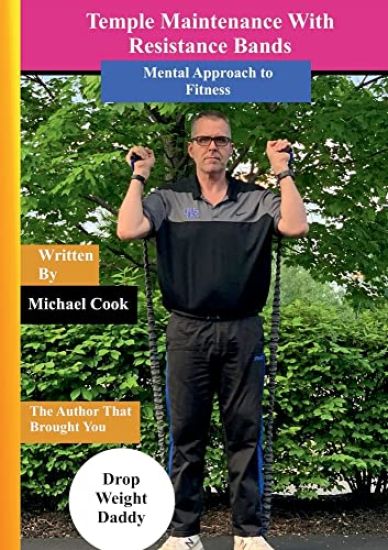
Temple Maintenance With Resistance Bands
Are you interested in targeted workouts with resistance bands? Michael Cook brings you a series of exercises and routines with resistance bands that are intended to get you on your way toward your goal of a better body. This easy-to-read guide combines faith and force, strength and spirituality, into one package.
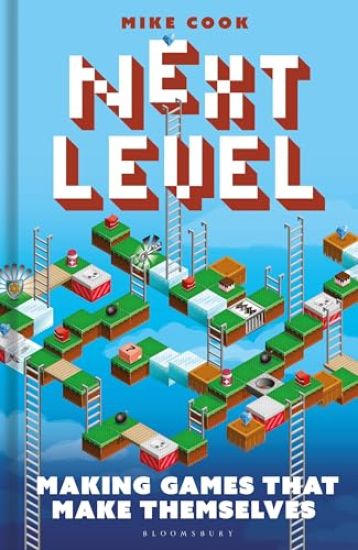
Next Level

Next Level

Michael Cook

BLOOMSBURY PUBLISHING PLC
2026
sidottu
How generative systems are reshaping the way games are made, how we experience them, and what this reveals about creativity itself. In video games creativity isn’t just seen – it’s played – from exploring endless landscapes, to diving into character details, to immersing ourselves in unpredictable narratives. Yet these elements are often the result of procedural generation – the creative use of algorithms to design game content. Procedural generation is the secret behind some of the biggest hits in video game history, from genre-defying titles in the 1980s, to the most famous blockbusters of today. Next Level demystifies the collection of algorithms and procedural techniques that are often as mysterious as the things they create. Written by game designer and creative AI researcher Mike Cook, it takes us on a tour of generative systems past and present, exploring how they work, the artistic uses they have in some of our favourite games and how procedural generation didn’t just change how we design games, but how we think about creativity.