Kirjojen hintavertailu. Mukana 11 616 945 kirjaa ja 12 kauppaa.

Kirjahaku

Etsi kirjoja tekijän nimen, kirjan nimen tai ISBN:n perusteella.

9 kirjaa tekijältä Michael D. Bailey

Battling Demons

Battling Demons

Michael D. Bailey

Pennsylvania State University Press
2002
pokkari
The fifteenth century is more than any other the century of the persecution of witches. So wrote Johan Huizinga more than eighty years ago in his classic Autumn of the Middle Ages. Although Huizinga was correct in his observation, modern readers have tended to focus on the more spectacular witch-hunts of the sixteenth and seventeenth centuries. Nevertheless, it was during the late Middle Ages that the full stereotype of demonic witchcraft developed in Europe, and this is the subject of Battling Demons.At the heart of the story is Johannes Nider (d. 1438), a Dominican theologian and reformer who alternately persecuted heretics and negotiated with them—a man who was by far the most important church authority to write on witchcraft in the early fifteenth century. Nider was a major source for the infamous Malleus maleficarum, or Hammer of Witches (1486), the manual of choice for witch-hunters in late medieval Europe. Today Nider's reputation rests squarely on his witchcraft writings, but in his own day he was better known as a leader of the reform movement within the Dominican order and as a writer of important tracts on numerous other aspects of late medieval religiosity, including heresy and lay piety. Battling Demons places Nider in this wider context, showing that for late medieval thinkers, witchcraft was one facet of a much larger crisis plaguing Christian society. As the only English-language study to focus exclusively on the rise of witchcraft in the early fifteenth century, Battling Demons will be important to students and scholars of the history of magic and witchcraft and medieval religious history.
Origins of the Witches’ Sabbath

Origins of the Witches’ Sabbath

Michael D. Bailey

Pennsylvania State University Press
2021
pokkari
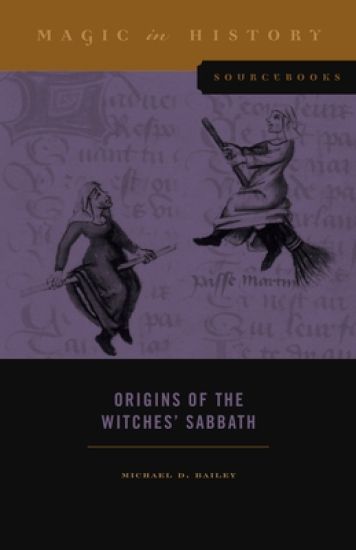
While the perception of magic as harmful is age-old, the notion of witches gathering together in large numbers, overtly worshiping demons, and receiving instruction in how to work harmful magic as part of a conspiratorial plot against Christian society was an innovation of the early fifteenth century. The sources collected in this book reveal this concept in its formative stages.The idea that witches were members of organized heretical sects or part of a vast diabolical conspiracy crystalized most clearly in a handful of texts written in the 1430s and clustered geographically around the arc of the western Alps. Michael D. Bailey presents accessible English translations of the five oldest surviving texts describing the witches’ sabbath and of two witch trials from the period. These sources, some of which were previously unavailable in English or available only in incomplete or out-of-date translations, show how perceptions of witchcraft shifted from a general belief in harmful magic practiced by individuals to a conspiratorial and organized threat that led to the witch hunts that shook northern Europe and went on to influence conceptions of diabolical witchcraft for centuries to come.Origins of the Witches’ Sabbath makes freshly available a profoundly important group of texts that are key to understanding the cultural context of this dark chapter in Europe’s history. It will be especially valuable to those studying the history of witchcraft, medieval and early modern legal history, religion and theology, magic, and esotericism.
Magic and Superstition in Europe

Magic and Superstition in Europe

Michael D. Bailey

Rowman Littlefield Publishers
2007
sidottu
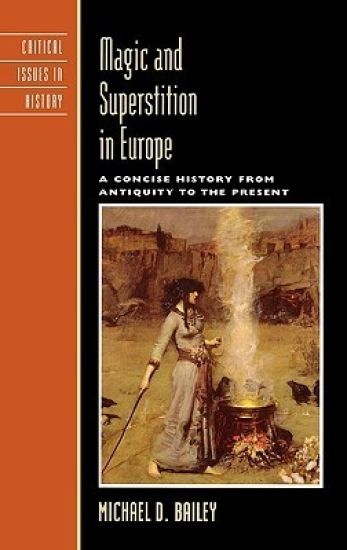
The only comprehensive, single-volume survey of magic available, this compelling book traces the history of magic, witchcraft, and superstitious practices such as popular spells or charms from antiquity to the present day. Focusing especially on Europe in the medieval and early modern eras, Michael Bailey also explores the ancient Near East, classical Greece and Rome, and the spread of magical systems_particularly modern witchcraft or Wicca_from Europe to the United States. He examines how magic and superstition have been defined in various historical eras and how these constructions have changed over time. He considers the ways in which specific categories of magic have been condemned, and how those identified as magicians or witches have been persecuted and prosecuted in various societies. Although conceptions of magic have changed over time, the author shows how magic has almost always served as a boundary marker separating socially acceptable actions from illicit ones, and more generally the known and understood from the unknown and occult.
Magic and Superstition in Europe

Magic and Superstition in Europe

Michael D. Bailey

Rowman Littlefield Publishers
2006
nidottu
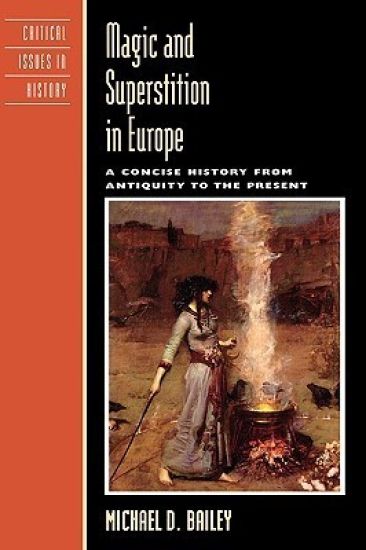
The only comprehensive, single-volume survey of magic available, this compelling book traces the history of magic, witchcraft, and superstitious practices such as popular spells or charms from antiquity to the present day. Focusing especially on Europe in the medieval and early modern eras, Michael Bailey also explores the ancient Near East, classical Greece and Rome, and the spread of magical systems_particularly modern witchcraft or Wicca_from Europe to the United States. He examines how magic and superstition have been defined in various historical eras and how these constructions have changed over time. He considers the ways in which specific categories of magic have been condemned, and how those identified as magicians or witches have been persecuted and prosecuted in various societies. Although conceptions of magic have changed over time, the author shows how magic has almost always served as a boundary marker separating socially acceptable actions from illicit ones, and more generally the known and understood from the unknown and occult.
Fearful Spirits, Reasoned Follies

Fearful Spirits, Reasoned Follies

Michael D. Bailey

Cornell University Press
2017
sidottu
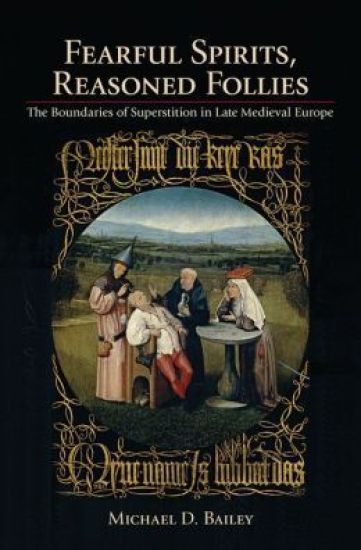
Superstitions are commonplace in the modern world. Mostly, however, they evoke innocuous images of people reading their horoscopes or avoiding black cats. Certain religious practices might also come to mind—praying to St. Christopher or lighting candles for the dead. Benign as they might seem today, such practices were not always perceived that way. In medieval Europe superstitions were considered serious offenses, violations of essential precepts of Christian doctrine or immutable natural laws. But how and why did this come to be? In Fearful Spirits, Reasoned Follies, Michael D. Bailey explores the thorny concept of superstition as it was understood and debated in the Middle Ages. Bailey begins by tracing Christian thinking about superstition from the patristic period through the early and high Middle Ages. He then turns to the later Middle Ages, a period that witnessed an outpouring of writings devoted to superstition—tracts and treatises with titles such as De superstitionibus and Contra vitia superstitionum. Most were written by theologians and other academics based in Europe's universities and courts, men who were increasingly anxious about the proliferation of suspect beliefs and practices, from elite ritual magic to common healing charms, from astrological divination to the observance of signs and omens. As Bailey shows, however, authorities were far more sophisticated in their reasoning than one might suspect, using accusations of superstition in a calculated way to control the boundaries of legitimate religion and acceptable science. This in turn would lay the conceptual groundwork for future discussions of religion, science, and magic in the early modern world. Indeed, by revealing the extent to which early modern thinkers took up old questions about the operation of natural properties and forces using the vocabulary of science rather than of belief, Bailey exposes the powerful but in many ways false dichotomy between the "superstitious" Middle Ages and "rational" European modernity.
The A to Z of Witchcraft

The A to Z of Witchcraft

Michael D. Bailey

Scarecrow Press
2009
nidottu
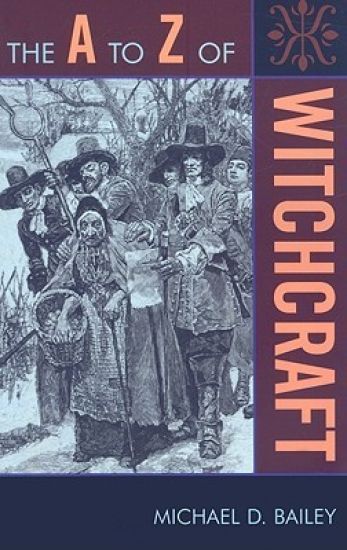
A great deal has been written about the history of witchcraft, but much of what has been written is unreliable, exaggerated, or inaccurate. This problem is especially acute in regard to modern witchcraft, or Wicca, and its supposed connections to historical witchcraft in medieval and early modern Europe. The A to Z of Witchcraft provides a reliable reference source for both academics and general readers interested in the actual historical development of witchcraft in the western world. The focus of the dictionary is on Western Europe during the late-medieval and early modern periods, when the specific idea of diabolical witchcraft developed and when the so-called "great witch-hunts" occurred. Entries are also provided that deal with magic and witchcraft in the earlier Christian period and classical antiquity, as well as with the lingering belief in witchcraft in the modern world, and with the development of the modern, neo-pagan religion of witchcraft, also known as Wicca. For comparative purposes, some entries have been provided that deal with aspects and systems of magic found in other parts of the world that seem to bear some relation to the idea of witchcraft as it developed in Christian Europe. The regions dealt with are mainly Africa, along with such New-World practices as Voodoo and Santeria. Entries in the dictionary cover important people in the history of witchcraft, from the medieval inquisitors and early modern magistrates who developed the stereotype of the historical witch to the modern individuals who have developed the religion of Wicca. Also included are legal terms and concepts important to the prosecution of the supposed crime of witchcraft, and religious and theological concepts pertaining to the demonic elements that came to be associated with witchcraft, as well as more popular beliefs and aspects of common folklore and mythology that became attached to the developing idea of witchcraft. Geographic entries are also included, discussing the scope of witch-hunting in various reg
Magic: The Basics

Magic: The Basics

Michael D. Bailey

Routledge
2017
sidottu
Magic: The Basics is a concise and engaging introduction to magic in world history and contemporary societies. Presenting magic as a global phenomenon which has manifested in all human cultures, this book takes a thematic approach which explores the historical, social, and cultural aspects of magic. Key features include: attempts to define magic either in universal or more particular terms, and to contrast it with other broad and potentially fluid categories such as religion and science; an examination of different forms of magical practice and the purposes for which magic has been used; debates about magic’s effectiveness, its reality, and its morality; an exploration of magic’s association with certain social factors, such as gender, ethnicity and education, among others.Offering a global perspective of magic from antiquity through to the modern era and including a glossary of key terms, suggestions for further reading and case studies throughout, Magic: The Basics is essential reading for anyone seeking to learn more about the academic study of magic.
Magic: The Basics

Magic: The Basics

Michael D. Bailey

Routledge
2017
nidottu
Magic: The Basics is a concise and engaging introduction to magic in world history and contemporary societies. Presenting magic as a global phenomenon which has manifested in all human cultures, this book takes a thematic approach which explores the historical, social, and cultural aspects of magic. Key features include: attempts to define magic either in universal or more particular terms, and to contrast it with other broad and potentially fluid categories such as religion and science; an examination of different forms of magical practice and the purposes for which magic has been used; debates about magic’s effectiveness, its reality, and its morality; an exploration of magic’s association with certain social factors, such as gender, ethnicity and education, among others.Offering a global perspective of magic from antiquity through to the modern era and including a glossary of key terms, suggestions for further reading and case studies throughout, Magic: The Basics is essential reading for anyone seeking to learn more about the academic study of magic.
Fearful Spirits, Reasoned Follies

Fearful Spirits, Reasoned Follies

Michael D. Bailey

Cornell University Press
2017
pokkari
Superstitions are commonplace in the modern world. Mostly, however, they evoke innocuous images of people reading their horoscopes or avoiding black cats. Certain religious practices might also come to mind—praying to St. Christopher or lighting candles for the dead. Benign as they might seem today, such practices were not always perceived that way. In medieval Europe superstitions were considered serious offenses, violations of essential precepts of Christian doctrine or immutable natural laws. But how and why did this come to be? In Fearful Spirits, Reasoned Follies, Michael D. Bailey explores the thorny concept of superstition as it was understood and debated in the Middle Ages. Bailey begins by tracing Christian thinking about superstition from the patristic period through the early and high Middle Ages. He then turns to the later Middle Ages, a period that witnessed an outpouring of writings devoted to superstition—tracts and treatises with titles such as De superstitionibus and Contra vitia superstitionum. Most were written by theologians and other academics based in Europe's universities and courts, men who were increasingly anxious about the proliferation of suspect beliefs and practices, from elite ritual magic to common healing charms, from astrological divination to the observance of signs and omens. As Bailey shows, however, authorities were far more sophisticated in their reasoning than one might suspect, using accusations of superstition in a calculated way to control the boundaries of legitimate religion and acceptable science. This in turn would lay the conceptual groundwork for future discussions of religion, science, and magic in the early modern world. Indeed, by revealing the extent to which early modern thinkers took up old questions about the operation of natural properties and forces using the vocabulary of science rather than of belief, Bailey exposes the powerful but in many ways false dichotomy between the "superstitious" Middle Ages and "rational" European modernity.