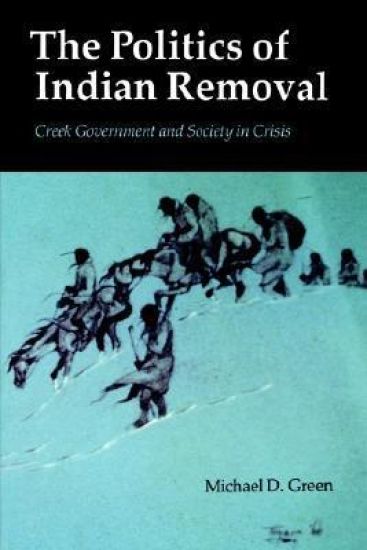
In the two decades after their defeat by the United States in the Creek War in 1814, the Creek Indians of Georgia and Alabama came under increasing—ultimately irresistible—pressure from state and federal governments to abandon their homeland and retreat westward. That historic move came in 1836. This study, based heavily on a wide variety of primary sources, is distinguished for its Creek perspective on tribal affairs during a period of upheaval.
Benedictin was prescribed to more than thirty-five million American women from its introduction in 1956 until 1983, when it was withdrawn from the market. The drug's manufacturer, Merrill Dow Pharmaceuticals, a major U.S. pharmaceutical firm, joined a list of other companies whose product liabilities would result in precedent-setting litigation. Before it was over, the Benedictin litigation would involve 2,000 claimants over a fifteen-year period. Michael D. Green offers a comprehensive overview of the Benedictin case and highlights many of the key issues in mass toxic substances litigation, comparing individual and collective forms of litigation, and illustrating the misunderstandings between scientists and lawyers about the role of science in providing evidence for the legal system.
When Europeans first arrived in North America, between five and eight million indigenous people were already living there. But how did they come to be here? What were their agricultural, spiritual, and hunting practices? How did their societies evolve and what challenges do they face today? Eminent historians Theda Perdue and Michael Green begin by describing how nomadic bands of hunter-gatherers followed the bison and woolly mammoth over the Bering land mass between Asia and what is now Alaska between 25,000 and 15,000 years ago, settling throughout North America. They describe hunting practices among different tribes, how some made the gradual transition to more settled, agricultural ways of life, the role of kinship and cooperation in Native societies, their varied burial rites and spiritual practices, and many other features of Native American life. Throughout the book, Perdue and Green stress the great diversity of indigenous peoples in America, who spoke more than 400 different languages before the arrival of Europeans and whose ways of life varied according to the environments they settled in and adapted to so successfully. Most importantly, the authors stress how Native Americans have struggled to maintain their sovereignty--first with European powers and then with the United States--in order to retain their lands, govern themselves, support their people, and pursue practices that have made their lives meaningful. Going beyond the stereotypes that so often distort our views of Native Americans, this Very Short Introduction offers an historically accurate, deeply engaging, and often inspiring account of the wide array of Native peoples in America. ABOUT THE SERIES: The Very Short Introductions series from Oxford University Press contains hundreds of titles in almost every subject area. These pocket-sized books are the perfect way to get ahead in a new subject quickly. Our expert authors combine facts, analysis, perspective, new ideas, and enthusiasm to make interesting and challenging topics highly readable.
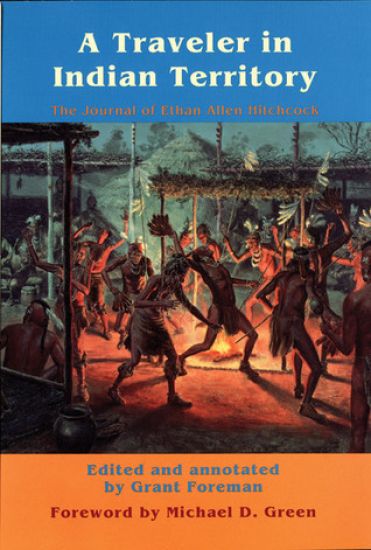
In 1841 U.S. government authorities sent Major Ethan Allen Hitchcock to Indian Territory to investigate numerous charges of fraud and profiteering by various contractors dealing with the Cherokee, Creek, Seminole, Chickasaw, and Choctaw Indians, who had been removed from the South during the last decade. Hitchcock's report, filed after four months of travel, exposed such a high level of graft and corruption that his investigation was suppressed and never brought to the attention of Congress.Hitchcock kept nine personal diaries of his travels and observations, however, and they reveal much historic and ethnographic information on Indian life in Indian Territory. He observes how the Indians were adjusting alter removal and includes many details on their customs, beliefs, culture, religion, ceremonies, amusements, industry, tribal councils, and government. To aid the modern reader, editor Grant Foreman provides an introduction and annotations, and Michael D. Green, in his foreword, explains the politics behind Hitchcock's mission to Indian Territory and his accomplishments in advancing ethnographic knowledge.
Jr. Coffee; Rowan Russell; Angela Itzikowitz; Philip R Wood; Kern Alexander; Jesper Lau Hansen; Erica Johansson; Klaus J. Hopt; William Blair; Michael D. Green; Brandon Jones; Ross Cranston; Brigitte Haar; Eiríkur Jónsson
On August 29–30 2014 the Marianne and Marcus Wallenberg Foundation in co-operation with the Stockholm Centre for Commercial Law arranged an International legal symposium under the heading “Functional or dysfunctional – the law as a cure? Risks and liability in the financial markets”. The symposium was held in honor of the 50th anniversary of the Marianne and Marcus Wallenberg Foundation. The topic of the symposium mirrors a particular interest of the activities of the SCCL covering regulatory as well as liability questions thus dealing with legal subjects which have also relevance to the Foundation. After World War II financial markets have gradually undergone huge differences depending on new financial devices, new financial markets and new financial actors evolving together with changes in regulation and supervision. These are circumstances which have together created new frames for the financial industry. Table of contents: - Extraterritorial Financial Regulation: Why E.T. Can’t Come Home by John C. Coffee, Jr. - Generally on Risks and Liability – Directors’ Liability Under the Law and Regulation in Australia by Rowan Russell - South African Company Law – Directors’ Duty of Care and Skill and the Introduction of the Business Judgment Rule: Answering the Critics by Angela Itzikowitz - International legal risk for banks and corporates by Philip R Wood - Macro-prudential regulation from an English and European Perspective – The Legal and Institutional Dimension by Kern Alexander - Comment on the session on the risks and liabilities of financial markets by Jesper Lau Hansen - Handling Risks in Financial Markets Regulation: EMIR and the problem with CCPs being Too Big to Fail by Erica Johansson - Responsibility of Banks and Their Directors, Including Liability and Enforcement by Klaus J. Hopt - Is there a role for culture and ethics in financial regulation? By William Blair - Tort Law to the Rescue? By Michael D. Green & Brandon Jones - The (non)-liability of banks under English law by Ross Cranston - Implementing liability on the basis of model case procedures – the example of the German Capital Markets Model Case Act (“KapMuG”) by Brigitte Haar - Tort cases in Iceland after the bank crash in 2008 by Eiríkur Jónsson