Kirjojen hintavertailu. Mukana 12 390 323 kirjaa ja 12 kauppaa.

Kirjahaku

Etsi kirjoja tekijän nimen, kirjan nimen tai ISBN:n perusteella.

2 kirjaa tekijältä Michael D. Pearlman

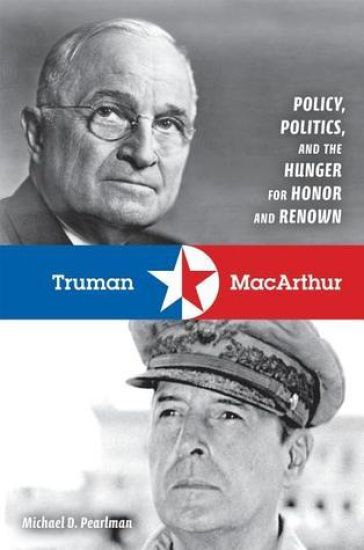
Truman and MacArthur

Truman and MacArthur

Michael D. Pearlman

Indiana University Press
2008
sidottu
Truman and MacArthur offers an objective and comprehensive account of the very public confrontation between a sitting president and a well-known general over the military's role in the conduct of foreign policy. In November 1950, with the army of the Democratic Peoples Republic of Korea mostly destroyed, Chinese military forces crossed the Yalu River. They routed the combined United Nations forces and pushed them on a long retreat down the Korean peninsula. Hoping to strike a decisive blow that would collapse the Chinese communist regime in Beijing, General Douglas MacArthur, the commander of the Far East Theater, pressed the administration of President Harry S. Truman for authorization to launch an invasion of China across the Taiwan straits. Truman refused; MacArthur began to argue his case in the press, a challenge to the tradition of civilian control of the military. He moved his protest into the partisan political arena by supporting the Republican opposition to Truman in Congress. This violated the President's fundamental tenet that war and warriors should be kept separate from politicians and electioneering. On April 11, 1951 he finally removed MacArthur from command. Viewing these events through the eyes of the participants, this book explores partisan politics in Washington and addresses the issues of the political power of military officers in an administration too weak to carry national policy on its own accord. It also discusses America's relations with European allies and its position toward Formosa (Taiwan), the long-standing root of the dispute between Truman and MacArthur.
Warmaking and American Democracy

Warmaking and American Democracy

Michael D. Pearlman

University Press of Kansas
1999
nidottu
While war is most effectively waged as a united effort, the United States has consistently waged military conflict without firm central direction. Throughout our history, observes Michael Pearlman, the waging of war has been subject to continuous bargaining and compromise among competing governmental and military factions. What passes for strategy emerged from this process.Warmaking and American Democracy is the first comprehensive study of American war strategy in its domestic context. It shows how internal divisions - between political parties, presidents and Congress, elected representatives and bureaucrats, soldiers and civilians, and branches of the armed services - make the creation of strategy extraordinarily complex and explains why wartime goals, ways, and means were often disconnected.Pearlman reveals how divided America has always been over warmaking, from colonial times to Desert Storm. Drawing on a wide array of sources in political, military, and diplomatic history as well as interviews with leading figures in the defense establishment he illuminates the strengths and weaknesses of our convoluted decision-making process. His examples of wartime success and failure explain many of the perpetual dysfunctions when a pluralist democracy makes high-level strategy.Exploring many previously neglected connections in American history, Pearlman compares the military thinking from different eras and points out the recurring difficulties of presidents and commanding generals to compose a common strategy. Disagreement between LBJ and the Joint Chiefs of Staff over how to conduct the war in Vietnam was similar to disputes between Wilson and Pershing, or Lincoln and Grant. Pearlman also provides a wealth of fresh insights into our major conflicts - notably the Civil War, World War II, and Vietnam - and shows how the experience of one war can influence strategy in the next.Warmaking and American Democracy goes far beyond other accounts of U.S. military history by relating strategies and campaigns to policy goals and means. It invites serious reconsideration of how we wage war as it shows the complex nature of national security decision making in a democracy.