Kirjojen hintavertailu. Mukana 11 699 587 kirjaa ja 12 kauppaa.

Kirjahaku

Etsi kirjoja tekijän nimen, kirjan nimen tai ISBN:n perusteella.

10 kirjaa tekijältä Michael D. Yapko

Hand-Me-Down Blues: How to Stop Depression from Spreading in Families

Hand-Me-Down Blues: How to Stop Depression from Spreading in Families

Michael D. Yapko

Golden Guides from St. Martin's Press
2000
nidottu
A powerful, family-based approach to understanding and treating depression that goes way beyond Prozac Many people have been led to believe that depression is caused simply by a chemical imbalance in the brain, and as a result they look to science for convenient answers, hoping that "a capsule a day will keep depression away." Unfortunately, this narrow focus on biology and the use of medications has often led people to overlook other important influences, such as how our families can affect emotional health in powerful ways. In Hand-Me-Down Blues, Dr. Michael Yapko carefully describes how the family can play a crucial role in the development of and recovery from depression. Parents introduce their children to various life experiences and inevitably reveal their own values, perspectives, and biases. Children typically learn to interpret life events in the same way their parents do, and their interpretations can be a basis for depression. Once depression strikes, it distorts family relationships, splintering families as it spreads from one person to another like a virus. Thus, children can "inherit" depression less from their parents' genes and more from their parents' attitudes and behaviors.
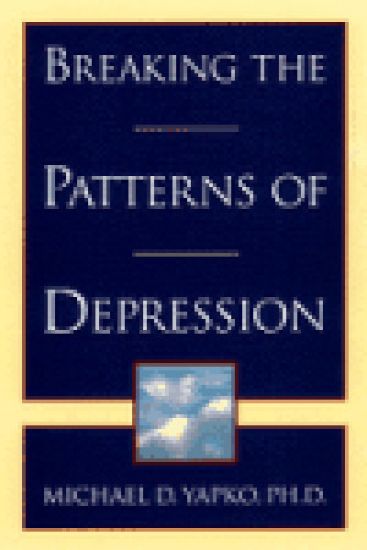
Breaking the Patterns of Depression

Breaking the Patterns of Depression

Michael D. Yapko

Bantam Doubleday Dell Publishing Group
1998
pokkari
Twenty to thirty million Americans suffer from some form of diagnosable depression, and their ranks are growing. Psychologist Michael D. Yapko explains that in order to find relief, more than the current episode of depression must be examined. In Breaking the Patterns of Depression, he presents skills that enable readers to understand and ultimately avert depression's recurring cycles. Focusing on future prevention as well as initial treatment, the book includes over one hundred structured activities to help sufferers learn the skills necessary to become and remain depression-free.Breaking the Patterns of Depression begins by translating the clinical literature on psychotherapy and antidepressant medication into language that can be used to enhance an understanding of depression, and to personalize individual cures. Yapko uses a conversational, anecdotal tone that encourages readers to take an active approach to helping themselves. Special sections entitled "Learn by Doing" and "Shifting Perspectives" help develop the skills necessary to manage difficult experiences. Readers learn how to solve problems effectively, anticipate the likely consequences of their actions, think and act in a direct, goal-oriented fashion, balance different areas of their lives, and use self-knowledge to stay out of harmful situations.More realistic and helpful than other depression-management books on the market, Breaking the Patterns of Depression defines what causes depression and, best of all, clarifies what can be done about it. With this knowledge in hand, readers can control their depression, rather than having depression control them.
Mindfulness and Hypnosis

Mindfulness and Hypnosis

Michael D. Yapko

WW Norton Co
2011
sidottu
In recent years mindfulness has become integrated into many clinicians' private practices, and become a staple of hospital and university based treatment programs for stress reduction, pain, anxiety management, and a host of other difficulties. Clinicians are now routinely encouraging their clients to focus, be aware, open, and accepting, and thereby derive benefit from the mindfulness experience. How has mindfulness, a treatment tool that might easily have been dismissed as esoteric only a few short years ago, become so widely accepted and applied? One obvious answer: Because it works. The empirical foundation documenting the therapeutic merits of mindfulness is already substantial and is still growing. This is not a book about documenting the therapeutic merits of mindfulness, however. Rather, this book is the first of its kind to address how and most importantly why guided mindfulness meditations can enhance treatment. The focus in this book is on the structure of guided mindfulness meditations and, especially, the role of suggestion in these processes. Specifically, one of the primary questions addressed in this book is this: When a psychotherapist conducts guided mindfulness meditations (GMMs) for some clinical purpose, how does mindfulness work? In posing this question other questions arise that are every bit as compelling: Do GMMs contain structural elements that can be identified and amplified and thereby employed more efficiently? How do we determine who is most likely to benefit from such methods? Can GMMs be improved by adapting them to the needs of specific individuals rather than employing scripted "one size fits all" approaches? Discussing the role of suggestion in experience and offering the author's concrete suggestions for integrating this work into psychotherapy, this book is a practical guide to hypnosis, focusing, and mindfulness for the clinician.
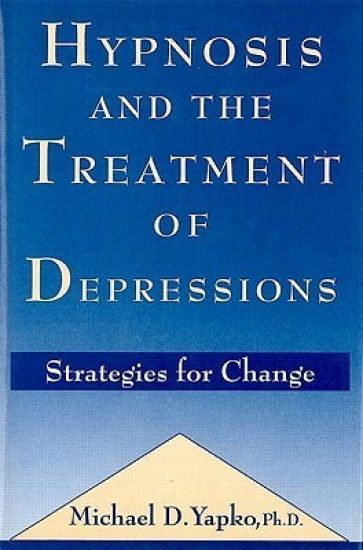
Hypnosis and the Treatment of Depressions

Hypnosis and the Treatment of Depressions

Michael D. Yapko

Brunner-Mazel Inc
1992
sidottu
In this book, Yapko not only demonstrates hypnosis is a viable and powerful approach to the treatment of depression but also confronts traditional criticism of its use head on. He first lays the groundwork for the book's dual focus, opening with a discussion of depressions. He then focuses on the historical perspective of depression and hypnosis as "forbidden friends," shedding new light on old myths about the use of hypnosis leading to hysteria, and even suicide. The result is a definition of hypnosis as a flexible and enlightened tool that offers precisely the multidimensionality that the problem demands.
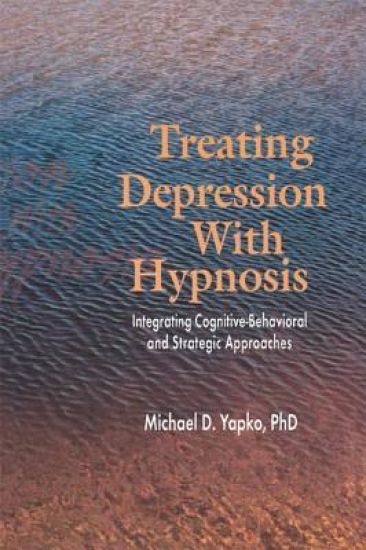
Treating Depression With Hypnosis

Treating Depression With Hypnosis

Michael D. Yapko

Routledge
2015
sidottu
Depression is a debilitating human condition and a common cause of suffering worldwide. This elicits a sense of urgency for mental health professionals to meet this challenge of the treatment of depression. Hypnosis plays a vital role in that treatment and in the efficacy of psychotherapy.This book focuses on the structuring and delivering of hypnotic interventions for major depression, with a substantial use of concepts and techniques from cognitive-behavioral and strategic approaches as a foundation. Current research on depression is used in this book to emphasize the still-growing knowledge of depression. Hypnosis has shown itself to be effective in not only reducing symptoms, but in teaching the skills (such as rationale thinking, effective problem-solving and coping strategies, and positive relationship skills) that can even prevent recurrences. Mental health professionals will find the detailed examples of hypnotic strategies invaluable to their own practice and application of hypnosis in the treatment of depression.
Essentials of Hypnosis

Essentials of Hypnosis

Michael D. Yapko

Routledge
2014
nidottu
Essentials of Hypnosis Second Edition provides a warm and rich introduction to the fascinating field of hypnosis by one of its leading experts. Readers may be surprised to discover that some of the most important methods in modern integrative health care have a foundation in hypnosis, and that modern neuroscience is regularly learning new things about brain functioning from brain scanning studies of hypnotized individuals. The emphasis in Essentials of Hypnosis Second Edition is on the use of hypnosis as an effective tool of treatment. Thus, readers will enjoy and benefit from the wealth of clinical insights and helpful hints Dr. Yapko offers for the skilled use of hypnotic principles and methods. The essentials of this dynamic field are well captured in this practical volume
Essentials of Hypnosis

Essentials of Hypnosis

Michael D. Yapko

Routledge
2014
sidottu
Essentials of Hypnosis Second Edition provides a warm and rich introduction to the fascinating field of hypnosis by one of its leading experts. Readers may be surprised to discover that some of the most important methods in modern integrative health care have a foundation in hypnosis, and that modern neuroscience is regularly learning new things about brain functioning from brain scanning studies of hypnotized individuals. The emphasis in Essentials of Hypnosis Second Edition is on the use of hypnosis as an effective tool of treatment. Thus, readers will enjoy and benefit from the wealth of clinical insights and helpful hints Dr. Yapko offers for the skilled use of hypnotic principles and methods. The essentials of this dynamic field are well captured in this practical volume
Hypnosis and the Treatment of Depressions
In this book, Yapko not only demonstrates hypnosis is a viable and powerful approach to the treatment of depression but also confronts traditional criticism of its use head on. He first lays the groundwork for the book's dual focus, opening with a discussion of depressions. He then focuses on the historical perspective of depression and hypnosis as "forbidden friends," shedding new light on old myths about the use of hypnosis leading to hysteria, and even suicide. The result is a definition of hypnosis as a flexible and enlightened tool that offers precisely the multidimensionality that the problem demands.
Process-Oriented Hypnosis

Process-Oriented Hypnosis

Michael D. Yapko

WW Norton Co
2021
sidottu
In Process-Oriented Hypnosis, internationally recognised psychologist, Michael D. Yapko provides clinicians with a new framework for utilising hypnosis with clients. Yapko encourages clinicians to take a broader perspective, in which patterns rather than individual symptoms are the emphasis of therapy. He offers numerous insights into ways clinicians can home in on the process of how people come to suffer various types of emotional distress. Beyond these insights, Process-Oriented Hypnosis provides highly practical information and specific examples for integrating this innovative perspective into clinical work. The key patterns of human experience are central to the first section of the book, providing a sound conceptual foundation and a wide range of examples. In the second section, Yapko provides ten richly structured hypnosis session transcripts for clinicians to insightfully adapt to their clients’ needs. Process-Oriented Hypnosis offers clinicians a fresh perspective for working with clients that can be integrated into many different treatment models.
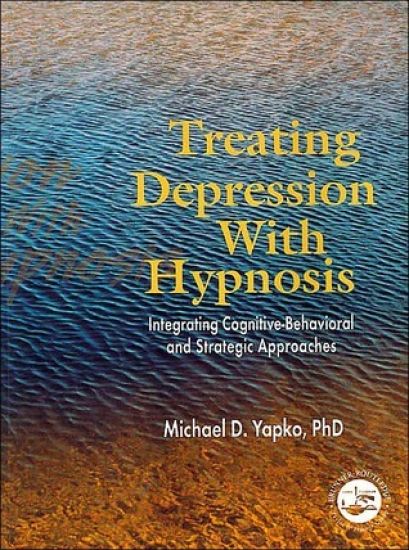
Treating Depression With Hypnosis

Treating Depression With Hypnosis

Michael D. Yapko

Brunner-Routledge
2001
nidottu
"Treating Depression with Hypnosis" focuses on the structuring and delivering of hypnotic interventions for major depression, with a substantial use of concepts and techniques from cognitive-behavioural and strategic approaches as a foundation.