Kirjojen hintavertailu. Mukana 11 244 527 kirjaa ja 12 kauppaa.

Kirjahaku

Etsi kirjoja tekijän nimen, kirjan nimen tai ISBN:n perusteella.

8 kirjaa tekijältä Michael D. Yates

Longer Hours, Fewer Jobs

Longer Hours, Fewer Jobs

Michael D. Yates

Monthly Review Press,U.S.
1994
nidottu
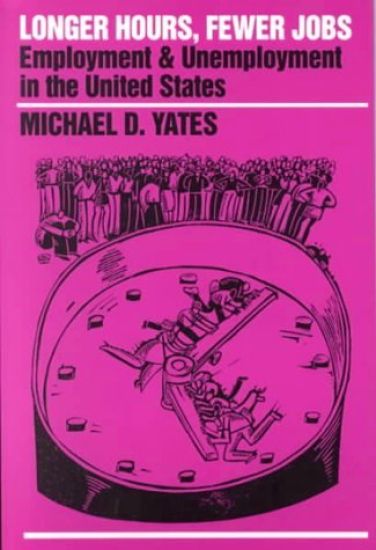
Using charts, graphs, and cartoons, Michael Yates describes how unemployment, or the fear of it, is part of the life of every American worker. He outlines the changes in the structure of the labor market that have undermined the living standards of the employed. Tying these together, he provides an easily understood analysis of the economy and the social destruction brought on by its everyday functions.
Cheap Motels and a Hotplate

Cheap Motels and a Hotplate

Michael D. Yates

Monthly Review Press,U.S.
2007
nidottu
The road trip is a staple of modern American literature. But nowhere in American literature, until now, has a left-wing economist hit the road, observing and interpreting the extraordinary range and spectacle of U.S. life, bringing out its conflicts and contradictions with humor and insight. Disillusioned with academic life after thirty-two years teaching economics, Michael D. Yates took early retirement in 2001, with a pension account that had doubled during the dot.com frenzy of the late 1990s. He and his wife Karen sold their house, got rid of their belongings, and have moved around the country since then, often spending months at a time on the road. Michael and Karen spent the summer of 2001 in Yellowstone National Park, where Michael worked as a hotel front-desk clerk. They moved to Manhattan for a year, where he worked for Monthly Review. From there they went to Portland, Oregon, to explore the Pacific Northwest. After five months of travel in Summer and Fall 2004, they settled in Miami Beach. Ahead of the 2005 hurricane season, they went back on the road, settling this time in Colorado. "Cheap Motels and a Hotplate" is both an account of their adventures and a penetrating examination of work and inequality, race and class, alienation and environmental degradation in the small towns and big cities of the contemporary United States.
Cheap Motels and a Hotplate

Cheap Motels and a Hotplate

Michael D. Yates

Monthly Review Press,U.S.
2007
sidottu
The road trip is a staple of modern American literature. But nowhere in American literature, until now, has a left-wing economist hit the road, observing and interpreting the extraordinary range and spectacle of U.S. life, bringing out its conflicts and contradictions with humor and insight. Disillusioned with academic life after thirty-two years teaching economics, Michael D. Yates took early retirement in 2001, with a pension account that had doubled during the dot.com frenzy of the late 1990s. He and his wife Karen sold their house, got rid of their belongings, and have moved around the country since then, often spending months at a time on the road. Michael and Karen spent the summer of 2001 in Yellowstone National Park, where Michael worked as a hotel front-desk clerk. They moved to Manhattan for a year, where he worked for Monthly Review. From there they went to Portland, Oregon, to explore the Pacific Northwest. After five months of travel in Summer and Fall 2004, they settled in Miami Beach. Ahead of the 2005 hurricane season, they went back on the road, settling this time in Colorado. "Cheap Motels and a Hotplate" is both an account of their adventures and a penetrating examination of work and inequality, race and class, alienation and environmental degradation in the small towns and big cities of the contemporary United States.
Why Unions Matter

Why Unions Matter

Michael D. Yates

Monthly Review Press,U.S.
2009
sidottu
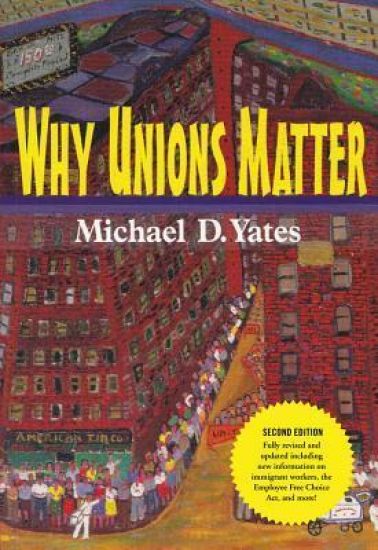
In this new edition of Why Unions Matter, Michael D. Yates shows why unions still matter. Unions mean better pay, benefits, and working conditions for their members; they force employers to treat employees with dignity and respect; and at their best, they provide a way for workers to make society both more democratic and egalitarian. Yates uses simple language, clear data, and engaging examples to show why workers need unions, how unions are formed, how they operate, how collective bargaining works, the role of unions in politics, and what unions have done to bring workers together across the divides of race, gender, religion, and sexual orientation. The new edition not onlyupdates the first, but also examines the record of the New Voice slate that took control of the AFL-CIO in 1995, the continuing decline in union membership and density, the Change to Win split in 2005, the growing importance of immigrant workers, the rise of worker centers, the impacts of and labor responses to globalization, and the need for labor to have an independent political voice. This is simply the best introduction to unions on the market.
Wisconsin Uprising

Wisconsin Uprising

Michael D. Yates

Monthly Review Press,U.S.
2012
nidottu
In early 2011, the nation was stunned to watch Wisconsin's state capitol in Madison come under sudden and unexpected occupation by union members and their allies. The protests to defend collective bargaining rights were militant and practically unheard of in this era of declining union power. Nearly forty years of neoliberalism and the most severe economic crisis since the Great Depression have battered the labor movement, and workers have been largely complacent in the face of stagnant wages, slashed benefits and services, widening unemployment, and growing inequality. That is, until now. Under pressure from a union-busting governor and his supporters in the legislature, and inspired by the massive uprisings in Tunisia and Egypt, workers in Wisconsin shook the nation with their colossal display of solidarity and outrage. Their struggle is still ongoing, but there are lessons to be learned from the Wisconsin revolt. This timely book brings together some of the best labor journalists and scholars in the United States, many of whom were on the ground at the time, to examine the causes and impact of events, and suggest how the labor movement might proceed in this new era of union militancy.
Can the Working Class Change the World?

Can the Working Class Change the World?

Michael D. Yates

Monthly Review Press,U.S.
2018
pokkari
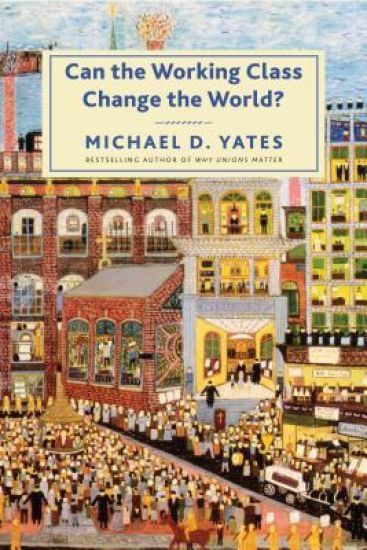
“Michael Yates’s passion and respect for the class he came out of delivers a book that is especially accessible without retreating from the complexities and internal contradictions of working class life and organization—a book committed not only to defending workers, but also to building on their potentials to transform society.”—Sam Gindin, former chief economist, Canadian Auto Workers Union; Packer Visitor in Social Justice, Political Science Dept., York University, Toronto One of the horrors of the capitalist system is that slave labor, which was central to the formation and growth of capitalism itself, is still fully able to coexist alongside wage labor. But, as Karl Marx points out, it is the fact of being paid for one's work that validates capitalism as a viable socio-economic structure. Beneath this veil of “free commerce” – where workers are paid only for a portion of their workday, and buyers and sellers in the marketplace face each other as “equals” – lies a foundation of immense inequality. Yet workers have always rebelled. They've organized unions, struck, picketed, boycotted, formed political organizations and parties – sometimes they have actually won and improved their lives. But, Marx argued, because capitalism is the apotheosis of class society, it must be the last class society: it must, therefore, be destroyed. And only the working class, said Marx, is capable of creating that change. In his timely and innovative book, Michael D. Yates asks if the working class can, indeed, change the world. Deftly factoring in such contemporary elements as sharp changes in the rise of identity politics and the nature of work, itself, Yates asks if there can, in fact, be a thing called the working class? If so, how might it overcome inherent divisions of gender, race, ethnicity, religion, location – to become a cohesive and radical force for change? Forcefully and without illusions, Yates supports his arguments with relevant, clearly explained data, historical examples, and his own personal experiences. This book is a sophisticated and prescient understanding of the working class, and what all of us might do to change the world.
Can the Working Class Change the World?

Can the Working Class Change the World?

Michael D. Yates

Monthly Review Press,U.S.
2018
sidottu
“Michael Yates’s passion and respect for the class he came out of delivers a book that is especially accessible without retreating from the complexities and internal contradictions of working class life and organization—a book committed not only to defending workers, but also to building on their potentials to transform society.”—Sam Gindin, former chief economist, Canadian Auto Workers Union; Packer Visitor in Social Justice, Political Science Dept., York University, Toronto One of the horrors of the capitalist system is that slave labor, which was central to the formation and growth of capitalism itself, is still fully able to coexist alongside wage labor. But, as Karl Marx points out, it is the fact of being paid for one's work that validates capitalism as a viable socio-economic structure. Beneath this veil of “free commerce” – where workers are paid only for a portion of their workday, and buyers and sellers in the marketplace face each other as “equals” – lies a foundation of immense inequality. Yet workers have always rebelled. They've organized unions, struck, picketed, boycotted, formed political organizations and parties – sometimes they have actually won and improved their lives. But, Marx argued, because capitalism is the apotheosis of class society, it must be the last class society: it must, therefore, be destroyed. And only the working class, said Marx, is capable of creating that change. In his timely and innovative book, Michael D. Yates asks if the working class can, indeed, change the world. Deftly factoring in such contemporary elements as sharp changes in the rise of identity politics and the nature of work, itself, Yates asks if there can, in fact, be a thing called the working class? If so, how might it overcome inherent divisions of gender, race, ethnicity, religion, location – to become a cohesive and radical force for change? Forcefully and without illusions, Yates supports his arguments with relevant, clearly explained data, historical examples, and his own personal experiences. This book is a sophisticated and prescient understanding of the working class, and what all of us might do to change the world.
Why Unions Matter

Why Unions Matter

Michael D. Yates

Monthly Review Press,U.S.
2009
nidottu
In this new edition of Why Unions Matter, Michael D. Yates shows why unions still matter. Unions mean better pay, benefits, and working conditions for their members; they force employers to treat employees with dignity and respect; and at their best, they provide a way for workers to make society both more democratic and egalitarian. Yates uses simple language, clear data, and engaging examples to show why workers need unions, how unions are formed, how they operate, how collective bargaining works, the role of unions in politics, and what unions have done to bring workers together across the divides of race, gender, religion, and sexual orientation. The new edition not onlyupdates the first, but also examines the record of the New Voice slate that took control of the AFL-CIO in 1995, the continuing decline in union membership and density, the Change to Win split in 2005, the growing importance of immigrant workers, the rise of worker centers, the impacts of and labor responses to globalization, and the need for labor to have an independent political voice. This is simply the best introduction to unions on the market.