Kirjojen hintavertailu. Mukana 11 717 486 kirjaa ja 12 kauppaa.

Kirjahaku

Etsi kirjoja tekijän nimen, kirjan nimen tai ISBN:n perusteella.

5 kirjaa tekijältä Michael David-Fox

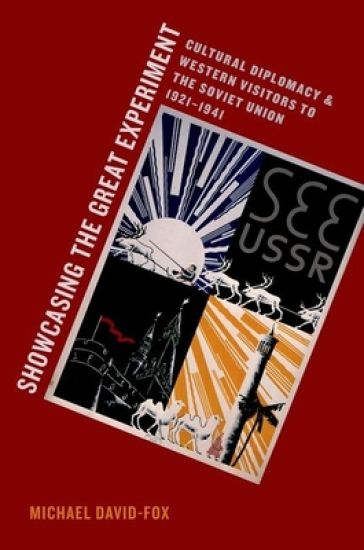
Showcasing the Great Experiment

Showcasing the Great Experiment

Michael David-Fox

Oxford University Press Inc
2014
nidottu
During the 1920s and 1930s thousands of European and American writers, professionals, scientists, artists, and intellectuals made a pilgrimage to experience the "Soviet experiment" for themselves. Showcasing the Great Experiment explores the reception of these intellectuals and fellow-travelers and their cross-cultural and trans-ideological encounters in order to analyze Soviet attitudes towards the West. Many of the twentieth century's greatest writers and thinkers, including Theodore Dreiser, André Gide, Paul Robeson, and George Bernard Shaw, notoriously defended Stalin's USSR despite the unprecedented violence of its prewar decade. While many visitors were profoundly affected by their Soviet tours, so too was the Soviet system. The early experiences of building showcases and teaching outsiders to perceive the future-in-the-making constitute a neglected international part of the emergence of Stalinism at home. Michael David-Fox contends that each side critically examined the other, negotiating feelings of inferiority and superiority, admiration and enmity, emulation and rejection. By the time of the Great Purges, these tensions gave way to the dramatic triumph of xenophobia and isolationism; whereas in the twenties the new regime assumed it had much to learn from Western modernity, by the Stalinist thirties the Soviet order was declared superior in all respects. Drawing on the declassified archival records of the agencies charged with crafting the international image of communism, David-Fox shows how Soviet efforts to sell the Bolshevik experiment abroad through cultural diplomacy shaped and were, in turn, shaped by the ongoing project of defining the Soviet Union from within. These interwar Soviet methods of mobilizing the intelligentsia for the international ideological contest, he argues, directly paved the way for the cultural Cold War.
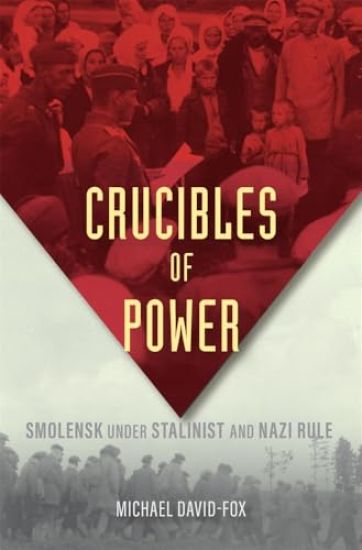
Crucibles of Power

Crucibles of Power

Michael David-Fox

HARVARD UNIVERSITY PRESS
2025
sidottu
An illuminating new history of World War II–era Smolensk, a region at the crossroads of the two great dictatorships of the twentieth century.During the Cold War, the Smolensk Archive held the only collection of Communist Party documents available to Western scholars, becoming the foundation for generations of scholarship on Soviet history. Crucibles of Power returns to the Smolensk Region with fresh eyes and fresh sources. Prizewinning historian Michael David-Fox traces the experiences of Smolensk residents between the interwar years and the end of World War II, a period during which the city and region passed from Stalinist rule to Nazi occupation and back. The result is a revelatory examination of choice and power under dueling forms of murderous totalitarianism.Exploring the life-and-death decisions of a fascinating cast of characters—from young women in the Communist Youth League to a defense lawyer during Stalin’s Great Terror who became Smolensk’s collaborationist mayor during the German occupation—David-Fox shows how deeply the Stalinist and Nazi regimes relied on the cooptation of average citizens motivated by greed and need, but always within the orbit of ideology. Challenging today’s Russian nationalist narrative of heroic WWII resistance, he finds that large numbers of Russians aided the Nazi occupation of Smolensk in order to protect themselves, secure their own self-interest, or pursue vendettas against a Soviet state they found no less corrupt or oppressive than its German foe.At a time when much of the world is tilting away from liberal democracy and toward authoritarianism, Crucibles of Power masterfully unravels the threads of dictatorial rule. Smolensk emerges as a laboratory for understanding the mechanics of both outright coercion and subtler forms of power, as well as the enabling behavior of ordinary citizens acquiescing to extraordinary crimes.
The Secret Police and the Soviet System

The Secret Police and the Soviet System

Michael David-Fox

UNIVERSITY OF PITTSBURGH PRESS
2024
sidottu
Even more than thirty years after the dissolution of the Soviet Union, the role of the secret police in shaping culture and society in communist USSR has been difficult to study, and defies our complete understanding. In the last decade, the opening of non-Russian KGB archives, notably in Ukraine after 2015, has allowed scholars to explore state security organizations in ways not previously possible. Moving beyond well-known cases of high-profile espionage and repression, this study is the first to showcase research from a wide range of secret police archives in former Soviet republics and the countries of the former Soviet bloc—some of which are rapidly closing or becoming inaccessible once again. Rather than focusing on Soviet leadership, The Secret Police and the Soviet System integrates the secret police into studies of information, technology, economics, art, and ideology. The result is a state-of-the-art portrait of one of the world’s most notorious institutions, the legacies of which are directly relevant for understanding Vladimir Putin’s Russia today.
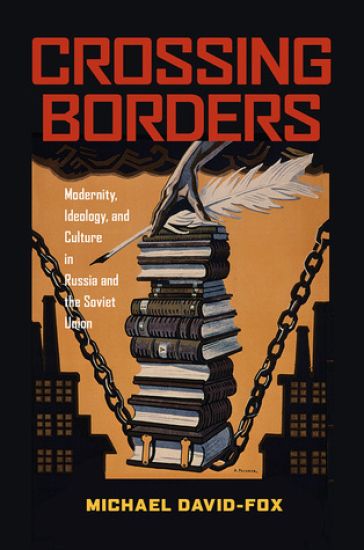
Crossing Borders

Crossing Borders

Michael David-Fox

University of Pittsburgh Press
2015
nidottu
Crossing Borders deconstructs contemporary theories of Soviet history from the revolution through the Stalin period, and offers new interpretations based on a transnational perspective. To Michael David-Fox, Soviet history was shaped by interactions across its borders. By reexamining conceptions of modernity, ideology, and cultural transformation, he challenges the polarizing camps of Soviet exceptionalism and shared modernity and instead strives for a theoretical and empirical middle ground as the basis for a creative and richly textured analysis.Discussions of Soviet modernity have tended to see the Soviet state either as an archaic holdover from the Russian past, or as merely another form of conventional modernity. David-Fox instead considers the Soviet Union in its own light—as a seismic shift from tsarist society that attracted influential visitors from the pacifist Left to the fascist Right. By reassembling Russian legacies, as he shows, the Soviet system evolved into a complex "intelligentsia-statist" form that introduced an array of novel agendas and practices, many embodied in the unique structures of the party-state. Crossing Borders demonstrates the need for a new interpretation of the Russian-Soviet historical trajectory—one that strikes a balance between the particular and the universal.
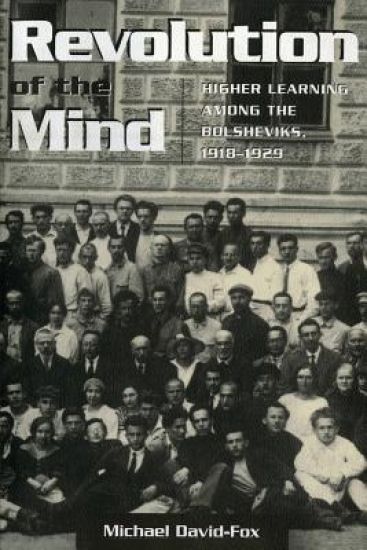
Revolution of the Mind

Revolution of the Mind

Michael David-Fox

Cornell University Press
2016
pokkari
Using archival materials never previously accessible to Western scholars, Michael David-Fox analyzes Bolshevik Party educational and research initiatives in higher learning after 1917. His fresh consideration of the era of the New Economic Policy and cultural politics after the Revolution explains how new communist institutions rose to parallel and rival conventional higher learning from the Academy of Sciences to the universities. Beginning with the creation of the first party school by intellectuals on the island of Capri in 1909, David-Fox argues, the Bolshevik cultural project was tightly linked to party educational institutions. He provides the first account of the early history and politics of three major institutions founded after the Revolution: Sverdlov Communist University, where the quest to transform everyday life gripped the student movement; the Institute of Red Professors, where the Bolsheviks sought to train a new communist intellectual or red specialist; and the Communist Academy, headquarters for a planned, collectivist, proletarian science.