Kirjojen hintavertailu. Mukana 11 699 587 kirjaa ja 12 kauppaa.

Kirjahaku

Etsi kirjoja tekijän nimen, kirjan nimen tai ISBN:n perusteella.

4 kirjaa tekijältä Michael E. Shay

A Grateful Heart

A Grateful Heart

Michael E. Shay

Praeger Publishers Inc
2001
sidottu
Shay looks at the crucial yet unheralded role played by support troops in World War I, in particular those in the medical branch. The unarmed men of the 103rd Field Hospital Company, 26th (Yankee) Division spent a year and a half in France performing their duty bravely under arduous conditions. The experiences of the men of the 103rd Field Hospital were undoubtedly shared by any member of a frontline field hospital. Based on nearly four years of research, including original archival material, he fills an important gap in the military history of World War I. A Grateful Heart is a detailed account of the 103rd Field Hospital Company, 26th (Yankee) Division in World War I. All aspects of the company are examined. The book is more than a chronological narrative and it places the unit in the context of the larger role of the 26th Division. It features original maps and passenger lists showing the members of the unit who sailed to France in 1917 and who returned in 1919.
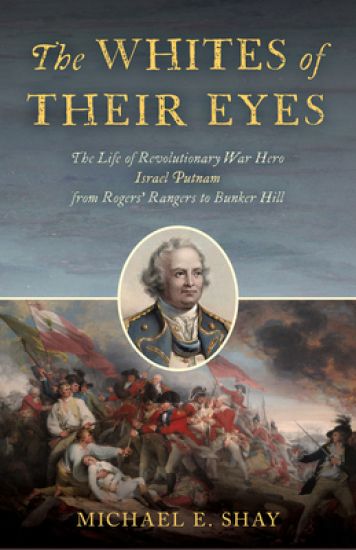
The Whites of Their Eyes

The Whites of Their Eyes

Michael E. Shay

STACKPOLE BOOKS
2023
sidottu
“Don’t fire until you see the whites of their eyes” remains one of the enduring, and most stirring, quotations of the Revolutionary War, and it was very likely uttered at the Battle of Bunker Hill by General Israel Putnam. Despite this, and Putnam’s renown as a battlefield commander and his colorful military service far and wide, Putnam has never received his due from modern historians. In The Whites of Their Eyes, Michael Shay tells the exciting life of Israel Putnam.Born near Salem, Massachusetts, in 1718, Putnam relocated in 1740 to northeastern Connecticut, where he was a slaveowner and, according to folk legend, killed Connecticut’s last wolf, in a cave known as Israel Putnam Wolf Den, which is on the U.S. National Register of Historic Places. During the French and Indian War, Putnam enlisted as a private and rose to the rank of colonel. He served with Robert Rogers, famous Ranger founder and leader, and a popular phrase of the time said, “Rogers always sent, but Putnam led his men to action.” In 1759, Putnam led an assault on French Fort Carillon (later Ticonderoga); in 1760, he marched against Montreal; in 1762, he survived a shipwreck and yellow fever during an expedition against Cuba; and in 1763, he was sent to defend Detroit during Pontiac’s rebellion.When the Revolutionary War broke out, Putnam—who had been radicalized by the Stamp Act—was among those immediately considered for high command. Named one of the Continental Army’s first four major generals, he helped plan and lead at the Battle of Bunker Hill, where he gave the order about “the whites of their eyes” and argued in favor of fortifying Breed’s Hill, in addition to Bunker Hill. Most of the battle would take place on Breed’s. During the battles for Manhattan, Brooklyn, and Long Island during the summer of 1776, Putnam proved himself a capable and courageous battlefield commander with a special eye for fortifications, but he sometimes faltered in tactical and strategic decision-making. In the fall of 1777, the British tricked Putnam into withdrawing from the Hudson Highlands near West Point. Relieved of command, Putnam was exonerated by a court of inquiry, but—nearly sixty and opposed by powerful political elements from New York, including Alexander Hamilton—he spent the rest of the war on non-battlefield duty in Connecticut before being paralyzed by a stroke in 1779.The Whites of Their Eyes recounts the life and times of Israel Putnam, a larger-than-life general, a gregarious tavern keeper and farmer, who was a folk hero in Connecticut and the probable source of legendary words during the Revolutionary War—and whose exploits make him one of the most interesting officers in American military history.
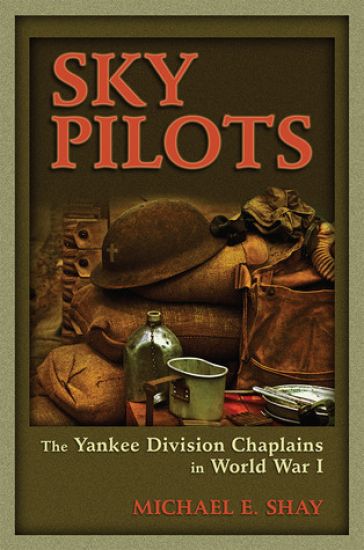
Sky Pilots

Sky Pilots

Michael E. Shay

University of Missouri Press
2014
sidottu
In August 1917, the U.S. 26th “Yankee” Division was formally activated for service in World War I. When the soldiers arrived in France, they were accompanied by more than three dozen volunteer chaplains. These clergymen experienced all the horrors of war, shared all the privations of the common soldier, and earned the love and affection of their “boys.” Two died, several were gassed or wounded, and many were decorated by France and the United States for their heroism, yet their stories have been lost to history. Through extensive research in published and archival sources, as well as firsthand materials obtained from the families of several chaplains, Michael E. Shay brings to life the story of these valiant men - a story of courage in the face of the horrors of war and of extreme devotion to the men they served.Just as important, Sky Pilots follows the chaplains home and on to their subsequent careers. For many, their war experiences shaped their ministries, particularly in the area of ecumenism and the Social Gospel. Others left the ministry altogether. To fill in the chaplains’ stories, Shay also examines the evolution of the U.S. Army Chaplain Corps, the education of the newly appointed chaplains, and the birth of the Yankee Division.This exploration of the noncombatants who earned the love and respect of the doughboys should appeal to armchair historians and scholars alike. Enhanced with photographs and an appendix summarising the biographical information for each man, Sky Pilots is the first comprehensive look at the role of the Army chaplaincy at the divisional level.
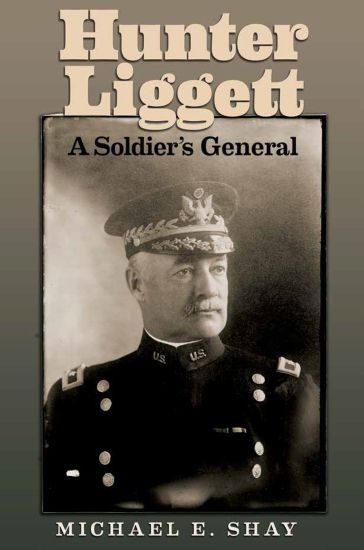
Hunter Liggett

Hunter Liggett

Michael E. Shay

Texas A M University Press
2019
sidottu
Lt. Gen. Hunter Liggett's forty-year career spanned the period from the Indian Wars in the territories of Montana and Dakota to the trenches of World War I. For someone who experienced many individual triumphs and battlefield victories—including the final push of the Meuse-Argonne Offensive—he often is overshadowed by figures such as John J. Pershing or George C. Marshall. His quiet demeanor sometimes did not serve him well, but it also masked steely determination. Liggett's tenacity won Pershing's attention and admiration, and he went on to direct and win what was at the time the largest single battle in American history. In Hunter Liggett, author Michael E. Shay shows that while Pershing may have assembled the pieces of the American Expeditionary Forces, it was Liggett who made it work. This first biography of Liggett follows the full life of a doggedly hard-working soldier whose leadership style contrasted and sometimes conflicted with the military culture of his time. Where Pershing employed a ""fear and censure"" approach to command, Liggett allowed his subordinates to grow into their jobs, all the while coaching them on the best course of action. Where Pershing was feared, Liggett enjoyed the respect—if not affection—of his men. Liggett was a modest man and a devoted student of military history at a time when many officers of his generation relied upon a combination of connections, political influence, and seniority to advance their careers.Hunter Liggett not only offers readers a much-needed biography of an almost forgotten general but also adds a new and nuanced perspective on the importance of military leadership in the era of the First World War.