Kirjojen hintavertailu. Mukana 11 342 296 kirjaa ja 12 kauppaa.

Kirjahaku

Etsi kirjoja tekijän nimen, kirjan nimen tai ISBN:n perusteella.

16 kirjaa tekijältä Michael F. Bird

How Did Christianity Begin?

How Did Christianity Begin?

Michael F. Bird

SPCK Publishing
2008
nidottu
The objective of "How Did Christianity Begin?" is to present two contrasting perspectives on the history of early Christianity. The contrast is evidently sharp as one co-author comes from a conservative Christian background (Michael Bird), whilst the other co-author (James Crossley) approaches the matter from a secular standpoint. The volume works sequentially through Christian origins and addresses various topics including the historical Jesus, the resurrection of Jesus, the Apostle Paul, the Gospels, and the early church. Each author in turn examines these subjects and lays out his historical arguments concerning their origin and meaning.The volume also includes short responses from two other scholars (Maurice Casey and Scot McKnight) to the arguments of Bird and Crossley so as to give an even handed and broad evaluation of the arguments and debates that unfold.
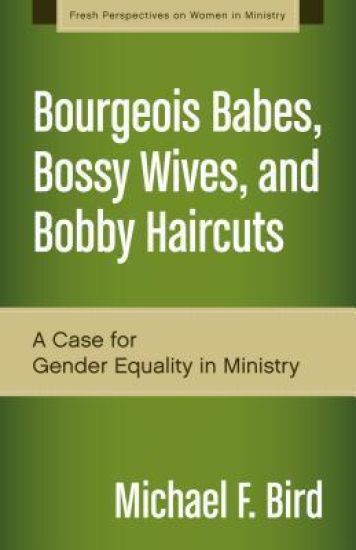
Bourgeois Babes, Bossy Wives, and Bobby Haircuts
Taking a stand over the gender-issue divide Author and New Testament scholar Michael Bird was formerly in favor of distinct gender roles in ministry, a viewpoint commonly called “complementarianism.” But inconsistencies in practice and careful biblical study convinced him to rethink his position.Originally published as a short ebook, Bourgeois Babes, Bossy Wives, and Bobby Haircuts offers an engaging, incisive perspective on biblical gender equality and the egalitarian view—a preference for allowing women to hold teaching and leadership positions in ministry.While Bird is now egalitarian, he nevertheless strikes a respectful tone toward those in his previous camp, seeking to craft a perspective that both values women and upholds biblical differences between the sexes. Humorous and hard-hitting, Bird will challenge readers on both sides of the gender-issue divide.
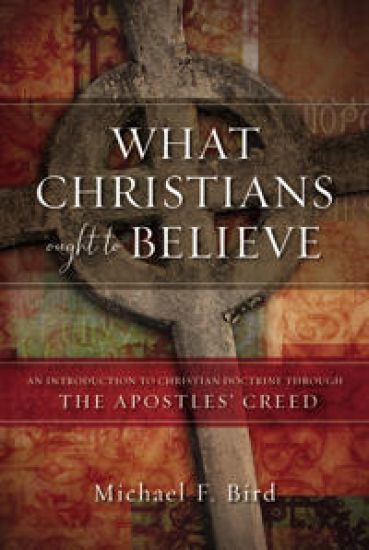
What Christians Ought to Believe

What Christians Ought to Believe

Michael F. Bird

Zondervan
2016
sidottu
Summarizes the basic tenets of the Christian faith using the Apostles' Creed as its entryway.The Apostles' Creed is a treasure trove of basic Christian beliefs and wisdom that helps ensure the integrity and orthodoxy of our faith. Sadly, modern churches have often hesitated to embrace the ancient creeds because of our "nothing but the Bible" tradition. What Christians Ought to Believe will open your eyes to the possibilities of the Apostles' Creed as a way to explore and understand the essential teachings of the Christian faith.Michael Bird deftly weaves together theological commentary, tips for application, and memorable illustrations. Each chapter, following the Creed's outline, introduces the Father, the Son, and the Spirit and the Church. An appendix includes the Apostles' Creed in the original Latin and Greek.What Christians Ought to Believe is ideally suited for both the classroom and the church setting to teach beginning students and laypersons the basics of what Christians ought to affirm if they are to be called Christians.
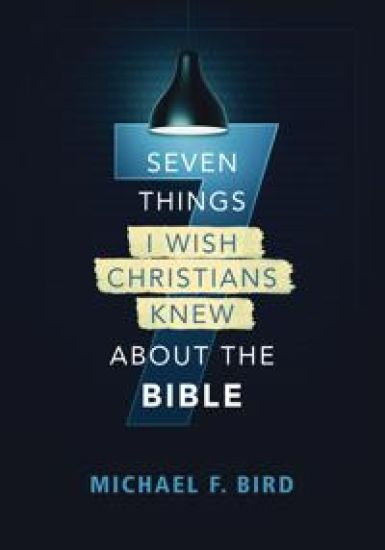
Seven Things I Wish Christians Knew about the Bible
Answers to the most common questions and misconceptions about the Bible Seven Things I Wish Christians Knew about the Bible is a short and readable introduction to the Bible—its origins, interpretation, truthfulness, and authority.Bible scholar, prolific author, and Anglican minister Michael Bird helps Christians understand seven important "things" about this unique book:how the Bible was put together;what "inspiration" means;how the Bible is true;why the Bible needs to be rooted in history;why literal interpretation is not always the best interpretation;how the Bible gives us knowledge, faith, love, and hope; andhow Jesus Christ is the center of the Bible.Seven Things presents a clear and understandable evangelical account of the Bible's inspiration, canonization, significance, and relevance in a way that is irenic and compelling. It is a must read for any serious Bible reader who desires an informed and mature view of the Bible that will enrich their faith.
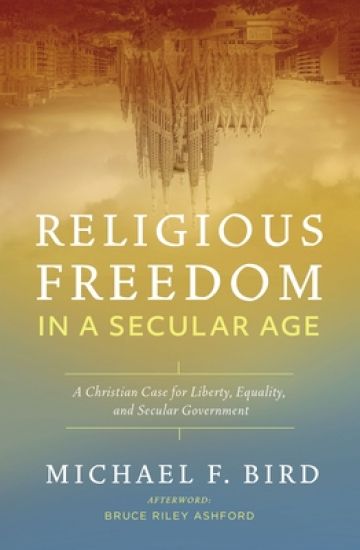
Religious Freedom in a Secular Age

Religious Freedom in a Secular Age

Michael F. Bird

ZONDERVAN
2022
nidottu
Discover how to responsibly defend religious freedom for all without compromising your personal beliefs. Religious freedom is a bitterly contested issue that spills over into political, public, and online spheres. It's an issue that's becoming ever more heated, and neither of the global political polarities is interested in protecting it. While the political left is openly hostile toward traditional religion, the political right seeks to weaponize it.How can we ensure that "religious freedom" is truly about freedom of one's religion rather than serving an ethno-nationalist agenda?In Religious Freedom in a Secular Age, Michael Bird (New Testament scholar and author of Evangelical Theology) has four main goals:To explain the true nature of secularism and help us to see it as one of the best ways of promoting liberty and mutual respect in a multifaith world.To dismantle the arguments for limiting religious freedom.To outline a biblical strategy for maintaining a Christian witness in a post-Christian society.To encourage Christians to participate in a new age of apologetics by being prepared to defend not only their own believes but also the freedom of all faiths.While Bird does address the recent political administrations in the US, his focus is global. Bird—who lives in Melbourne, Australia—freely admits to his anxiety of the militant secularism surrounding him, but he also strongly critiques the marriage of national and religious identities that has gained ground in countries like Hungary and Poland.The fact is that religion has a lot to contribute to the common good. Religious Freedom in a Secular Age will challenge readers of all backgrounds and beliefs not only to make room for peaceable difference, but also to find common ground on the values of justice, mercy, and equality.
Jesus and the Origins of the Gentile Mission

Jesus and the Origins of the Gentile Mission

Michael F. Bird

BLOOMSBURY PUBLISHING PLC
2006
sidottu
Bird argues that Jesus was attempting to achieve and enact the restoration of Israel, and in continuity with other strands of Jewish belief, Jesus conceived of the restoration of Israel as resulting in the salvation of the gentiles. Jesus' mission was Israel-centric, but he espoused a view of restoration that was indebted to certain strands of Israel's sacred traditions where the gentiles are implicit beneficiaries of Israel's salvation. Since this restoration was already being partially realized in Jesus' ministry, it was becoming possible for gentiles to begin sharing in Israel's salvation in the present. Additionally, Jesus understood himself and his followers to be the new temple and the vanguard of the restored Israel who would appropriate for themselves the role of Israel and the temple in being a light to the nations. Thus, a gentile mission has its germinal roots in the aims and intentions of Jesus and was developed in a transformed situation by adherents of the early Christian movement.
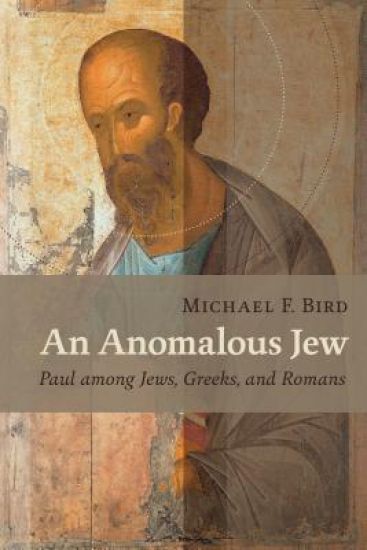
Anomalous Jew

Anomalous Jew

Michael F. Bird

William B Eerdmans Publishing Co
2016
nidottu
Lively, well-informed portrait of the complex figure who was the apostle Paul Though Paul is often lauded as the first great Christian theologian and a champion for Gentile inclusion in the church, in his own time he was universally regarded as a strange and controversial person. In this book Pauline scholar Michael Bird explains why. An Anomalous Jew presents the figure of Paul in all his complexity with his blend of common and controversial Jewish beliefs and a faith in Christ that brought him into conflict with the socio-religious scene around him. Bird elucidates how the apostle Paul was variously perceived -- as a religious deviant by Jews, as a divisive figure by Jewish Christians, as a purveyor of dubious philosophy by Greeks, and as a dangerous troublemaker by the Romans. Readers of this book will better understand the truly anomalous shape of Paul's thinking and worldview.
The Gospel of the Lord

The Gospel of the Lord

Michael F. Bird

William B Eerdmans Publishing Co
2014
nidottu
In this book Michael Bird describes how the canonical Gospels originated from a process of oral tradition, literary composition, textual development, and reception in the early church with a view to showing what makes them among the most important writings in the New Testament. Bird explores how the Christian movement shaped the Gospels and, conversely, how these writings shaped the early church. He develops a distinctive evangelical and critical approach to the Gospels, deals with the Synoptic problem head-on, and explains the significance of the fourfold Gospel canon. The book includes a number of helpful excursuses on related topics. All in all, Bird's Gospel of the Lord clarifies the often-confusing debates over the origins of the Gospels and offers informed and soundly argued explanations that account for the content of the Gospels in the context of the wider Greco-Roman world.
Jesus the Eternal Son

Jesus the Eternal Son

Michael F. Bird

William B Eerdmans Publishing Co
2017
nidottu
Adoptionism--the idea that Jesus is portrayed in the Bible as a human figure who was adopted as God's son at his baptism or resurrection--has been commonly accepted in much recent scholarship as the earliest explanation of Jesus's divine status. In this book Michael Bird draws that view into question with a thorough examination of pre-Pauline materials, the Gospel of Mark, and patristic sources. Engaging critically with Bart Ehrman, James Dunn, and other scholars, Bird demonstrates that a full-fledged adoptionist Christology did not emerge until the late second century. As he delves into passages often used to support the idea of an early adoptionist Christology, including Romans 1:3-4 and portions of the speeches in Acts, Bird persuasively argues that early Christology was in fact incarnational, not adoptionist. He concludes by surveying and critiquing notable examples of adoptionism in modern theology.
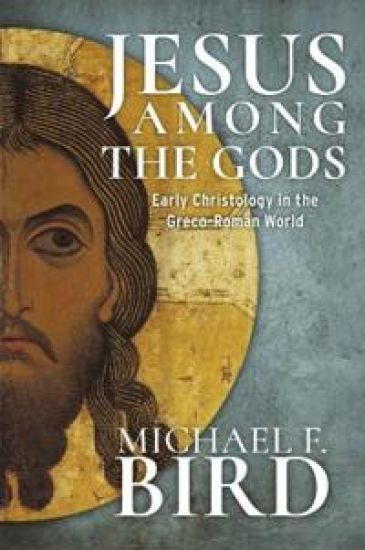
Jesus Among the Gods

Jesus Among the Gods

Michael F. Bird

Baylor University Press
2022
sidottu
The early church, after several centuries of controversy, came to an uneasy consensus that Jesus was both fully human and fully divine. In his divinity, orthodox Christianity claimed, he shared fully in the nature of the uncreated creator God. But was this doctrinal position crafted from whole cloth in the era of the great ecumenical councils? How did earlier Christ-followers understand Jesus in light of their convictions about the one supreme deity, and in the context of a cultural milieu saturated with gods?In Jesus among the gods Michael Bird gives renewed attention to divine ontology—what a god is—in relation to literary representations of Jesus. Most studies of the origins of early Christology focus on christological titles, various functions, divine identity, and types of worship. The application of ontological categories to Jesus is normally considered something that only began to happen in the second and third centuries as the early church engaged in platonizing interpretations of Jesus. Bird argues, to the contrary, that ontological language and categories were used to describe Jesus as an eternal, true, and unbegotten deity from the earliest decades of the nascent church.Through comparison with representative authors such as Philo and Plutarch, and a comprehensive analysis of Jesus and various intermediary figures from Greco-Roman religion and ancient Judaism, Bird demonstrates how early accounts of Jesus both overlapped with and diverged from existing forms of religious expression. However Jesus resembled the various divine agents of Greco-Roman religion and Second Temple Judaism, the chorus of early Christian witnesses held Jesus to be simultaneously an agent of and an analogue with the God of Israel. Among the gods, Jesus stood in clear relief, a conviction that may have been refined over time but that belongs to the emerging heart of Christian confession.
The Saving Righteousness of God

The Saving Righteousness of God

Michael F. Bird

Wipf Stock Publishers
2007
sidottu
This book presents a series of studies on contentious aspects of Paul's doctrine of justification including the meaning of "righteousness," the question of imputation, the role of resurrection in justification, an evaluation of the New Perspective, the soteriological and ecclesiological significance of justification, justification by faith with judgment according to works, and debates over the orthodoxy of N. T. Wright. The burden of this volume is to demonstrate that reformed and "new" readings of Paul are indispensable to attaining a full understanding of Paul's soteriology. An analysis of Galatians and Romans demonstrates that the covenantal and forensic dimensions of justification go hand in glove. The vertical and horizontal aspects need to be appropriately described and weighted in order to provide a holistic rendering of justification in Paul's letters. According to Paul, faith alone in Jesus Christ is the instrument of eschatological vindication; and faith alone marks out the true people of God.
The Saving Righteousness of God

The Saving Righteousness of God

Michael F. Bird

Wipf Stock Publishers
2007
nidottu
This book presents a series of studies on contentious aspects of Paul's doctrine of justification including the meaning of "righteousness," the question of imputation, the role of resurrection in justification, an evaluation of the New Perspective, the soteriological and ecclesiological significance of justification, justification by faith with judgment according to works, and debates over the orthodoxy of N. T. Wright. The burden of this volume is to demonstrate that reformed and "new" readings of Paul are indispensable to attaining a full understanding of Paul's soteriology. An analysis of Galatians and Romans demonstrates that the covenantal and forensic dimensions of justification go hand in glove. The vertical and horizontal aspects need to be appropriately described and weighted in order to provide a holistic rendering of justification in Paul's letters. According to Paul, faith alone in Jesus Christ is the instrument of eschatological vindication; and faith alone marks out the true people of God.
Whispers of Revolution

Whispers of Revolution

Michael F. Bird

INTER-VARSITY PRESS
2025
sidottu
The first part engages in an actual theology of the New Testament in the context of early Christianity. Michael Bird argues for the possibility of a New Testament theology, identifies the relationship between a text and its community in the construction of a theology, and sets forth the methodological approach for the study. He looks at the challenges to New Testament Theology and questions their assumptions. Then he gives an overview of the theology of the New Testament where the texts are sometimes grouped by a common socio-religious context in early Christianity. The second part engages the problem of unity and diversity in the New Testament. Bird argues for the abandonment of the terms 'unity' and 'diversity'. and in their place he advocates 'complexity' and 'accordance'. He looks at the problem of finding a centre or centres to a New Testament and surveys proposed centres. Then he gives explicit examples of complexity related to a number of subjects, and of theological accordance in the New Testament. Bird identifies the actual central nodes (fulcrum) of a New Testament theology, and then demonstrates the relative homogeneity of the early Christian movement and thus the possibility of a theology of early Christianity.