Kirjojen hintavertailu. Mukana 11 627 220 kirjaa ja 12 kauppaa.

Kirjahaku

Etsi kirjoja tekijän nimen, kirjan nimen tai ISBN:n perusteella.

43 kirjaa tekijältä Michael Foley

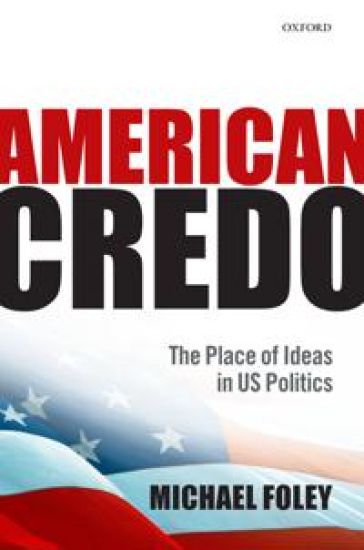
American Credo

American Credo

Michael Foley

Oxford University Press
2007
sidottu
American society may be hostile to the thought of ideologies, but it possesses a sophisticated but little understood ability to engage in deep conflicts over political ideas, while at the same time reducing adversarial positions to legitimate derivatives of American history and development. The study asks how this occurs; how the sources, traditions and usages of core ideas and their derivative compounds animate political discourse and structure the basis of political conflict; and how it is possible to sustain a high incidence of competitive value-laden argument and principled political conflict within a stable political order. The fundamental aim of this study is to examine the traditions and usages of American political ideas within the arena of practical politics. By locating them in their respective contexts, it will be possible to assess both their changing meanings and their shifting relationships to one another. In surveying America's core ideas both in isolation and in combination, the book facilitates an informed awareness of their political and cultural leverage as forms of persuasion and sources of legitimacy. American Credo roots the examination of American political ideas firmly in the milieu of social drives, political movements and contemporary issues within which the ideas themselves are embedded. This not only allows the study to investigate the interior properties and traditional priorities of America's key values but permits the theoretical implications and practical consequences of these ideas to be traced and evaluated. By marshalling a wide variety of evidence from different disciplines and perspectives, and by employing innovative principles of organisation, the study offers clarity and depth in support of an inventive explanatory scheme. It concludes with a review of the current and likely future challenges to the protocols and conventions surrounding the matrix of ideational coexistence.
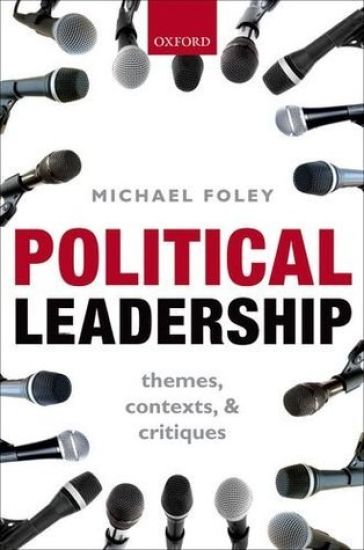
Political Leadership

Political Leadership

Michael Foley

Oxford University Press
2013
sidottu
Despite its recognized significance in social life, leadership is a notoriously elusive subject that generates a host of different points of explanatory focus. This is particularly so in the field of political leadership, which has been afflicted by an enduring split between the biographical idiosyncrasies of individual leaders and the specialist contributions from an array of social science disciplines. This new study is designed to establish an improved balance between this often myopic and confusing bifurcation of approaches. It engages with an expansive range of empirical, theoretical, and interpretive research into the issue of leadership but does so in a way that ensures that the political character of the subject is kept securely in the foreground. The project is therefore designed to maintain a clear emphasis upon leaders embedded in their political contexts and viscerally connected to high level issues of political location and status, political power and legitimacy, and political functions and contingencies. The book has a cumulative design that moves from an in-depth analysis of the basic components of political leadership to an examination of a series of key dimensions relating to leadership activity and development--namely the themes of representation, communication, marketing, business practice, and the issue of women leaders. It goes on to survey the developmental properties of the international sphere before concluding with a substantive review of the changing landscapes of contemporary leadership activity and the different ways that we come to terms with the theme of political leadership in an increasingly complex world.
Laws, Men and Machines

Laws, Men and Machines

Michael Foley

Routledge
2011
sidottu
First published in 1990, Laws, Men and Machines is an original interpretation of the lasting influence that Newtonian mechanics has had on the design and operation of the American political system. The author argues that it is this mechanistic tradition that now instinctively shapes the way we conceive of, analyse, and evaluate American politics, and that the Newtonian conception of the world still finds expression in the 'checks and balances' of the American system.
Laws, Men and Machines (Routledge Revivals)
First published in 1990, Laws, Men and Machines is an original interpretation of the lasting influence that Newtonian mechanics has had on the design and operation of the American political system. The author argues that it is this mechanistic tradition that now instinctively shapes the way we conceive of, analyse, and evaluate American politics, and that the Newtonian conception of the world still finds expression in the 'checks and balances' of the American system.
The Silence of Constitutions (Routledge Revivals)
First published in 1989, Michael’s Foley’s book deals with the ‘abeyances’ present in both written and unwritten constitutions, arguing that these gaps in the explicitness of a constitution, and the various ways they are preserved, provide the means by which constitutional conflict is continually postponed. Abeyances are valuable, therefore, not in spite of their obscurity, but because of it. The author illustrates his point with analyses of constitutional crises from both sides of the Atlantic. He examines the period leading up to the English civil war in the seventeenth century, and the ‘imperial presidency’ episode under Richard Nixon in the late 1960s and 1970s in the USA. In both cases there was no constitutionally correct solution available but, as the author demonstrates, the political skill of the participants in their use of constitutional devices allowed the anomalies of the American system to survive in a way that contrasted markedly with the plight of Charles I and the Stuart constitution. This reissue of a landmark study will be welcomed by all those interested in the interpretation and construction of constitutional law.
The Silence of Constitutions (Routledge Revivals)
First published in 1989, Michael’s Foley’s book deals with the ‘abeyances’ present in both written and unwritten constitutions, arguing that these gaps in the explicitness of a constitution, and the various ways they are preserved, provide the means by which constitutional conflict is continually postponed. Abeyances are valuable, therefore, not in spite of their obscurity, but because of it. The author illustrates his point with analyses of constitutional crises from both sides of the Atlantic. He examines the period leading up to the English civil war in the seventeenth century, and the ‘imperial presidency’ episode under Richard Nixon in the late 1960s and 1970s in the USA. In both cases there was no constitutionally correct solution available but, as the author demonstrates, the political skill of the participants in their use of constitutional devices allowed the anomalies of the American system to survive in a way that contrasted markedly with the plight of Charles I and the Stuart constitution. This reissue of a landmark study will be welcomed by all those interested in the interpretation and construction of constitutional law.
The Politics of the British Constitution

The Politics of the British Constitution

Michael Foley

Manchester University Press
1999
nidottu
This work on the British constitution assesses the properties, dynamics and implications of political exchange. It investigates the methods employed to mobilise and resist the pressure for constitutional change, how political agendas are formed, and reviews different political motivations.
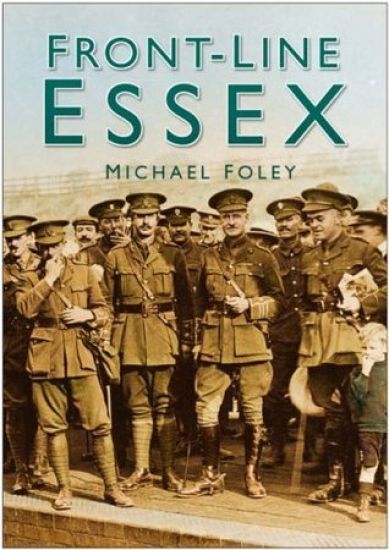
Front-line Essex

Front-line Essex

Michael Foley

The History Press Ltd
2005
nidottu
Before the First World War, Essex was a very different county from that which we know today. The economy was largely based on agriculture, and the people rarely travelled beyond its borders, or even out of their towns or villages. The war opened up a whole new world for the people of Essex. Men from the county enlisted in Kitchener's Army and travelled abroad, and many troops came into the camps and barracks which sprang up. Some of these were men from across the empire who came to fight for the mother country. Essex was a key area during the war: situated on the east coast, it was thought that the enemy could potentially use it as a site for invasion, so many defences were set up all round the county. Essex was subjected to great danger and harsh times by the enemy in the form of air raids from Zeppelins, and later, from aeroplanes. This book sets out the experiences of the county against what was happening in the broader theatre of war.
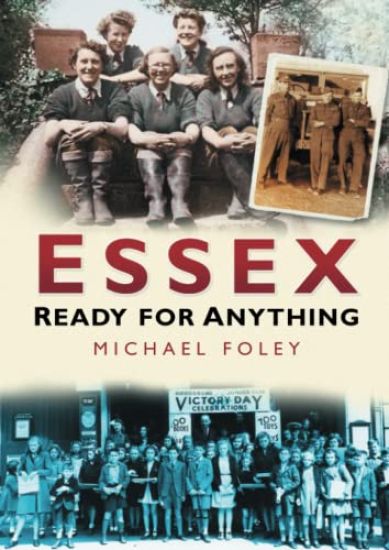
Essex: Ready for Anything

Essex: Ready for Anything

Michael Foley

The History Press Ltd
2006
nidottu
A follow-up to the "Frontline Essex", this book describes life in the county during the Second World War. It draws on written sources and interviews with people who lived through the war on the Home Front, as children or as adults.
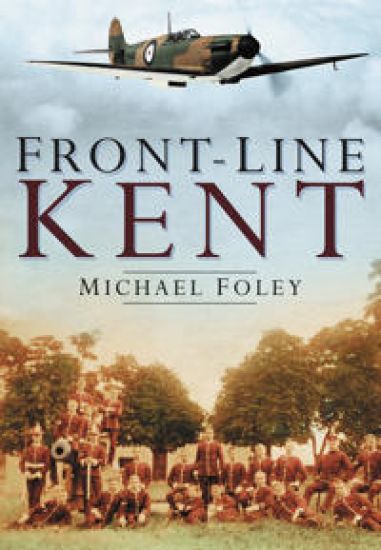
Front-Line Kent

Front-Line Kent

Michael Foley

The History Press Ltd
2006
nidottu
Kent has been on England's first line of defence. In all major conflicts many people in the county have lived closer to the enemy in Europe than they did to London. Much of the county's coastline has been the site of training and weapon development, which adds to the interest of military sites in this area.Michael Foley's new book delves into the long history of military Kent, from Roman forts to Martello towers, built to keep Napoleon out, from the ambitious Royal Military Canal, which cost an equivalent of GBP10 million in today's money but was abandoned after seventy years, to wartime airfields and underground Cold War installations.Illustrated with a wide range of photographs, maps, drawings, engravings and paintings, Front-Line Kent also includes location and access details for the sites that are illustrated and described. This lively and informative book will appeal to anyone interested in Kent's history, whether or not a military specialist.
Front-line Suffolk

Front-line Suffolk

Michael Foley

The History Press Ltd
2007
nidottu
Suffolk's coastline faces east, and through most of its history has therefore been one of the areas of this country that has been at risk from invasion during times of conflict. This title delves into history of military Suffolk, from Saxon shore forts to castles or castle sites, Napoleonic martello towers and Second World War airfields.
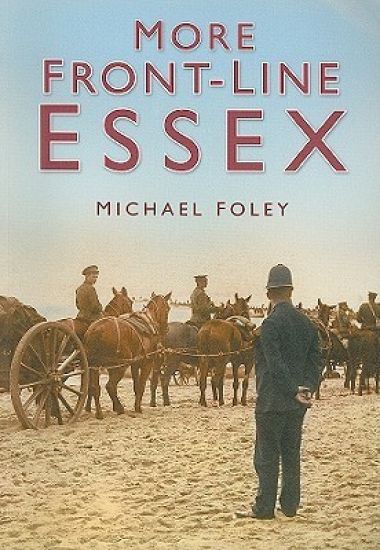
More Front-line Essex

More Front-line Essex

Michael Foley

The History Press Ltd
2008
nidottu
More Front-Line Essex takes another fascinating look at the military history of the county and answers all these questions. Since early times Essex has been on England's military front line and has protected the rest of the country from European invaders. Michael Foley covers much of the earlier period not mentioned in his first book, Front-Line Essex, as well as uncovering a host of new facts from later periods. We learn about Essex's distinguished military history from Roman times right up to the present day, taking in the Napoleonic Wars, the First and Second World Wars and the Cold War. Illustrated with a plethora of photographs, maps, drawings, engravings and paintings, More Front-Line Essex is a highly informative book which will appeal to anyone interested in the county's history.
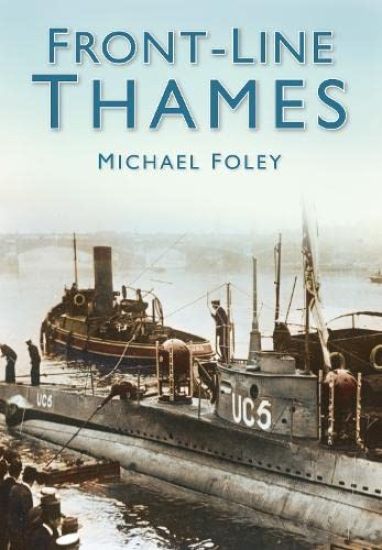
Front-Line Thames

Front-Line Thames

Michael Foley

The History Press Ltd
2008
nidottu
The Thames has been the highway into London since early times. Iron Age forts once guarded its banks and then Roman legionaries took over. Every age since has added to the defences lining the river. The river was also used as the site of mills to produce gunpowder and test weapons, industries too dangerous to be based close to London. The river also betrayed the site of London to enemy airships and later aircraft. Even a complete blackout of the capital could not hide the river's route from enemy pilots. Although the defences are now outdated, many of them remain, giving example of London's battle through history. Michael Foley examines all aspects of military history around the capital and along the banks of the Thames in this fascinating new book.
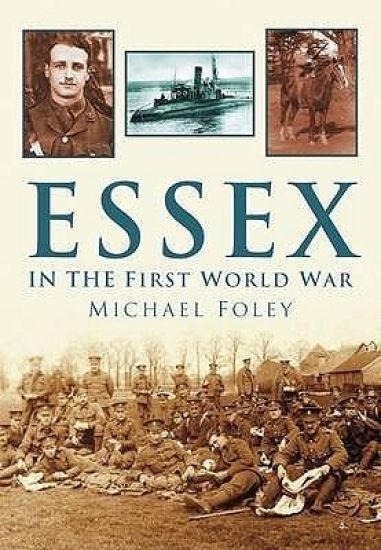
Essex in the First World War

Essex in the First World War

Michael Foley

The History Press Ltd
2009
nidottu
Before the First World War, Essex was a very different county from that which we know today. The economy was largely based on agriculture, and its people rarely travelled beyond its borders, or even out of their towns or villages. The war opened up a whole new world for the people of Essex. Men from the county enlisted in Kitchener's Army and travelled abroad, and many troops came into the camps and barracks which sprang up around the countryside. Some of these men came from all points of the British Empire and had enlisted to fight for the mother country. Essex was a key area during the war. Situated on the east coast, it was thought that the enemy could potentially use it as a site for invasion, so many defences were set up all round the county. Essex was subjected to great danger and harsh times by the enemy in the form of air raids from Zeppelins, and later, from the more potent aeroplane attacks.This well-illustrated and informative book sets out the experiences of the county and its inhabitants against what was happening in the broader theatre of war. It offers a valuable insight into life for Essex folk in the First World War and will appeal to anyone interested in the county's history.
London Under Attack

London Under Attack

Michael Foley

The History Press Ltd
2010
nidottu
London has been under attack for literally centuries. London Under Attack charts the military history of the capital from Roman times until the Second World War. Throughout this period London was at the centre of hostilities, not always instigated by foreign enemies, but more often from its own inhabitants or those from other parts of Britain. As well as the terrible Blitz on London during the Second World War, earlier conflicts which made an impact on the city are also documented, including the Civil Wars of twelfth and seventeenth centuries, the war between King John and the barons, uprisings against the poll tax, the uprising against Queen Mary's marriage to Philip of Spain, the Gordon Riots, the riots and deaths at the funeral of Queen Caroline in the nineteenth century and numerous other uprisings and conflicts that have mainly been forgotten in the twenty-first century. London Under Attack is a must-read for all those interested in military history as well as the turbulent history of our nation’s capital.
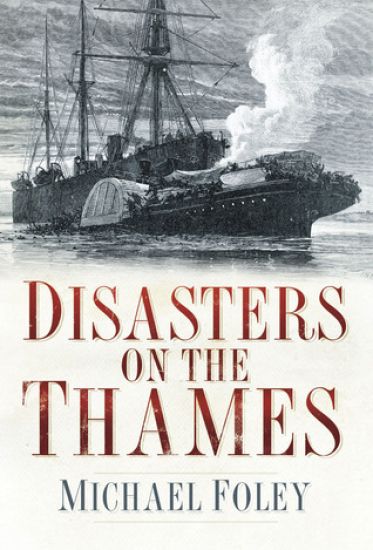
Disasters on the Thames

Disasters on the Thames

Michael Foley

The History Press Ltd
2011
nidottu
The River Thames has been a vital lifeline for London since Roman warships sailed along it to the newly founded town of Londinium. Even then the peaceful-looking river had a lethal aspect which led to the loss of these Thames sailors. When the Vikings sailed across the treacherous North Sea they did not expect to lose their ships in the Thames but still many did. Throughout the centuries the River Thames has claimed the lives of crews of small boats and large naval warships, the scale of the tragedies growing with the sizes of the vessels involved. The danger to shipping was often accepted as a necessary risk in order to keep trade flowing into London and many of the earlier tragedies, before news was so widely transmissible, have been largely forgotten today. This illustrated book chronicles the surprising number of disasters and tragedies to have occurred on the River Thames up to the present day.
Death in Every Paragraph

Death in Every Paragraph

Michael Foley

Quinnipiac University Press
2015
nidottu
Ireland's Great Hunger Museum at Quinnipiac University publishes Famine Folios, a unique resource for students, scholars and researchers, as well as general readers, covering many aspects of the Famine in Ireland from 1845-1852 - the worst demographic catastrophe of nineteenth-century Europe. The essays are interdisciplinary in nature, and make available new research in Famine studies by internationally established scholars in history, art history, cultural theory, philosophy, media history, political economy, literature and music. Had the Great Famine not occurred, newspapers would still have gone through massive changes in the nineteenth century, precipitated by industrialization and urbanisation. But the Famine did take place, and the ways Irish journalists found to tell the story of unprecedented horror conditioned the evolution of journalism, not alone in Ireland, but abroad. The scale and complexity of the catastrophe forced journalists to find new ways of reporting news, to develop new techniques of interrogation, including the narration of the stories of ordinary people, rather than just reporting the speeches of important men.Whatever the political perspective of the journalist, the ideologies of his readers had to be taken into account, requiring him to develop new writing skills - forensic, contextual and emotional - that explained the Famine to the rest of the world. The stories that appeared in local Irish newspapers were often reprinted not only in the newspapers of Dublin, but London and other major cities, as far as America and Australia. It was the work of journalists that attracted other journalists from around the world who wanted to see for themselves how such a calamity could take place so close to the centre of the world's greatest empire. The Great Irish Famine was the worst humanitarian disaster of the nineteenth century and how it was reported by the press established many of the norms of disaster coverage to this day.
Britain's Railways in the Second World War

Britain's Railways in the Second World War

Michael Foley

PEN SWORD BOOKS LTD
2025
nidottu
The outbreak of the Second World War had an enormous effect on the railway system in Britain. Keeping the trains running through times of conflict was not such a distant memory for the railway companies and their workers but in this second major war of the twentieth century, the task was to prove a very different one. The railway system no longer consisted of the hundreds of companies of the past, but the Big Four' still needed to learn how to work together and forget their differences for the war effort. The logistics of the mass evacuation of children, and transporting thousands of troops during the evacuation of Dunkirk and the preparations for D-Day, for instance, were unprecedented. At the same time, they had to cope with the new and constant threat of aerial bombing that military advances brought to the Second World War. The railway system, and the men and women who ran it, effectively served as another branch of the military during the conflict. This book is a fascinating account of the important role that the railways played in the defence of the country as well as in their support of the Allied forces in theatres of war around the world. It brings to light the often forgotten stories of the brave and hard-working men and women who went to work on the railways and put their lives on the line.
Pioneers of Aerial Combat

Pioneers of Aerial Combat

Michael Foley

PEN SWORD BOOKS LTD
2023
nidottu
When the Wright Brothers made their first flight in the early years of the twentieth century it sparked the imagination of those who wanted to fly, both in their country and around the world. In Britain, however, the spark wasnt strong enough to light a fire and it was in other parts of Europe, notably France, where flight began to develop seriously. Early pioneers of flight faced a high level of danger and many died in pursuit of fulfilling their dream. Although aircraft design had made incredible progress by the time of the outbreak of war, accidents still occurred on a regular basis. For some time, as many pilots died in accidents as they did in combat. This publication consolidates a range of stories, insights, and facts that, when combined, offer a vivid impression of events as they unfolded. The chaos stirred up during the First World War and the scramble to develop aircraft in response to the threat to homeland security is eloquently relayed, as are the battles that characterized this conflicted era. The reality of conflict gave aviation engineers and designers the opportunity to test their craft in the harshest of environments, pushing the benchmark ever higher in terms of what could be achieved. Sure to appeal to aviation enthusiasts and historians alike, this work offers the reader a full account of the developmental early days of flight.
London's Docklands Through Time

London's Docklands Through Time

Michael Foley

Amberley Publishing
2014
nidottu
London’s Docklands have a rich and varied history. Dating from the Middle Ages, they developed into one of the biggest docks in the world. The riches of Britain’s Empire found its way into the country through the River Thames and into London. Unfortunately, the people who worked and lived in London’s Docklands rarely shared in the riches arriving from around the world. The area around the docks was one of the poorest in the country, with men working on a casual basis and often fighting other men for the few jobs available in the docks. As well as the docks, the area along the Thames was also a major shipbuilding site until the early twentieth century where many of the early warships were built.