Kirjojen hintavertailu. Mukana 12 044 940 kirjaa ja 12 kauppaa.

Kirjahaku

Etsi kirjoja tekijän nimen, kirjan nimen tai ISBN:n perusteella.

22 kirjaa tekijältä Michael Friedman

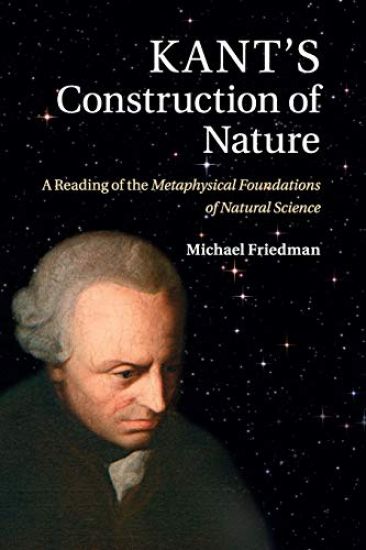
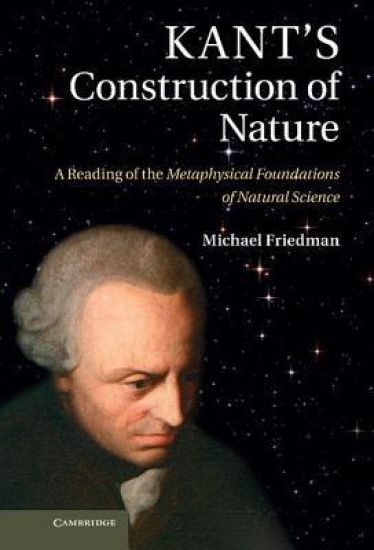
Kant's Construction of Nature

Kant's Construction of Nature

Michael Friedman

Cambridge University Press
2013
sidottu
Kant's Metaphysical Foundations of Natural Science is one of the most difficult but also most important of Kant's works. Published in 1786 between the first (1781) and second (1787) editions of the Critique of Pure Reason, the Metaphysical Foundations occupies a central place in the development of Kant's philosophy, but has so far attracted relatively little attention compared with other works of Kant's critical period. Michael Friedman's book develops a new and complete reading of this work and reconstructs Kant's main argument clearly and in great detail, explaining its relationship to both Newton's Principia and eighteenth-century scientific thinkers such as Euler and Lambert. By situating Kant's text relative to his pre-critical writings on metaphysics and natural philosophy and, in particular, to the changes Kant made in the second edition of the Critique, Friedman articulates a radically new perspective on the meaning and development of the critical philosophy as a whole.
Reconsidering Logical Positivism

Reconsidering Logical Positivism

Michael Friedman

Cambridge University Press
1999
pokkari
In this collection of essays one of the preeminent philosophers of science writing today offers a reinterpretation of the enduring significance of logical positivism, the revolutionary philosophical movement centered around the Vienna Circle in the 1920s and 30s. Michael Friedman argues that the logical positivists were radicals not by presenting a new version of empiricism (as is often thought to be the case) but rather by offering a new conception of a priori knowledge and its role in empirical knowledge. This collection will be mandatory reading for any philosopher or historian of science interested in the history of logical positivism in particular or the evolution of modern philosophy in general.
Kant and the Exact Sciences

Kant and the Exact Sciences

Michael Friedman

Harvard University Press
1998
nidottu
Kant sought throughout his life to provide a philosophy adequate to the sciences of his time—especially Euclidean geometry and Newtonian physics. In this new book, Michael Friedman argues that Kant’s continuing efforts to find a metaphysics that could provide a foundation for the sciences is of the utmost importance in understanding the development of his philosophical thought from its earliest beginnings in the thesis of 1747, through the Critique of Pure Reason, to his last unpublished writings in the Opus postumum.Previous commentators on Kant have typically minimized these efforts because the sciences in question have since been outmoded. Friedman argues that, on the contrary, Kant’s philosophy is shaped by extraordinarily deep insight into the foundations of the exact sciences as he found them, and that this represents one of the greatest strengths of his philosophy. Friedman examines Kant’s engagement with geometry, arithmetic and algebra, the foundations of mechanics, and the law of gravitation in Part One. He then devotes Part Two to the Opus postumum, showing how Kant’s need to come to terms with developments in the physics of heat and in chemistry formed a primary motive for his projected Transition from the Metaphysical Foundations of Natural Science to Physics.Kant and the Exact Sciences is a book of high scholarly achievement, argued with impressive power. It represents a great advance in our understanding of Kant’s philosophy of science.
Foundations of Space-Time Theories

Foundations of Space-Time Theories

Michael Friedman

Princeton University Press
2014
pokkari
This book, explores the conceptual foundations of Einstein's theory of relativity: the fascinating, yet tangled, web of philosophical, mathematical, and physical ideas that is the source of the theory's enduring philosophical interest. Originally published in 1983. The Princeton Legacy Library uses the latest print-on-demand technology to again make available previously out-of-print books from the distinguished backlist of Princeton University Press. These editions preserve the original texts of these important books while presenting them in durable paperback and hardcover editions. The goal of the Princeton Legacy Library is to vastly increase access to the rich scholarly heritage found in the thousands of books published by Princeton University Press since its founding in 1905.
Foundations of Space-Time Theories

Foundations of Space-Time Theories

Michael Friedman

Princeton University Press
2016
sidottu
This book, explores the conceptual foundations of Einstein's theory of relativity: the fascinating, yet tangled, web of philosophical, mathematical, and physical ideas that is the source of the theory's enduring philosophical interest. Originally published in 1983. The Princeton Legacy Library uses the latest print-on-demand technology to again make available previously out-of-print books from the distinguished backlist of Princeton University Press. These editions preserve the original texts of these important books while presenting them in durable paperback and hardcover editions. The goal of the Princeton Legacy Library is to vastly increase access to the rich scholarly heritage found in the thousands of books published by Princeton University Press since its founding in 1905.
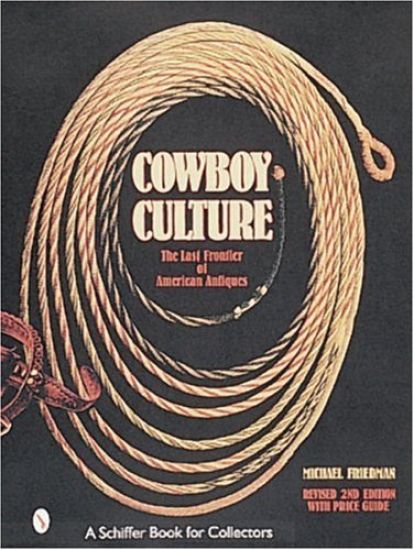
Cowboy Culture

Cowboy Culture

Michael Friedman

Schiffer Publishing Ltd
1999
sidottu
The American cowboy's unique life-style inspired tools, clothing, amusements, advertising, and more which are avidly sought by collectors today. They are presented here with over 1000 color photographs identified in text and captions. Each section of this beautiful new second edition is more complete and has better examples than earlier books devoted to each subject. In Cowboy Culture, these items are inspected in their many variations. Here are exquisite spurs, saddles, gambling tools, photography, guns, holsters, bits, chaps, gloves, boots, hats, badges, and knives. Objects related to Wild West shows-which popularized the myths and accomplishments of cowboys to town dwellers who fantasized life on the open range-are also included. That same fantasy endures to this day as people all over the world who today dream of being a "cowboy."
A Parting of the Ways

A Parting of the Ways

Michael Friedman

Open Court Publishing Co ,U.S.
2000
pokkari
Beginning with a confrontation in 1929 in Switzerland, Michael Friedman examines how the work of three pivotal philosophers evolved and intertwined over several years, ultimately giving rise to two very different schools of thought - analytic philosophy and continental. The author explores the clashes that set them apart as they developed their own radical new ideas.
Kant's Construction of Nature

Kant's Construction of Nature

Michael Friedman

Cambridge University Press
2015
pokkari
Kant's Metaphysical Foundations of Natural Science is one of the most difficult but also most important of Kant's works. Published in 1786 between the first (1781) and second (1787) editions of the Critique of Pure Reason, the Metaphysical Foundations occupies a central place in the development of Kant's philosophy, but has so far attracted relatively little attention compared with other works of Kant's critical period. Michael Friedman's book develops a new and complete reading of this work and reconstructs Kant's main argument clearly and in great detail, explaining its relationship to both Newton's Principia and eighteenth-century scientific thinkers such as Euler and Lambert. By situating Kant's text relative to his pre-critical writings on metaphysics and natural philosophy and, in particular, to the changes Kant made in the second edition of the Critique, Friedman articulates a radically new perspective on the meaning and development of the critical philosophy as a whole.
Titus Andronicus

Titus Andronicus

Michael Friedman

Manchester University Press
2019
nidottu
Michael D. Friedman’s second edition of this stage history of Shakespeare’s Titus Andronicus adds an examination of twelve major theatrical productions and one film that appeared in the years 1989–2009. Friedman identifies four lines of descent in the recent performance history of the play: the stylised, realistic, darkly comic, and political approaches, which culminate in Julie Taymor’s harrowing film Titus (1999). Aspects of Taymor’s eclectic vision of ancient Rome under the grip of modern fascism were copied by several subsequent productions, making Titus the most characteristic, as well as the most influential, contemporary performance of the play. Friedman’s work extends Alan Dessen’s original study to include Taymor’s film, along with chapters devoted to the efforts of international directors including Gregory Doran, Silviu Purcarete, and Yukio Ninagawa.
Dynamics of Reason

Dynamics of Reason

Michael Friedman

Centre for the Study of Language Information
2001
sidottu
This text introduces a new approach to the issue of radical scientific revolutions, or "paradigm-shifts", given prominence in the work of Thomas Kuhn. The book articulates a dynamic and historic version of the conception of scientific "a priori" principles first developed by the philosopher Immanuel Kant. Focusing on the development of "scientific philosophy" from Kant to Rudolf Carnap, along with the developments within science at the same time, the author provides a dynamic conception of relativized "a priori" principles. This idea within the physical sciences aims to show that rational intersubjective consensus is intricately preserved across radical scientific revolutions or "paradigm-shifts" and how this is achieved. This book defends the Enlightenment ideal of scientific objectivity and universality while also doing justice to the revolutionary changes within the sciences that have undermined Kant's original defense of this ideal.
Dynamics of Reason

Dynamics of Reason

Michael Friedman

Centre for the Study of Language Information
2001
nidottu
This text introduces a new approach to the issue of radical scientific revolutions, or "paradigm-shifts", given prominence in the work of Thomas Kuhn. The book articulates a dynamic and historic version of the conception of scientific "a priori" principles first developed by the philosopher Immanuel Kant. Focusing on the development of "scientific philosophy" from Kant to Rudolf Carnap, along with the developments within science at the same time, the author provides a dynamic conception of relativized "a priori" principles. This idea within the physical sciences aims to show that rational intersubjective consensus is intricately preserved across radical scientific revolutions or "paradigm-shifts" and how this is achieved. This book defends the Enlightenment ideal of scientific objectivity and universality while also doing justice to the revolutionary changes within the sciences that have undermined Kant's original defense of this ideal.
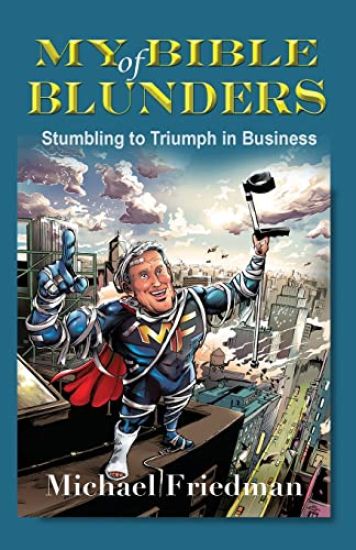
My Bible of Blunders

My Bible of Blunders

Michael Friedman

Encompass Editions
2019
pokkari
After forty years in professional sport and business, Michael Friedman sits down to describe the harrowing career path that he -- a self-described "ordinary guy"-- pursued, stumbled on, raced along, departed from, triumphed through and is still following with undiminished enthusiasm.This is no "how to" book, as Friedman admits, nor a "how not to" book. It's simply what happened, but recounted with enough honesty that we can laugh and learn as we try to keep up with Mike's busy but meandering path.He began as a basketball-crazed kid, grew to become a professional basketball coach, leapt from that world into the pizza business because it seemed a good idea at the time, made a success of it over nine years, leapt from pizza to real estate dealing, rose, fell, rose, finally settled on the financing of real estate development and then, suddenly, has dived into telling others what he's learned and how -- and infecting them with his enthusiasm.My Bible of Blunders is 140 pages of whizz-bang business adventures featuring an ordinary guy who does some extraordinary things.
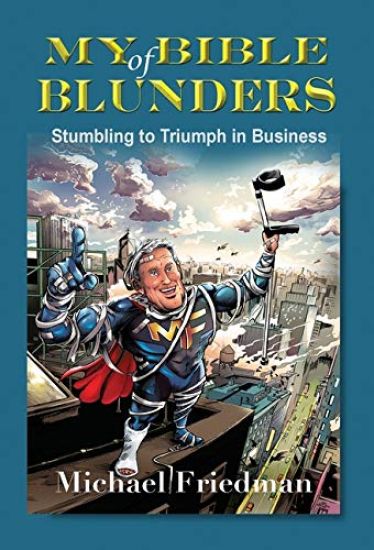
My Bible of Blunders

My Bible of Blunders

Michael Friedman

Encompass Editions
2019
sidottu
After forty years in professional sport and business, Michael Friedman sits down to describe the harrowing career path that he -- a self-described "ordinary guy"-- pursued, stumbled on, raced along, departed from, triumphed through and is still following with undiminished enthusiasm.This is no "how to" book, as Friedman admits, nor a "how not to" book. It's simply what happened, but recounted with enough honesty that we can laugh and learn as we try to keep up with Mike's busy but meandering path.He began as a basketball-crazed kid, grew to become a professional basketball coach, leapt from that world into the pizza business because it seemed a good idea at the time, made a success of it over nine years, leapt from pizza to real estate dealing, rose, fell, rose, finally settled on the financing of real estate development and then, suddenly, has dived into telling others what he's learned and how -- and infecting them with his enthusiasm.My Bible of Blunders is 140 pages of whizz-bang business adventures featuring an ordinary guy who does some extraordinary things.
A History of Folding in Mathematics

A History of Folding in Mathematics

Michael Friedman

Springer Nature Switzerland AG
2019
nidottu
While it is well known that the Delian problems are impossible to solve with a straightedge and compass – for example, it is impossible to construct a segment whose length is cube root of 2 with these instruments – the discovery of the Italian mathematician Margherita Beloch Piazzolla in 1934 that one can in fact construct a segment of length cube root of 2 with a single paper fold was completely ignored (till the end of the 1980s). This comes as no surprise, since with few exceptions paper folding was seldom considered as a mathematical practice, let alone as a mathematical procedure of inference or proof that could prompt novel mathematical discoveries. A few questions immediately arise: Why did paper folding become a non-instrument? What caused the marginalisation of this technique? And how was the mathematical knowledge, which was nevertheless transmitted and prompted by paper folding, later treated and conceptualised? Aiming to answer these questions, this volume provides, for the first time, an extensive historical study on the history of folding in mathematics, spanning from the 16th century to the 20th century, and offers a general study on the ways mathematical knowledge is marginalised, disappears, is ignored or becomes obsolete. In doing so, it makes a valuable contribution to the field of history and philosophy of science, particularly the history and philosophy of mathematics and is highly recommended for anyone interested in these topics.
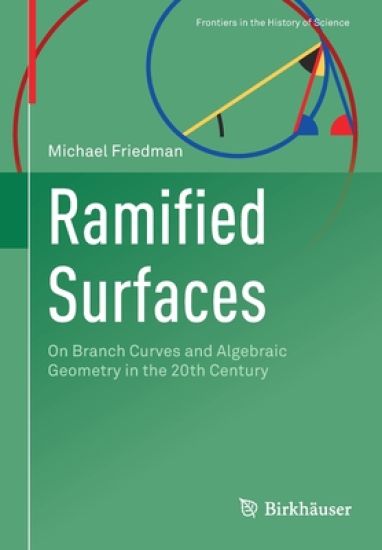
Ramified Surfaces

Ramified Surfaces

Michael Friedman

BIRKHAUSER VERLAG AG
2022
nidottu
The book offers an extensive study on the convoluted history of the research of algebraic surfaces, focusing for the first time on one of its characterizing curves: the branch curve. Starting with separate beginnings during the 19th century with descriptive geometry as well as knot theory, the book focuses on the 20th century, covering the rise of the Italian school of algebraic geometry between the 1900s till the 1930s (with Federigo Enriques, Oscar Zariski and Beniamino Segre, among others), the decline of its classical approach during the 1940s and the 1950s (with Oscar Chisini and his students), and the emergence of new approaches with Boris Moishezon’s program of braid monodromy factorization.By focusing on how the research on one specific curve changed during the 20th century, the author provides insights concerning the dynamics of epistemic objects and configurations of mathematical research. It is in this sense that the book offers to take the branch curve as a cross-section through the history of algebraic geometry of the 20th century, considering this curve as an intersection of several research approaches and methods. Researchers in the history of science and of mathematics as well as mathematicians will certainly find this book interesting and appealing, contributing to the growing research on the history of algebraic geometry and its changing images.
On Joachim Jungius’ Texturæ Contemplatio

On Joachim Jungius’ Texturæ Contemplatio

Michael Friedman

Springer International Publishing AG
2023
sidottu
The book offers an analysis of Joachim Jungius’ Texturæ Contemplatio - a hitherto-unpublished manuscript written in German and Latin that deals with weaving, knitting and other textile practices, attempting to present as well various fabrics and textile techniques in a scientifical and even mathematical framework. The book aims to provide the epistemological, technical and historic framework for Jungius’ manuscript, inspecting fabrics, weaving techniques as well as looms and other textile machines in Holy Roman Empire during the Early Modern Period. It also offers a unique investigation of the notion and metaphor of ‘texture’ during this period, and explores, within the wider context of the ‘meeting’ or ‘trading zones’ thesis, the relations between artisans and natural philosophers during the 17th century. The book is of interest to historians of philosophy and mathematics, as well as historians of technology.
On Joachim Jungius’ Texturæ Contemplatio

On Joachim Jungius’ Texturæ Contemplatio

Michael Friedman

Springer International Publishing AG
2024
nidottu
The book offers an analysis of Joachim Jungius’ Texturæ Contemplatio - a hitherto-unpublished manuscript written in German and Latin that deals with weaving, knitting and other textile practices, attempting to present as well various fabrics and textile techniques in a scientifical and even mathematical framework. The book aims to provide the epistemological, technical and historic framework for Jungius’ manuscript, inspecting fabrics, weaving techniques as well as looms and other textile machines in Holy Roman Empire during the Early Modern Period. It also offers a unique investigation of the notion and metaphor of ‘texture’ during this period, and explores, within the wider context of the ‘meeting’ or ‘trading zones’ thesis, the relations between artisans and natural philosophers during the 17th century. The book is of interest to historians of philosophy and mathematics, as well as historians of technology.
A History of Folding in Mathematics

A History of Folding in Mathematics

Michael Friedman

Birkhauser Verlag AG
2018
sidottu
While it is well known that the Delian problems are impossible to solve with a straightedge and compass – for example, it is impossible to construct a segment whose length is cube root of 2 with these instruments – the discovery of the Italian mathematician Margherita Beloch Piazzolla in 1934 that one can in fact construct a segment of length cube root of 2 with a single paper fold was completely ignored (till the end of the 1980s). This comes as no surprise, since with few exceptions paper folding was seldom considered as a mathematical practice, let alone as a mathematical procedure of inference or proof that could prompt novel mathematical discoveries. A few questions immediately arise: Why did paper folding become a non-instrument? What caused the marginalisation of this technique? And how was the mathematical knowledge, which was nevertheless transmitted and prompted by paper folding, later treated and conceptualised? Aiming to answer these questions, this volume provides, for the first time, an extensive historical study on the history of folding in mathematics, spanning from the 16th century to the 20th century, and offers a general study on the ways mathematical knowledge is marginalised, disappears, is ignored or becomes obsolete. In doing so, it makes a valuable contribution to the field of history and philosophy of science, particularly the history and philosophy of mathematics and is highly recommended for anyone interested in these topics.