Kirjojen hintavertailu. Mukana 11 475 574 kirjaa ja 12 kauppaa.

Kirjahaku

Etsi kirjoja tekijän nimen, kirjan nimen tai ISBN:n perusteella.

9 kirjaa tekijältä Michael G. Smith

Rockets and Revolution

Rockets and Revolution

Michael G. Smith

University of Nebraska Press
2014
sidottu
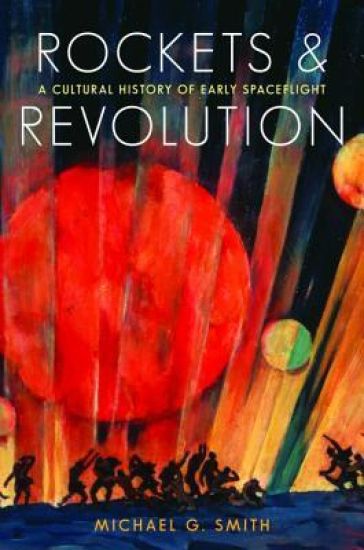
Rockets and Revolution offers a multifaceted study of the race toward space in the first half of the twentieth century, examining how the Russian, European, and American pioneers competed against one another in the early years to acquire the fundamentals of rocket science, engineer simple rockets, and ultimately prepare the path for human spaceflight. Between 1903 and 1953, Russia matured in radical and dramatic ways as the tensions and expectations of the Russian revolution drew it both westward and spaceward. European and American industrial capacities became the models to imitate and to surpass. The burden was always on Soviet Russia to catch up-enough to achieve a number of remarkable “firsts” in these years, from the first national rocket society to the first comprehensive surveys of spaceflight. Russia rose to the challenges of its Western rivals time and again, transcending the arenas of science and technology and adapting rocket science to popular culture, science fiction, political ideology, and military programs. While that race seemed well on its way to achieving the goal of space travel and exploring life on other planets, during the second half of the twentieth century these scientific advances turned back on humankind with the development of the intercontinental ballistic missile and the coming of the Cold War.
The Spacefaring Earth

The Spacefaring Earth

Michael G. Smith

TAYLOR FRANCIS LTD
2024
nidottu
This engaging survey of the Space Age links science and technology with politics and popular culture, war and peace, and crises and controversies. It examines the history of spaceflight as a mirror of human thought and action across the Earth.The volume encompasses the new astronomy and sciences of the modern era, the early dreamers and pioneers after 1903, the national competitions of the First World War, the rocket states that prepared for the Second World War, the rivalries and “space race” of the Cold War between the US and USSR, as well as more recent developments including the Space Shuttle, the International Space Station, national space programs, orbital technologies, transhumanism, and military and commercial ventures in space. It also stresses the importance of geography in the geopolitics of spaceflight competition and in the nature of the planetary biosphere. Taking a chronological approach to lived human experience and threshold achievements, the chapters show how these themes have been reflected in literature, art, music, film, and our new digital worlds.This book is essential reading for students of the history of the Space Age, as well as an excellent companion to courses on twentieth-century science and technology, the Cold War, and American history.
The Spacefaring Earth

The Spacefaring Earth

Michael G. Smith

TAYLOR FRANCIS LTD
2024
sidottu
This engaging survey of the Space Age links science and technology with politics and popular culture, war and peace, and crises and controversies. It examines the history of spaceflight as a mirror of human thought and action across the Earth.The volume encompasses the new astronomy and sciences of the modern era, the early dreamers and pioneers after 1903, the national competitions of the First World War, the rocket states that prepared for the Second World War, the rivalries and “space race” of the Cold War between the US and USSR, as well as more recent developments including the Space Shuttle, the International Space Station, national space programs, orbital technologies, transhumanism, and military and commercial ventures in space. It also stresses the importance of geography in the geopolitics of spaceflight competition and in the nature of the planetary biosphere. Taking a chronological approach to lived human experience and threshold achievements, the chapters show how these themes have been reflected in literature, art, music, film, and our new digital worlds.This book is essential reading for students of the history of the Space Age, as well as an excellent companion to courses on twentieth-century science and technology, the Cold War, and American history.
The Rocket Lab

The Rocket Lab

Michael G. Smith

PURDUE UNIVERSITY PRESS
2023
sidottu
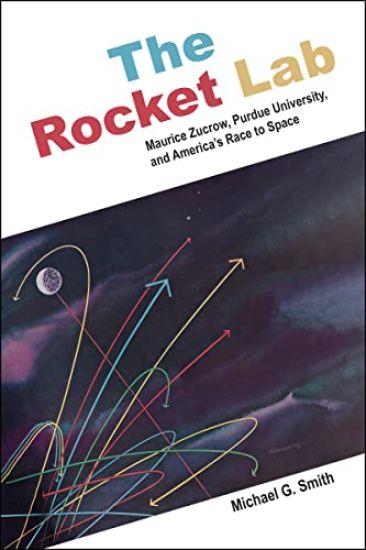
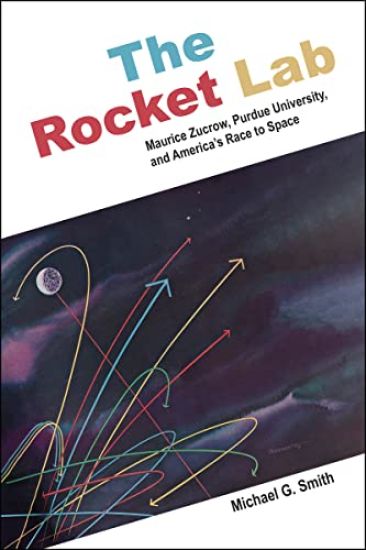
The Rocket Lab: Maurice Zucrow, Purdue University, and America's Race to Space focuses on the golden era of space exploration between 1946 and 1966, specifically the life and times of Purdue University's Dr. Maurice J. Zucrow, a pioneering teacher and researcher in aerospace engineering. Zucrow taught America's first university course in jet and rocket propulsion, wrote the field's first textbook, and established the country's first educational Rocket Lab. He was part of a small circle of innovators who transformed Purdue into the country's largest engineering university, which became a cradle of astronauts. Taking a chronological and thematic approach, The Rocket Lab weaves between the local and national, drawing in rival universities, especially Harvard, MIT, Princeton, and Caltech. Also covered is Zucrow's role in the national project system of research and development through World War II and the Cold War. At Aerojet, he was one of the country's original project engineers, dedicated to scientific-technical expertise and the stepwise approach. He made vanguard power plant contributions to the Northrop Flying Wing, as well as the Corporal, Nike, and Atlas missiles, among others. Zucrow's work in propulsion helped to improve the country's arsenal of ballistic missiles and space launchers, and as a teacher, he educated the first generation of aerospace engineers. This book elevates Zucrow and the central role he played in getting the United States to space.
The Rocket Lab

The Rocket Lab

Michael G. Smith

PURDUE UNIVERSITY PRESS
2023
nidottu
The Rocket Lab: Maurice Zucrow, Purdue University, and America's Race to Space focuses on the golden era of space exploration between 1946 and 1966, specifically the life and times of Purdue University's Dr. Maurice J. Zucrow, a pioneering teacher and researcher in aerospace engineering. Zucrow taught America's first university course in jet and rocket propulsion, wrote the field's first textbook, and established the country's first educational Rocket Lab. He was part of a small circle of innovators who transformed Purdue into the country's largest engineering university, which became a cradle of astronauts. Taking a chronological and thematic approach, The Rocket Lab weaves between the local and national, drawing in rival universities, especially Harvard, MIT, Princeton, and Caltech. Also covered is Zucrow's role in the national project system of research and development through World War II and the Cold War. At Aerojet, he was one of the country's original project engineers, dedicated to scientific-technical expertise and the stepwise approach. He made vanguard power plant contributions to the Northrop Flying Wing, as well as the Corporal, Nike, and Atlas missiles, among others. Zucrow's work in propulsion helped to improve the country's arsenal of ballistic missiles and space launchers, and as a teacher, he educated the first generation of aerospace engineers. This book elevates Zucrow and the central role he played in getting the United States to space.