Kirjojen hintavertailu. Mukana 11 717 486 kirjaa ja 12 kauppaa.

Kirjahaku

Etsi kirjoja tekijän nimen, kirjan nimen tai ISBN:n perusteella.

4 kirjaa tekijältä Michael Goebel

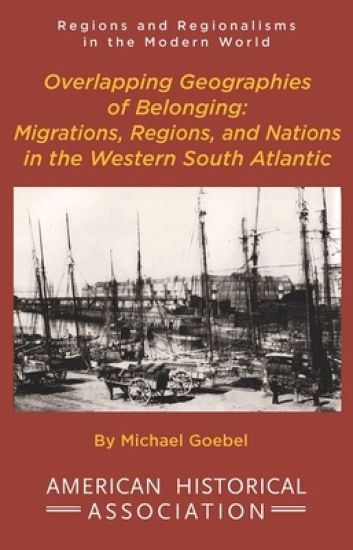
Overlapping Geographies of Belonging: Migrations, Regions, and Nations in the Western South Atlantic
In contrast to nationalism and, more recently, globalization and transnationalism, "Regionalism" remains a relatively unexplored concept by historians. In this essay, Michael Goebel examines the historical construction of the Western South Atlantic region--roughly the area consisting of Brazil and Argentina--from the period from 1870 to 1930, during which intensified global exchange fed into the formation of this area as a historical "region."
Anti-Imperial Metropolis

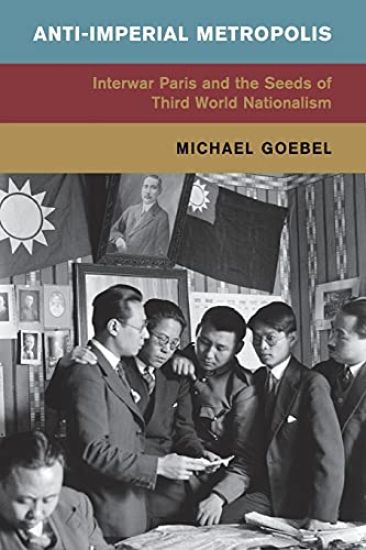
Anti-Imperial Metropolis

Michael Goebel

Cambridge University Press
2015
sidottu
This book traces the spread of a global anti-imperialism from the vantage point of Paris between the two World Wars, where countless future leaders of Third World countries spent formative stints. Exploring the local social context in which these emergent activists moved, the study delves into assassination plots allegedly hatched by Chinese students, demonstrations by Latin American nationalists, and the everyday lives of Algerian, Senegalese and Vietnamese workers. On the basis of police reports and other primary sources, the book foregrounds the role of migration and interaction as driving forces enabling challenges to the imperial world order, weaving together the stories of peoples of three continents. Drawing on the scholarship of twentieth-century imperial, international and global history as well as migration, race and ethnicity in France, it ultimately proposes a new understanding of the roots of the Third World idea.
Anti-Imperial Metropolis

Anti-Imperial Metropolis

Michael Goebel

Cambridge University Press
2017
pokkari
This book traces the spread of a global anti-imperialism from the vantage point of Paris between the two World Wars, where countless future leaders of Third World countries spent formative stints. Exploring the local social context in which these emergent activists moved, the study delves into assassination plots allegedly hatched by Chinese students, demonstrations by Latin American nationalists, and the everyday lives of Algerian, Senegalese and Vietnamese workers. On the basis of police reports and other primary sources, the book foregrounds the role of migration and interaction as driving forces enabling challenges to the imperial world order, weaving together the stories of peoples of three continents. Drawing on the scholarship of twentieth-century imperial, international and global history as well as migration, race and ethnicity in France, it ultimately proposes a new understanding of the roots of the Third World idea.
Argentina’s Partisan Past

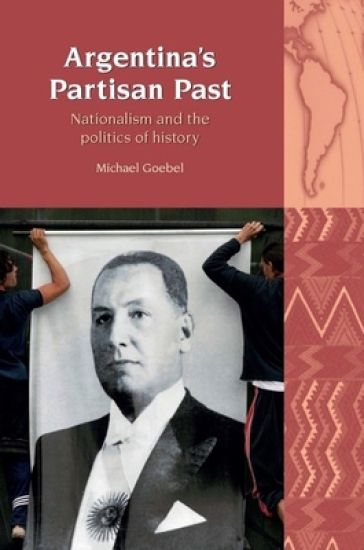
Argentina’s Partisan Past

Michael Goebel

Liverpool University Press
2014
nidottu
Argentina’s Partisan Past is a challenging new study about the production, the spread and the use of understandings of national history and identity for political purposes in twentieth-century Argentina. Based on extensive research of primary and published sources, it analyses how nationalist views about what it meant to be Argentine were built into the country’s long drawn-out crisis of liberal democracy from the 1930s to the 1980s. Eschewing the notion of any straightforward relationship between cultural customs, ideas and political practices, the study seeks to provide a more nuanced framework for understanding the interplay between popular culture, intellectuals and the state in the promotion, co-option and repression of conflicting narratives about the nation’s history. Particular attention is given to the conditions for the production and the political use of cultural goods, especially the writings of historians. The intimate linkage between history and politics, it is argued, helped Argentina’s partisan past of the period following independence to cast its shadow onto the middle decades of the twentieth century. This process is scrutinised within the framework of recent approaches to the study of nationalism, in an attempt to communicate the major scholarly debates of this field with the case of Argentina. The book is a valuable resource to both students of Argentine history and those interested in the ways in which nationalism has shaped our contemporary world.