Kirjahaku
Etsi kirjoja tekijän nimen, kirjan nimen tai ISBN:n perusteella.
18 kirjaa tekijältä Michael Grenfell
The French social theorist Pierre Bourdieu is now recognized as a leading intellectual of the late twentieth-century, and one whose ideas are very much relevant for the twenty-first. This comprehensive account of Bourdieu's life and work locates both in their social and political context, thereby tracing the origins of his ideas and theories. It explains and explores just what Bourdieu argued for and why. It also illustrates the social, political and philosophical strands that run through his work. Michael Grenfell's broad scope takes in Bourdieu's response to The Algerian Crisis, his ideas for the reform of state education, and his views on aesthetics and the mass media. Detailed attention is also paid to Bourdieu's overtly political stance, including his critique of capitalism and his opposition to recent Western military action in Iraq, Yugoslavia, and Afghanistan. This book offers a reading of Bourdieu's work as a coherent and valuable response to those key social and political issues, events and trends that combined to shape contemporary society. The implications and consequences of his work are laid out and assessed, along with suggestions for where his ideas might be taken from here. This is the clearest and most thorough account of Bourdieu's work available; as such, it will be invaluable to students, researchers and teachers of contemporary social theory.

The French social theorist Pierre Bourdieu is now recognized as leading intellectual of the late twentieth century. This comprehensive account of Bourdieu's life and work traces the origins of his ideas and theories, explaining and exploring just what Bourdieu argued for and why. Illuminating the social, political, and philosophical strands that run through his work, Michael Grenfell's broad study takes in Bourdieu's response to The Algerian Crisis, his ideas for the reform of state education, and his views on aesthetics and the mass media. Detailed attention is also paid to Bourdieu's overtly political stance, including his critique of capitalism and his opposition to recent Western military action in Iraq, Yugoslavia, and Afghanistan. Laying out the implications of Bourdieu's work and assessing the consequences, Grenfell explains why his ideas are still relevant and suggests where his ideas might be taken from here. This clear, thorough account of Bourdieu is invaluable to students, researchers and teachers of contemporary society theory.
Bourdieu once commented that what was needed was a ‘new gaze’ on the social world – a metanoia. This book describes this view and how to do it. Based on biographical detail and the socio-political contexts which surrounded him, it sets out his vision of society and culture.Grounded on the distinction between traditional and modern worlds, it shows how ethnographic experience led Bourdieu to an intellectual epiphany. It demonstrates the growth of his conceptual tools and the emergence of ‘field theory’ in various contexts: law, religion, fashion, sport, culture, fine art, philosophy, literature and politics. The book offers an up-to-date, extensive account of Bourdieu, his work and its significance. It centres on philosophical questions of social experience and intellectual practice. Based around his entire oeuvre, it features recent posthumous publications in French, providing important insights for the first time into his way of viewing the world.Including issues of the state, neoliberalism and resistance, this book explores the ways in which the social, philosophical and political came together for Bourdieu to shape how we see ourselves and our place in the contemporary world – a metanoia. Being both an introductory and advanced text, it is a valuable resource for the newcomer to Bourdieu as well as the experienced researcher. It will be of interest to undergraduates, postgraduates, researchers of Bourdieu’s work in the areas of sociology, media, philosophy, religion, economics, architecture, cultural studies, education, music, journalism, gender studies, politics, the law, fine arts and linguistics.
Pierre Bourdieu is regarded as one of the foremost social philosophers of the twentieth century. His output included extensive studies of education, culture, art and language. He went beyond being a sociologist to being regarded in the same 'public intellectual' role as Sartre, de Beauvoir and Foucault. Issues surrounding language permeate Bourdieu's entire oeuvre. Although he did undertake empirical studies on language in a range of contexts, very little of this was published. This book redresses this balance; it sets out what Bourdieu has to say about language and why, and exemplifies this approach through a series of empirical language studies. This book will appeal to researchers across the world in fields such as sociology, philosophy, cultural studies, anthropology but is of especial interest to language and linguistics scholars.
Pierre Bourdieu is regarded as one of the foremost social philosophers of the twentieth century. His output included extensive studies of education, culture, art and language. He went beyond being a sociologist to being regarded in the same 'public intellectual' role as Sartre, de Beauvoir and Foucault. Issues surrounding language permeate Bourdieu's entire oeuvre. Although he did undertake empirical studies on language in a range of contexts, very little of this was published. This book redresses this balance; it sets out what Bourdieu has to say about language and why, and exemplifies this approach through a series of empirical language studies. This book will appeal to researchers across the world in fields such as sociology, philosophy,cultural studies, anthropologybut is of especial interest to language and linguistics scholars.
Every secondary school pupil studies modern foreign languages as part of the curriculum, and some do so with considerably more success than others. This book looks firstly at the ways in which languages can be taught, and secondly at case studies that highlight the practical methods that will help teachers get the best results. The case studies included show that the best learners are those who have developed learning strategies that help them succeed. These learning strategies are examined through practical examples carried out in classrooms, and advice is given about ways in which teachers can ensure that all their pupils have the opportunity to develop these skills. Lots of suggestions are made about the various activities teachers can carry out in order to make learning enjoyable and positive. In some cases, the results are shown to be very encouraging and any language teacher should be left with a feeling not only of renewed enthusiasm for their subject area but also a deeper understanding of how to enable learners to reach their full potential.
Language, Ethnography, and Education
Michael Grenfell; David Bloome; Cheryl Hardy; Kate Pahl; Jennifer Rowsell; Brian V Street
Routledge
2011
sidottu
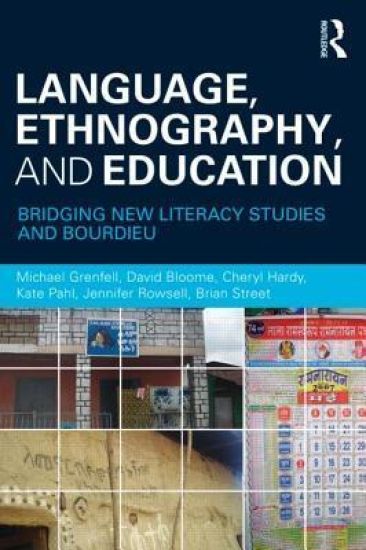
This frontline volume contributes to the social study of education in general and literacy in particular by bringing together in a new way the traditions of language, ethnography, and education. Integrating New Literacy Studies and Bourdieusian sociology with ethnographic approaches to the study of classroom practice, it offers an original and useful reference point for scholars and students of education, language, and literacy wishing to incorporate Bourdieu’s ideas into their work.More than just a set of stand-alone chapters around social perspectives on language interactions in classrooms, this book develops and unfolds dialogically across three sections: Bridging New Literacy Studies and Bourdieu – Principles; Language, Ethnography and Education - Practical Studies; Working at the Intersections – In Theory and Practice.The authors posit ‘Classroom Language Ethnography’ as a genuinely new perspective with rich and developed traditions behind it, but distinct from conventional approaches to literacy and education — an approach that bridges those traditions to yield fresh insights on literacy in all its manifestations, thereby providing a pathway to more robust research on language in education.
Language, Ethnography, and Education
Michael Grenfell; David Bloome; Cheryl Hardy; Kate Pahl; Jennifer Rowsell; Brian V Street
Routledge
2011
nidottu
This frontline volume contributes to the social study of education in general and literacy in particular by bringing together in a new way the traditions of language, ethnography, and education. Integrating New Literacy Studies and Bourdieusian sociology with ethnographic approaches to the study of classroom practice, it offers an original and useful reference point for scholars and students of education, language, and literacy wishing to incorporate Bourdieu’s ideas into their work.More than just a set of stand-alone chapters around social perspectives on language interactions in classrooms, this book develops and unfolds dialogically across three sections: Bridging New Literacy Studies and Bourdieu – Principles; Language, Ethnography and Education - Practical Studies; Working at the Intersections – In Theory and Practice.The authors posit ‘Classroom Language Ethnography’ as a genuinely new perspective with rich and developed traditions behind it, but distinct from conventional approaches to literacy and education — an approach that bridges those traditions to yield fresh insights on literacy in all its manifestations, thereby providing a pathway to more robust research on language in education.
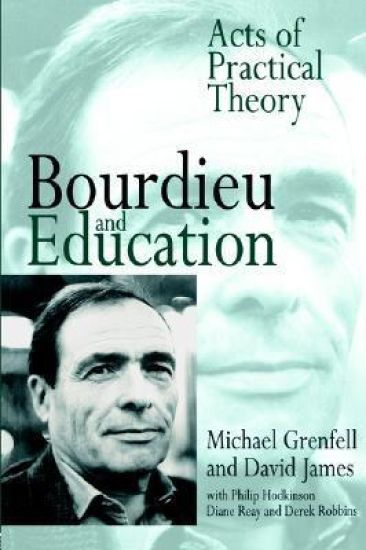
This text details the practical applications of Bourdieu's theories in a series of specific pedagogic research studies, showing how his ideas can be put into practice. Language, gender, career decision-making and the experience of higher education students are all covered. Questions are also raised concerning research methodology. The authors examine Bourdieu's interest in the position of the researcher within the research process. Bourdieu's influence is traced in aspects both of theory and practice. Finally, principles, approaches, methods and techniques that may be derived from Bourdieu are suggested, and assessed, for practical use in research.
Bourdieu, Language-based Ethnographies and Reflexivity
Michael Grenfell; Kate Pahl
Routledge
2018
sidottu
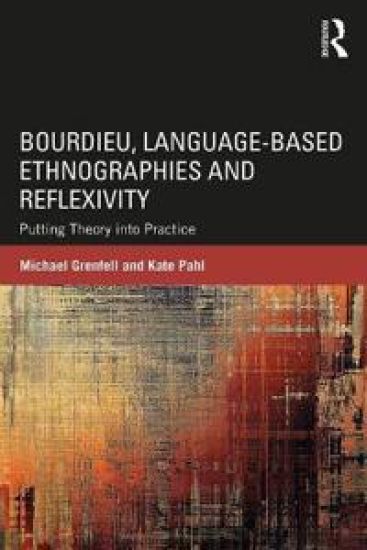
Offering a unique and original perspective on Bourdieu, language-based ethnographies,and reflexivity, this volume provides a nuanced, in-depth discussion of the complex relationship between these interconnected topics and their impact in real-world contexts. Part I opens the book with an overview of the historical background and development of language-based ethnographic research and Bourdieu’s work in this space. Part II presents a series of case studies that highlight a Bourdieusian perspective and demonstrate how reflexivity impacts language-based ethnography. In each study, Bourdieu’s conceptual framework of reflexively-informed objectivity examines the ways in which the studies themselves were constructed and understood. Building on Parts I and II, the concluding set of chapters in Part III unpacks the messiness of the theory and practice of language-based ethnography, and provides insights into what reflexivity means for Bourdieu and in practical contexts. Arguing for a greater reflexive understanding in research practice, this volume sets an agenda for future literacy and language research.
Bourdieu, Language-based Ethnographies and Reflexivity
Michael Grenfell; Kate Pahl
Routledge
2018
nidottu
Offering a unique and original perspective on Bourdieu, language-based ethnographies,and reflexivity, this volume provides a nuanced, in-depth discussion of the complex relationship between these interconnected topics and their impact in real-world contexts. Part I opens the book with an overview of the historical background and development of language-based ethnographic research and Bourdieu’s work in this space. Part II presents a series of case studies that highlight a Bourdieusian perspective and demonstrate how reflexivity impacts language-based ethnography. In each study, Bourdieu’s conceptual framework of reflexively-informed objectivity examines the ways in which the studies themselves were constructed and understood. Building on Parts I and II, the concluding set of chapters in Part III unpacks the messiness of the theory and practice of language-based ethnography, and provides insights into what reflexivity means for Bourdieu and in practical contexts. Arguing for a greater reflexive understanding in research practice, this volume sets an agenda for future literacy and language research.
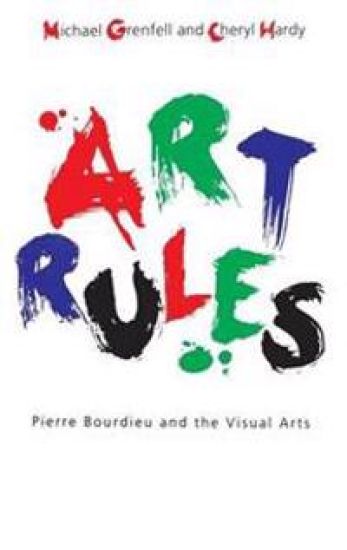
Pierre Bourdieu is now recognized as one of the key contemporary critics of culture and the visual arts. Art Rules analyses Bourdieu's work on the visual arts to provide the first overview of his theory of culture and aesthetics. Bourdieu's engagement with both postmodernism and the 'problem of aesthetics' provides a new way of analysing the visual arts. His interest is in how artistic fields function and the implications their processes have for art and artistic practice. Art Rules applies Bourdieu's theory of practice to the three fields of museums, photography and painting. These practical examples are used as a springboard to address visual arts in the 21st Century and to establish Bourdieu's 'Rules of Art'.
The European Language Teacher
Michael Grenfell; Diana Jones; Michael Kelly
Verlag Peter Lang
2003
nidottu
Contents: Contexts for Teacher Training (The Social and Policy Context; Theories of Teacher Training) - Summary of Current Provision (Conditions and In-Service Training for Primary and Secondary Education) - Fifteen Case Studies of Good Practice - Furthering Good Practice (Needs Analysis, Recommendations, Professional Profile).
Merger Control in the United Kingdom and European Union
Riccardo Celli; Michael Grenfell
Kluwer Law International
1997
nidottu
This guide to the merger control rules and procedures at both national and EU levels identifies whether a transaction will come under the UK or the EU system, who needs to be notified, when and how notifications need to be filed, and the various stages of the process.