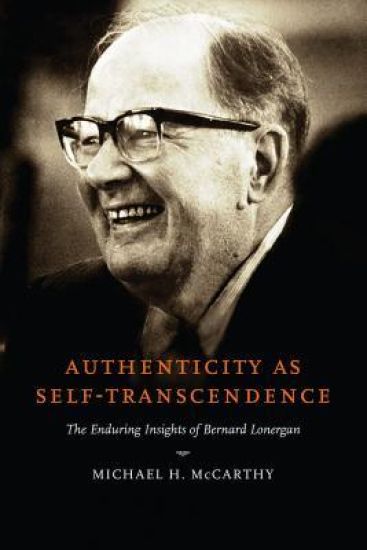
Michael H. McCarthy has carefully studied the writings of Bernard Lonergan (Canadian philosopher-theologian, 1904-1984) for over fifty years. In his 1989 book, The Crisis of Philosophy, McCarthy argued for the superiority of Lonergan's distinctive philosophical project to those of his analytic and phenomenological rivals. Now in Authenticity as Self-Transcendence: The Enduring Insights of Bernard Lonergan, he develops and expands his earlier argument with four new essays, designed to show Lonergan's exceptional relevance to the cultural situation of late modernity. The essays explore and appraise Lonergan's cultural mission: to raise Catholic philosophy and theology to meet the intellectual challenges and standards of his time.
Michael H. McCarthy has carefully studied the writings of Bernard Lonergan (Canadian philosopher-theologian, 1904-1984) for over fifty years. In his 1989 book, The Crisis of Philosophy, McCarthy argued for the superiority of Lonergan's distinctive philosophical project to those of his analytic and phenomenological rivals. Now in Authenticity as Self-Transcendence: The Enduring Insights of Bernard Lonergan, he develops and expands his earlier argument with four new essays, designed to show Lonergan's exceptional relevance to the cultural situation of late modernity. The essays explore and appraise Lonergan's cultural mission: to raise Catholic philosophy and theology to meet the intellectual challenges and standards of his time.
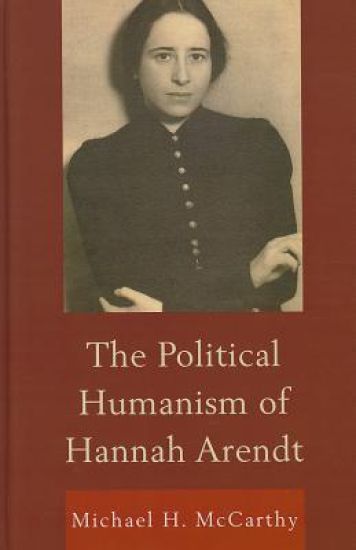
At the end of the Second World War when the horror of the holocaust became known, Hannah Arendt committed herself to a work of remembrance and reflection. Intellectual integrity demanded that we comprehend and articulate the genesis and meaning of totalitarian terror. What earlier spiritual and moral collapse had made totalitarian regimes possible? What was the basis of their evident mass appeal? To what cultural resources and political institutions and traditions could we turn to prevent their recurrence? After years of profound study, Arendt concluded that the deepest crisis of the modern world was political and that the enduring appeal of political mass movements demonstrated how profound that crisis had become. For Arendt the modern political crisis is also a crisis of humanism. The radical totalitarian experiment was rooted in two distorted images of the human being. The agents of terror believed in the limitless power generated by strategic organization, a power exercised without restraint and justified by appeal to historical necessity. The victims of terror, by contrast, were systematically dehumanized by the ruling ideology, and then brutally deprived of their legal rights and their moral and existential dignity. Arendt’s political humanism directly challenges both of these distorted images, the first because it dangerously inflates human power, the second because it deliberately subverts human freedom and agency. This book offers a dialectical account of the political crisis that Arendt identified and shows why her interpretation of that crisis is especially relevant today. The author also provides detailed analysis and appraisal of Arendt’s political humanism, the revisionary anthropology she based on the politically engaged republican citizen. Finally, the work distinguishes the merits from the limitations of Arendt’s genealogical critique of “our tradition of political thought”, showing that she tended to be right in what she affirmed and wrong in what she excluded or omitted.
At the end of the Second World War when the horror of the holocaust became known, Hannah Arendt committed herself to a work of remembrance and reflection. Intellectual integrity demanded that we comprehend and articulate the genesis and meaning of totalitarian terror. What earlier spiritual and moral collapse had made totalitarian regimes possible? What was the basis of their evident mass appeal? To what cultural resources and political institutions and traditions could we turn to prevent their recurrence? After years of profound study, Arendt concluded that the deepest crisis of the modern world was political and that the enduring appeal of political mass movements demonstrated how profound that crisis had become. For Arendt the modern political crisis is also a crisis of humanism. The radical totalitarian experiment was rooted in two distorted images of the human being. The agents of terror believed in the limitless power generated by strategic organization, a power exercised without restraint and justified by appeal to historical necessity. The victims of terror, by contrast, were systematically dehumanized by the ruling ideology, and then brutally deprived of their legal rights and their moral and existential dignity. Arendt’s political humanism directly challenges both of these distorted images, the first because it dangerously inflates human power, the second because it deliberately subverts human freedom and agency. This book offers a dialectical account of the political crisis that Arendt identified and shows why her interpretation of that crisis is especially relevant today. The author also provides detailed analysis and appraisal of Arendt’s political humanism, the revisionary anthropology she based on the politically engaged republican citizen. Finally, the work distinguishes the merits from the limitations of Arendt’s genealogical critique of “our tradition of political thought”, showing that she tended to be right in what she affirmed and wrong in what she excluded or omitted.
Critical belonging has been an essential feature of Christianity since its origin, but the forms it assumes understandably differ with the specific challenges Christians rise to meet throughout history. During the past two thousand years, these challenges have covered a broad spectrum: epistemic, moral, political, economic, religious, and spiritual. In our global society, all of these challenges seem to be occurring at once. Since no individual can meet all of them adequately, Toward a catholic Christianity tries to show how by working collaboratively the “people of God” can credibly meet them together. In this way, the diversity and unity within the Roman Catholic community are explicitly acknowledged and affirmed. For if that community is to become authentically Christian, it will need to become more genuinely catholic.
In Liberal Education and Democratic Citizenship, Michael H. McCarthy carefully describes the crises confronting American democracy, identifying their philosophical, cultural, and institutional origins to show how liberal education—properly understood—can respond to these crises effectively. The chapters explore the sources, areas, and levels of division in contemporary America and how they have created important disagreements within the major challenges that we face today; what a liberation education is and why it is important; the complex relationship between effective freedom and modern economic and political liberalism; the importance of effective freedom to a free, just, and inclusive democracy; the challenges the modern cultural predicament creates for civic education; Alexis de Tocqueville’s critical retrieval and William Galston’s critical dismantling strategies; the profound civic implications of important cultural changes within American democracy; and the three most influential stories that have shaped our educational practices and aspirations. By addressing these issues, McCarthy provides insight into how we can rectify these challenges effectively through speech and conduct in order to foster, prize, and reliably exercise the essential virtues of a liberal and democratic education.
This book presents a sympathetic yet critical treatment of the major philosophical attempts to define a viable project for philosophy in the face of historical changes. McCarthy, then, proposes a comprehensive, critical, and methodological strategy of epistemic integration that fully respects the progressive and pluralistic character of contemporary science and common sense. The programs of Frege, Husserl, Wittgenstein, Carnap, Sellers, Dewey, Quine, and Rorty are carefully presented and an assessment is made of their merits and limitations. This assessment results in a defense of Lonergan's integrative strategy — a nuanced philosophical strategy around which a gathering center could be built. McCarthy presents Lonergan's work as containing the firm outline and partial execution of a philosophical project continuous with philosophy's historic purposes and equal to the exigences of the present. The book examines a broad range of seminal topics and, after extended dialectical treatment of them, develops a coherent account of their interdependence. These topics include psychologism, intentionality, the limits of naturalism, semantical and epistemic realism, historical belonging, epistemic invariance, foundational analysis, the limitation of logic and of the linguistic turn, generalized empirical method, the interdependence of mind and language, the interplay of nature and history, and the critical appropriation of tradition.