Kirjojen hintavertailu. Mukana 11 699 587 kirjaa ja 12 kauppaa.

Kirjahaku

Etsi kirjoja tekijän nimen, kirjan nimen tai ISBN:n perusteella.

34 kirjaa tekijältä Michael Hofmann

Messing About in Boats

Messing About in Boats

Michael Hofmann

Oxford University Press
2021
sidottu
Written by the eminent poet Michael Hofmann, this approachable and companionable book offers readings of four poems on the subject of boats. Based on Michael Hofmann's Clarendon lectures, this volume offers readings of four poems in German, French, Italian, and English, by Rainer Maria Rilke, Arthur Rimbaud, Eugenio Montale, and Karen Solie. All four poems are on the subject of boats: 'Emigrant Ship', the 'Bateau Ivre', 'Boats on the Marne', and 'The World'. The volume suggests an affinity between boats and poems, offers a partial lineage of boats in poems, and pursues four variant destinies: the boat that stays in port, the boat that gives itself to the world, the boat that is washed away down the river, and the one that goes manically and hubristically on forever. The volume retains the style of lectures and has an improvisational character, with the same fire and detail as the things it is about. It is written with a sense of fun, of revelation, and in a spirit of respect and attention.
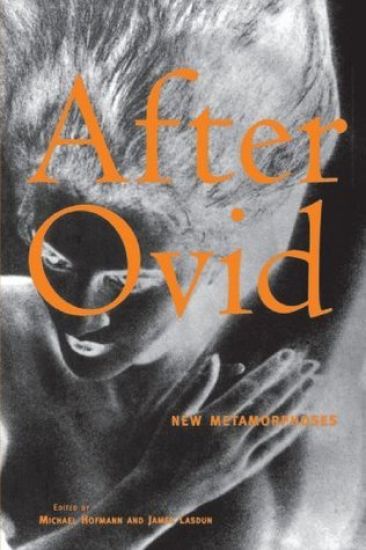
After Ovid: New Metamorphoses

After Ovid: New Metamorphoses

Michael Hofmann

Farrar, Strauss Giroux-3pl
1996
nidottu
Ovid's Metamorphoses is one of the great works in classical literature, and a primary source for our knowledge of much of classic mythology, in which the relentless theme of transformation stands as a primary metaphor for the often cataclysmic dynamics of life itself. For this book, British poets Michael Hofmann and James Lasdun have invited more than forty leading English-language poets to create their own idiomatic contemporary versions of some of the most famous and notorious myths from the Metamorphoses. Apollo and Daphne, Pyramus and Thisbe, Proserpina, Marsyas, Medea, Baucis and Philemon, Orpheus and Eurydice--these and many other immortal tales are given fresh and startling life in exciting new versions. The contributors--among them Fleur Adcock, Amy Clampitt, Jorie Graham, Thom Gunn, Seamus Heaney, Ted Hughes, Lawrence Joseph, Kenneth Koch, Michael Longley, Paul Muldoon, Les Murray, Robert Pinsky, Frederick Seidel, Charles Simic, and C. K. Williams--constitute an impressive roster of today's major poets. After Ovid is a powerful re-envisioning of a fundamental work of literature as well as a remarkable affirmation of the current state of poetry in English.
Twentieth-Century German Poetry

Twentieth-Century German Poetry

Michael Hofmann

Farrar, Strauss Giroux-3pl
2008
nidottu
This groundbreaking anthology will serve as the standard for years to come. Editor Michael Hofmann has assembled brilliant translations of the major German poets, from Rilke and Brecht to Durs Grunbein and Jan Wagner, in an approachable, readable, and endlessly interesting collection. Here we find poetry as a living counter-force to socio-political reality; poetry of dissent and fear and protest; poetry of private griefs and musics. From the subtlety and elegance of Brecht, to the extraordinary jargon-glooms of Gottfried Benn, to the oblique and straightforward responses to the country's villainous history, to the bitter, cleansed, and haunted poetry of the postwar years, the anthology ends with a reunified country looking at itself and its neighbors in new ways. This is an essential and timely collection of verse from a tumultuous, violent, tragic, and hopeful century, written in the language of those who were at the heart of the matter.
Selected Poems

Selected Poems

Michael Hofmann

Farrar, Strauss Giroux-3pl
2010
nidottu
With five critically acclaimed collections "Nights in the Iron Hotel "(1983), "Acrimony "(1986), "K.S. in Lakeland: New and Selected Poems "(1990), "Corona, Corona "(1993), and "Approximately Nowhere "(1999) Michael Hofmann has established himself as one of the truly original poetic voices of our time. His poetry, both public and personal, expansive and intimate, looks in three directions toward the Germany of his birth and toward his adopted homelands, England and America and his perspective on all three is surprising, alarmed, and alarming. Influenced by Robert Lowell and John Berryman (both of whom he has edited), Hofmann nevertheless cannot be pigeonholed in any given style or movement. Hofmann may be better known, especially in America, for his acclaimed translations than for his own poetry, but this volume promises to introduce a broad new readership to a keenly intelligent, formally rigorous, emotionally unsparing poetry that feels entirely fresh."
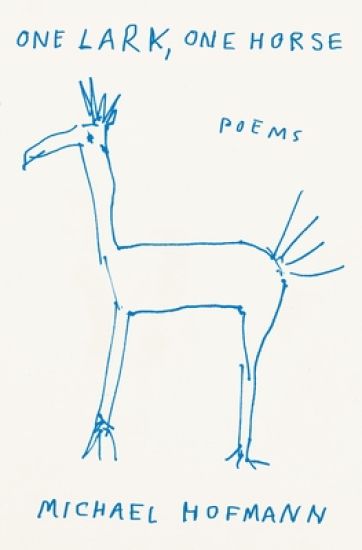
One Lark, One Horse

One Lark, One Horse

Michael Hofmann

Farrar, Strauss Giroux-3pl
2020
nidottu
A new collection of poems by Michael Hofmann--his first in more than twenty years Michael Hofmann, renowned as one of our most brilliant critics and translators, is also regarded as among our most respected poets. Hofmann's status--he is the author of "one of the definitive bodies of work of the last half-century" (The Times Literary Supplement)--is all the more impressive for his relatively concentrated output. One Lark, One Horse is his fifth collection of poems since his debut in 1983, and his first since Approximately Nowhere in 1999. It is also one of the most anticipated gatherings of new work in years. In style, his voice is as unmistakable as ever--sometimes funny, sometimes caustic; world-facing and yet intimate--and this collection shows a bright mind burning fiercely over the European and American imaginations. The poet explores where he finds himself, geographically and in life, treating with wit and compassion such universal themes as aging and memory, place, and the difficult existence of the individual in an ever-bigger and more bestial world. One Lark, One Horse is a remarkable assemblage of work that will delight loyal readers and enchant new ones with Hofmann's approachable, companionable voice.
Corona, Corona

Corona, Corona

Michael Hofmann

Faber Faber
2016
nidottu
A Poetry Book Society recommendationArranged in three parts - the first concerning other people's lives, the second autobiographical, the third to do with the poet's travels in Mexico - Corona, Corona displays to the full Michael Hofmann's gift for compressed and vividly pointed reportage. It offers some of the boldest, frankest and most searching poetry of our time.
Approximately Nowhere

Approximately Nowhere

Michael Hofmann

Faber Faber
2016
nidottu
A number of the poems in this collection by Michael Hofmann show him returning to the subject of his father, the German novelist Gert Hofmann, whose relationship with his son was also the principal subject of his celebrated 1986 collection, Acrimony, and of a memorable television documentary that appeared at that time. In 1993, however, Gert Hofmann died, and the poems written since then replace the combativeness and acerbity of the earlier book with a more complex tone: frankness and factuality are still important elements, but they are tempered now by grief, pity, pain and bemusement.Readers will note other differences, too: among them, a greater sense of formal freedom, a more flowing and abundant style of poetic discourse, an ever-sharper receptiveness to brilliant and brittle observations, and an increasing variety of tones, from the droll to the remorseful and the delirious. Above all, they will be delighted to learn that Michael Hofmann, whose outstanding talents were evident from his very first collection has found ways of putting them at the service of a more mature, profound and revelatory view of the world.
Nights in the Iron Hotel

Nights in the Iron Hotel

Michael Hofmann

Faber Faber
2016
nidottu
Michael Hofmann, a much-praised contributor to Poetry Introduction 5, was born in Germany in 1957 but brought up in Britain. Nights in the Iron Hotel, which won the author a Cholmondeley Award in 1984, is his first full-length volume. Hofmann's poems are marked by a classical authority, a formidable ironic intelligence, wide-ranging subject matter and a unique tone of voice. 'You move the fifty-seven muscles it takes to smile,' Hofmann writes in a poem whose subject is sexual tension - and immediately the reader recognises a world in which emotions are not the usual poetic counters but something truer, more complex and more painful. This quality of disenchantment is served by a deceptively laconic style of measured brio.
Gottfried Benn - Impromptus

Gottfried Benn - Impromptus

Michael Hofmann

Faber Faber
2022
nidottu
The first poem in Gottfried Benn's first book, Morgue (1912) - written in an hour, published in a week, and notorious ever after, or so the poet claimed - with its scandalous closing image of an aster sewn into a corpse by a playful medical student, set him on his celebrated path. And indeed, mortality, flowers, and powerful aesthetic collisions typify much of Benn's subsequent work.Over decades, as he suffered the vicissitudes of an often hostile fate - the death of his mother from untreated cancer; the death of his first wife Edith in 1922; his brief but disastrous attempt to ingratiate himself with the Nazis in 1933, followed by their persecution of him; the suicide of his second wife Herta in 1945, afraid she would fall into the hands of the Russians - the harsh, sometimes callous voice of the poems relented, softened, and mellowed. The later Benn - from which Impromptus is chiefly drawn, many of the poems translated into English for the first time - is deeply affecting: the routines and sorrows and meditations of an intelligent, pessimistic, and experienced man. Written in what T. S. Eliot called the 'third voice' of poetry, the low un-upholstered monologue of the poet talking to himself, these poems are slender ribbons of speech on the naked edge of song and silence.With this new collection of poems selected and translated by Michael Hofmann, Gottfired Benn, at long last, promises to attain in English the presence and importance that he so richly deserves.
One Lark, One Horse

One Lark, One Horse

Michael Hofmann

Faber Faber
2018
sidottu
Michael Hofmann is renowned as one of our most brilliant critics and translators; that he is also regarded as among our most respected poets - 'one of the definitive bodies of work of the last half-century', TLS - is all the more impressive for his relatively concentrated output. One Lark, One Horse will be his fifth collection of poems since his debut in 1983, and his first since Approximately Nowhere in 1999. But it is also one of the most anticipated gatherings of new work in years. In style, it is as unmistakable as ever: sometimes funny, sometimes caustic; world-facing and yet intimate; and shows a bright mind burning fiercely over the European imagination. Approaching his sixtieth birthday, the poet explores where he finds himself, geographically and in life, treating with wit and compassion such universal themes as ageing and memory, place, and the difficulty for the individual to exist at all in an ever bigger and more bestial world. One Lark, One Horse is a remarkable assembly of work that will delight loyal readers and enchant new ones with its approachable, companionable voice.
One Lark, One Horse

One Lark, One Horse

Michael Hofmann

Faber Faber
2020
nidottu
Michael Hofmann is renowned as one of our most brilliant critics and translators; that he is also regarded as among our most respected poets - 'one of the definitive bodies of work of the last half-century', TLS - is all the more impressive for his relatively concentrated output. One Lark, One Horse will be his fifth collection of poems since his debut in 1983, and his first since Approximately Nowhere in 1999. But it is also one of the most anticipated gatherings of new work in years. In style, it is as unmistakable as ever: sometimes funny, sometimes caustic; world-facing and yet intimate; and shows a bright mind burning fiercely over the European imagination. Approaching his sixtieth birthday, the poet explores where he finds himself, geographically and in life, treating with wit and compassion such universal themes as ageing and memory, place, and the difficulty for the individual to exist at all in an ever bigger and more bestial world. One Lark, One Horse is a remarkable assembly of work that will delight loyal readers and enchant new ones with its approachable, companionable voice.
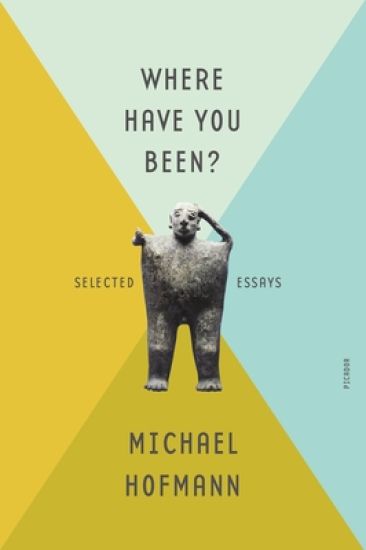
Where Have You Been?: Selected Essays

Where Have You Been?: Selected Essays

Michael Hofmann

Picador USA
2023
nidottu
An adventure with a roving genius of literary criticism Michael Hofmann--poet, translator, and intellectual vagabond--has established himself as one of the keenest critics of contemporary literature. Safely nestled between the covers of Where Have You Been?, he offers a hand to guide us and an encouraging whisper in our ear, leading us on a trip through what to read, how to think, and why to like. And while these essays bear sharp insights that will help us revisit writers with a fresh eye, they are also a story of love between a reader and his treasured books. In the thirty essays collected here, Hofmann brings his signature wit and sustained critical mastery to a poetic, penetrating, and candid discussion of the writers and artists of the last hundred years. Here are the indispensable poets without which contemporary poetry would be unimaginable--Elizabeth Bishop, "the poets' poets' poet," the "ghostly skill" of Robert Lowell, and the man he calls the greatest English poet since Shakespeare, Ted Hughes. But he also illumines the despair of John Berryman and the antics of poetry's bogeyman, Frederick Seidel. In essays on art that are themselves works of art, Hofmann's agile and brilliant mind explores a panoply of subjects from the mastery of translation to the best day job for a poet. What these diverse gems share are the critic's insatiable curiosity and great charm. Where Have You Been? is an unmissable journey with literature's most irresistible flaneur.
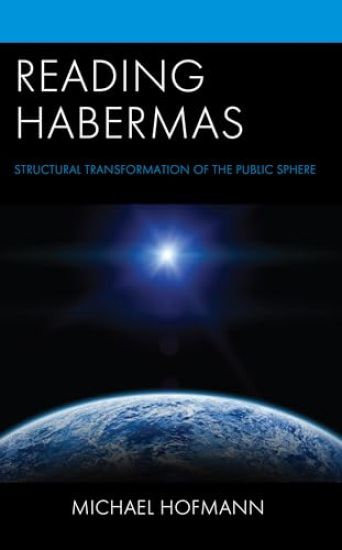
Reading Habermas

Reading Habermas

Michael Hofmann

BLOOMSBURY PUBLISHING PLC
2023
sidottu
Reading Habermas: Structural Transformation of the Public Sphere dissolves Habermas’s monolithic stylization to precisely access his seminal distinction between the purely political polis of antiquity, which excludes the private economy from the res publica, and the modern public sphere with its rational-critical discourse about commodity exchange and social labor in the political economy. Deconstructing the uniform mold of Structural Transformation’s narrative about a rise and fall of the bourgeois public sphere in modernity also allows to identify and understand the ideology-critical methodologies of Habermas’s theory reconstruction of Kant’s ideal of the liberal public in the context of the French Revolution. Readers of this guide realize that Habermas’s interpretation of a sociological and political category with the norms of constitutional theory and intellectual history causes the “collapsing of norm and description” he acknowledged in 1989 and thus frequent misunderstandings about the historical validity of Structural Transformation’s ideal-type derived from Condorcet’s absolute rationalism and Kant’s “unofficial” philosophy of history. Specifically, the guide explains that Habermas’s key construct of a “morally pretentious rationality” of the bourgeois public sphere entirely depends on the claim about “natural laws” harmoniously regulating the economy. While neoliberalism still maintains this claim, Hegel “decisively destroyed” it already in 1821.
Reading Habermas

Reading Habermas

Michael Hofmann

BLOOMSBURY PUBLISHING PLC
2025
nidottu
Reading Habermas: Structural Transformation of the Public Sphere dissolves Habermas’s monolithic stylization to access his seminal distinction between the purely political polis of antiquity, and the modern public sphere. Deconstructing the mold of Structural Transformation’s narrative about a rise and fall of the bourgeois public sphere in modernity allows us to understand the ideology-critical methodologies of Habermas’s theory reconstruction of Kant’s ideal of the liberal public in the context of the French Revolution. Readers realize that Habermas’s interpretation of a sociological and political category with the norms of constitutional theory and intellectual history causes the “collapsing of norm and description” he acknowledged in 1989 and thus frequent misunderstandings about the historical validity of Structural Transformation’s ideal-type derived from Condorcet’s absolute rationalism and Kant’s “unofficial” philosophy of history. Specifically, the guide explains that Habermas’s key construct of a “morally pretentious rationality” of the bourgeois public sphere entirely depends on the claim about “natural laws” harmoniously regulating the economy. While neoliberalism still maintains this claim, Hegel “decisively destroyed” it already in 1821.
Habermas’s Public Sphere

Habermas’s Public Sphere

Michael Hofmann

Fairleigh Dickinson University Press
2017
sidottu
Habermas’s Public Sphere: A Critique analyzes the evolution of Juergen Habermas’s social and political theory from the 1950s to the present by focusing on the explicit and on the tacit changes in his thinking about The Structural Transformation of the Public Sphere, his global academic bestseller, which has been translated into 30 languages. Integrating “public sphere,” “discourse,” and “reason,” the three categories at the center of his lifelong work as a scholar and as a public intellectual, Habermas’s classic public sphere concept has deeply influenced an unusually high number of disciplines in the social sciences and in the humanities. In the process, its complex methodology, whose sources are not always identified, can be perplexing and therefore lead to misunderstandings. While Habermas’s “Further Reflections on the Public Sphere” (1992) contain several far-reaching clarifications, they still do not identify a number of the most important sources for his methodology, above all Herbert Marcuse and Ernst Bloch. Hence, a key purpose of this study is to thoroughly analyze the Marxist critique of ideology that Habermas uses in dialectical fashion for his theory reconstruction of Immanuel Kant’s liberal ideal of a rational-critical public as the organizational principle of the constitutional state and as the method of Enlightenment. Such dialectical thinking allows him to appropriate the structure of Reinhart Koselleck’s Critique and Crisis and of Carl Schmitt’s writings on the modern state while simultaneously upending their conservative critique of Liberalism and of the Enlightenment. However, this strategy restricts the application of his concept to his stylizations of the French Revolution and of his British “model case.” This critique reinvigorates Habermas’s seminal distinction between the purely political polis of antiquity, which excludes the private economy from the res publica, and the modern public sphere with its rational-critical discourse about commodity exchange and social labor in the political economy. At the same time, it identifies the crises of seventeenth-century England and the Dutch Republic as the origins of the new channels of public communication used to constantly evaluate the role of state power as political facilitator and regulator of an increasingly complex, dynamic, and crisis-prone market economy.
Habermas’s Public Sphere

Habermas’s Public Sphere

Michael Hofmann

Fairleigh Dickinson University Press
2019
nidottu
Habermas’s Public Sphere: A Critique analyzes the evolution of Juergen Habermas’s social and political theory from the 1950s to the present by focusing on the explicit and on the tacit changes in his thinking about The Structural Transformation of the Public Sphere, his global academic bestseller, which has been translated into 30 languages. Integrating “public sphere,” “discourse,” and “reason,” the three categories at the center of his lifelong work as a scholar and as a public intellectual, Habermas’s classic public sphere concept has deeply influenced an unusually high number of disciplines in the social sciences and in the humanities. In the process, its complex methodology, whose sources are not always identified, can be perplexing and therefore lead to misunderstandings. While Habermas’s “Further Reflections on the Public Sphere” (1992) contain several far-reaching clarifications, they still do not identify a number of the most important sources for his methodology, above all Herbert Marcuse and Ernst Bloch. Hence, a key purpose of this study is to thoroughly analyze the Marxist critique of ideology that Habermas uses in dialectical fashion for his theory reconstruction of Immanuel Kant’s liberal ideal of a rational-critical public as the organizational principle of the constitutional state and as the method of Enlightenment. Such dialectical thinking allows him to appropriate the structure of Reinhart Koselleck’s Critique and Crisis and of Carl Schmitt’s writings on the modern state while simultaneously upending their conservative critique of Liberalism and of the Enlightenment. However, this strategy restricts the application of his concept to his stylizations of the French Revolution and of his British “model case.” This critique reinvigorates Habermas’s seminal distinction between the purely political polis of antiquity, which excludes the private economy from the res publica, and the modern public sphere with its rational-critical discourse about commodity exchange and social labor in the political economy. At the same time, it identifies the crises of seventeenth-century England and the Dutch Republic as the origins of the new channels of public communication used to constantly evaluate the role of state power as political facilitator and regulator of an increasingly complex, dynamic, and crisis-prone market economy.
Der Faktor «Zeit» ALS Zentrales Element Des Politisch-Administrativen Managements
-Erfolg oder Misserfolg einer Massnahme ist nicht selten die Frage von heute oder morgen-. In dieser Feststellung eines Staatssekretars wird der grosse Einfluss des Faktors -Zeit- fur das politisch-administrative Handeln deutlich. Ziel der Untersuchung ist es, diese Bedeutung des Zeitfaktors systematisch aufzudecken und Hinweise fur einen effizienteren Umgang mit dem Faktor -Zeit- zu entwickeln. Hierzu wurden 19 Staatssekretare und 43 Abteilungsleiter von Landesministerien intensiv befragt. Dabei zeigte sich u.a. dass die Akteure den Zeitfaktor durchaus beachten, jedoch in der Regel eher fallbezogen-intuitiv als systematisch-geplant."