Kirjojen hintavertailu. Mukana 12 390 323 kirjaa ja 12 kauppaa.

Kirjahaku

Etsi kirjoja tekijän nimen, kirjan nimen tai ISBN:n perusteella.

40 kirjaa tekijältä Michael Hughes

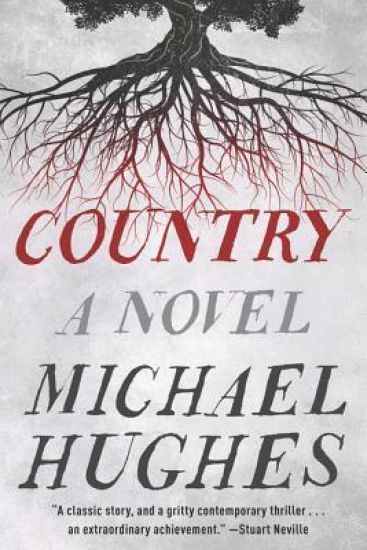
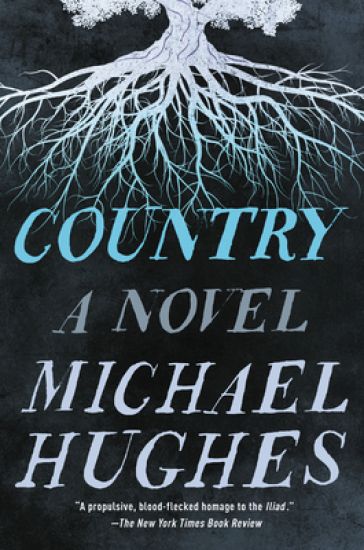
Country

Country

Michael Hughes

Mariner Books
2020
nidottu
Published to ravishing acclaim in the UK, a fierce and suspenseful reimagining of Homer's Iliad set in mid-1990s Northern Ireland--a heart pounding tale of honor and revenge that "explodes with verbal invention, rapid juxtaposition, brutality and fun" (Times Literary Supplement).Northern Ireland, 1996.After twenty-five years of vicious conflict, the IRA and the British have agreed to an uneasy ceasefire as a first step towards lasting peace. But, faced with the prospect that decades of savage violence and loss have led only to smiles and handshakes, those on the ground in the border country question whether it really is time to pull back--or quite the opposite.When an IRA man's wife turns informer, he and his brother gather their comrades for an assault on the local army base. But old grudges boil over, and the squad's feared sniper, Achill, refuses to risk his life to defend another man's pride. As the gang plots without him, the British SAS are sent to crush the rogue terror cell before it can wreck the fragile truce and drag the region back to the darkest days of the Troubles. Meanwhile, Achill's young prot g grabs his chance to join the fray in his place...Inspired by the oldest war story of them all, Michael Hughes's virtuoso novel explores the brutal glory of armed conflict, the cost of Ireland's most uncivil war, and the bitter tragedy of those on both sides who offer their lives to defend the dream of country.
Country

Country

Michael Hughes

Mariner Books
2019
sidottu
Published to ravishing acclaim in the UK, a fierce and suspenseful reimagining of Homer's Iliad set in mid-1990s Northern Ireland--a heart pounding tale of honor and revenge that "explodes with verbal invention, rapid juxtaposition, brutality and fun" (Times Literary Supplement).Northern Ireland, 1996.After twenty-five years of vicious conflict, the IRA and the British have agreed to an uneasy ceasefire as a first step towards lasting peace. But, faced with the prospect that decades of savage violence and loss have led only to smiles and handshakes, those on the ground in the border country question whether it really is time to pull back--or quite the opposite.When an IRA man's wife turns informer, he and his brother gather their comrades for an assault on the local army base. But old grudges boil over, and the squad's feared sniper, Achill, refuses to risk his life to defend another man's pride. As the gang plots without him, the British SAS are sent to crush the rogue terror cell before it can wreck the fragile truce and drag the region back to the darkest days of the Troubles. Meanwhile, Achill's young prot g grabs his chance to join the fray in his place...Inspired by the oldest war story of them all, Michael Hughes's virtuoso novel explores the brutal glory of armed conflict, the cost of Ireland's most uncivil war, and the bitter tragedy of those on both sides who offer their lives to defend the dream of country.
Digital Filmmaking for Beginners A Practical Guide to Video Production
Publisher's Note: Products purchased from Third Party sellers are not guaranteed by the publisher for quality, authenticity, or access to any online entitlements included with the product.Discover how to create professional-quality digital videos--faster than you can say "lights, camera, action"Digital video cameras are everywhere--even on our phones! But cameras don't make great movies; filmmakers do. Written by a seasoned pro with 40 years of teaching experience, Digital Filmmaking for Beginners is your fully illustrated introduction to all technical aspects of digital filmmaking.Featuring clear, concise instruction--accompanied by online video demonstrations--this comprehensive guide covers the best methods and techniques to plan and script projects; set up lighting, microphones, and cameras; and shoot, edit, and apply postproduction effects and other finishing touches. Whether you're an amateur film buff or an aspiring professional videographer, this is the source for everything you need to bring your ideas from the page to the screen.Coverage includes:Best practices to ensure smooth operations in all project phases, from planning to post productionRecommendations on selecting and purchasing cameras, filming gear, and the best editing and effects software to fit your budget and needsAdvice on planning, shooting, editing, and other technical elementsFully illustrated tutorials on composition, framing, and other visual storytelling techniquesExclusive bonus online content, including finished video demonstrations of key filmmaking techniques and informative articles
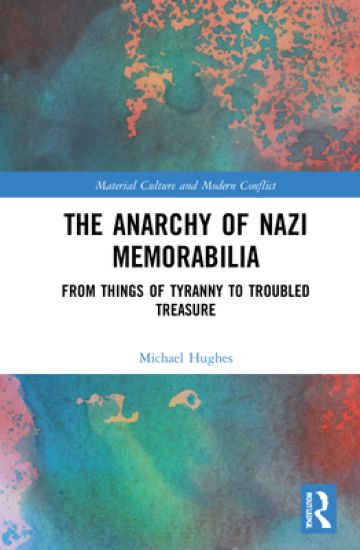
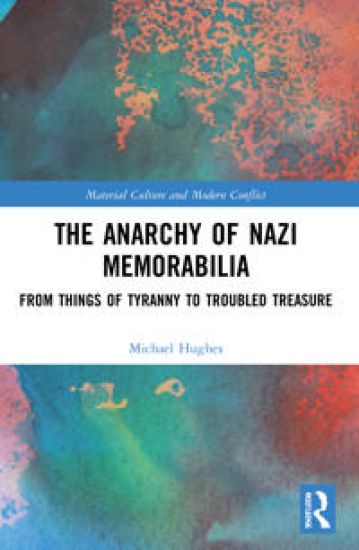
The Anarchy of Nazi Memorabilia

The Anarchy of Nazi Memorabilia

Michael Hughes

TAYLOR FRANCIS LTD
2021
sidottu
Out of the numerous books and articles on the Third Reich, few address its material culture, and fewer still discuss the phenomenon of Nazi memorabilia. This is all the more surprising given that Nazi symbols, so central to sustaining Hitler’s movement, continue to live long after the collapse of his 12-year Reich. Neither did Nazi ideology die; far-right populists would like to see the swastika flown over the White House or Buckingham Palace. Against a backdrop of right-wing extremism, military re-enactors think nothing of dressing up in Waffen-SS uniforms and romanticising the Third Reich in the name of living history. Auctioneers are prepared to hammer down Nazi artefacts to the highest bidder, but who is buying them, and why do they do so? Should collectors be allowed to decorate their homes with Nazi flags?The Anarchy of Nazi Memorabilia begins by examining the creation and context of Nazi artefacts and symbols during the volatile Weimar Republic to their wider distribution during the Third Reich. There were few people in Nazi Germany who did not wear a badge or uniform of some sort. Whether it be mothers, soldiers or concentration camp inmates, they were all branded. The chapter on the Second World War demonstrates that although German soldiers were cynical about being given medals in exchange for freezing in Russia. They still continued to fight, for which more decorations were awarded. A large proportion of this book is therefore given to the meaning that Nazi symbols had before Nazi Germany was eventually defeated in May 1945. Equally important, however, and one of the characteristics of this book, is the analysis of the meaning and value of Nazi material culture over time. The interpreters of Nazi symbols that this book focuses on are internationally based private collectors and traders. Sustained attention is given in a chapter outlining the development of the collectors’ market for Nazi memorabilia from 1945 onwards. No matter how much collectors go out of their way to paint the hobby in a positive light, their activities do not fully escape the troubled past of the material that they desire. So contested are Nazi symbols that another chapter is devoted to the ethics and morals of destroying or preserving them. The issues surrounding private versus public custody and ownership of Nazi artefacts are also discussed. So far, in this book, the examination of Nazi artefacts has been restricted to physical objects within societies that are generally aware of the consequences of Hitlerism. As we increasingly move into the digital age, however, and there are few survivors of the Second World War left to relay their horrific experiences, the final chapter contemplates the future of Nazi symbols both digitally and physically, fake or real.This book will appeal to all those interested in the Third Reich, Nazi ideology, Neo-Nazism, perceptions of the Nazis post-1945, modern European history and political symbolism. It will also hold particular appeal to those interested in the collecting and trading of contested and highly emotive artefacts. It considers aesthetics, authenticity, commodification, gift exchange, life histories of people and objects, materiality and value theory.
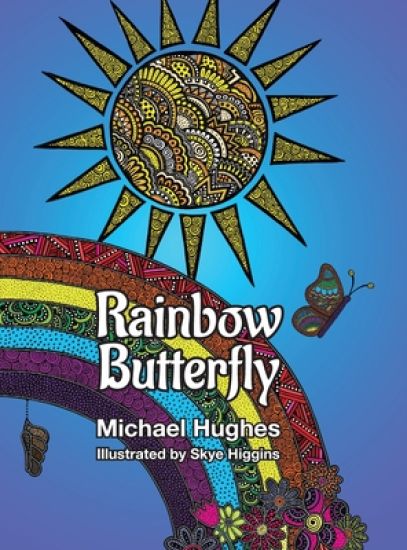
Rainbow Butterfly

Rainbow Butterfly

Michael Hughes

Graham Davidson
2022
sidottu
As the Rainbow Butterfly takes you on its journey through the circle of lifeyou can feel this new sense of joy and peace growing withinsharing this uniquely written and beautifully illustrated story with someonecan help to create the beneficial changes in their life they may needRainbow Butterfly is the first book in the Slumber Therapy seriesand can help with sleeping, confidence, anxiety and self-beliefa story for children of all ages and even for adults to tryyou can find a feeling of freedom within, on the wings of the Rainbow Butterfly.
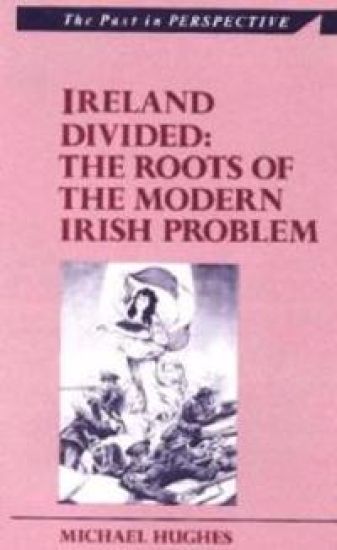
Ireland Divided

Ireland Divided

Michael Hughes

University of Wales Press
1994
nidottu
Part of the "Past in Perspective" series, this text provides a concise introduction to the events which led to the partition of Ireland, with a discussion of the subsequent development of the two Irish states which emerged from the events of 1920-1922. The author is even-handed in his treatment of the two Irish states and their politics, and deals sensitively with a very complex affair, especially when he deals with post-1968 developments. In addition to a core of chapters which explore a major theme in depth and from a number of angles, this book begins with a survey of the ways in which its theme has been treated in the past by historians and other writers; it includes a section of contemporary documents substantial enough to give an accurate flavour of the relevant theme, and it ends with a bibliography to give the guidance to further study. By these means, as well as the inexpensive format, the series aims to convey the facination of Irish history to a wider public.
British Foreign Secretaries in an Uncertain World, 1919-1939
The nature of international diplomacy and Britain’s world role changed immeasurably after the end of the First World War, and this book shows how the various men who headed the Foreign Office during the interwar years sought to operate in the shifting political and bureaucratic environments that confronted them. British Foreign Secretaries in an Uncertain World examines the careers of each of the interwar Foreign Secretaries, including Lord Curzon, Ramsay MacDonald and Anthony Eden. Using an extensive range of primary sources both published and unpublished, official and private, Michael Hughes provides a detailed assessment of how these men approached their role and how influential they were in international diplomacy. The book also looks at the Foreign Secretaries’ successes or failures within the British political system, analysing how influential the Foreign Office was under each Secretary in determining British foreign policy. A fascinating book with a unique focus, British Foreign Secretaries in an Uncertain World takes a rigorous look at a key topic in British history.
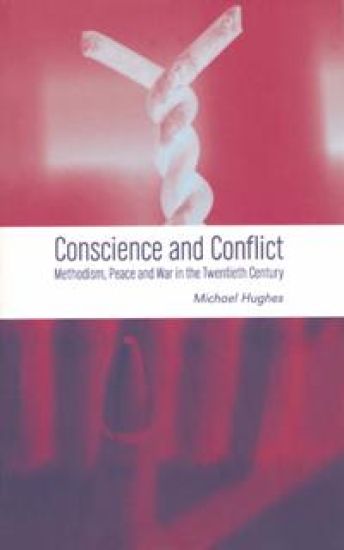
Conscience and Conflict

Conscience and Conflict

Michael Hughes

EPWORTH PRESS
2013
nidottu
Attention is given to the way in which Methodist scholars and ministers, ranging from A.S. Peake to Leslie Weatherhead and Donald Soper to Kenneth Greet, have sought to relate questions of war and peace to broader considerations of Christian faith and practice. Chapters focus on responses within British Methodism to the Boer War and its aftermath, the First World War, the inter-war years and the rise of fascism, the Second World War, the Cold War, debates about the relationship between economic justice and conflict in the post-1945 period, and the international situation since the end of the Cold War.Looking at official Conference documents and 'grass roots' material, the author shows how Methodists, alongside other Christians, have wrestled with questions such as whether it can ever be right for Christians to take up arms or support their country in times of war? Does the state have the right to conscript its citizens to fight in times of war, and should individuals have the right to object to military service on grounds of conscience? Is it ever morally acceptable to possess weapons of mass destructions or to target civilians in times of war? Is it possible to identify new ways of promoting global economic justice in order to reduce the incidence of war and conflict (debt relief, new trading patterns, etc.)?
Early Modern Germany, 1477-1806

Early Modern Germany, 1477-1806

Michael Hughes

University of Pennsylvania Press
1992
pokkari
Attempts to present a coherent account of early modern German history are often hampered by the German equivalent of the Whig theory of history, by which all useful roads lead up to the creation of the nineteenth-century power state (Machstaat) or institutional state (Anstalstaat). In this kind of historiography, there are large "blank" areas between the "important" events like the Reformation, the Thiry Years War, the Seven Years War, and the French Revolution. During the intervals of apparent stagnation between these events, "Germany" seems to disappear, to be replaced by states such as Prussian and Austria, Saxony, Bavaria, and the Palatinate. Substantial areas are ignored, and groups such as the parliamentary Estates, which stood in the way of state-building, are virtually written out of most accounts. Rather than focusing on the separate histories of the individual German states, Michael Hughes looks to the structure of the Holy Roman Empire in its final centuries and writes an account of Germany as a functioning, federative state, with institutions capable of reform and modernization.For nineteenth-and twentieth-century historians, the Empire was seen as the embodiment of division and weakness. But by examining the first Reich, Hughes reveals the persistence of the idea of Germanness and German national feeling during a period when, according to most accounts, Germany had virtually ceased to exist. At the same time, he examines "the element of continuity in Germany's development ...in an attempt to discover how far back in Germany's past it is necessary to go to find the roots of the 'German problem,' the Germans' search for a political expression of their strongly developed awareness of cultural unity."
The Anarchy of Nazi Memorabilia

The Anarchy of Nazi Memorabilia

Michael Hughes

TAYLOR FRANCIS LTD
2023
nidottu
Out of the numerous books and articles on the Third Reich, few address its material culture, and fewer still discuss the phenomenon of Nazi memorabilia. This is all the more surprising given that Nazi symbols, so central to sustaining Hitler’s movement, continue to live long after the collapse of his 12-year Reich. Neither did Nazi ideology die; far-right populists would like to see the swastika flown over the White House or Buckingham Palace. Against a backdrop of right-wing extremism, military re-enactors think nothing of dressing up in Waffen-SS uniforms and romanticising the Third Reich in the name of living history. Auctioneers are prepared to hammer down Nazi artefacts to the highest bidder, but who is buying them, and why do they do so? Should collectors be allowed to decorate their homes with Nazi flags?The Anarchy of Nazi Memorabilia begins by examining the creation and context of Nazi artefacts and symbols during the volatile Weimar Republic to their wider distribution during the Third Reich. There were few people in Nazi Germany who did not wear a badge or uniform of some sort. Whether it be mothers, soldiers or concentration camp inmates, they were all branded. The chapter on the Second World War demonstrates that although German soldiers were cynical about being given medals in exchange for freezing in Russia. They still continued to fight, for which more decorations were awarded. A large proportion of this book is therefore given to the meaning that Nazi symbols had before Nazi Germany was eventually defeated in May 1945. Equally important, however, and one of the characteristics of this book, is the analysis of the meaning and value of Nazi material culture over time. The interpreters of Nazi symbols that this book focuses on are internationally based private collectors and traders. Sustained attention is given in a chapter outlining the development of the collectors’ market for Nazi memorabilia from 1945 onwards. No matter how much collectors go out of their way to paint the hobby in a positive light, their activities do not fully escape the troubled past of the material that they desire. So contested are Nazi symbols that another chapter is devoted to the ethics and morals of destroying or preserving them. The issues surrounding private versus public custody and ownership of Nazi artefacts are also discussed. So far, in this book, the examination of Nazi artefacts has been restricted to physical objects within societies that are generally aware of the consequences of Hitlerism. As we increasingly move into the digital age, however, and there are few survivors of the Second World War left to relay their horrific experiences, the final chapter contemplates the future of Nazi symbols both digitally and physically, fake or real.This book will appeal to all those interested in the Third Reich, Nazi ideology, Neo-Nazism, perceptions of the Nazis post-1945, modern European history and political symbolism. It will also hold particular appeal to those interested in the collecting and trading of contested and highly emotive artefacts. It considers aesthetics, authenticity, commodification, gift exchange, life histories of people and objects, materiality and value theory.
A Plain Narrative or Journal of the Late Rebellion, Begun in 1745
The 18th century was a wealth of knowledge, exploration and rapidly growing technology and expanding record-keeping made possible by advances in the printing press. In its determination to preserve the century of revolution, Gale initiated a revolution of its own: digitization of epic proportions to preserve these invaluable works in the largest archive of its kind. Now for the first time these high-quality digital copies of original 18th century manuscripts are available in print, making them highly accessible to libraries, undergraduate students, and independent scholars.Delve into what it was like to live during the eighteenth century by reading the first-hand accounts of everyday people, including city dwellers and farmers, businessmen and bankers, artisans and merchants, artists and their patrons, politicians and their constituents. Original texts make the American, French, and Industrial revolutions vividly contemporary.++++The below data was compiled from various identification fields in the bibliographic record of this title. This data is provided as an additional tool in helping to insure edition identification: ++++British LibraryT045736London: printed for Henry Whitridge, 1746. 4],59, 1]p.; 8
A Plain Narrative and Authentic Journal of the Late Rebellion, Begun in 1745
The 18th century was a wealth of knowledge, exploration and rapidly growing technology and expanding record-keeping made possible by advances in the printing press. In its determination to preserve the century of revolution, Gale initiated a revolution of its own: digitization of epic proportions to preserve these invaluable works in the largest archive of its kind. Now for the first time these high-quality digital copies of original 18th century manuscripts are available in print, making them highly accessible to libraries, undergraduate students, and independent scholars.Medical theory and practice of the 1700s developed rapidly, as is evidenced by the extensive collection, which includes descriptions of diseases, their conditions, and treatments. Books on science and technology, agriculture, military technology, natural philosophy, even cookbooks, are all contained here.++++The below data was compiled from various identification fields in the bibliographic record of this title. This data is provided as an additional tool in helping to insure edition identification: ++++British LibraryT055102London: printed for Henry Whitridge, 1747. 4],59, 1]p.; 8
Archbishop Randall Davidson

Archbishop Randall Davidson

Michael Hughes

Routledge
2017
sidottu
Randall Davidson was Archbishop of Canterbury for quarter of a century. Davidson was a product of the Victorian ecclesiastical and social establishment, whose advance through the Church was dependent on the patronage of Queen Victoria, but he became Archbishop at a time of huge social and political change. He guided the Church of England through the turbulence of the Edwardian period, when it faced considerable challenges to its status as the established Church, as well as helping shape its response to the horrors of the First World War. Davidson inherited a Church of England that was sharply divided on a range of issues, and he devoted his career as Archbishop to securing its unity, whilst ensuring that its voice continued to be heard both nationally and internationally. A modest and pragmatic man, he was widely respected both within the Church of England and beyond, helping to find solutions to a range of political and ecclesiastical problems. This book explores Davidson’s role within the Church and in the life of Britain more broadly during his time at Canterbury. It includes a large selection of documents that help to reveal the Archbishop’s character and cast light on the way in which he carried out his varied and demanding duties.
Archbishop Randall Davidson

Archbishop Randall Davidson

Michael Hughes

Routledge
2020
nidottu
Randall Davidson was Archbishop of Canterbury for quarter of a century. Davidson was a product of the Victorian ecclesiastical and social establishment, whose advance through the Church was dependent on the patronage of Queen Victoria, but he became Archbishop at a time of huge social and political change. He guided the Church of England through the turbulence of the Edwardian period, when it faced considerable challenges to its status as the established Church, as well as helping shape its response to the horrors of the First World War. Davidson inherited a Church of England that was sharply divided on a range of issues, and he devoted his career as Archbishop to securing its unity, whilst ensuring that its voice continued to be heard both nationally and internationally. A modest and pragmatic man, he was widely respected both within the Church and beyond, helping to find solutions to a range of political and ecclesiastical problems. This book explores Davidson’s role within the Church and in the life of Britain more broadly during his time at Canterbury. It includes a large selection of documents that help to reveal the Archbishop’s character and cast light on the way in which he carried out his varied and demanding duties.
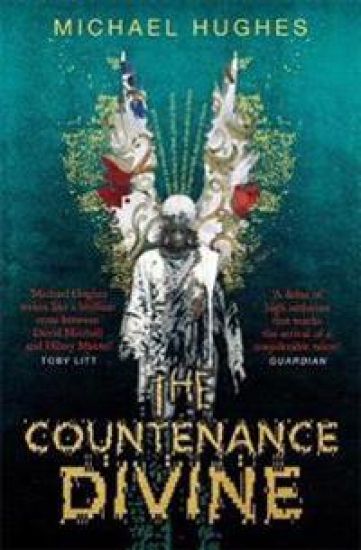
The Countenance Divine

The Countenance Divine

Michael Hughes

John Murray Publishers Ltd
2017
pokkari
'Michael Hughes writes like a brilliant cross between David Mitchell and Hilary Mantel' Toby LittIn 1999 a programmer is trying to fix the millennium bug, but can't shake the sense he's been chosen for something.In 1888 five women are brutally murdered in the East End by a troubled young man in thrall to a mysterious master.In 1777 an apprentice engraver called William Blake has a defining spiritual experience; thirteen years later this vision returns.And in 1666 poet and revolutionary John Milton completes the epic for which he will be remembered centuries later.But where does the feeling come from that the world is about to end?