Kirjojen hintavertailu. Mukana 11 627 220 kirjaa ja 12 kauppaa.

Kirjahaku

Etsi kirjoja tekijän nimen, kirjan nimen tai ISBN:n perusteella.

34 kirjaa tekijältä Michael Hunter

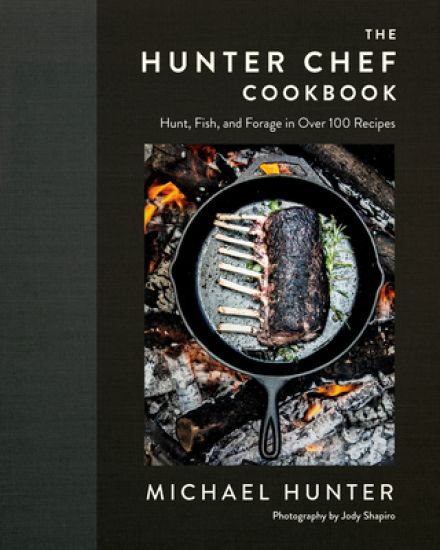
The Hunter Chef Cookbook

The Hunter Chef Cookbook

Michael Hunter

Prentice Hall Press
2020
sidottu
Wild-game hunter and chef, Michael Hunter, celebrates the use of wild ingredients in a stunning collection of recipes and photography. Well-known hunter and respected wild-game chef, Michael Hunter, grew up in the great outdoors. Inspired by the endless bounty of the land, hunting, fishing, foraging, and cooking is a way of life for Hunter. Celebrating the resources of the wild, The Hunter Chef Cookbook features a collection of over 100 recipes and butchery guides.
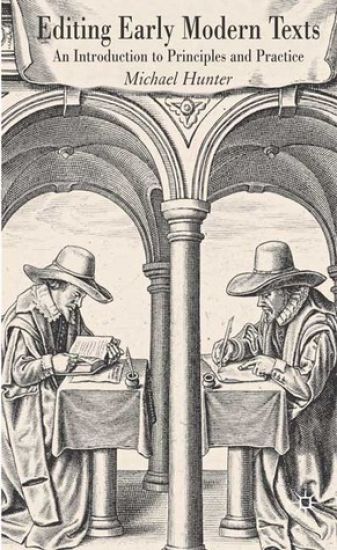
Editing Early Modern Texts

Editing Early Modern Texts

Michael Hunter

Palgrave Macmillan
2006
sidottu
This book provides an approachable exposition of the rationale of textual editing with special reference to texts from between 1550-1800. The volume explains how manuscript and printed texts were produced, indicating the implications of this for their editorial treatment and giving practical advice on how texts should be prepared and presented.
Editing Early Modern Texts

Editing Early Modern Texts

Michael Hunter

Palgrave Macmillan
2006
nidottu
This book provides an approachable exposition of the rationale of textual editing with special reference to texts from between 1550-1800. The volume explains how manuscript and printed texts were produced, indicating the implications of this for their editorial treatment and giving practical advice on how texts should be prepared and presented.
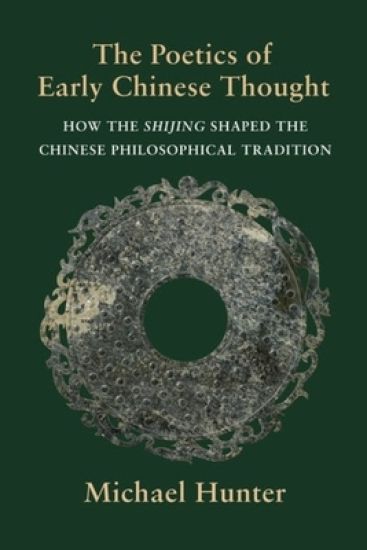
The Poetics of Early Chinese Thought

The Poetics of Early Chinese Thought

Michael Hunter

Columbia University Press
2021
sidottu
The modern imagination of classical Chinese thought has long been dominated by Confucius, Mozi, Mencius, and other so-called “Masters” of the Warring States period. Michael Hunter argues that this approach neglects the far more central role of poetry, and the Shijing (Classic of Poetry) in particular, in the formation of the philosophical tradition. Through a new reading of its ideology and poetics, Hunter reestablishes the Shijing as a work of major intellectual-historical significance. The Poetics of Early Chinese Thought demonstrates how Shi poetry weaves a vision of society united at every level by the innate and universal impulse to come home. The Shi immersed early thinkers in a world of movement and flow in order to teach them that the most powerful current of all was the gravitational pull of a virtuous king, without whom people can never truly feel at home. Hunter traces the profound influence of the Shi ideology across numerous sources of classical Chinese thought, which he recasts as a network centered on the Shi. Reframing the tradition in this way reveals how poetry shaped ancient Chinese thinkers’ conception of the world and their place within it.This book offers both a sweeping critique of how classical Chinese thought is commonly understood and a powerful new way of studying it.
The Poetics of Early Chinese Thought

The Poetics of Early Chinese Thought

Michael Hunter

Columbia University Press
2021
pokkari
The modern imagination of classical Chinese thought has long been dominated by Confucius, Mozi, Mencius, and other so-called “Masters” of the Warring States period. Michael Hunter argues that this approach neglects the far more central role of poetry, and the Shijing (Classic of Poetry) in particular, in the formation of the philosophical tradition. Through a new reading of its ideology and poetics, Hunter reestablishes the Shijing as a work of major intellectual-historical significance. The Poetics of Early Chinese Thought demonstrates how Shi poetry weaves a vision of society united at every level by the innate and universal impulse to come home. The Shi immersed early thinkers in a world of movement and flow in order to teach them that the most powerful current of all was the gravitational pull of a virtuous king, without whom people can never truly feel at home. Hunter traces the profound influence of the Shi ideology across numerous sources of classical Chinese thought, which he recasts as a network centered on the Shi. Reframing the tradition in this way reveals how poetry shaped ancient Chinese thinkers’ conception of the world and their place within it.This book offers both a sweeping critique of how classical Chinese thought is commonly understood and a powerful new way of studying it.
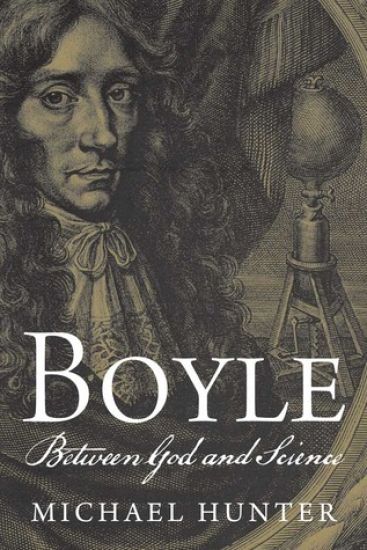
Boyle

Boyle

Michael Hunter

Yale University Press
2010
pokkari
Robert Boyle ranks with Newton and Einstein as one of the world’s most important scientists. Aristocrat and natural philosopher, he was a remarkably wide-ranging and penetrating thinker—pioneering the modern experimental method, championing a novel mechanical view of nature, and reflecting deeply on philosophical and theological issues related to science. But, as Michael Hunter shows, Boyle was also a complex and contradictory personality, fascinated by alchemy and magic and privately plagued with doubts about faith and conscience, which troubled the rational vision he heralded. This extraordinary work is the first biography of Boyle in a generation, and the culminating achievement of a world-renowned expert on the scientist. Deftly navigating Boyle’s voluminous published works as well as his personal letters and papers, Hunter’s complete and intimate account gives us the man rather than myth, the troubled introvert as well as the public campaigner. Lively, perceptive, and full of original insights, this is the definitive account of a remarkable man and the changing world in which he lived.
The Decline of Magic

The Decline of Magic

Michael Hunter

Yale University Press
2021
pokkari
A new history that overturns the received wisdom that science displaced magic in Enlightenment Britain—named a Best Book of 2020 by the Financial Times In early modern Britain, belief in prophecies, omens, ghosts, apparitions and fairies was commonplace. Among both educated and ordinary people the absolute existence of a spiritual world was taken for granted. Yet in the eighteenth century such certainties were swept away. Credit for this great change is usually given to science – and in particular to the scientists of the Royal Society. But is this justified? Michael Hunter argues that those pioneering the change in attitude were not scientists but freethinkers. While some scientists defended the reality of supernatural phenomena, these sceptical humanists drew on ancient authors to mount a critique both of orthodox religion and, by extension, of magic and other forms of superstition. Even if the religious heterodoxy of such men tarnished their reputation and postponed the general acceptance of anti-magical views, slowly change did come about. When it did, this owed less to the testing of magic than to the growth of confidence in a stable world in which magic no longer had a place.
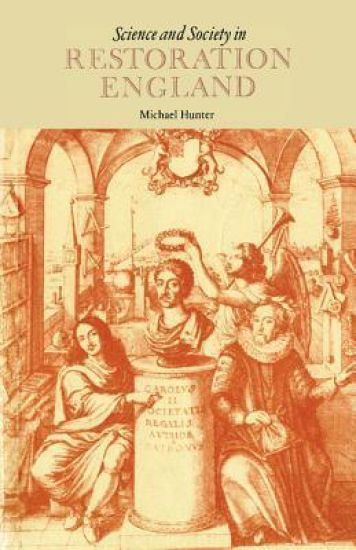
Science and Society in Restoration England

Science and Society in Restoration England

Michael Hunter

Cambridge University Press
1981
pokkari
Although much has been written on the intellectual achievements of the age of Newton, Boyle and Hooke, this book provided the first systematic assessment of the social relations of Restoration science when it was published in 1981. On the basis of a detailed analysis of the early history of the Royal Society, Professor Hunter examines the key issues concerning the role of science in late seventeenth-century England. The nature of the scientific community, the links between science and technology and science's political affiliations are all explored, while much light is cast on contemporary priorities in religion and learning through a reconsideration of attacks on science. At once wide-ranging and authoritative, this remains a work that no one concerned with science and its social integration in this formative period can afford to ignore.
Life with Sharyn: A Positive Approach to Alzheimer's
I truly believe, and have been told by many, that the story of my journey with my wife of 52 years through Alzheimer's is a beautiful one. In a world filled with only the negatives about this disease, I have worked to ensure that our lives are full of only the positives. My life with Sharyn is a great one, and I'd like to share it.
Robert Hooke

Robert Hooke

Michael Hunter

Ashgate Publishing Limited
2006
sidottu
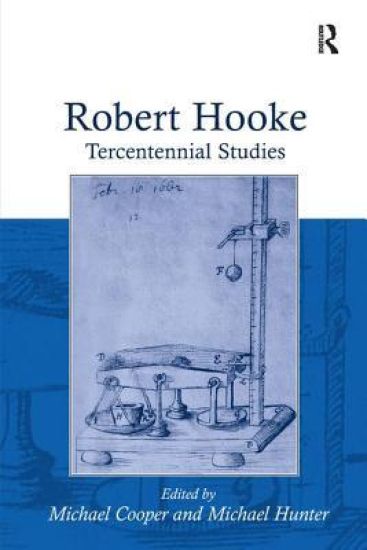
Robert Hooke (1635-1703) was a genius whose wide-ranging achievements are at last receiving the recognition that they deserve. Long overshadowed by such eminent contemporaries as Sir Isaac Newton and Sir Christopher Wren, Hooke's own seminal contributions to science, architecture and technology are now being acclaimed in their own right. Curator of Experiments to the Royal Society when it was chartered in 1662 and author of the famous Micrographia (1665), Hooke also showed unparalleled ingenuity in designing machines and instruments, and played a crucial role as Surveyor to the City of London after the Great Fire. This volume represents a benchmark in the study of Hooke, bringing together a comprehensive set of studies of different aspects of his life, thought and artistry. Its sections deal with Hooke's life and reputation; his contributions to celestial mechanics and astronomy, and to speculative natural philosophy; the instruments that he designed; and his work in architecture and construction. The introduction places the studies in the context of our current understanding of Hooke and his milieu, while the book also contains a comprehensive bibliography. In all, it will be an invaluable resource for all those interested in a figure whose complexity and importance are becoming clear after centuries of neglect.
The Boyle Papers

The Boyle Papers

Michael Hunter

Ashgate Publishing Limited
2007
sidottu
Robert Boyle (1627-91) was the most influential British scientist of the late seventeenth century. His huge archive, which has been at the Royal Society since 1769, has only recently been explored, leading to a new understanding of many aspects of Boyle's thought. This volume brings together the essential materials for understanding the Boyle Papers. It includes a revised version of Michael Hunter's fundamental study of the archive, first published in 1992, which elucidates its history and the way in which handwriting evidence can be used to identify chronological strata within it, thus making it possible to trace the development of Boyle's ideas. Other chapters deal with such components of the Papers as Boyle's 'workdiaries' and his projected Paralipomena; another uses material from the archive to illuminate the making of a key work by Boyle, his Free Inquiry into the Vulgarly Receiv'd Notion of Nature; while another illustrates that, large as the archive is, it is only a part of what existed in Boyle's lifetime. Parts of the content have been published before, but they are here presented in revised and fully indexed form. Lastly, the volume includes a completely revised version of the catalogue of the Boyle Papers, Letters and ancillary manuscripts originally published in 1992, updating it by tabulating the extensive use of the archive made in recent years in connection with the publication of the definitive editions of Boyle's Works and Correspondence (1999-2001). In all, the volume will be indispensable to anyone with a serious interest in Boyle.
Establishing the New Science

Establishing the New Science

Michael Hunter

The Boydell Press
1995
sidottu
For anyone interested in the scientific revolution these essays are compulsory reading. HISTORY A fresh view of the formative years of the Royal Society. `Hunter's reputation as one of the foremost students of Restoration science in England can only be further enhanced by this volume.' NATURE `For anyone interested in the scientific revolution these essays are compulsory reading. Elegantly written and carefully researched, they are a welcome addition to the already extensive literature on the early years of the Royal Society.'HISTORY In a series of detailed case studies, Michael Hunterpresents a fresh view of the formative years of Britain's oldest scientific institution; The Royal Society of London, founded in 1660.
Atheists and Atheism before the Enlightenment

Atheists and Atheism before the Enlightenment

Michael Hunter

Cambridge University Press
2023
sidottu
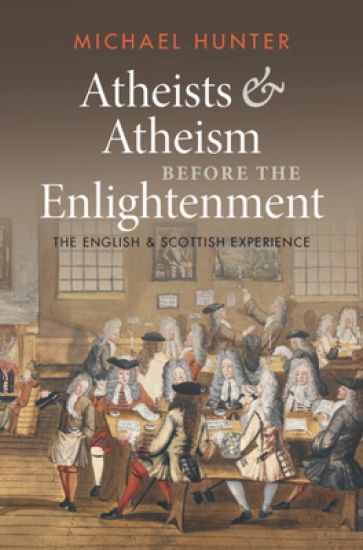
Anxiety about the threat of atheism was rampant in the early modern period, yet fully documented examples of openly expressed irreligious opinion are surprisingly rare. England and Scotland saw only a handful of such cases before 1750, and this book o?ers a detailed analysis of three of them. Thomas Aikenhead was executed for his atheistic opinions at Edinburgh in 1697; Tinkler Ducket was convicted of atheism by the Vice-Chancellor's court at the University of Cambridge in 1739; whereas Archibald Pitcairne's overtly atheist tract, Pitcairneana, though evidently compiled very early in the eighteenth century, was ?rst published only in 2016. Drawing on these, and on the better-known apostacy of Christopher Marlowe and the Earl of Rochester, Michael Hunter argues that such atheists showed real 'assurance' in publicly promoting their views. This contrasts with the private doubts of Christian believers, and this book demonstrates that the two phenomena are quite distinct, even though they have sometimes been wrongly con?ated.
The Image of Restoration Science

The Image of Restoration Science

Michael Hunter

TAYLOR FRANCIS LTD
2022
nidottu
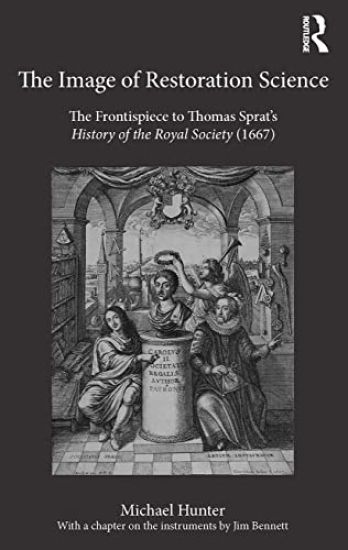
This book is about a single image - the frontispiece to Thomas Sprat’s History of the Royal-Society of London (1667). Designed by John Evelyn, and etched by Wenceslaus Hollar, it is arguably the best-known representation of seventeenth-century English science. The use of such plates to celebrate and legitimise the ‘new’ science of the period falls into a tradition that was well-established both in Britain and in Europe more generally, and which has increasingly attract attention from historians. Nevertheless, there are many questions to be asked about it and how it came into being. Was it an original composition by Evelyn, or is it based on earlier exemplars? Can all the scientific instruments, books and other objects that appear in it be identified, and what significance should be attached to their inclusion? Above all, how did the plate come to be designed in the first place, and what is its true relationship with Sprat’s book? In order to assess such issues, this study provides a full analysis of Evelyn’s image in its Royal Society setting and the wider world of early-modern science. The book first considers the overall iconography of the image and its message concerning Evelyn’s conception of the society’s role, before moving on to examine the myriad of details included in the plate and their significance. It concludes by considering the print’s history after publication, including the extent to which Evelyn used copies to exemplify the combination of technological and artistic accomplishment to which he believed the society should aspire.
Boyle Studies

Boyle Studies

Michael Hunter

TAYLOR FRANCIS LTD
2024
nidottu
The significance of Robert Boyle (1627-91) as the most influential English scientist in the generation before Newton is now generally acknowledged, but the complexity and eclecticism of his ideas has also become increasingly apparent. This volume presents an important group of studies of Boyle by Michael Hunter, the leading expert on Boyle’s life and thought. It forms a sequel to two previous books: Hunter’s Robert Boyle: Scrupulosity and Science (2000) and The Boyle Papers: Understanding the Manuscripts of Robert Boyle (2007). Like them, it conveniently brings together material otherwise widely scattered in essay volumes and academic journals, while nearly a third of the book’s content is hitherto unpublished. The collection opens with a substantial introduction that places the studies that follow in the context of existing studies of Boyle; appended to it is an annotated edition of Boyle’s telling list of desiderata for science. The next three essays comprise a group of essentially biographical studies, exploring various aspects of Boyle’s life and intellectual evolution, after which three others provide further evidence of the ’convoluted’ Boyle divulged in Robert Boyle: Scrupulosity and Science. Finally, we have two chapters, one hitherto published only in French and the other not at all, which throw important light on topics that preoccupied Boyle in the last few years of his life - the supernatural and the exotic. Together, these essays add greater depth to our understanding of Boyle, both as an individual and as a natural philosopher.
Renaissance Man

Renaissance Man

Michael Hunter

Lulu.com
2025
pokkari
Thomas Jefferson is brought to the future to help cleanse the world of the same racism he fostered in the 1800s. It is a daunting task, a conundrum fit for one of history's sharpest minds.
River Road

River Road

Michael Hunter

Lulu.com
2024
pokkari
River Road is a collection of four stories, all taking place on or near River Road, which runs parallel to the Puyallup River. The road connects Tacoma and Puyallup in Western Washington.