Everyday life is something we tend to take for granted, something that just is, something unnoticed. But everyday life is perhaps the most important dimension of society – it's where we live most parts of our lives with each other. This book provides a clear, contemporary and comprehensive overview of the sociologies of everyday life.Looking at everyday activities and experiences, from language and emotions to popular culture and leisure, Encountering the Everyday explores what social structures, orders and processes mean to us on a daily basis. The book carefully leads the reader through historical developments in the field, beginning at the earlier Chicago school and finishing with up-to-date ideas of postmodernism and interactionism. Each chapter relates theoretical ideas directly to case studies and real empirical research to make complex concepts and core issues accessible, relevant and engaging. Written by leading international scholars in the field, this truly global book will inspire and inform all students and scholars of everyday life sociology.
Everyday life is something we tend to take for granted, something that just is, something unnoticed. But everyday life is perhaps the most important dimension of society – it's where we live most parts of our lives with each other. This book provides a clear, contemporary and comprehensive overview of the sociologies of everyday life.Looking at everyday activities and experiences, from language and emotions to popular culture and leisure, Encountering the Everyday explores what social structures, orders and processes mean to us on a daily basis. The book carefully leads the reader through historical developments in the field, beginning at the earlier Chicago school and finishing with up-to-date ideas of postmodernism and interactionism. Each chapter relates theoretical ideas directly to case studies and real empirical research to make complex concepts and core issues accessible, relevant and engaging. Written by leading international scholars in the field, this truly global book will inspire and inform all students and scholars of everyday life sociology.
The Poetics of Crime provides an invitation to reconsider and reimagine how criminological knowledge may be creatively and poetically constructed, obtained, corroborated and applied. Departing from the conventional understanding of criminology as a discipline concerned with refined statistical analyses, survey methods and quantitative measurements, this book shows that criminology can - and indeed should - move beyond such confines to seek sources of insight, information and knowledge in the unexplored corners of poetically and creatively inspired approaches and methodologies. With chapters illustrating the ways in which criminologists and other researchers or practitioners working on crime-related questions can find inspiration in a variety of unconventional materials, writing styles and analytical strategies, The Poetics of Crime offers studies of police photography, classic and contemporary literature, silver screen movies, performative dance enactments and media images. As such, this volume opens up the field of criminological research to alternative and novel sources of knowledge about crime, its perpetrators and victims, authorities, motives and justice. It will therefore appeal not only to sociologists, social theorists and criminologists, but to scholars across disciplines with interests in crime, deviance and innovative approaches to social research.
Zygmunt Bauman is one of the most inspirational and controversial thinkers on the scene of contemporary sociology. For several decades he has provided compelling analyses and diagnoses of a vast variety of aspects of modern and liquid modern living. This book considers the theoretical significance of his contribution to sociology, but also discusses and adopts a critical stance towards his work. The Sociology of Zygmunt Bauman introduces and critically appraises some of the most significant as well as some of the lesser known of Bauman's contributions to contemporary sociology. An international team of scholars delineates and discusses how Bauman's treatment of these themes challenges conventional wisdom in sociology, thereby revising and revitalizing sociological theory. As a special feature, the book concludes with Bauman's intriguing reflections and contemplations on his own life and intellectual trajectory, published here for the first time in English. In this postscript aptly entitled 'Pro Domo Sua' ('About Myself'), he describes the pushes and pulls that throughout the years have shaped his thinking.
This title was first published in 2001: For over 30 years it has been argued that contemporary society is undergoing a fundamental transformation. The portrait of the modern society or modernity offered by philosophers and social scientists from Hobbes to Parsons is no longer understood as a description of the final and highest stage in the social evolution of mankind. Modern society is not the end of history but simply another more or less contingent social and cultural formation on planet earth. This new perspective on modernity and its transformation, which has emerged from the modernist-postmodernist debate, is the subject matter of this book. It is addressed in a multidisciplinary and international way, both theoretically and empirically, and is explored not only in general and historical terms, but also through specific topics such as sexuality, identity, democracy, globalization, knowledge and leadership. Offering an important collaborative contribution to contemporary discourse in sociology, social psychology, politics and philosophy, this book represents a unique effort to come to grips with our obscure and elusive social position at the start of the 21st century.
This title was first published in 2001: For over 30 years it has been argued that contemporary society is undergoing a fundamental transformation. The portrait of the modern society or modernity offered by philosophers and social scientists from Hobbes to Parsons is no longer understood as a description of the final and highest stage in the social evolution of mankind. Modern society is not the end of history but simply another more or less contingent social and cultural formation on planet earth. This new perspective on modernity and its transformation, which has emerged from the modernist-postmodernist debate, is the subject matter of this book. It is addressed in a multidisciplinary and international way, both theoretically and empirically, and is explored not only in general and historical terms, but also through specific topics such as sexuality, identity, democracy, globalization, knowledge and leadership. Offering an important collaborative contribution to contemporary discourse in sociology, social psychology, politics and philosophy, this book represents a unique effort to come to grips with our obscure and elusive social position at the start of the 21st century.
The Poetics of Crime provides an invitation to reconsider and reimagine how criminological knowledge may be creatively and poetically constructed, obtained, corroborated and applied. Departing from the conventional understanding of criminology as a discipline concerned with refined statistical analyses, survey methods and quantitative measurements, this book shows that criminology can - and indeed should - move beyond such confines to seek sources of insight, information and knowledge in the unexplored corners of poetically and creatively inspired approaches and methodologies. With chapters illustrating the ways in which criminologists and other researchers or practitioners working on crime-related questions can find inspiration in a variety of unconventional materials, writing styles and analytical strategies, The Poetics of Crime offers studies of police photography, classic and contemporary literature, silver screen movies, performative dance enactments and media images. As such, this volume opens up the field of criminological research to alternative and novel sources of knowledge about crime, its perpetrators and victims, authorities, motives and justice. It will therefore appeal not only to sociologists, social theorists and criminologists, but to scholars across disciplines with interests in crime, deviance and innovative approaches to social research.
En af de vigtigste dele af det videnskabelige arbejde består i at opdage noget nyt. Det gælder også for samfundsforskningen, hvor interessen for at studere nye, oversete, ukendte eller hidtil uudforskede sider af den sociale virkelighed kontinuerligt bidrager til at skabe ny og vigtig viden – og gør os klogere på verden. Grundige introduktioner til og mere udfoldede beskrivelser af det, der kan kaldes for ’det eksplorative design’ eller ’den eksplorative tilgang’, er imidlertid en mangelvare inden for de fleste lærebøger i videnskabsteori og metode. Denne bog ønsker at råde bod herpå.Bogen tilbyder en bredt anlagt introduktion til det eksplorative design, hvor der både er fokus på det videnskabsteoretiske, videnskabshistoriske og metodologiske grundlag for at arbejde eksplorativt og på en række mere praktiske refleksioner over og eksempler på, hvordan man så udfører eksplorativt forskningsarbejde. Bogen trækker løbende på en mangfoldighed af både konventionelle og mere kreative kilder og på forfatterens egne erfaringer med at arbejde eksplorativt. Formålet med bogen er at tilbyde både studerende og mere erfarne forskere et fundament til at udtænke og foretage eksplorative undersøgelser på med afsæt i en nysgerrig, åben, fleksibel og udogmatisk indstilling til studiet af den sociale virkelighed.Bogens forfatter er Michael Hviid Jacobsen (f. 1971), professor i sociologi ved Institut for Sociologi & Socialt Arbejde, Aalborg Universitet.
Zygmunt Bauman (1925-2017) var en polsk sociolog, der igennem en lang årrække var en af sin tids mest fremtrædende tænkere. Efter at være havnet i unåde hos det kommunistiske system i Polen, valgte Bauman at leve store dele af sit liv i eksil i England. Det var herfra, at han med et forfatterskab, der rummer mere end 50 bøger og hundredvis af bogkapitler og tidsskriftsartikler, med en lang række centrale værker var med til at udvikle og udfordre både sociologien og samtiden. Mest kendt er hans bog Modernitet og Holocaust (1989), der har vundet adskillige internationale priser. Derudover udviklede han i en senere bog også begrebet om 'flydende modernitet', der i dag har vundet indpas i sociologien og beslægtede discipliner. Gennem hele sit virke fremstod Bauman som en, der forsvarede mennesket mod systemet, og han var altid kategorisk på de svagestes side. Denne bog giver en kort introduktion til Zygmunt Baumans liv og sociologiske tænkning. Med en kronologisk beskrivelse og nedslag i et udvalg af hans tekster, belyses hans betydning for og status i samfundstænkningen. Michael Hviid Jacobsen er professor i sociologi ved Aalborg Universitet
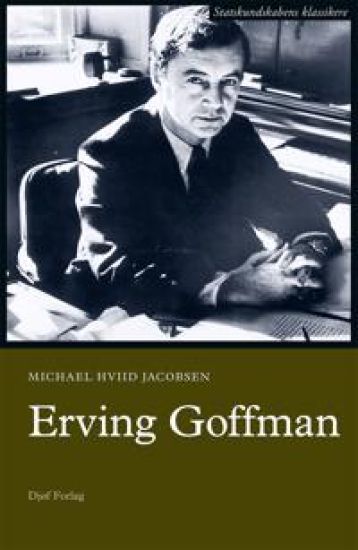
ERVING GOFFMAN (1922-1982) var en af det 20. århundredes mest læste sociologer, og han har siden sin død for små fyrre år siden bibeholdt sin aktualitet og popularitet både blandt etablerede forskere og studerende. Dette skyldes formentlig, at Goffman på mange måder var en forholdsvis ukonventionel sociolog. Det er et kendetegn for Goffmans virke, at han arbejdede mikrosociologisk og primært interesserede sig for individets selvpræsentation i hverdagslivets interaktioner. Derfor var konventionelle genstandsfelter fra sociologien om magtstrukturer, ulighed, forandringer i værdier, makrosociologiske problemstillinger og ”det store samfund” ikke noget, der optog ham. I tillæg hertil var han ikke en politisk engageret sociolog i modsætning til mange andre i sin samtid, og temaer fra statskundskaben som politik, administration, beslutningsprocesser og vælgeradfærd er helt fraværende fra hans tekster.Dette betyder imidlertid ikke, at Goffmans forfatterskab er irrelevant for dem, der ønsker at forstå det samfund, vi lever i. Tværtimod kan Goffmans dramaturgiske indsigt og begrebsapparatanvendes til at studere og analysere betydningen af iscenesættelse og performance i moderne politik.I denne bog gennemgås Goffmans forfatterskab med fokus på de overordnede perspektiver og med nedslag i de fleste af hansværker, og det vises med eksempler, hvordan Goffmans generelle perspektiv og specifikke begreber kan anvendes i studier af temaer, der er relevante inden for statskundskaben.Michael Hviid Jacobsen er professor i sociologi ved Aalborg Universitet
Norbert Elias (1897-1990) var en tysk sociolog, der skrev i kølvandet på sociologiens store grundlæggere – Karl Marx, Max Weber, Émile Durkheim og Georg Simmel – og som selv satte et mærkbart aftryk inden for samfundsforskningen. Elias efterlod sig en betydelig arv til sociologien bl.a. med sit studie af 'hofsamfundet', med sine indgående studier af 'civiliseringsprocessen', med sit fokus på gensidig afhængighed i sociale relationer, med sit figurationssociologiske perspektiv og interessen for langstrakte sociale og historiske processer, med sin undersøgelse af forholdet mellem de etablerede og outsiderne i et engelsk lokalsamfund samt med studiet af fremvæksten af sport og fritid i det moderne samfund. Selvom det tog en rum tid, før Elias for alvor brød igennem til international berømmelse, så har der i de senere år været en markant øget interesse for hans arbejde inden for en lang række fagområder, der trækker på hans grundlæggende perspektiv og hans mere specifikke begreber og forståelser. Denne bog tilbyder en grundlæggende introduktion til Norbert Elias' forfatterskab, hvor der både fokuseres på hans liv og levned, på hans overordnede sociologiske perspektiv, på hans konkrete analyser samt på hans varige betydning for samfundsvidenskabelig tænkning. Michael Hviid Jacobsen er professor i sociologi ved Aalborg Universitet.
Bogen præsenterer Baumans tanker og tekster om det nye læringsliv, som det tager sig ud i den flydende moderne tidsalder, hvor alt er under forandring, opløsning og fragmentering. Vilkårene for læring, pædagogik, uddannelse og undervisning er under hastig fiorandring i disse år - nationalt som internationalt - så en hastig og gennemgribende forandring så vi ofte kan have svært ved at følge med og tilpasse os de mange nye krav og udfordringer, som er en ubønhørlig og iboende del af nutidens samfund.
Michael Hviid Jacobsen; Gunnar Aakvaag; Gunnar C. Aakvaag; Thomas Johansson; Willy Guneriussen; Johanna Esseveld; Mai Ottosen; Nihad Bunar; Rickard Jonsson; Sara Eldén; Thomas Eriksen; Simon Lindgren; Fredrik Engelstad; Inger Hagen; Bjørn Schiermer; Philip Lalander; Søren Kristiansen; Marko Valenta; Ola Sigurdson; Thomas Boje
Sociology is a constantly changing scientific endeavour, adventure and practice that was born with the advent of modernity. One of the main reasons for the rise of sociology was modern societys wish to understand itself. In this introduction to sociology, the authors emphasize the importance and centrality of the idea of the sociological imagination, as it was conceived by sociologist C. Wright Mills. This book will enhance and further develop your sociological imagination with a sensibility that has its breeding ground in the Scandinavian countries; this is the first comprehensive attempt to write an international/Nordic text book and introductory text to sociology. This book is aimed primarily at first year students in sociology but will be of interest to anyone who is looking for a comprehensive guide to the exciting field of sociology. Contents Introduction The legacy of the sociological imagination Scandinavian sensibility Structure and content of the book Summary Think for yourself Further reading Chapter 1. What is society? Contested concepts and shifting metaphors Willy Guneriussen, University of Tromsø Introduction Individualism vs holism: methodological and ontological controversies Sociology – an explanatory or interpretive science? Structure or action? Society – a material or symbolic reality? The symbolic turn Combining distinctions The theoretical landscape of sociology Several theories – one reality? Beyond traditions – towards a minimalist model of society Biology and society Combining traditions The first synthesis: Talcott Parsons’ sociology Modifying Parsons’ theory of society Metaphors, science and sociological imagination Metaphors Changing conceptions or changing realities? Concluding reflections Summary Think for yourself Further reading Chapter 2. The sociology of work Inger Marie Hagen, Fafo Introduction The labour contract – labour as commodity in the market From work to labour Modern labour – work as commodity The two parties to the contract: labour and managerial prerogative The labour contract and the social context – different models The collective agreement Labour and self-expression Working conditions Other answers to `why work?’ Motivation and management The work organisation From command to self-management? An example – the modern work organisation – the three different company systems Employer and employee – equal partners Management as superior to employees Employee and management as parties in an ongoing dialogue Working life and distribution – industrial democracy Norms of distribution and norms of democracy Three notions of industrial democracy Industrial democracy and participation – individual and representative participation The Nordic labour market The Nordic model of labour relations When contemporary labour is a part of the past . . . Summary Think for yourself Further reading Chapter 3. The sociology of power Fredrik Engelstad, University of Oslo Introduction The interpretation of `power’ Power as concept Dimensions in social action Expectations and legitimacy From micro to macro State, democracy, politics State, rights and informal power relations Shaping and articulation of interests Political participation on a broad scale Fragmentation and globalisation: abdication of politics? Civil society Networks and organising capacity Gender power and attitudes toward gender Encounters with welfare state institutions Economy and working life Business life, markets and power Management and leadership in enterprises Participation and industrial democracy Ideas and communication Power in the public sphere Aesthetics, culture and national values Social elites: who governs? Power and democratisation Summary Think for yourself Further reading Chapter 4. The sociology of the family Mai Heide Ottosen, The Danish National Centre for Social Research Introduction What is a family? Sociological perspectives on the family Kinship vs family studies The family as a social institution The family as a social group Family as social practice Demographic trends The `bean-pole’ family The crisis of the patriarchal family Structuring family networks Family policies Inside the family: marriage, parenthood and childhood The de-institutionalisation of marriage From fatherhood and motherhood to parenthood Childhood Summary Think for yourself Further reading Chapter 5. The sociology of education Nihad Bunar and Rickard Jonsson, Stockholm University Introduction Sociological perspectives on education The functionalist approach Education and socialisation Social integration Education and gatekeeping: screening and selecting Education as an agent of social change The conflict approach The correspondence principle Reproduction through expectations and opposition Subjective expectation of objective probability Restricted and elaborated codes The subjective-interpretative approach Education and the market The market-oriented position The market-sceptical position The market-ambivalent position Education and ethnicity Urban schools Refugee and migrant students Education and gender Gender and school achievement Summary Think for yourself Further reading Chapter 6. The sociology of religion Ola Sigurdson, University of Gothenburg Introduction What is the sociology of religion? Sociology, the secularisation thesis and the return of religion Religion in the Scandinavian nation-states: an example The continuities and discontinuities of secularised religion The future of religion: towards a post-secular society? Summary Think for yourself Further reading Chapter 7. The sociology of media and information technologies Simon Lindgren, UmeS University Introduction Constructions and representations The media `effects’ model Media, ideology and struggles over hegemony New media and participatory culture Summary Think for yourself Further reading Chapter 8. The sociology of health Thomas Johansson, University of Gothenburg Introduction Historical perspectives Health inequalities Gender and health Lifestyles, risks and health The face of health Global health Summary Think for yourself Further reading Chapter 9. The sociology of class and social stratification Gunnar C. Aakvaag, University of Oslo Introduction Marx’s definition of class The class structure of modern capitalism Max Weber: a multidimensional approach to stratification and class Weber’s general approach to social stratification: class, status and party Weber’s class theory Contemporary class analysis A neo-Marxian approach: Erik Olin Wright and exploitation Wright’s class schema A neo-Weberian approach: John H. Goldthorpe and life chances Service and labour contracts Goldthorpe’s class schema Pierre Bourdieu: classes and lifestyles The social space Bourdieu’s class schema Habitus and class Class, habitus and lifestyle Class and social mobility Social relationships Intergenerational mobility Summary Think for yourself Further reading Chapter 10. The sociology of deviance Philip Lalander, Malmö University Introduction Labelling, ambivalence and counter-labelling Different types of deviance Diagnosis and identity Indulgence at the margins of society Escape from everyday life/escaping everyday life Summary Think for yourself Further reading Chapter 11. The sociology of gender Johanna Esseveld and Sara Eldén, Lund University Introduction Gender and sex Beyond dichotomies A sociological definition of gender Theorising gender Classical texts Men’s and women’s roles Gender oppression and structural inequality New themes in the sociology of gender Gender as a social practice Intersectionality Scandinavian sociology of gender today Conclusions Summary Think for yourself Further reading Chapter 12. The sociology of micro-social interaction and everyday life Søren Kristiansen and Michael Hviid Jacobsen, Aalborg University Introduction Everyday life as a social domain Micro-social interaction The basis of micro-social interaction: common sense, meaning and intersubjectivity Phenomenological sociology Symbolic interactionism Ethnomethodology The syntax of interaction: rules, rituals and ceremonies Goffman and dramaturgical sociology Conversation analysis Summary Think for yourself Further reading Chapter 13. The sociology of globalisation Thomas Hylland Eriksen, University of Oslo Introduction Origins of contemporary globalisation Globalisation today Globalisers and sceptics Dimensions of globalisation Disembedding, including de-localisation Standardisation Interconnectedness Mobility Mixing Vulnerability Re-embedding Central questions about globalisation The dialectics of globalisation Summary Think for yourself Further reading Chapter 14. The sociology of culture Bjorn Schiermer, University of Copenhagen Introduction Sociology of culture and popular culture The Frankfurt School: the critique and the potential of modern mass culture Siegfried Kracauer: the dialectics of commodified culture Theodor W. Adorno: the critical potential of autonomous art Walter Benjamin: art and politics The Birmingham School: culture as `a way of life’ Poststructuralism and semiotics: culture as `text’ The `material turn’: re-extending the shortened concept of culture Cultural studies: leaving the high/low dichotomy behind Ironic sensibilities: kitsch and camp and new ways of being together Summary Think for yourself Further reading Chapter 15. The sociology of ethnicity Nihad Bunar and Marko Valenta, Stockholm University and NTNU Introduction Defining ethnicity Theoretical approaches to ethnicity Primordialism Instrumentalism New ethnicities The importance of ethnic networks Symbolic ethnicity Theories and policies for managing ethnic diversity Ethnicity and other sociologically relevant concepts of categorisation Ethnicity and class Ethnicity and gender Ethnicity and race Ethnicity, racism and discrimination Ethnicity and nation Ethnicity and citizenship Summary Think for yourself Further reading Chapter 16. The sociology of the self Thomas Johansson, University of Gothenburg Introduction The sociology of the body: classical texts Consuming the Other Cyborgs and transvestites Lifestyle, fashion and the body Bodybuilding, fitness and gender Plastic surgery and body modifications Summary Think for yourself Further reading Chapter 17. The sociology of social change Gunnar C. Aakvaag, University of Oslo Introduction What are the `general characteristics’ of a society? Functional differentiation Consequences for the individual: facing social complexity Institutional `colonisation’ Consequences for the individual: facing commercialisation and bureaucratisation Individualisation Industrial modernity Individualised modernity Consequences for the individual: facing the decline of standard biographies Risk society Objective side-effects Subjective perception Consequences for the individual: facing uncertainty Social change: all that is solid melts into air? Summary Think for yourself Further reading Notes References Index
Imaginative Methodologies in the Social Sciences develops, expands and challenges conventional social scientific methodology and language by way of literary, poetic and other alternative sources of inspiration, as sociologists, social workers, anthropologists, criminologists and psychologists all rethink, provoke and reignite social scientific methodology. Challenging the mainstream orthodoxy of social scientific methodology, which closely guards the boundaries between the social sciences and the arts and humanities, this volume reveals that authors and artists are often engaged in projects parallel to those of the social sciences and vice versa, thus demonstrating that artistic and cultural production does not necessarily constitute a specialist field, but is in fact integral to social reality. As such, it will be of interest to scholars and students in the social sciences and across the arts and humanities working on the philosophy of social science, methodology, social theory, creativity, poetics, pedagogy and other related topics.
Part of the SAGE Social Thinker series, this book serves as a concise and inviting introduction to the life and works of Erving Goffman, one of the most prominent social theorists in postwar sociology. Goffman’s ideas continue to influence scholars in various fields and have also attracted many readers outside conventional academia. Goffman’s overall research agenda was the exploration of what he termed the interaction order—that is, the micro social order that regulates the co-mingling of people in each other’s immediate presence. He coined several new concepts (face-work, impression management, role distance, civil inattention, etc.) with which to grasp and understand the complexities and basic social restructuring of everyday life, many of which are now part of sociology’s standard vocabulary.
Imaginative Methodologies in the Social Sciences develops, expands and challenges conventional social scientific methodology and language by way of literary, poetic and other alternative sources of inspiration, as sociologists, social workers, anthropologists, criminologists and psychologists all rethink, provoke and reignite social scientific methodology. Challenging the mainstream orthodoxy of social scientific methodology, which closely guards the boundaries between the social sciences and the arts and humanities, this volume reveals that authors and artists are often engaged in projects parallel to those of the social sciences and vice versa, thus demonstrating that artistic and cultural production does not necessarily constitute a specialist field, but is in fact integral to social reality. As such, it will be of interest to scholars and students in the social sciences and across the arts and humanities working on the philosophy of social science, methodology, social theory, creativity, poetics, pedagogy and other related topics.
Michael Hviid Jacobsen; Erik Laursen; Jan Brødslev Olsen; Harriet Bjerrum Nielsen; Charlotte Bloch; Inger Glavind Bo; Christian Borch; Nicolai Jørgensgaard Graakjær; Peter Gundelach; Allan Holmgren; Thomas Johansson; Søren Kristiansen; Thorkil Molly-Søholm; Anders Petersen; Palle Rasmussen; Nikolaj Stegeager; Lene Tanggaard Pedersen; Morten Ziethen; Gunnar Colbjørnsen Aakvaag
Socialpsykologi – en grundbog til et fag omhandler en række klassiske som nyere socialpsykologiske teorier, temaer og undersøgelser. Bogen fremstiller socialpsykologien som et bredt favnende felt, der rummer en række indbyrdes ganske forskellige måder at beskæftiger sig med forholdet mellem individ og samfund på. Samlende for de forskellige tilgange er det fælles formål at beskrive, forstå og forklare samspillet mellem psykologiske aspekter ved mennesket og den sociale kontekst indenfor hvilken det lever og virker. Bogen præsenterer både sociologisk som psykologisk orienterede bidrag til socialpsykologien, og sammenligningen og vekselvirkningen mellem de to tilgange er en af dens gennemgående ledetråde. Bogen er opdelt i to hoveddele. I første del lægges der vægt på at introducere til socialpsykologiens traditioner, persongalleri og paradigmer. I bogens anden del er der udvalgt en række konkrete temaer, hvor specifikke teorier, begreber og empiriske resultater bliver præsenteret. Socialpsykologi – en grundbog til et fag er redigeret af Michael Hviid Jacobsen, professor i sociologi, Erik Laursen, professor i pædagogisk sociologi og læringsforskning samt Jan Brødslev Olsen, lektor i socialpsykologi, alle ved Aalborg Universitet. Bogens øvrige bidragydere har alle tilknytning til universitetsmiljøer i Danmark og andre nordiske lande og beskæftiger sig teoretisk, empirisk og praktisk med socialpsykologiske temaer.
Michael Hviid Jacobsen; Inger Glavind Bo; Charlotte Bloch; Svend Brinkmann; Jan Brødslev Olsen; Anders Dræby Sørensen; Emma Engdahl; Rasmus Johnsen; Hanne Dauer Keller; Ester Holte Kofod; Anders Petersen; Poul Poder; Mette Rønberg; Lars Fredrik Svendsen; Gunnar Colbjørnsen Aakvaag
Hverdagslivet i familier, på arbejdspladser og i andre nære relationer er præget af strukturer og omgangsformer, der tilsammen danner et komplekst socialt system. Disse strukturer er ofte blevet studeret og analyseret inden for sociologi og humaniora under overskriften mikrosociologi, men der har i mange år været en tendens til at forbigå følelseslivet, som på mange måder udgør selve den lim, der binder hverdagens relationer sammen. Hverdagslivets følelser – kærlighed, lykke, angst, frygt, kedsomhed, vrede osv. – er emnet for denne bog, som giver en indføring i nogle af de mest centrale temaer og teorier i krydsfeltet mellem mikro- og emotionssociologi. Bogens kapitler er skrevet af førende fagfolk på området, som her tegner et fyldigt portræt af det følelsesliv, der præger vores relationer i hverdagen. Hverdaglivets følelser er redigeret af Inger Glavind Bo og Michael Hviid Jacobsen, hhv. lektor og professor ved Institut for Sociologi og Socialt Arbejde, Aalborg Universitet.
Michael Hviid Jacobsen; Søren Kristiansen; Emma Engdahl; Antje Gimmler; Anja Jørgensen; Joseph A. Kotarba; Irene Levin; Søren Peter Olesen; Søren Overgaard; Jan Trost; Dan Zahavi; Michael Gardiner
Hverdagen spiller en afgørende rolle, hvis man vil forstå samfundet i sin helhed og kompleksitet, og de seneste årtier har studier af hverdagen spillet en stadig større rolle inden for sociologien. Hverdagslivet – sociologier om det upåagtede giver en bred introduktion til hverdagslivssociologien som et samlet felt. Bogen beskriver hverdagslivssociologiens ophav i Chicago-skolen og den amerikanske pragmatisme samt udviklingen mod nyere teoridannelser. Der stilles skarpt på marxisme, fænomenologi, eksistentialisme, emotionssociologi og nyere fransk hverdagslivssociologi, der ikke er eksplicit sociologiske skoler, men som på hver deres måde kaster et perspektivrigt blik på hverdagslivet. Endvidere præsenteres centrale hverdagslivstænkere som Goffman, Garfinkel, Sacks og Schegloff. Bogen er rettet mod studerende og undervisere på universiteter og højere læreanstalter. Bogen foreligger her i en gennemrevideret og ajourført udgave med til føjelse af to kapitler: fransk hverdagssociologi og emotionssociologi. Indhold: 1. Chicago-sociologi: Anja Jørgensen 2. Amerikansk pragmatisme: Antje Gimler 3. Symbolsk interaktionisme: Jan Trost, Irene Levin 4. Marxisme, modernitet og utopi: Michael Gardiner 5. Fænomenologisk sociologi: Dan Zahavi og Søren Overgaard 6. Erving Goffmann: Søren Kristiansen 7. Fransk hverdagssociologi: Michael Hviid Jacobsen 8. Eksistentiaistisk sociologi: Joseph A. Kotarba 9. Etnometodologi og det absurdes sociologi: Michael Hviid Jacobsen 10. Samtaleanalyse: Søren Peter Olesen 11. Emotionssociologi: Emma Engdahl og Michael Hviid Jacobsen Redaktion: Michael Hviid Jacobsen, professor ved Institut for Sociologi og Socialt Arbejde, AAU. Søren Kristiansen, lektor i sociologi ved Institut for Sociologi og Socialt Arbejde, AAU, samt prorektor sammesteds.
De senere år er der kommet stadig større fokus på den sociale betydning af følelser. Fænomener som fremmedgørelse og blaserthed er klassiske i sociologien, men også frygt, skam, sympati, kommercialisering af følelseslivet og andre følelsesmæssige tendenser har vist sig at være afgørende i mange sociale sammenhænge. Ikke kun menneskenære relationer, men også større samfundsmæssige strømninger og fænomener kan vanskeligt begribes uden at inddrage følelsernes betydning for den sociale dynamik. Følelsernes sociologi præsenterer en række toneangivende teorier om følelsernes sociale funktion og rummer bidrag om den klassiske sociologi hos bl.a. Weber og Durkheim samt om helt nye teorier. Bogen er redigeret af Inger Glavind Bo og Michael Hviid Jacobsen, Aalborg Universitet.