Kirjojen hintavertailu. Mukana 11 342 296 kirjaa ja 12 kauppaa.

Kirjahaku

Etsi kirjoja tekijän nimen, kirjan nimen tai ISBN:n perusteella.

4 kirjaa tekijältä Michael J. Collins

Western European Integration

Western European Integration

Michael J. Collins

Praeger Publishers Inc
1992
sidottu
Startling changes are taking place in Western Europe; this study argues that the U.S. strategic response should be no less dramatic. Michael J. Collins describes a creation of a new type of political organization--a new way for nations to integrate themselves politically in Western Europe--and contends that this new model is dynamic enough to rival older historical paradigms. Western Europeans are making massive changes in their international arrangements, with each other and the outside world, to permit a natural evolution of national cultures along with the development of an intra-European culture. This changing political and economic situation in Europe has already affected the way the United States looks at the world diplomatically, and it may soon alter the general thrust of U.S. military strategy with regard to NATO. Europeans and Americans alike are questioning how much longer a united Europe can expect American troops to defend them against the Soviet Union, now that the Cold War era has ended. U.S. military strategy must change because the world is changing, and the increasing power of Western Europe is a major factor in the equation.Collins concludes that the Common Market Countries can no longer be understood as a simple collection of nation-states joined in a cartel or economic alliance, calling for a change in U.S. foreign policy and strategy. Chapter 1 describes the developments in Western Europe since World War II. Chapters 2 and 3 discuss how the new Western European alliance interacts along both military and political lines. Chapter Four describes the character of Western Europe and the replacement of the nation-state concept with a new flexibility in dealing with each other and the surrender of sovereignty by the constituent states in limited but decisive areas. The final two chapters suggest possible policy and strategic responses by the United States. A chapter on strategic implications is bound to be controversial, particularly to traditional military strategists. These thought-provoking analyses and policy implementations will interest scholars and students of European History and Politics, Comparative Politics, United States Foreign Policy and Defense, as well as government policy makers and decision makers in international business.
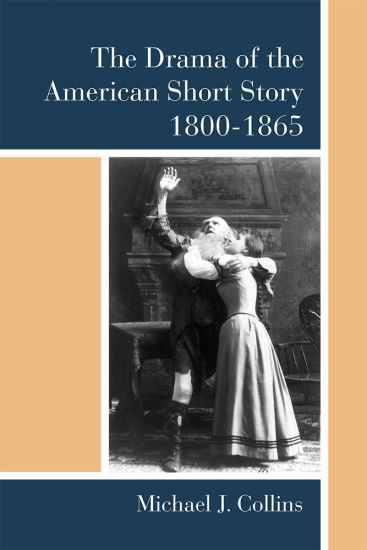
The Drama of the American Short Story, 1800-1865

The Drama of the American Short Story, 1800-1865

Michael J. Collins

The University of Michigan Press
2016
sidottu
The Drama of the American Short Story, 1800–1865 argues that to truly understand the short story form, one must look at how it was shaped by the lively, chaotic, and deeply politicized world of 19th-century transatlantic theater and performance culture. By resurrecting long-neglected theatrical influences on representative works of short fiction, Michael J. Collins demonstrates that it was the unruly culture of the stage that first energized this most significant of American art forms. Whether it was Washington Irving’s first job as theater critic, Melville’s politically controversial love of British drama, Alcott’s thwarted dreams of stage stardom, Poe and Lippard’s dramatizations of peculiarly bloodthirsty fraternity hazings, or Hawthorne’s fascination with automata, theater was a key imaginative site for the major pioneers of the American short story. The book shows how perspectives from theater studies, anthropology, and performance studies can enrich readings of the short-story form. Moving beyond arbitrary distinctions between performance and text, it suggests that this literature had a social life and was engaged with questions of circumatlantic and transnational culture. It suggests that the short story itself was never conceived as a nationalist literary form, but worked by mobilizing cosmopolitan connections and meanings. In so doing, the book resurrects a neglected history of American Federalism and its connections to British literary forms.
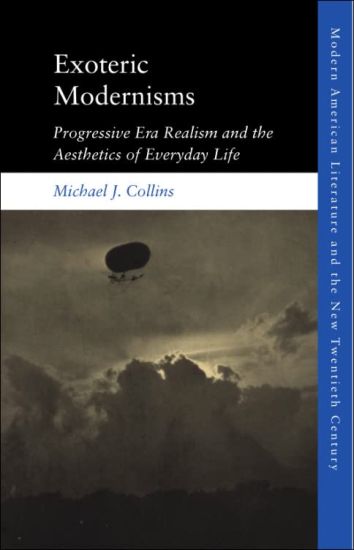
Exoteric Modernisms

Exoteric Modernisms

Michael J. Collins

EDINBURGH UNIVERSITY PRESS
2023
sidottu
Applies new understandings of realism as a political aesthetic to Progressive Era Literature, arguing for its radicalism politically and culturally Offers an original interpretation of the contribution of American anthropology and social science to the development of literature and culture in the 20th century New readings of canonical and non-canonical texts of the period 1880 1930, placing Edith Wharton, WD Howells, Stephen Crane Jose Mart and others alongside works by other working-class reformers, journalists, political radicals and anthropologists working in the Progressive Era U.S.A. New approach to realism that explores it as a form of modernism in the arts Develops a theory of the intersections of class and culture in U.S. literature that contributes to ongoing discussions in the method wars This book is an account of how American realism in the Progressive Era contributed to debates about modernity. It uses the anthropological theories of Franz Boas, and Jacques Ranciere's work on aesthetics and politics to develop a mode of reading class and culture that challenges conventional interpretations that pit the two modes of representation in opposition. It paints a picture of the late-nineteenth century, prior to modernism, as an aesthetically exciting, original, and politically radical stage in American life to reinvigorate realism as a radical aesthetic practice, with implications for understandings of American literature both in the past and into the future.
Exoteric Modernisms

Exoteric Modernisms

Michael J. Collins

EDINBURGH UNIVERSITY PRESS
2025
nidottu
This book is an account of how American realism in the Progressive Era contributed to debates about modernity. It uses the anthropological theories of Franz Boas, and Jacques Ranciere's work on aesthetics and politics to develop a mode of reading class and culture that challenges conventional interpretations that pit the two modes of representation in opposition. It paints a picture of the late-nineteenth century, prior to modernism, as an aesthetically exciting, original, and politically radical stage in American life to reinvigorate realism as a radical aesthetic practice, with implications for understandings of American literature both in the past and into the future.