Kirjojen hintavertailu. Mukana 11 699 587 kirjaa ja 12 kauppaa.

Kirjahaku

Etsi kirjoja tekijän nimen, kirjan nimen tai ISBN:n perusteella.

3 kirjaa tekijältä Michael J. Dodds

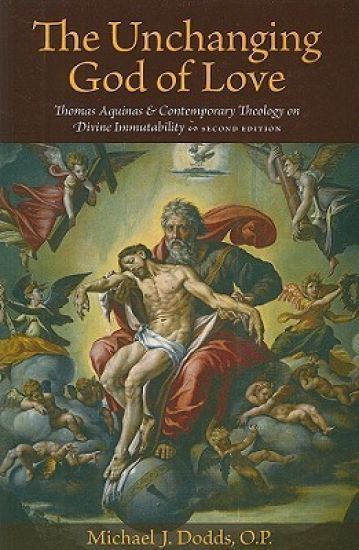
The Unchanging God of Love

The Unchanging God of Love

Michael J. Dodds

The Catholic University of America Press
2008
nidottu
Much contemporary debate surrounds the traditional teaching that God is unchanging. It is frequently argued that an immutable God must be cold, remote, indifferent, and uncaring - that an unchanging God cannot be the triune God of love revealed in Scripture. Those who reject divine immutability often single out Thomas Aquinas as its most prominent proponent. Unfortunately, such critics of his theology frequently misunderstand the fundamentals of Aquinas' actual teaching.""The Unchanging God of Love"" provides a clear and comprehensive account of what Aquinas really says about divine immutability, presented in a way that allows his theology to address contemporary criticisms. The book first reviews the various ways Aquinas applies the notion of immutability to creatures, showing that he is well aware of both the positive and negative implications of the concept. It then analyzes all of his arguments for divine immutability that are presented in his writings, noting his care in determining which aspects of immutability are to be affirmed and which are to be denied of God. It also demonstrates the distinctiveness of Aquinas' teaching by examining the biblical, patristic, and philosophical sources he employs.Aquinas' unchanging God proves to be no static deity, but the dynamic, trinitarian plenitude of knowledge, love, and life, to whom not only immutability but also motion may in some way be attributed. A study of 'the motion of the motionless God' reveals how the concepts of both motion and immutability function in Aquinas' understanding of the Trinity, the Incarnation, Creation, and Providence. Through this study, it becomes clear that the unchanging God of Aquinas, far from being indifferent or remote, is truly the God of compassion and love revealed in Scripture, who shares a most intimate friendship with the people he has created and redeemed.
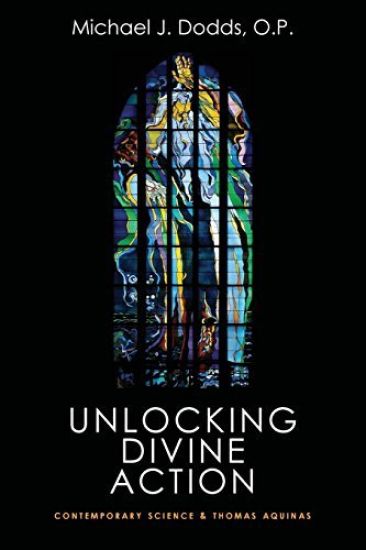
Unlocking Divine Action

Unlocking Divine Action

Michael J. Dodds

The Catholic University of America Press
2017
nidottu
Our ability to talk about God's action in the world is closely tied to our understanding of causality. With the advent of modern Newtonian science the conception of causality narrowed, and the discussion of divine action became locked into that contracted understanding. There seemed to be simply no room for God to act in the world without interfering with nature and the laws of science that describe it.Fortunately, the idea of causality has been greatly expanded through developments in contemporary science. Discoveries in quantum mechanics, cosmology, chaos theory, and biology have all led to a broader understanding of causality. These developments have opened two fundamentally new ways for theologians to ""unlock"" the discussion of divine action. One is to use the developments of science themselves to speak of God's action. The other is to speak of divine action not directly through the theories and interpretations of science, but rather through the broader understanding of causality that they suggest.,br>This book explores both approaches and argues that the latter provides a more effective way for discussing divine action. After showing that the idea of causality in contemporary science is remarkably reminiscent of key concepts in the philosophy of Thomas Aquinas, it then retrieves those notions and applies them to the discussion of divine action. In this way, it provides a sustained account of how the thought of Aquinas may be used in conjunction with contemporary science to deepen our understanding of divine action and address such issues as creation, providence, prayer, and miracles.
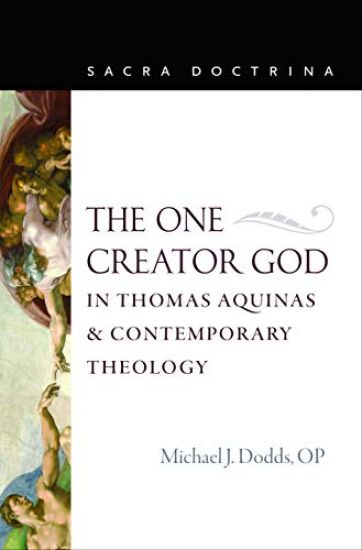
The One Creator God in Thomas Aquinas & Contemporary Theology

The One Creator God in Thomas Aquinas & Contemporary Theology

Michael J. Dodds

The Catholic University of America Press
2020
nidottu
This book provides a fundamental introduction to Aquinas's theology of the One Creator God. Aimed at making that thought accessible to contemporary audiences, it gives a basic explanation of his theology while showing its compatibility with contemporary science and its relevance to current theological issues. Opening with a brief account of Aquinas’s life, it then describes the purpose and nature of the Summa Theologica and gives a short review of current varieties of Thomism. Without neglecting other works, it then focuses primarily on the discussion of the One God in the first part of the Summa Theologica. God's transcendence and immanence is a recurrent theme in that discussion. Evidence of God's immanent causality in the natural world grounds Aquinas's five arguments for the existence of God (the Five Ways) which then open onto God's transcendence. The subsequent discussion of the divine attributes builds on the modes of God's causality established in the Five Ways. It also shows the need for a language of analogy to preserve God's transcendence and prevent us from reducing God to the level of creatures, even as qualities such as ""goodness"" and ""love,"" which we first know from creatures, are applied to God. The discussion of God's providence and governance establishes that the transcendent Creator God is most intimately present in creation. God acts in all creatures in a way that does not diminish their proper causality, but is rather its source. As there is no contradiction between God's transcendence and immanence, so there is no competition between the primary causality of God and the secondary causality of creatures. Empirical science, which is limited by its method to the secondary causality of creatures, is shown to be compatible with the broader discipline of theology which also embraces the primary causality of the Creator.