The central aim of this book is to attempt to determine the response of the classic texts of Jewish traditions to the famous dilemma posed in Plato's Euthyphro: Does God freely determine morality, or is morality independent of God?The author argues that the picture that emerges from Jewish texts is significantly more complex and nuanced than most of the contemporary Jewish philosophical literature is prepared to concede. While providing an extensive discussion of the perspective of Jewish tradition on divine command ethics, this book develops a position that is distinct from and critical of other views that have recently been advanced in Jewish scholarship. At the same time, the book provides a substantial analysis of some Christian perspectives on divine command ethics. Relevant biblical, rabbinic and later Jewish texts are discussed, as well as some of the relevant views that have been taken in philosophical literature and in Christian and Jewish thought.
Faith without Fear examines key unresolved philosophical, theological, and ideological issues in the Modern Orthodox Jewish world, including Modern Orthodoxy and Haredi Orthodoxy as competing heirs to the pre-modern Jewish tradition, the challenge to traditional faith posed by modern biblical scholarship, and Modern Orthodoxy's perspective on other faiths. The book explores some familiar topics, such as the role and status of women in Judaism and Jewish life. However, author Michael J. Harris also explores issues which have received little scholarly attention: Modern Orthodoxy's relationship with Jewish mysticism, its hopes for the messianic era, and the fundamental nature and commitments of Modern Orthodoxy. Each chapter offers a clearly-argued position. Complex issues in Jewish law (Halacha) and thought are summarized so as to be accessible to the general and specialist reader alike, as well as students of Judaism and comparative religion. The comprehensive notes and references will allow scholars to delve more deeply into the sources and secondary literature, and open up new areas for debate. Faith without Fear does not provide easy or neat responses. As a thought provoking book, Faith without Fear offers some controversial approaches to key issues in contemporary Jewish society, seeking to open debate and develop further discussion. *** "Harris has the skills of an academic scholar which enables him to present us with both a proud and sophisticated manifesto of Modern Orthodoxy, one which builds on past thinkers but does not hesitate to chart new ground as well." -- Marc B. Shapiro, Weinberg Chair in Judaic Studies, U. of Scranton, and author of Changing the Immutable: How Orthodox Judaism Rewrites Its History *** "Faith Without Fear is a fascinating read...I highly recommend it to all readers who love Torah and are concerned about our future." -- David Bigman, Rosh HaYeshiva, Yeshivat Maale Gilboa *** ..".extremely comprehensive work. ...the issues that Harris so devotedly and sincerely wrestles with aren't disappearing from the minds of critical thinking Modern Orthodox Jews any time soon." -- Stu Halpern, Jewish Book Council, The ProsenPeople, July 1, 2016 *** Librarians: ebook available on ProQuest and EBSCO Subject: Theology, Jewish Studies, Religious Studies]
The central aim of this book is to attempt to determine the response of the classic texts of Jewish traditions to the famous dilemma posed in Plato's Euthyphro: Does God freely determine morality, or is morality independent of God?The author argues that the picture that emerges from Jewish texts is significantly more complex and nuanced than most of the contemporary Jewish philosophical literature is prepared to concede. While providing an extensive discussion of the perspective of Jewish tradition on divine command ethics, this book develops a position that is distinct from and critical of other views that have recently been advanced in Jewish scholarship. At the same time, the book provides a substantial analysis of some Christian perspectives on divine command ethics. Relevant biblical, rabbinic and later Jewish texts are discussed, as well as some of the relevant views that have been taken in philosophical literature and in Christian and Jewish thought.
Faith without Fear examines key unresolved philosophical, theological, and ideological issues in the Modern Orthodox Jewish world, including Modern Orthodoxy and Haredi Orthodoxy as competing heirs to the pre-modern Jewish tradition, the challenge to traditional faith posed by modern biblical scholarship, and Modern Orthodoxy's perspective on other faiths. The book explores some familiar topics, such as the role and status of women in Judaism and Jewish life. However, author Michael J. Harris also explores issues which have received little scholarly attention: Modern Orthodoxy's relationship with Jewish mysticism, its hopes for the messianic era, and the fundamental nature and commitments of Modern Orthodoxy. Each chapter offers a clearly-argued position. Complex issues in Jewish law (Halacha) and thought are summarized so as to be accessible to the general and specialist reader alike, as well as students of Judaism and comparative religion. The comprehensive notes and references will allow scholars to delve more deeply into the sources and secondary literature, and open up new areas for debate. Faith without Fear does not provide easy or neat responses. As a thought provoking book, Faith without Fear offers some controversial approaches to key issues in contemporary Jewish society, seeking to open debate and develop further discussion. *** "Harris has the skills of an academic scholar which enables him to present us with both a proud and sophisticated manifesto of Modern Orthodoxy, one which builds on past thinkers but does not hesitate to chart new ground as well." -- Marc B. Shapiro, Weinberg Chair in Judaic Studies, U. of Scranton, and author of Changing the Immutable: How Orthodox Judaism Rewrites Its History *** "Faith Without Fear is a fascinating read...I highly recommend it to all readers who love Torah and are concerned about our future." -- David Bigman, Rosh HaYeshiva, Yeshivat Maale Gilboa *** ..".extremely comprehensive work. ...the issues that Harris so devotedly and sincerely wrestles with aren't disappearing from the minds of critical thinking Modern Orthodox Jews any time soon." -- Stu Halpern, Jewish Book Council, The ProsenPeople, July 1, 2016 *** Librarians: ebook available on ProQuest and EBSCO [Subject: Theology, Jewish Studies, Religious Studies]
Begin your journey on the road to pursuing your dreams with our collection of 366 motivational and inspirational quotes. Start at any time Unlike many journals and diaries that start on January 1st, you can pick any day of the year to be the first day on your journey...we even include a space for you to write the date for each quote. Use the quotes to inspire your day, and then use the included journal space to make note of how that day's quote guided you on your journey - ideas, thoughts, feelings...dreams With space on each page for entries for five years, re-visit your thoughts and memories over the years as you return to each page to record the current day's events. The quotes in this collection have been gathered from many sources, and we have made every reasonable effort to attribute each quote to its original author.
Begin each day with a quote from our collection of 366 quotes that are sure to inspire, motivate and keep you thinking... Start at any time Unlike many journals and diaries that start on January 1st, you can pick any day of the year to be the first day on your journey...we even include a space for you to write the date for each quote. Use the quotes to inspire your day, and then use the included journal space to make note of how that day's quote guided you on your journey - ideas, thoughts, feelings...dreams With space on each page for entries for five years, re-visit your thoughts and memories over the years as you return to each page to record the current day's events. The quotes in this collection have been gathered from many sources, and we have made every reasonable effort to attribute each quote to its original author.
What does one do as a Jewish philosopher if one is convinced by much of the Nietzschean critique of religion? Is there a contemporary Jewish philosophical theology that can convince in a post-metaphysical age? The argument of this book is that Rabbi Joseph Soloveitchik (1903–1993) - the leading twentieth-century exponent of Modern Orthodoxy - presents an interpretation of halakhic Judaism, grounded in traditional sources, that brings a life-affirming Nietzschean sensibility to the religious life. Soloveitchik develops a form of Judaism replete with key Nietzschean ideas, which parries Nietzsche's critique by partially absorbing it. This original study of Soloveitchik's philosophy highlights his unique contribution to Jewish thought for students and scholars in Jewish studies, while also revealing his wider significance for those working more broadly in fields such as philosophy and religious studies.
Elvis Sunny Bear has a problem. He wakes from his winter hibernation and discovers he has the blues Join Elvis on his adventure to lose the blues.About This Book: We feel that developmental learning in children and adolescents is timeless, and that the skills needed for that development is best absorbed through stories. With the days of stories being "told around the camp fire" and of tribal or large family learning sets being long since past; the necessity of teaching these learning sets and ancestral stories is more important than ever. However, the necessity of teaching learning sets is more important than ever.In addition to being entertaining, this title and the other stories in the 'Elvis Sunny Bear' series from Ted E. Bear Press are designed specifically to provide a methodology for parents, teachers and children to address different, and sometimes uncomfortable, topics in a way that is respectful and informational without having to be too scientific or direct - yet still provide needed resources and education.
Meet Elvis Sunny Bear Elvis Sunny Bear is on his way to the seashore to visit his close friend, Wally the Whale. With all of the problems he runs into on the way, will he make it there? Tag along with Elvis on his latest adventure.About This Book: We feel that developmental learning in children and adolescents is timeless, and that the skills needed for that development is best absorbed through stories. With the days of stories being "told around the camp fire" and of tribal or large family learning sets being long since past; the necessity of teaching these learning sets and ancestral stories is more important than ever. However, the necessity of teaching learning sets is more important than ever. In addition to being entertaining, this title and the other stories in the 'Elvis Sunny Bear' series from Ted E. Bear Press are designed specifically to provide a methodology for parents, teachers and children to address different, and sometimes uncomfortable, topics in a way that is respectful and informational without having to be too scientific or direct - yet still provide needed resources and education.
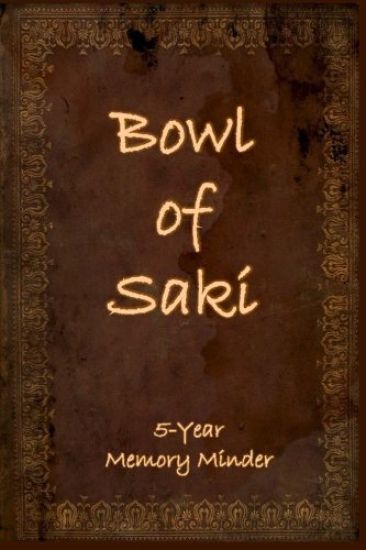
A daily guide and journal containing wisdom and enlightenment from the inspired words of Hazrat Inayat Khan. The Bowl of Saki is a daily non-sectarian inspirational message from Hazrat Inayat Khan, a spiritual leader from India who brought a timeless message of Love, Harmony and Beauty to the Western world in the early 1900's - a message which helps us to become more acutely aware of the precious spark of divinity within ourselves and within all of creation. The Bowl of Saki does not promote a particular religion, doctrine, or set of beliefs. Our primary reason for being is to foster direct, original experience of what is named as, in the languages of diverse spiritual traditions, the Real, the basic state, original nature, Buddha nature, the oneness of being, illumination, enlightenment, nondual awareness, unconditioned mind, Rigpa, the ground of being, God-consciousness, and many other names. From this primal experience a natural happiness arises, as well as a desire to be of benefit. Based on a tradition of oral teachings and an emphasis on direct experience. The Bowl of Saki is known for the inclusivity of teachings and practices from many traditions, and for the use of musical meditations that evoke a sense of peace and communion. The Bowl of Saki approach to spiritual growth encourages rigorous self-inquiry, contemplative practice, and the living of a full, balanced life that is present to both the joys and the suffering of the world. The Bowl of Saki seeks to avoid becoming an in-group or spiritual club, remaining open to all who share its purposes and ideals. There is no obligation on the side of the reader except for sincerity. In addition, the Bowl of Saki is designed to direct experience rather than acceptance of required dogma, and avoids whenever possible the use of in-language or jargon. In these ways the reader is protected from cults, or becoming a victim of one. With space on each page for entries for five years, re-visit your thoughts and memories over the years as you return to each page to record the current day's events.