Kirjahaku
Etsi kirjoja tekijän nimen, kirjan nimen tai ISBN:n perusteella.
16 kirjaa tekijältä Michael J. Mazarr
Nuclear Weapons in a Transformed World sets out to examine one of the most pressing issues of the twenty-first century: the future of nuclear weapons. Acknowledging the growing consensus that pushing nuclear weapons to the margins of world politics would represent the wisest political and moral choice for the United States, a stellar group of scholars has been assembled in this volume to analyze one solution to the problem: virtual nuclear arsenals. First proposed by Jonathan Schell in his 1984 book The Abolition , this option involves removing all nuclear weapons from operational status and placing them in a dismantled, 'virtual' condition. Essays by many of the world's top experts on arms control and international relations combine to offer the first detailed assessment of what may be the most promising and provocative idea in the field today. Thorough, balanced, and probing, Nuclear Weapons in a Transformed World opens the debate on a concept which could possibly determine the future of arms control and US policy.
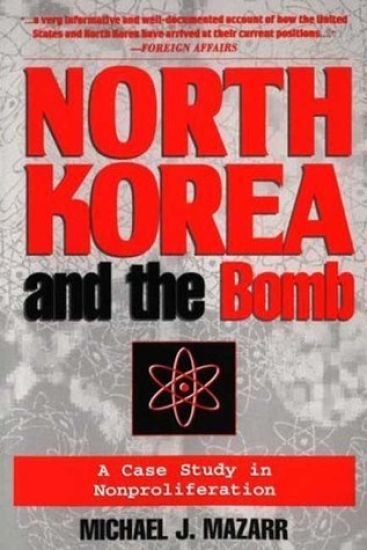
North Korea and the Bomb offers the first in-depth history of the biggest diplomatic challenge in the post-Cold War era - the North Korean nuclear programme and the US and allied efforts to stop it. Drawing on years of research and dozens of interviews with officials from the major countries involved, Dr Mazarr explains why North Korea may believe it needs nuclear weapons and how the United States has tried to thwart the North's plans. The book lays out a comprehensive history of diplomacy toward the North, alongside personal vignettes of the actors in this international drama, including Westerners who travelled to North Korea to meet Kim Il-sung before his death. As a case history of nonproliferation, the book offers guidance to the future of US policy in this critical area, arguing that confusion about goals and a refusal to act decisively have undermined American diplomacy. The outcome of the crisis in Korea could have decisive implications for the state of the post-Cold-War world. North Korea and the Bomb traces the origins of the crisis, makes sense of current events, and points the way to a resolution.
From Saddam Hussein's first bold threats in 1990 to the stunning ground phase of Desert Storm in early 1991, the crisis in the Gulf captured the world's attention. This high-tech, low-cost war was televised nightly from beginning to end, accompanied by on-the-spot interpretations of strategy and its implications. But what did we learn from this crisis? Did the United States bungle its attempts at discouraging Saddam's aggressive actions, or is deterrence simply not a reliable foreign policy tool? Are chemical weapons truly the "poor man's atom bomb"? Does the war represent a good model for future crises, or did circumstances make this war more of an anomaly than a precedent? How did the ail-volunteer U.S. force perform? By combining exciting, detailed vignettes of the crisis with insightful discussions of its consequences, this book opens up an informed debate concerning the true military and geopolitical lessons of the conflict. Representing a distillation of the best thinking on defense and foreign policy in Washington, Desert Storm also incorporates the testimony of the inside players during the crisis—the people who actually planned and fought the war. Combining academic rigor and in-depth military expertise, the authors challenge the complacency of the emerging conventional wisdom regarding the conflict, taking us beyond mere chronicling and instant analysis to a riveting reenactment of the war and the serious consideration of its long-term implications.
Desert Storm aims to examine the lessons of the Gulf War from a high-level, strategic defense perspective. It opens up an informed debate concerning the true military and geopolitical lessons of the conflict.
A sense of malaise and uncertainty surrounds the so-called war on terror. This volume offers a bold rethinking of the central challenge in that conflict: the rise of radical Islamism. Mazarr argues that this movement represents the latest in a series of anti-modern political and philosophical rebellions: in its causes, the shape of its ideology, and its social consequences, the movement shares much in common with German fascism, Russian revolutionary doctrines, and Japanese imperialist nationalism. The book builds a model of how anti-modern movements arise and suggests broader truths about the changing character of world politics and the psychological basis of national security in a globalized world. It concludes with a critique of the war on terror as currently pursued and a wide-ranging proposal for a strikingly different approach to the challenge of this latest challenge to modernity.
This unique collection of essays explores the intricacies of how the Internet has changed the way we currently approach international security, civil society, and economic development. The contributors move past the conventional wisdom, tapping new and original sources to investigate new and unexpected developments. One essay explores how wiring Russia's nuclear scientists into the Internet increases the threat of weapons proliferation. Another looks at Internet-enabled development projects and, despite early success stories in Bangalore, India, explains why they will fail. Together the essays in this collection try to bring a dose of reality to the rose-colored futures many have predicted for world politics in the Information Age.
This book examines the role of risk management in the recent financial crisis and applies lessons from there to the national security realm. It rethinks the way risk contributes to strategy, with insights relevant to practitioners and scholars in national security as well as business. Over the past few years, the concept of risk has become one of the most commonly discussed issues in national security planning. And yet the experiences of the 2007-2008 financial crisis demonstrated critical limitations in institutional efforts to control risk. The most elaborate and complex risk procedures could not cure skewed incentives, cognitive biases, groupthink, and a dozen other human factors that led companies to take excessive risk. By embracing risk management, the national security enterprise may be turning to a discipline just as it has been discredited.
Leap of Faith is the first comprehensive and objective history of the decision to invade Iraq. Based on nine years of research, over 100 interviews with participants in the drama, and information from hundreds of U.S. and British declassified documents, Mike Mazarr shows how the most impressive and experienced foreign policy team made the greatest strategic folly of the century.Mazarr reveals that a combination of messianic certainty, cultural deference, and administrative infighting and incompetence allowed the decision to be made without any examination of the ways in which it could unravel. So when it did, no one had any answers.Leap of Faith is a parable of how good intentions can go wrong, and a cautionary tale about any international entanglement.
Understanding the Current International Order
Michael J. Mazarr; Miranda Priebe; Andrew Radin; Astrid Stuth Cevallos
RAND
2016
pokkari
In the first report of a series on the emerging international order, RAND researchers examine the liberal order in effect since World War II, including the mechanisms by which the order affects state behavior, the engines that drive states to participate, and the U.S. approach to the order since 1945.
Mastering the Gray Zone: Understanding A Changing Era of Conflict
Michael J. Mazarr; Strategic Studies Institute; U.S. Army War College
Lulu.com
2015
nidottu
This manuscript examines the increasingly important form of rivalry and statecraft that has become known as "gray zone strategies." In regions from Eastern Europe to the South China Sea, such tactics in the hands of ambitious regional powers pose a growing challenge to U.S. and allied interests. This monograph aims to provide a broad introduction to the issue to help leaders in the U.S. Army and the wider joint Department of Defense and national security community better understand this challenge. Dr. Michael Mazarr, a Senior Political Scientist at the RAND Corporation and Associate Program Director of the Army's Arroyo Center there, defines the issue, examines the most notable current cases of gray zone strategies, offers several hypotheses about the nature of this form of conflict, and suggests a number of policy responses. The monograph emphasizes that many gray zone tools and techniques have been employed for centuries.
Understanding Escalation: A Framework for Evaluating the Escalatory Risks of Policy Actions
Michael J. Mazarr; Dara Massicot; Anthony Atler
RAND Corporation
2025
nidottu
This report presents an analysis of the factors that govern escalatory risk from U.S. policy options during periods of peace, crisis, or war. The analysis combines theoretical and historical research with a current assessment of Chinese and Russian views of escalation. The research provides the basis for building a framework that could be useful to the U.S. Army and policymakers to assess the possible effects of proposed policy actions.
Sustaining U.S. Army Operations in the Indo-Pacific: Potential Roles of Allies and Partners
Michael J. Mazarr; Duncan Long; Derek Eaton
RAND Corporation
2025
nidottu
Previous research has identified that logistics and sustainment shortfalls are a critical barrier to U.S. operational success in the Indo-Pacific. In this report, the authors identify five case countries (Australia, Japan, the Philippines, Singapore, and South Korea) and assess their potential to support the logistics and sustainment activities that are critical to the success of military operations.
Responses to Territorial Revision: Historical Lessons
Michael J. Mazarr; Duncan Long; Derek Eaton
RAND Corporation
2025
nidottu
Previous research has identified that logistics and sustainment shortfalls are a critical barrier to U.S. operational success in the Indo-Pacific. In this report, the authors identify five case countries (Australia, Japan, the Philippines, Singapore, and South Korea) and assess their potential to support the logistics and sustainment activities that are critical to the success of military operations.
Reserve Component General and Flag Officers
Lisa M. Harrington; Igor Mikolic-Torreira; Geoffrey McGovern; Michael J. Mazarr; Peter Schirmer; Keith Gierlack; Jonathan Welch
RAND
2016
pokkari
Increased use of the reserve component, particularly since September 11, 2001, and an expectation that this role will continue and possibly increase in the future has renewed interest in the question of the appropriate number of reserve component general and flag officers (RC G/FOs). RAND researchers conducted a review of requirements and authorized strength for RC G/FOs.